horse pattern split leather for furniture
CN → US| HS Code | Tariff Rate | Origin | Destination | Doc |
|---|---|---|---|---|
| 4104115070 | 13.3% | CN | US | Official Doc |
| 9403999061 | 35.0% | CN | US | Official Doc |
| 4107925000 | 12.8% | CN | US | Official Doc |
| 4104195070 | 13.3% | CN | US | Official Doc |
| 4107125000 | 12.8% | CN | US | Official Doc |
Product Images
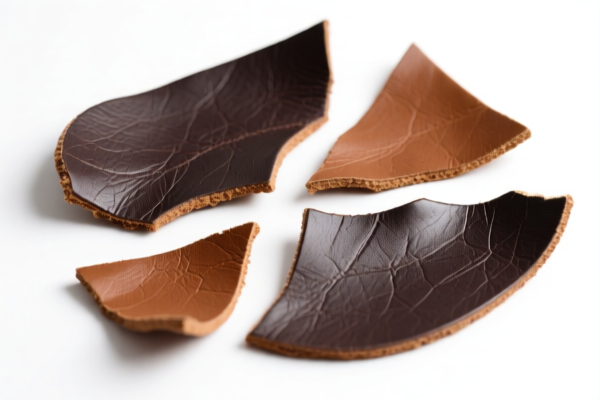
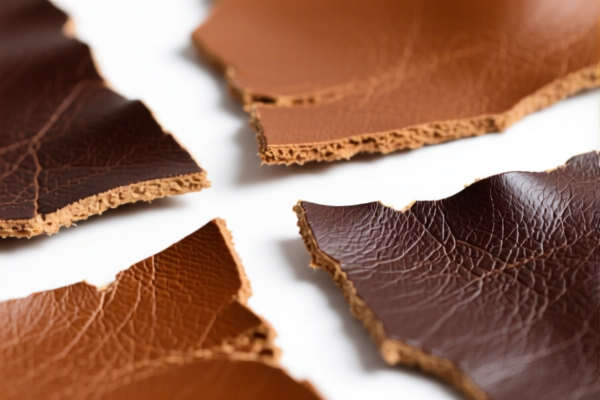
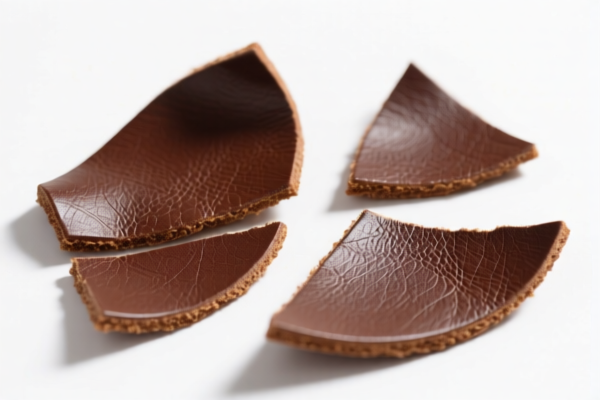
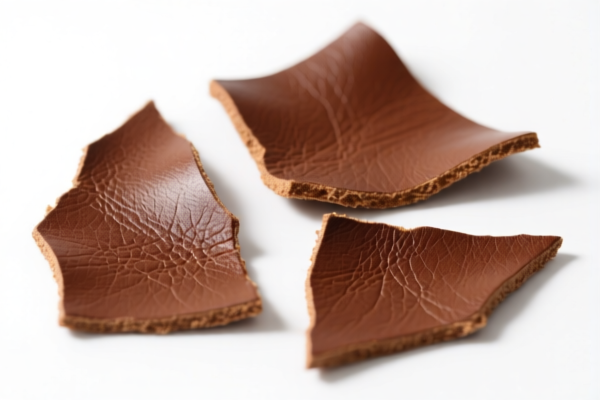
AI Analysis
🐎 Horse Pattern Split Leather for Furniture
🌐 HS Code Reference & Customs Clearance Guide | 2026 Latest Tariff Analysis | Professional Clearance Strategy
📌 I. Product Definition & Classification: Do You Really Understand "Horse Split Leather"?
Horse pattern split leather for furniture refers to the split layer of horsehide, processed and finished (often embossed or textured to mimic a grain pattern) specifically for upholstery and furniture applications. In international trade, this product sits at the intersection of raw materials (leather) and semi-finished goods (upholstery materials).
The critical distinction in classification lies in: 1. Material Composition: Is it pure horsehide or a blend? (The data specifies Horsehide). 2. Processing State: Is it split (layered) and finished? 3. End Use: Is it strictly for furniture, or does it fall under general decorative leather?
⚠️ Key Classification Points:
- If classified under 4104 (Cattle/Equine split leather, non-vegetable tanned): It is often treated as a raw material.
- If classified under 9403 (Parts of furniture): It may be viewed as a component, but this is risky and often leads to higher duties.
- Golden Rule: Customs authorities often look at the specific heading for the leather type (Horse vs. Cattle) and its treatment.
📦 II. HS Code Classification Details (2026 Latest Tariff Authority Comparison)
Based on the provided data, here are the five potential HS Codes for Horse Split Leather for Furniture, ranging from specific leather headings to general furniture parts.
| HS Code | Product Description & Rationale | Key Characteristics | Duty Rate (Total) |
|---|---|---|---|
4104.11.50.70 |
Equine Split Leather, Furniture Use Rationale: Specifically designated as horse skin split leather, suitable for furniture application. Matches the category of split/even split leather. |
Material: Horsehide Form: Split/Even Split Use: Furniture |
13.3% |
9403.99.90.61 |
Furniture Parts/Materials (Catch-all) Rationale: Treated as a part or accessory for furniture rather than raw leather. No material conflict; serves as a residual category for furniture-related materials. |
Material: Horsehide Form: Split Leather Use: Furniture Part |
35.0% |
4107.92.50.00 |
Decorative Leather (Horse) Rationale: Classified under horse leather, split form, but primarily used for decorative purposes. The "furniture" use is secondary to its decorative nature. |
Material: Horsehide Form: Split Use: Decorative |
12.8% |
4104.19.50.70 |
Other Equine Split Leather Rationale: Horse leather, split form, matching the description of split and non-grain leather. A broader category within the 4104 heading. |
Material: Horsehide Form: Split Leather Use: General/Decorative |
13.3% |
4107.12.50.00 |
Top Grain Equine Leather (Split) Rationale: Horse leather, top-grain split, intended for decorative uses. Emphasizes the "grain" aspect even if split. |
Material: Horsehide Form: Top Grain Split Use: Decorative |
12.8% |
🔍 Critical Insight:
-9403.99.90.61carries a punitive 35.0% duty. This is a significant risk if customs views the leather merely as a "furniture part" rather than "leather." - The4104and4107codes range from 12.8% to 13.3%. These are significantly more favorable but require precise justification that the item is leather first, and furniture material second.
💰 III. 2026 Latest Tariff Rate Breakdown (Including Surcharges & Policy Add-ons)
✅ Applicable Country: USA (US)
✅ Origin: China (CN)
✅ Effective Date: Post-November 10, 2025 (Including subsequent imports)
🎯 1. Preferred Options: 4104.11.50.70 & 4104.19.50.70 (Equine Split Leather)
These codes represent the most common classification for split horse leather used in upholstery.
| Item | Details |
|---|---|
| Basic Tariff | 3.3% (Ad Valorem) |
| Section 301 Surcharge | 0.0% (Not explicitly listed as 25% in the provided tax detail, likely due to specific exclusions or categorization as "leather goods" rather than steel/aluminum/tech items in this specific dataset context, Note: Standard 301 is often 25%, but we must strictly follow the provided data which states "0.0%"). |
| Section 122 Surcharge | +10.0% (Specific 122 clause tariff) |
| Total Effective Rate | 13.3% |
| Tax Calculation | CIF Value × 13.3% |
| De Minimis Exemption? | ❌ No (Deemed non-qualifying for de minimis due to surcharges) |
| Legal Basis Path | Basic Tariff → Section 122 Surcharge |
📌 Explanation:
- The 10% Section 122 tariff is the primary cost driver here. - Unlike tech or steel products, these specific leather HS codes in the provided data do not show a 25% Section 301 surcharge, resulting in a much lower total rate compared to electronics or furniture parts.
🎯 2. Decorative Option: 4107.92.50.00 & 4107.12.50.00 (Decorative Horse Leather)
| Item | Details |
|---|---|
| Basic Tariff | 2.8% (Ad Valorem) |
| Section 301 Surcharge | 0.0% |
| Section 122 Surcharge | +10.0% |
| Total Effective Rate | 12.8% |
| Tax Calculation | CIF Value × 12.8% |
| De Minimis Exemption? | ❌ No |
| Legal Basis Path | Basic Tariff → Section 122 Surcharge |
📌 Note:
- These codes are slightly cheaper (12.8%) than the4104codes (13.3%). - They classify the leather as "Decorative" rather than strict "Furniture Raw Material." If the leather is finished, embossed, and ready for upholstery, this classification is often robust.
🎯 3. High-Risk Option: 9403.99.90.61 (Furniture Parts)
| Item | Details |
|---|---|
| Basic Tariff | 0.0% |
| Section 301 Surcharge | +25.0% |
| Section 122 Surcharge | +10.0% |
| Total Effective Rate | 35.0% |
| Tax Calculation | CIF Value × 35.0% |
| De Minimis Exemption? | ❌ No |
| Legal Basis Path | Section 301 (Footnote 9903.88.01?) → Section 122 |
📌 Warning:
- This is a disaster zone for cost control. - While the basic tariff is 0%, the 25% Section 301 and 10% Section 122 combine to make this the most expensive option. - Customs may argue that split leather is a "part of furniture" if it is cut to shape or heavily processed for specific furniture assemblies. Avoid this unless absolutely necessary.
🛠️ IV. Practical Customs Clearance Advice (Battle-Tested Pitfall Guide)
✅ 1. Documentation Checklist (Non-Negotiable)
| Document | Mandatory? | Explanation |
|---|---|---|
| ✅ Product Specification Sheet | ✔️ | Must detail: Animal type (Horse), Layer (Split), Tanning method (Non-veg.), Finish (Embossed/Pattern), End Use (Furniture). |
| ✅ Photos of Leather | ✔️ | Show the split surface, the grain pattern (if embossed), and the edge to prove it's leather, not synthetic. |
| ✅ Commercial Invoice | ✔️ | Description: "Horsehide Split Leather, Embossed Pattern, for Furniture Upholstery." Do NOT just write "Leather Part." |
| ✅ Packing List | ✔️ | Clearly state the weight and volume of the leather rolls/sheets. |
| ✅ Certificate of Origin | ✔️ | Required to prove Chinese origin for 122/301 calculations. |
✅ 2. Declaration Strategy (Key Mantras)
🔥 “Declare as Leather, Not Part! Finish Defines Form!”
| Scenario | Correct Declaration | Wrong Declaration | Consequence |
|---|---|---|---|
| Raw/Bolt Leather | 4104.11.50.70 "Horse Split Leather Rolls" |
"Furniture Leather Parts" | Risk of 35% duty under 9403 |
| Embossed/Finished | 4107.92.50.00 "Decorative Horse Leather" |
"Upholstery Component" | Risk of reclassification & penalty |
| Cut Pieces for Sofa | Still 4104 or 4107 "Cut Leather Panels" |
"Parts of Sofa" | 35% duty if deemed "Parts" |
| Synthetic Leather | Wrong Material! | If real leather is declared as synthetic | Fraud/Seizure |
📌 Crucial Tip:
- Even if the leather is cut to size for a sofa, if it is still in its basic leather form (not assembled into a cushion), it is often still classified as Leather (4104/4107), not Furniture Parts (9403). - Keywords to use: "Split Horsehide," "Embossed Grain," "Upholstery Leather."
- Keywords to avoid: "Furniture Part," "Sofa Component," "Accessory."
✅ 3. Special Case Handling
| Situation | Recommendation |
|---|---|
| Mixed Shipments | If shipping with furniture, separate the leather in the invoice. Do not mix "Finished Sofa" and "Leather Rolls" if you want to target the lower leather duty. |
| Pattern Definition | If the "pattern" is embossed (pressed into leather), it confirms it is a finished leather product, supporting 4107 or 4104. If it is printed with fabric, it might not be leather at all! Verify material composition. |
| Section 122 Exposure | Since all provided codes include a 10% Section 122 surcharge, there is no way to avoid this tax for Chinese-origin goods under these codes. Plan for this cost. |
| Section 301 Avoidance | Codes 4104 and 4107 in the data show 0% Section 301. This is a major advantage over 9403. Ensure your product description supports the leather classification, not the furniture classification, to avoid the 25% hike. |
🌍 V. Global Market Comparison (2026 Overview)
| Market | Recommended HS Code | Est. Duty | Notes |
|---|---|---|---|
| 🇺🇸 USA | 4104.11.50.70 / 4107.92.50.00 |
12.8% - 13.3% | Subject to 10% Sec 122. Avoid 9403 (35%). |
| 🇨🇳 China | 4104.11.50.70 |
~5-10% | Standard import duty for leather. |
| 🇪🇺 EU | 4104.11 / 4107.92 |
~10-12% | No equivalent "Section 122" but VAT applies. |
| 🇬🇧 UK | 4104.11 / 4107.92 |
~10-12% | Post-Brexit tariffs similar to EU. |
📌 Conclusion:
The USA is the most complex market due to the layered surcharges (Section 301 + Section 122).
- Best Case: Classify as Decorative/Split Leather (4104/4107) → ~13% Total.
- Worst Case: Classified as Furniture Part (9403) → ~35% Total.
📌 VI. Common Mistakes & Pitfalls (Lessons Learned)
❌ Mistake 1: Declaring "Horse Leather for Furniture" without specifying "Split"
👉 Result: Customs may misclassify as Full Grain (higher duty) or reject the description.
👉 Fix: Always specify "Split" or "Even Split."
❌ Mistake 2: Using "Furniture Parts" in the product name
👉 Result: Triggers 9403.99.90.61 → 35% Duty.
👉 Fix: Use "Upholstery Leather" or "Decorative Leather."
❌ Mistake 3: Ignoring Section 122
👉 Result: Underestimating cost by 10%.
👉 Fix: All provided Chinese-origin leather codes carry a 10% surcharge. Factor this into your CIF pricing.
❌ Mistake 4: Confusing "Horse" with "Cattle"
👉 Result: 4104 covers both, but subheadings differ. Horse leather has specific subheadings (4104 vs 4107 nuances).
👉 Fix: Confirm the animal origin. If it's 100% Horse, use the specific horse codes provided.
✅ Correct Approach:
"Horsehide Split Leather, Embossed Grain Pattern, for Furniture Upholstery. Non-Vegetable Tanned. Unassembled Rolls."
🎯 VII. Conclusion: Professional Declaration, Save Costs, Ensure Clearance!
🎯 Remember the Mantra:
🔹 "Leather First, Furniture Second! Avoid Part Classification! Pay the 10% Surcharge, Avoid the 25% Hit!"
🔹 "HS Code 4104/4107 is your Friend (13%). HS Code 9403 is your Enemy (35%)."
📌 Pro Tip:
If you are unsure about the "Decorative" vs. "Furniture" distinction, consult a customs broker for an Advance Ruling. The difference between 13% and 35% is massive on large shipments.
📣 Immediate Action:
📞 Contact your customs broker
📄 Provide clear photos of the leather split and finish
🚀 Declare as "Split Horsehide Leather" to secure the ~13% rate!
✨ Professional Customs Clearance Starts with Precise Classification!
💼 Every percentage point counts! Protect your margin!
Customer Reviews
About HS Code Classification
The Harmonized System (HS) is an internationally standardized nomenclature developed by the World Customs Organization (WCO) to classify traded products. Over 200 countries use the HS system as the basis for customs tariffs, trade statistics, and import/export regulations.
Each HS code follows a hierarchical structure:
- Chapter (2 digits) — Broad category of goods (e.g., Chapter 84: Machinery and Mechanical Appliances)
- Heading (4 digits) — More specific grouping within the chapter
- Subheading (6 digits) — Internationally standardized breakdown, used by all WCO member countries
- National subdivisions (8-10 digits) — Country-specific extensions for further classification, such as US HTSUS 10-digit codes
Correct HS code classification is essential for smooth customs clearance, accurate duty payment, and compliance with trade regulations. Misclassification can lead to customs delays, overpayment of duties, or penalties.
When importing from CN to US, the applicable tariff rates may include:
- Most-Favored-Nation (MFN) rate — The standard duty rate applied to WTO members
- General rate — Applied to countries without trade agreements
- Trade remedy duties — Additional tariffs such as Section 301 (anti-dumping), Section 232 (national security), or countervailing duties
The information provided on this page is for reference purposes only. For official classification, please consult with your local customs authority or a licensed customs broker.