hose
CN → US| HS Code | Tariff Rate | Origin | Destination | Doc |
|---|---|---|---|---|
| 8481809050 | 37.0% | CN | US | Official Doc |
| 8307903000 | 38.8% | CN | US | Official Doc |
| 3917400095 | 40.3% | CN | US | Official Doc |
| 8481909085 | 85.0% | CN | US | Official Doc |
| 4009110000 | 37.5% | CN | US | Official Doc |
Product Images
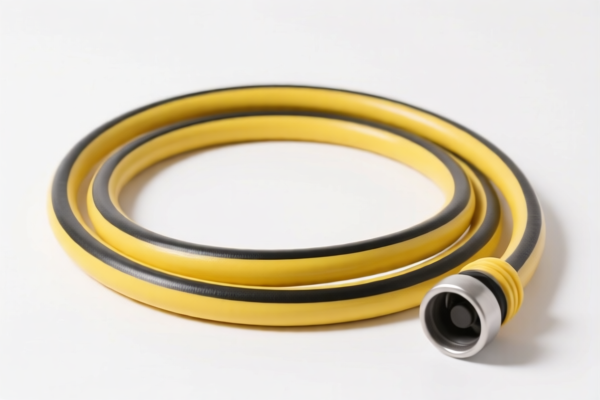
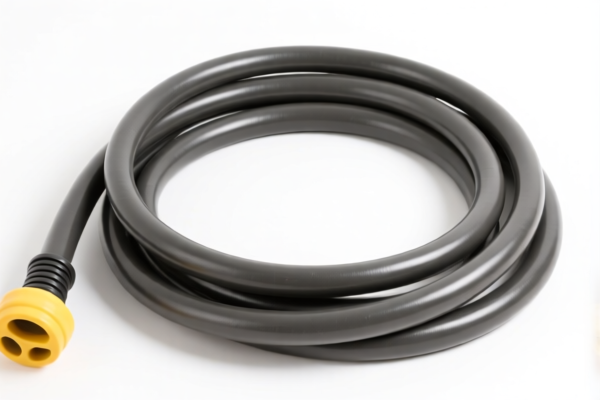
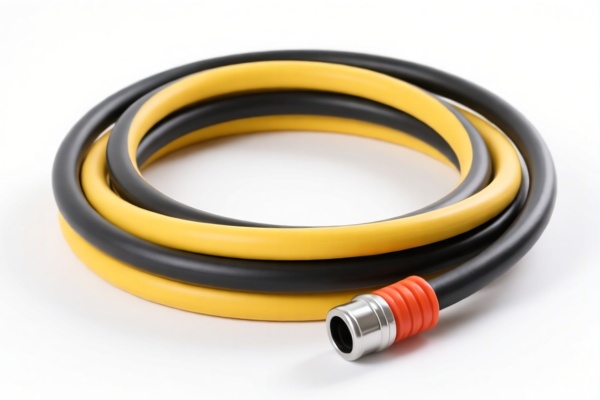
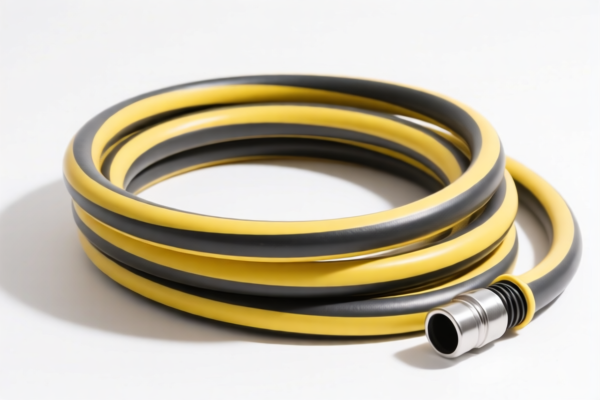
AI Analysis
🖋️ Hose & Hose Valves (Industrial Tubing & Fittings)
🌐 HS Code Reference & Customs Clearance Guide | 2026 Latest Tariff Analysis | Professional Clearance Strategy
📌 I. Product Definition & Classification: What Exactly Is a "Hose"?
In international trade, the term "Hose" is ambiguous. It can refer to the flexible tube itself or the valves/connectors attached to it. Misclassification here leads to massive tariff differences (from ~37% to ~85%).
Two Main Categories:
1. Hoses Tubes/Conduits (4009, 3917, 8307): Flexible pipes made of rubber, plastic, or metal. Used for fluid/air transfer.
2. Valves & Parts (8481, 8481.90): Devices used to control, regulate, or direct the flow of liquids, gases, or powders. Includes "Hose Valves" specifically designed to shut off or regulate hose pressure.
⚠️ Key Distinction Point:
- If the item is primarily a flexible pipe (rubber/plastic/metal) → It is a Hose (Chapter 39, 40, or 83).
- If the item is primarily a mechanical device to control flow (even if attached to a hose) → It is a Valve (Chapter 84).
- Crucial: A "Hose Valve" (a valve specifically for hoses) is often classified as a Valve Part or Valve, not a hose, unless it is an integral, non-removable part of the hose assembly under specific material rules.
📦 II. HS Code Classification Details (2026 Latest Tariff Authority Comparison)
Based on the provided data, here are the 5 possible classifications for "Hose/Hose Valves" and why they differ.
| HS Code | Product Description | Material/Type | Key Differentiator |
|---|---|---|---|
8481.80.90.50 |
Hose Valves (Valves & Similar Apparatus) | Mechanical Valve | Classified as a Valve, not a hose part. Used for pipe connection. |
8307.90.30.00 |
Hose Valves (Base Material: Base Metal) | Base Metal | Classified under Base Metal Articles because the primary material/identity is metal. |
3917.40.00.95 |
Hose Valves (Base Material: Plastic) | Plastic | Classified under Plastics & Articles Thereof. Often considered an accessory/part of plastic hoses. |
8481.90.90.85 |
Hose Valves (Parts of Valves) | No Specific Material | Classified as a Part/Accessory of valves. Highest risk category due to "Steel, Aluminum, Copper" surcharge. |
4009.11.00.00 |
Rubber Hoses | Vulcanized Rubber | Classified as a Rubber Hose. Pure hose, no valve mechanism described. |
🔍 Critical Warning:
- The term "Hose Valve" is the trigger for divergence.
- If it is a standalone valve used to connect/control hoses → Go to 8481 (Valve).
- If it is a valve made of metal/plastic → It might fall under 8307 or 3917 depending on material specificity.
- If it is a part of a valve assembly → 8481.90.
- If it is just the rubber tube → 4009.
💰 III. 2026 Latest Tariff Rate Breakdown (Including Surcharges & Policy Add-ons)
✅ Applicable Country: USA (US)
✅ Origin: China (CN)
✅ Effective Date: 2025+ (Current Trade War Context)
🎯 1. 8481.80.90.50 —— Hose Valves (Valves Class)
| Item | Detail |
|---|---|
| Base Tariff | 2.0% |
| Section 301 Surcharge | +25.0% |
| Section 122 Tariff | +10.0% |
| Total Rate | 37.0% |
| Tax Calculation | CIF Value × 37.0% |
| Legal Basis | 8481 (Valves) → 301 Tariff → 122 Clause |
📌 Explanation:
- This is the standard Valve classification.
- It benefits from the lowest base rate (2%).
- Total 37% is significant but lower than the "Part" classification.
- Recommendation: This is the most common and favorable classification for functional hose valves.
🎯 2. 8307.90.30.00 —— Hose Valves (Base Metal Material)
| Item | Detail |
|---|---|
| Base Tariff | 3.8% |
| Section 301 Surcharge | +25.0% |
| Section 122 Tariff | +10.0% |
| Total Rate | 38.8% |
| Tax Calculation | CIF Value × 38.8% |
| Legal Basis | 8307 (Base Metal Hoses/Accessories) → 301 Tariff → 122 Clause |
📌 Explanation:
- Used if the valve is primarily made of base metal (e.g., iron, steel, aluminum) and not clearly identifiable as a general valve under Ch. 84.
- Slightly higher than8481due to higher base rate (3.8% vs 2.0%).
- Risk: Customs may reclassify as8481if it functions clearly as a valve.
🎯 3. 3917.40.00.95 —— Hose Valves (Plastic Material)
| Item | Detail |
|---|---|
| Base Tariff | 5.3% |
| Section 301 Surcharge | +25.0% |
| Section 122 Tariff | +10.0% |
| Total Rate | 40.3% |
| Tax Calculation | CIF Value × 40.3% |
| Legal Basis | 3917 (Plastic Hoses/Accessories) → 301 Tariff → 122 Clause |
📌 Explanation:
- Used for plastic hose valves or fittings.
- Plastic items often have higher base tariffs.
- Note: If it’s a plastic valve, ensure it doesn’t contain significant mechanical metal parts, or it might be pulled to Ch. 84.
🎯 4. 8481.90.90.85 —— Hose Valves (Parts of Valves)
| Item | Detail |
|---|---|
| Base Tariff | 0.0% |
| Section 301 Surcharge | +25.0% |
| Section 122 Tariff | +10.0% |
| Steel/Aluminum/Copper Surcharge | +50.0% |
| Total Rate | 85.0% |
| Tax Calculation | CIF Value × 85.0% |
| Legal Basis | 8481.90 (Parts) → 301 Tariff → 122 Clause → Metal Parts Surcharge |
📌 WARNING:
- This is the MOST EXPENSIVE classification.
- Why? It is classified as a Part, and if the part is made of steel, aluminum, or copper, it triggers an additional 50% surcharge.
- Avoid this classification if possible. Only use if the item is definitively a "part" and not a "valve" itself.
- Do not ship metal valve parts under this code unless you want to pay 85% tax.
🎯 5. 4009.11.00.00 —— Rubber Hoses
| Item | Detail |
|---|---|
| Base Tariff | 2.5% |
| Section 301 Surcharge | +25.0% |
| Section 122 Tariff | +10.0% |
| Total Rate | 37.5% |
| Tax Calculation | CIF Value × 37.5% |
| Legal Basis | 4009 (Rubber Hoses) → 301 Tariff → 122 Clause |
📌 Explanation:
- Use this ONLY if the product is a bare rubber hose with no valve.
- If a valve is present, even if attached, Customs may reclassify the entire assembly as a "Valve" or "Valve Assembly," leading to penalties.
- Best for simple fluid transfer hoses.
🛠️ IV. Customs Clearance Practical Advice (Avoid Pitfalls)
✅ 1. Document Preparation Checklist
| Document | Required? | Description |
|---|---|---|
| ✅ Product Description | ✔️ | Must specify: "Hose Valve" vs. "Rubber Hose". Include material (Metal, Plastic, Rubber). |
| ✅ Technical Diagram | ✔️ | Show if the valve is removable or integral. Show material composition. |
| ✅ HS Code Declaration | ✔️ | Explicitly state the intended HS Code and reason (e.g., "Classified as Valve under 8481 due to primary function"). |
| ✅ Commercial Invoice | ✔️ | Value must match CIF. No hidden costs. |
| ✅ Material Certificate | ✔️ | Crucial for distinguishing between 8481 (Valve) and 8307 (Base Metal). |
✅ 2. Declaration Strategy (Key Mnemonics)
🔥 "Valve Function Rules! Material Matters! Parts Are Pricy!"
| Situation | Correct Classification | Incorrect Classification | Consequence |
|---|---|---|---|
| Functional Valve (controls flow) | 8481.80.90.50 (37%) |
8481.90.90.85 (85%) |
Save 48%! |
| Metal Valve Body | 8307.90.30.00 (38.8%) |
8481 (37%) |
Small difference, but ensure "Base Metal" intent. |
| Plastic Fitting | 3917.40.00.95 (40.3%) |
8481 (37%) |
Check if it has moving parts; if not, plastic category is safer. |
| Bare Rubber Hose | 4009.11.00.00 (37.5%) |
8481 (37%) |
No valve = No 8481. |
| Metal Valve Part | AVOID 8481.90.90.85 |
Any other | 85% Tax! |
✅ 3. Special Handling Scenarios
| Scenario | Recommendation |
|---|---|
| Hose with Integrated Valve | Declare as Valve (8481.80.90.50) if the valve is the primary function. Do not split shipment. |
| OEM Custom Metal Valve | Provide material composition proof. Argue for 8481 (Valve) over 8307 (Base Metal) if function is clear. |
| Plastic Hose Connector | Ensure it’s not a "valve" (has no moving mechanism to control flow). If no moving part, 3917 is appropriate. |
| Steel Valve Part | Do NOT use 8481.90.90.85. Try to classify as part of 8481.80 if it’s a complete valve unit, not just a spare part. |
🌍 V. Global Market Comparison (2026)
| Country/Region | Recommended HS Code | Total Tariff (China Origin) | Notes |
|---|---|---|---|
| 🇺🇸 USA | 8481.80.90.50 |
37.0% | 122 Clause + 301 Tariff apply. |
| 🇨🇳 China | 8481.80.90.50 |
~5-10% (Import Duty) | Low base duty, no 301/122 surcharges. |
| 🇪🇺 EU | 8481.80.90 |
~4-6% | No Section 301/122. GSP may apply. |
| 🇯🇵 Japan | 8481.80.90 |
~4-5% | Lower tariffs, no US-style surcharges. |
📌 Conclusion:
- The USA market is the most expensive due to the 122 Clause (10%) and Section 301 (25%).
- European and Asian markets are significantly cheaper.
- Strategy: If targeting the US, optimize for8481.80.90.50(37%) and AVOID8481.90.90.85(85%).
📌 VI. Common Errors & Pitfalls (Blood & Tears Lessons)
❌ Error 1: Classifying a Valve as a Part (8481.90)
👉 Consequence: You pay 85% tax instead of 37%. Loss: 48% per unit.
❌ Error 2: Declaring a Hose with Valve as just a Hose (4009)
👉 Consequence: Customs reclassifies as Valve, adds penalties, and delays clearance.
❌ Error 3: Ignoring Material Composition for 8307 vs 8481
👉 Consequence: Misclassification leads to duty reassessment. Metal valves should be checked carefully.
❌ Error 4: Using "Hose Fitting" for a Valve
👉 Consequence: "Fitting" implies static connection. If it controls flow, it’s a Valve.
✅ Correct Practice:
"Industrial Hose Valve, Brass Body, Manual Operation, for Water Transfer, Model XYZ" → Declare as
8481.80.90.50.
🎯 VII. Conclusion: Professional Classification Saves Money!
🎯 Remember the Mantra:
🔹 "Valve Function Rules, Parts Are Pricy, Metal Surcharges Bite!"
🔹 "HS Code Determines Cost, 37% vs 85% is the Difference!"
🔹 "122 Clause + 301 = High Cost, Plan Ahead!"
📌 Pro Tip:
If your product is a composite item (hose + valve), always declare the primary function. If it controls flow, it’s a Valve. If it just transports, it’s a Hose.
For US imports, always aim for 8481.80.90.50 (37%) and never 8481.90.90.85 (85%) unless absolutely necessary.
📣 Immediate Action:
📞 Consult a Customs Broker + Provide Technical Specs + Request Advance Ruling for
8481.80.90.50.
🚀 Ensure your invoice clearly states "Valve" not just "Fitting" to justify the 37% rate.
💼 Your Profit Margin Depends on Accurate Classification!
Customer Reviews
About HS Code Classification
The Harmonized System (HS) is an internationally standardized nomenclature developed by the World Customs Organization (WCO) to classify traded products. Over 200 countries use the HS system as the basis for customs tariffs, trade statistics, and import/export regulations.
Each HS code follows a hierarchical structure:
- Chapter (2 digits) — Broad category of goods (e.g., Chapter 84: Machinery and Mechanical Appliances)
- Heading (4 digits) — More specific grouping within the chapter
- Subheading (6 digits) — Internationally standardized breakdown, used by all WCO member countries
- National subdivisions (8-10 digits) — Country-specific extensions for further classification, such as US HTSUS 10-digit codes
Correct HS code classification is essential for smooth customs clearance, accurate duty payment, and compliance with trade regulations. Misclassification can lead to customs delays, overpayment of duties, or penalties.
When importing from CN to US, the applicable tariff rates may include:
- Most-Favored-Nation (MFN) rate — The standard duty rate applied to WTO members
- General rate — Applied to countries without trade agreements
- Trade remedy duties — Additional tariffs such as Section 301 (anti-dumping), Section 232 (national security), or countervailing duties
The information provided on this page is for reference purposes only. For official classification, please consult with your local customs authority or a licensed customs broker.