hose sprayer
CN → US| HS Code | Tariff Rate | Origin | Destination | Doc |
|---|---|---|---|---|
| 3917390050 | 38.1% | CN | US | Official Doc |
| 3917320050 | 38.1% | CN | US | Official Doc |
| 5909001000 | 35.0% | CN | US | Official Doc |
| 5909002000 | 38.3% | CN | US | Official Doc |
| 8307106000 | 38.8% | CN | US | Official Doc |
Product Images
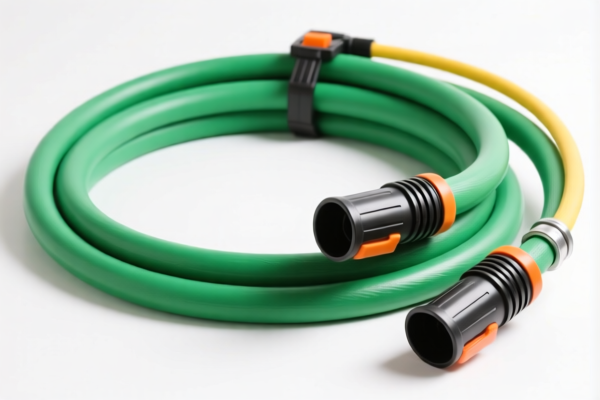
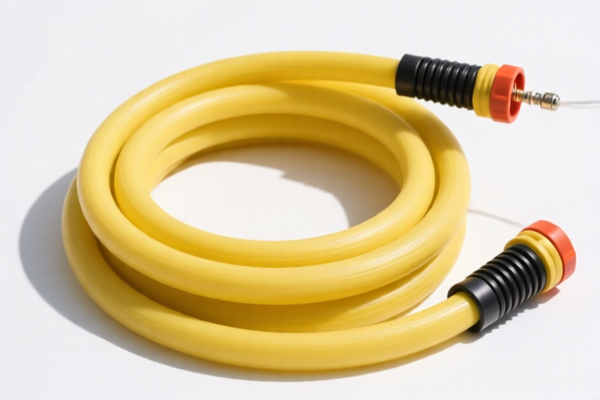
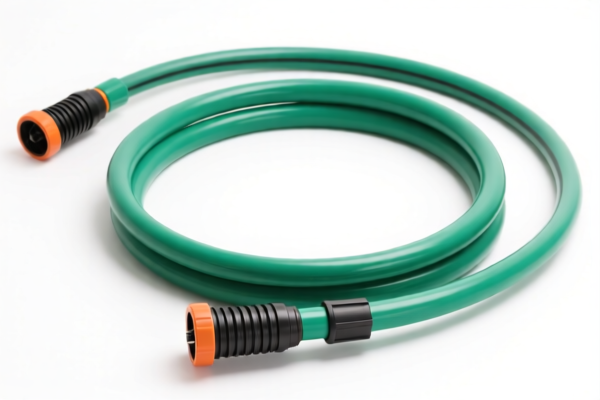
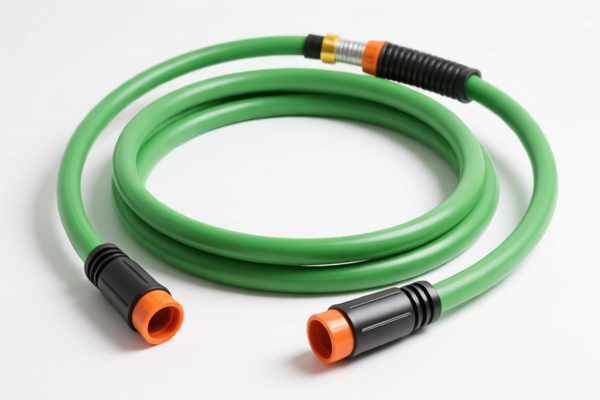
AI Analysis
🚿 Hose Sprayer (Garden Hose Sprayers & Nozzles)
🌐 HS Code Reference & Customs Clearance Guide | 2026 Latest Tariff Analysis | Professional Clearance Strategy
📌 I. Product Definition & Classification: Do You Really Understand "Hose Sprayers"?
A "Hose Sprayer" (often called a Garden Hose Nozzle or Sprinkler Head) is a device attached to the end of a hose to control water flow and spray pattern. In international trade, classification depends heavily on the material, structure, and specific function:
- Plastic Tubing/Connectors: If the item is primarily a flexible plastic hose connector or a rigid plastic nozzle body.
- Textile/Fabric Hoses: If the sprayer is integrated into or made of textile/fiber materials.
- Metal/Plastic Hardware: If the item is considered part of general metal or plastic hardware for plumbing/gardening.
⚠️ Key Distinction Point:
- If it is a flexible plastic tube acting as the main conveyance → Chapter 39 (Plastics)
- If it is a textile-based hose with a sprayer head → Chapter 59 (Impregnated Textiles)
- If it is a rigid hardware piece (metal/plastic connector) → Chapter 83 (Miscellaneous Metal Articles)
📦 II. HS Code Classification Details (2026 Latest Tariff Authority Comparison)
Based on the provided data, here are the 5 possible HS Codes for "Hose Sprayers," categorized by material and structure:
| HS Code | Product Description | Application Scenario | Primary Material |
|---|---|---|---|
3917.39.00.50 |
Other tubes, pipes, and hoses of plastics, flexible | Standard plastic garden hoses; flexible plastic connectors | ✅ Plastic |
3917.32.00.50 |
Hoses of plastics, non-PVC, non-polyethylene | Hoses made of other specific plastics (e.g., PEX, silicone blends) inferred by function | ✅ Plastic (Non-PVC/PE) |
5909.00.10.00 |
Textile hose & similar textile tubing of vegetable textile fibers | Hoses made from plant fibers or composite fabrics (e.g., rubber-lined canvas) | ✅ Textile/Vegetable Fiber |
5909.00.20.00 |
Other textile hose & similar textile tubing (e.g., of man-made fibers) | General textile hoses, likely with synthetic fibers (nylon/polyester) | ✅ Textile/Synthetic |
8307.10.60.00 |
Other tubes, pipes, and hoses of base metal | Rigid metal hoses, steel braided hoses, or metal fittings classified as hardware | ✅ Metal/Plastic Hybrid |
🔍 Critical Reminder:
- Plastic Hoses fall under Chapter 39. The distinction between3917.39and3917.32depends on whether the plastic is PVC/PE or another type.
- Textile Hoses fall under Chapter 59. The distinction between5909.00.10and5909.00.20is based on the fiber type (Vegetable vs. Other).
- Metal/Hardware falls under Chapter 83. This is often used for rigid metal hoses or complex fittings not strictly defined as "tubing" in Chapter 39.
💰 III. 2026 Latest Tariff Rate Breakdown (Including Surtaxes & Policy Add-ons)
✅ Applicable Country: United States (US)
✅ Origin: China (CN)
✅ Effective Date: From November 10, 2025 (for subsequent imports)
All listed HS Codes below are subject to the same surtax structure due to US-China trade policies.
🎯 1. 3917.39.00.50 — Other Plastic Hoses (Flexible)
| Item | Content |
|---|---|
| Base Tariff | 3.1% (ad valorem) |
| Section 301 Surcharge | +25.0% (USITC Footnote) |
| IEEPA Surcharge | +10.0% (For Chinese/HK products) |
| Total Rate | 38.1% |
| Tax Calculation | CIF Value × 38.1% |
| De Minimis Eligibility | ❌ Not Eligible (High value threshold not met for exemption) |
| Legal Basis Path | IEEPA:9903.01.25 → IEEPA:9903.01.24 → USITC:3917.39.00.50 |
📌 Explanation:
- The 3.1% is the standard Most Favored Nation (MFN) duty for plastic hoses.
- The +25% is the Section 301 tariff on Chinese goods.
- The +10% is the additional IEEPA tariff.
- Total 38.1% is a significant cost factor for plastic hose manufacturers.
🎯 2. 3917.32.00.50 — Other Plastic Hoses (Non-PVC/PE)
| Item | Content |
|---|---|
| Base Tariff | 3.1% |
| Section 301 Surcharge | +25.0% |
| IEEPA Surcharge | +10.0% |
| Total Rate | 38.1% |
| Tax Calculation | CIF Value × 38.1% |
| De Minimis Eligibility | ❌ Not Eligible |
| Legal Basis Path | IEEPA:9903.01.25 → IEEPA:9903.01.24 → USITC:3917.32.00.50 |
📌 Note:
- Same tax burden as above. Even if the plastic is specialized (e.g., silicone, PEX), it falls under the same high-tariff bracket if imported from China.
🎯 3. 5909.00.10.00 — Textile Hose (Vegetable Fibers)
| Item | Content |
|---|---|
| Base Tariff | 0.0% |
| Section 301 Surcharge | +25.0% |
| IEEPA Surcharge | +10.0% |
| Total Rate | 35.0% |
| Tax Calculation | CIF Value × 35.0% |
| De Minimis Eligibility | ❌ Not Eligible |
| Legal Basis Path | IEEPA:9903.01.25 → IEEPA:9903.01.24 → USITC:5909.00.10.00 |
📌 Advantage:
- Base tariff is 0%! This is the lowest total rate among all options.
- Ideal for products made from natural fiber composites (e.g., canvas hoses with rubber lining).
🎯 4. 5909.00.20.00 — Other Textile Hoses
| Item | Content |
|---|---|
| Base Tariff | 3.3% |
| Section 301 Surcharge | +25.0% |
| IEEPA Surcharge | +10.0% |
| Total Rate | 38.3% |
| Tax Calculation | CIF Value × 38.3% |
| De Minimis Eligibility | ❌ Not Eligible |
| Legal Basis Path | IEEPA:9903.01.25 → IEEPA:9903.01.24 → USITC:5909.00.20.00 |
📌 Note:
- Slightly higher than vegetable fiber hoses.
- Applies to synthetic textile hoses (nylon, polyester braided).
🎯 5. 8307.10.60.00 — Other Metal/Plastic Hoses
| Item | Content |
|---|---|
| Base Tariff | 3.8% |
| Section 301 Surcharge | +25.0% |
| IEEPA Surcharge | +10.0% |
| Total Rate | 38.8% |
| Tax Calculation | CIF Value × 38.8% |
| De Minimis Eligibility | ❌ Not Eligible |
| Legal Basis Path | IEEPA:9903.01.25 → IEEPA:9903.01.24 → USITC:8307.10.60.00 |
📌 Warning:
- Highest total rate (38.8%).
- Use only if the product is structurally classified as "miscellaneous metal articles" (e.g., rigid metal piping/hoses).
🛠️ IV. Customs Clearance Practical Advice (Real-World Pitfall Guide)
✅ 1. Required Documentation Checklist (Non-Negotiable)
| Document | Must Provide | Explanation |
|---|---|---|
| ✅ Product Specification Sheet | ✔️ | Must detail material (plastic type, fiber type), diameter, length, and pressure rating. |
| ✅ Material Composition Report | ✔️ | Critical for distinguishing between Plastic (Ch. 39) and Textile (Ch. 59). |
| ✅ Product Photos | ✔️ | Clear shots of the sprayer head, hose body, and connection points. |
| ✅ Commercial Invoice | ✔️ | Must clearly state "Garden Hose Sprayer" and specify material. |
| ✅ Packing List | ✔️ | Detail packaging to avoid weight discrepancies. |
| ✅ Certificate of Origin | ✔️ | Essential for verifying Chinese origin and applying correct surtaxes. |
✅ 2. Declaration Tips (Key Mantras)
🔥 “Material First, Structure Second, Name Accurate, Rate Lower!”
| Scenario | Correct Declaration | Wrong Action |
|---|---|---|
| Standard Plastic Hose | Use 3917.39.00.50 |
Misdeclare as Textile → Penalty + Delay |
| Textile-Braided Hose | Use 5909.00.20.00 |
Misdeclare as Plastic → Higher Base Rate (3.1% vs 3.3%) + Risk |
| Metal Rigid Hose | Use 8307.10.60.00 |
Misdeclare as Plastic → Classification Error |
| Vegetable Fiber Hose | Use 5909.00.10.00 |
Best for Lowest Tax (35.0%) |
✅ 3. Special Case Handling
| Situation | Handling Advice |
|---|---|
| Hybrid Hoses (Plastic Liner + Textile Braid) | Often classified under Chapter 59 if the textile provides structural strength. Declare as 5909.00.20.00. |
| Sprayer Head Attached | If the sprayer head is plastic and the hose is plastic, the entire assembly usually falls under Chapter 39 (GIR 3(b) - Essential Character). |
| OEM Custom Design | Provide design drawings to prove material composition. |
| Small Quantities (De Minimis) | ❌ Not Applicable for China-origin hose sprayers due to Section 301/IEEPA surtaxes. |
🌍 V. Global Market Customs Comparison (2026 Latest)
| Country/Region | Recommended HS Code | Tariff (China Origin) | Certification Required | Notes |
|---|---|---|---|---|
| 🇺🇸 USA | 3917.39.00.50 |
38.1% | No special cert needed | High tariff due to surtaxes |
| 🇺🇸 USA | 5909.00.10.00 |
35.0% | No special cert needed | Lowest US tariff option |
| 🇨🇳 China | 3917.39.00.00 |
5-13% | No surtax | No IEEPA/Section 301 |
| 🇪🇺 EU | 3917.39.00 |
~4-6% | REACH + RoHS | No surtaxes |
| 🇬🇧 UK | 3917.39.00 |
~4-6% | UKCA + RoHS | Post-Brexit rules apply |
📌 Conclusion:
- USA is the most challenging market due to 301/IEEPA surtaxes.
- Textile hoses (5909.00.10.00) offer the lowest tax burden (35%) in the US.
- Plastic hoses are consistently high at 38.1-38.3%.
- Consider sourcing from Vietnam, Mexico, or Thailand to avoid US surtaxes (if rules of origin are met).
📌 VI. Common Mistakes & Pitfalls (Lessons Learned)
❌ Mistake 1: Declaring a plastic hose as textile to avoid higher base rates
👉 Consequence: Customs audit → Retrospective tax + fines + seizure.
❌ Mistake 2: Ignoring the sprayer head material
👉 Consequence: If the hose is plastic but the head is metal, customs may classify the whole item under Chapter 83 (8307.10.60.00) → 38.8% Tax.
❌ Mistake 3: Assuming De Minimis ($800) applies
👉 Consequence: Denied entry. Section 301/IEEPA goods are excluded from de minimis treatment.
❌ Mistake 4: Vague description "Garden Hose"
👉 Consequence: Customs classification error → Delay in release.
✅ Correct Practice:
“Flexible Plastic Garden Hose with Sprayer Nozzle, Material: PVC, Diameter: 5/8 inch, Length: 50 ft, HS Code: 3917.39.00.50”
🎯 VII. Conclusion: Smart Classification, Save Costs!
🎯 Remember:
🔹 “Plastic Hose: 38.1%”
🔹 “Vegetable Fiber Hose: 35.0% (Best for USA)”
🔹 “Metal Hose: 38.8% (Highest)”
🔹 “De Minimis: NOT AVAILABLE for China-origin hose sprayers”
📌 Pro Tip:
If your product is a hybrid (plastic + textile), consult a customs broker to determine if Chapter 59 is applicable. If yes, you can save 3.1-3.3% on the base tariff compared to pure plastic hoses.
📣 Immediate Action:
📞 Contact a licensed customs broker + Provide material specs + Apply for Advance Ruling if unsure.
🚀 Ensure accurate HS Code classification to avoid delays and high duties!
✨ Professional Clearance Starts with Accurate Classification!
💼 Every percentage point of tariff matters for your profit margin!
Customer Reviews
About HS Code Classification
The Harmonized System (HS) is an internationally standardized nomenclature developed by the World Customs Organization (WCO) to classify traded products. Over 200 countries use the HS system as the basis for customs tariffs, trade statistics, and import/export regulations.
Each HS code follows a hierarchical structure:
- Chapter (2 digits) — Broad category of goods (e.g., Chapter 84: Machinery and Mechanical Appliances)
- Heading (4 digits) — More specific grouping within the chapter
- Subheading (6 digits) — Internationally standardized breakdown, used by all WCO member countries
- National subdivisions (8-10 digits) — Country-specific extensions for further classification, such as US HTSUS 10-digit codes
Correct HS code classification is essential for smooth customs clearance, accurate duty payment, and compliance with trade regulations. Misclassification can lead to customs delays, overpayment of duties, or penalties.
When importing from CN to US, the applicable tariff rates may include:
- Most-Favored-Nation (MFN) rate — The standard duty rate applied to WTO members
- General rate — Applied to countries without trade agreements
- Trade remedy duties — Additional tariffs such as Section 301 (anti-dumping), Section 232 (national security), or countervailing duties
The information provided on this page is for reference purposes only. For official classification, please consult with your local customs authority or a licensed customs broker.