hot stamping paper
CN → US| HS Code | Tariff Rate | Origin | Destination | Doc |
|---|---|---|---|---|
| 4823906700 | 35.0% | CN | US | Official Doc |
| 4823908680 | 35.0% | CN | US | Official Doc |
Product Images
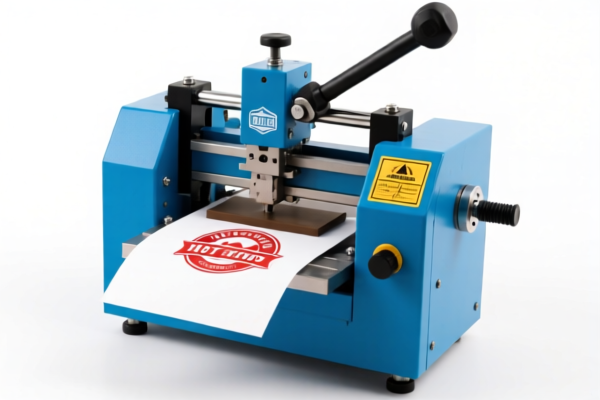
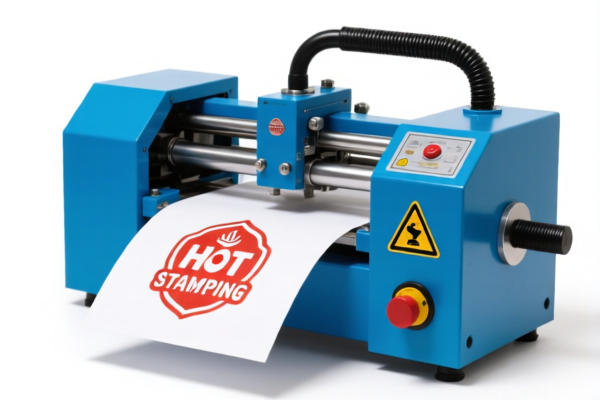
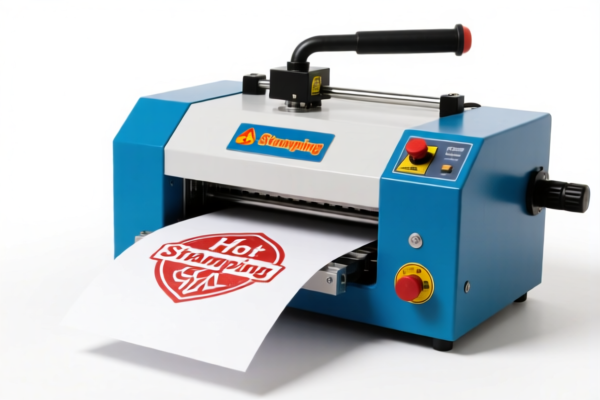
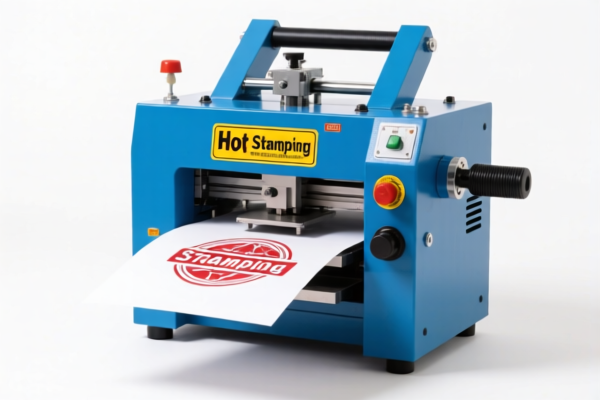
AI Analysis
🎨 Hot Stamping Paper (烫金纸/电化铝箔)
🌐 HS Code Reference & Customs Clearance Guide | 2026 Latest Tariff Analysis | Professional Clearance Strategy
📌 One, Product Definition and Classification: Do You Really Understand "Hot Stamping Paper"?
Hot stamping paper, also known as electrochemical aluminum foil or hot stamping film, is a decorative material used in printing and packaging industries to apply metallic or pigmented finishes onto various substrates (paper, plastic, leather, etc.) using heat and pressure.
In international trade, it is generally classified under Chapter 48 (Paper and Paperboard) or Chapter 39 (Plastics), depending on its base material and structure. However, for most standard commercial hot stamping papers used in general printing, they are classified as articles of paper, paperboard, cellulose wadding, or webs of cellulose fibers.
⚠️ Key Distinction Point:
- If the product is a cut-to-size sheet or shape (e.g., A4, specific die-cut shapes) made of coated paper with metallic layers → It falls under HS Code 4823.
- If it is a web (continuous roll) not cut to size, it may fall under different subheadings, but the provided<DATA>specifically covers items cut to size or shape.
📦 Two. HS Code Classification Details (2026 Latest Tariff Authority Comparison)
Based on the provided <DATA>, here are the specific HS Codes for Hot Stamping Paper (cut to size/shape):
| HS Code | Product Description | Applicable Scenario | Key Features |
|---|---|---|---|
4823.90.67.00 |
Other paper, paperboard...: Of coated paper or paperboard: Other | Coated Hot Stamping Paper: Paper base with metallic/pigment coating, cut to size/shape. | ✅ Coated surface; ✅ Cut to specific size/shape |
4823.90.86.80 |
Other paper, paperboard...: Other: Other Other Other | Uncategorized/Other Hot Stamping Paper: Non-coated or other special articles cut to size/shape. | ✅ Cut to size/shape; ✅ Not strictly "coated" or falls outside 4823.90.67 |
🔍 Important Reminder:
- Both codes apply to items cut to size or shape. If you import continuous rolls (webs) for industrial cutting, these codes do not apply. You must check HS Code4823.90.61or4823.90.65for webs.
- Hot Stamping Paper is typically considered "coated paper" due to the release layer and metal/pigment layer, making4823.90.67.00the most common classification.
- Never misclassify as "Printing Blocks" (8442) or "Plastic Films" (3920) unless specifically requested by customs for non-paper base materials.
💰 Three. 2026 Latest Tariff Rate Details (Including Additional Taxes, Policy Add-ons)
✅ Applicable Country: United States (US)
✅ Country of Origin: China (CN)
✅ Effective Date: From November 10, 2025 (and subsequent imports)
🎯 1. 4823.90.67.00 —— Hot Stamping Paper (Coated, Cut to Size/Shape)
| Item | Content |
|---|---|
| Base Tariff Rate | 0.0% (ad valorem) |
| Section 301 Additional Tariff | +25.0% |
| Total Tax Rate | 25.0% |
| Tax Calculation | CIF Value × 25% |
| De Minimis Eligibility | ❌ Not Applicable (Denied de minimis for Section 301 goods) |
| Legal Basis Path | USITC:4823.90.67.00 → FOOTNOTE:301.9903.88.01 |
📌 Explanation:
- "Base Tariff 0%" means there is no normal MFN duty.
- 25% is a punitive tariff under US Section 301 Trade Action against China.
- This rate is high and significantly increases the cost of imported decorative packaging materials.
🎯 2. 4823.90.86.80 —— Hot Stamping Paper (Other, Cut to Size/Shape)
| Item | Content |
|---|---|
| Base Tariff Rate | 0.0% (ad valorem) |
| Section 301 Additional Tariff | +25.0% |
| Total Tax Rate | 25.0% |
| Tax Calculation | CIF Value × 25% |
| De Minimis Eligibility | ❌ Not Applicable (Denied de minimis for Section 301 goods) |
| Legal Basis Path | USITC:4823.90.86.80 → FOOTNOTE:301.9903.88.01 |
📌 Note:
- Same tariff structure as above.
- Even if the paper is not "coated" in the traditional sense but is still an article of paper cut to size, the 25% additional tariff applies.
🛠️ Four. Customs Clearance Practical Advice (Real-World Pitfall Avoidance Guide)
✅ 1. Preparation Checklist (All Required)
| Document | Mandatory? | Description |
|---|---|---|
| ✅ Product Specification Sheet | ✔️ | Must detail: Base material (paper/plastic), coating type, release layer, metal type (aluminum/gold/silver), dimensions, and cut shape. |
| ✅ Photos of Product | ✔️ | Clear images showing the metallic finish, the roll/sheet structure, and any packaging labels. |
| ✅ Commercial Invoice | ✔️ | Must clearly state: "Hot Stamping Paper, Cut to Size, Coated" and include HS Code 4823.90.67.00. |
| ✅ Packing List | ✔️ | Detail weight, quantity, and dimensions. Ensure no mix-up with raw rolls if declared as cut pieces. |
| ✅ Country of Origin Certificate | ✔️ | Crucial for proving Chinese origin to apply the correct Section 301 tariff. |
✅ 2. Declaration Tips (Key Mnemonics)
🔥 "Cut to size, declare 4823; Coated or not, 25% tax awaits!"
| Scenario | Correct Declaration | Incorrect Practice |
|---|---|---|
| Sheets of hot stamping paper (e.g., 20x30cm) | 4823.90.67.00 |
Misdeclare as "Plastic Film" (3920) → Higher risk of audit |
| Rolls of hot stamping film | ❌ Not covered by provided <DATA> |
Use 4823.90.67.00 → Wrong! Must use code for webs |
| Mixed packaging (paper + plastic components) | Declare primary material | Split declaration → Complex customs valuation |
✅ 3. Special Circumstances Handling
| Situation | Handling Advice |
|---|---|
| Non-Paper Base | If the hot stamping foil is made entirely of plastic (PET) without paper backing, it may fall under Chapter 39. Check with customs before shipment. |
| Small Samples | Even small samples (under $800 de minimis) may be subject to inspection if flagged for Section 301 goods. Prepare full documentation. |
| OEM Custom Shapes | Provide die-cut templates to prove "cut to shape" classification. Avoid generic descriptions like "foil." |
🌍 Five. Global Market Comparison (2026 Latest)
| Country/Region | Recommended HS Code | Tariff (China Origin) | Certification Requirements | Remarks |
|---|---|---|---|---|
| 🇺🇸 USA | 4823.90.67.00 |
25% (Additional 301) | None specific | High tariff impact on packaging costs |
| 🇨🇳 China | 4823.90.67.00 |
0% | None | Domestic production is common |
| 🇪🇺 EU | 4823.90.99 |
6.5% | REACH (if chemical coatings) | Standard MFN rate applies |
| 🇦🇺 Australia | 4823.90.90 |
5% | None | Moderate tariff |
| 🇯🇵 Japan | 4823.90.90 |
4.8% | None | Standard tariff |
📌 Conclusion:
- The US imposes a significant 25% additional tariff on Chinese-origin hot stamping paper.
- EU and other markets have lower but standard tariffs.
- Cost Optimization: Consider sourcing from non-China countries (e.g., Vietnam, India) for US-bound goods to avoid Section 301 tariffs, if feasible.
📌 Six. Common Mistakes & Pitfalls (Blood Lessons)
❌ Mistake 1: Declaring rolls as "cut sheets" to avoid web-specific codes
👉 Consequence: Customs inspection reveals continuous rolls → Penalty for misclassification + back taxes.
❌ Mistake 2: Ignoring the "Coated" status
👉 Consequence: If coated, it must go to 4823.90.67.00. Misdeclaring as "uncoated" leads to duty differences and potential audits.
❌ Mistake 3: Not accounting for the 25% Additional Tariff in pricing
👉 Consequence: Profit margins eroded by 25% unexpected cost. Always factor in Section 301 tariffs for US imports from China.
✅ Correct Practice:
"Hot Stamping Paper, A4 Size, Aluminum Coated, Paper Base, Cut to Shape, Model XYZ, Origin: China"
🎯 Seven. Conclusion: Professional Declaration, Cost Control!
🎯 Remember the Mnemonic:
🔹 "Cut to Size, 4823; China Origin, 25% Extra!"
🔹 "HS Code Decides Duty, 25% Difference, Declare Right, Save Money!"
📌 Tips:
- If your hot stamping paper is not from China, the 25% Section 301 tariff does not apply.
- For US imports, consider Section 301 Exclusions if available (check USTR website for current exclusions).
- Always pre-classify with a licensed customs broker if the product has complex multi-material layers.
📣 Immediate Action:
📞 Contact a professional customs broker + Provide product photos + Confirm HS Code pre-ruling
🚀 Ensure your hot stamping paper, clears customs smoothly, efficiently, and profitably!
✨ Professional clearance starts with accurate classification!
💼 Every cent of your cost deserves precise calculation!
Customer Reviews
About HS Code Classification
The Harmonized System (HS) is an internationally standardized nomenclature developed by the World Customs Organization (WCO) to classify traded products. Over 200 countries use the HS system as the basis for customs tariffs, trade statistics, and import/export regulations.
Each HS code follows a hierarchical structure:
- Chapter (2 digits) — Broad category of goods (e.g., Chapter 84: Machinery and Mechanical Appliances)
- Heading (4 digits) — More specific grouping within the chapter
- Subheading (6 digits) — Internationally standardized breakdown, used by all WCO member countries
- National subdivisions (8-10 digits) — Country-specific extensions for further classification, such as US HTSUS 10-digit codes
Correct HS code classification is essential for smooth customs clearance, accurate duty payment, and compliance with trade regulations. Misclassification can lead to customs delays, overpayment of duties, or penalties.
When importing from CN to US, the applicable tariff rates may include:
- Most-Favored-Nation (MFN) rate — The standard duty rate applied to WTO members
- General rate — Applied to countries without trade agreements
- Trade remedy duties — Additional tariffs such as Section 301 (anti-dumping), Section 232 (national security), or countervailing duties
The information provided on this page is for reference purposes only. For official classification, please consult with your local customs authority or a licensed customs broker.