hydraulic pipe
CN → US| HS Code | Tariff Rate | Origin | Destination | Doc |
|---|---|---|---|---|
| 3917290090 | 38.1% | CN | US | Official Doc |
| 3917310000 | 38.1% | CN | US | Official Doc |
| 7304390004 | 10.0% | CN | US | Official Doc |
| 7304592045 | 35.0% | CN | US | Official Doc |
Product Images
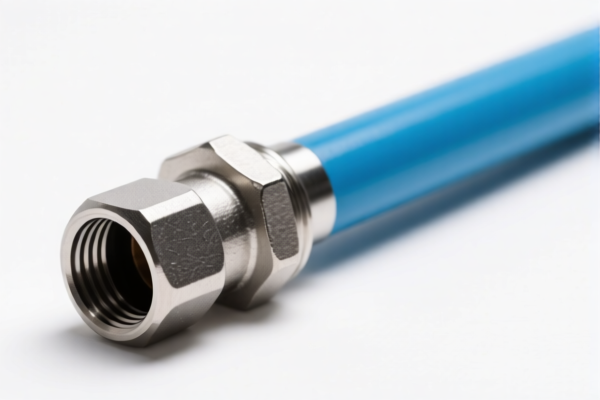
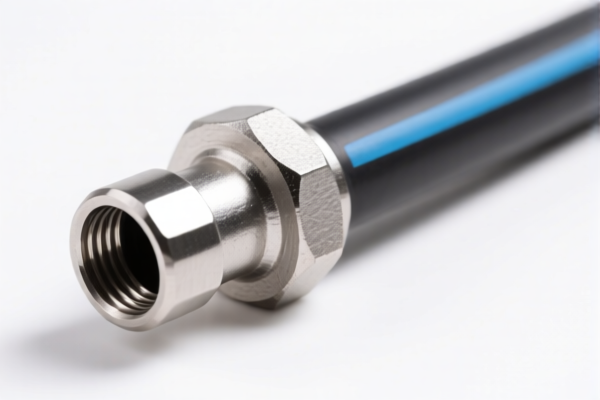
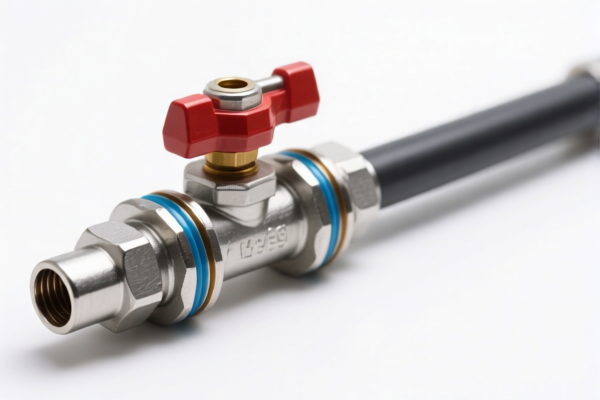
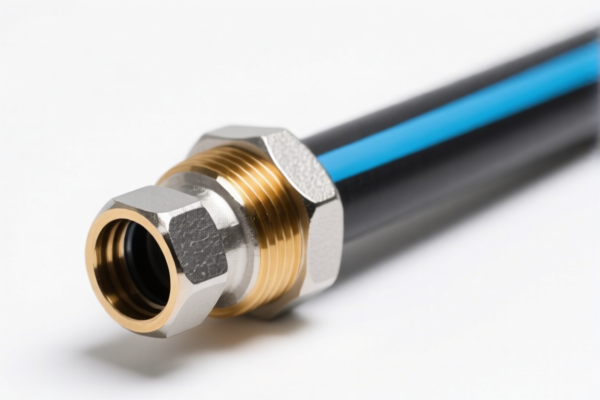
AI Analysis
💧 Hydraulic Pipes & Hoses (High-Pressure Fluid Power Transmission)
🌐 HS Code Reference & Customs Clearance Guide | 2026 Latest Tariff Analysis | Professional Compliance Strategy
📌 I. Product Definition & Classification: Do You Truly Understand "Hydraulic Pipes"?
Hydraulic pipes and hoses are critical components in industrial machinery, construction equipment, automotive systems, and aerospace applications. They transport hydraulic fluid under high pressure. In international trade, they are strictly categorized by material, rigidity, and pressure specifications.
Steel Seamless Tubes: Rigid, high-pressure conduits made from iron or steel alloys, essential for structural integrity in heavy machinery.
Plastic/Composite Hoses: Flexible conduits made from various plastics or composites, used for lower-pressure applications or specific chemical resistance.
⚠️ Key Distinction Points:
- Material Matters: Plastic pipes (HS 3917) are fundamentally different from steel tubes (HS 7304). Misclassification leads to severe penalties.
- Pressure Rating: For plastic hoses, a minimum burst pressure of 27.6 MPa is a critical threshold for specific sub-headings.
- Dimensions: For steel tubes, the outside diameter (OD) and suitability for boilers/heat exchangers determine the exact code.
📦 II. HS Code Classification Details (2026 Latest Tariff Authority Comparison)
Based on the provided data, here are the precise HS Codes and their corresponding tax implications.
| HS Code | Product Description | Material Type | Key Specifications | Applicable Scenario |
|---|---|---|---|---|
3917.29.00.90 |
Tubes, pipes and hoses, rigid; of other plastics | Plastic (Rigid) | Not specified as PVC or polyethylene; "Other plastics" | Rigid plastic conduits for non-standard applications |
3917.31.00.00 |
Flexible tubes, pipes and hoses | Plastic (Flexible) | Minimum burst pressure ≥ 27.6 MPa | High-pressure flexible hydraulic lines |
7304.39.00.04 |
Seamless tubes, of iron/nonalloy steel | Iron/Non-alloy Steel | OD ≥ 38.1 mm & < 190.5 mm; Suitable for boilers/heat exchangers | Industrial boiler tubes, feedwater heaters |
7304.59.20.45 |
Seamless tubes, of other alloy steel | Alloy Steel | OD ≥ 38.1 mm & ≤ 114.3 mm; Suitable for boilers/heat exchangers | High-alloy steel hydraulic tubes for specialized high-temp/high-pressure use |
🔍 Critical Reminder:
- Plastic Pipes: Must distinguish between rigid (3917.29) and flexible (3917.31). The pressure rating is decisive for flexible plastic hoses.
- Steel Tubes: Must distinguish between non-alloy (7304.39) and alloy (7304.59). Also, the Outside Diameter (OD) and End-Use (e.g., boilers) are mandatory for classification.
- Tax Implication:7304.59.20.45incurs a 25% additional tariff, while others are 0%. This is a major cost difference!
💰 III. 2026 Latest Tariff Rate Breakdown (Including Additional Taxes)
✅ Applicable Country: USA (US)
✅ Origin: China (CN) (Note: Tax details provided in data reflect specific conditions, likely China-US trade context given the 25% levy)
✅ Effective Time: Current applicable rates
🎯 1. 3917.29.00.90 —— Rigid Tubes/Pipes of Other Plastics
| Item | Content |
|---|---|
| Base Tariff | 0% |
| Additional Tariff | 0% |
| Total Tax Rate | 0.0% |
| Tax Calculation | CIF Value × 0% |
| De Minimis Eligibility | ✅ Yes (Typically applies for low-value shipments) |
| Legal Basis | HTSUS 3917.29.00.90 |
📌 Explanation:
- This category for rigid plastic pipes enjoys a 0% duty rate.
- No additional Section 301 tariffs apply in this specific data set.
🎯 2. 3917.31.00.00 —— Flexible Plastic Hoses (≥ 27.6 MPa)
| Item | Content |
|---|---|
| Base Tariff | 0% |
| Additional Tariff | 0% |
| Total Tax Rate | 0.0% |
| Tax Calculation | CIF Value × 0% |
| De Minimis Eligibility | ✅ Yes |
| Legal Basis | HTSUS 3917.31.00.00 |
📌 Explanation:
- High-pressure flexible plastic hoses are also classified at 0%.
- Ensure the burst pressure proof is available, as customs may request verification of the 27.6 MPa threshold.
🎯 3. 7304.39.00.04 —— Seamless Steel Tubes (Non-Alloy)
| Item | Content |
|---|---|
| Base Tariff | 0% |
| Additional Tariff | 0% |
| Total Tax Rate | 0.0% |
| Tax Calculation | CIF Value × 0% |
| De Minimis Eligibility | ✅ Yes |
| Legal Basis | HTSUS 7304.39.00.04 |
📌 Explanation:
- Standard non-alloy steel seamless tubes suitable for boilers/heat exchangers are duty-free in this dataset.
- Key is proving the material type (non-alloy steel) and application (boilers/heat exchangers).
🎯 4. 7304.59.20.45 —— Seamless Alloy Steel Tubes (⚠️ HIGH TAX)
| Item | Content |
|---|---|
| Base Tariff | 0% |
| Additional Tariff | +25.0% |
| Total Tax Rate | 25.0% |
| Tax Calculation | CIF Value × 25% |
| De Minimis Eligibility | ❌ No (Subject to Section 301) |
| Legal Basis | HTSUS 7304.59.20.45 + Section 301 Footnote |
📌 Explanation:
- This is the critical risk point!
- Alloy steel tubes suitable for boilers/heat exchangers with OD ≤ 114.3 mm incur a 25% additional tariff.
- This is likely due to Section 301 tariffs on specific steel products.
- Cost Impact: A $10,000 shipment incurs $2,500 in duties alone.
🛠️ IV. Customs Clearance Practical Advice (Battle-Tested Pitfall Guide)
✅ 1. Required Documentation Checklist (Mandatory)
| Document | Must Provide | Description |
|---|---|---|
| ✅ Product Specification Sheet | ✔️ | Material grade (e.g., 1020 Steel, PEEK Plastic), OD, Wall Thickness, Pressure Rating |
| ✅ Material Test Report (MTR) | ✔️ | Essential for steel tubes to prove non-alloy vs. alloy status |
| ✅ Pressure Burst Test Certificate | ✔️ | For plastic hoses: Proof that burst pressure ≥ 27.6 MPa (if claiming HS 3917.31) |
| ✅ Commercial Invoice | ✔️ | Clearly state "Hydraulic Pipe/Hose", Material, and End-Use (e.g., "For Boiler Use") |
| ✅ Packing List | ✔️ | Accurate weight and dimensions |
| ✅ Certificate of Origin | ✔️ | To determine if any Free Trade Agreement (FTA) applies |
✅ 2. Declaration Tips (Critical Mnemonics)
🔥 "Material First, End-Use Second, Pressure Third, Tax Varies!"
| Scenario | Correct Declaration | Incorrect Approach |
|---|---|---|
| Flexible Plastic Hose | 3917.31.00.00 + "Burst Pressure: 30 MPa" |
Generic "Plastic Hose" → Risk of reclassification |
| Steel Tube (Non-Alloy) | 7304.39.00.04 + "Non-alloy steel, for heat exchanger" |
Generic "Steel Pipe" → Ambiguity |
| Alloy Steel Tube (OD 100mm) | 7304.59.20.45 + Declare 25% Tax |
Attempting to misclassify as non-alloy → Fraud Penalty |
| Rigid Plastic Pipe | 3917.29.00.90 + "Other plastics" |
Claiming PVC without proof → Wrong code |
✅ 3. Special Cases Handling
| Scenario | Handling Advice |
|---|---|
| Alloy vs. Non-Alloy Ambiguity | Provide Chemical Composition Analysis. If Cr, Ni, Mo content is low, argue for non-alloy (7304.39). If high, accept 25% tax for 7304.59. |
| Multi-Use Tubes | If tubes can be used for hydraulics OR boilers, declare the primary intended use supported by marketing materials. For tax optimization, if technically suitable for boilers, ensure it aligns with HS 7304.39/59. |
| Mixed Shipment (Plastic + Steel) | Split Declaration. Do not combine. Plastic and steel have different HTS chapters (39 vs 73). Mixing causes immediate flagging. |
| OD Close to Thresholds | If OD is 114.3 mm exactly, ensure it falls under "not exceeding" for 7304.59.20.45. Measurement errors can shift codes. |
🌍 V. Global Market Comparison (2026 Latest)
| Country/Region | Recommended HS Code | Tariff (China Origin) | Certification Requirements | Notes |
|---|---|---|---|---|
| 🇺🇸 USA | 7304.59.20.45 |
25% (Alloy Steel) | ASTM/ASME Compliance | High risk for alloy tubes. Plastic/Non-alloy steel are 0%. |
| 🇪🇺 EU | 7304.30/7304.59 | ~3.7% (General) | PED (Pressure Equipment Directive) | No Section 301 tariffs. |
| 🇨🇳 China | 7304.39/7304.59 | 0-5% | GB Standards | Import duties vary by material. |
| 🇯🇵 Japan | 7304.31/7304.51 | 0-5% | JIS Standards | Generally low duties. |
📌 Conclusion:
- USA is the only market with significant additional tariffs for specific alloy steel hydraulic tubes.
- Plastic hydraulic pipes are safe (0% duty in this dataset).
- Non-alloy steel tubes are also safe (0% duty).
- Cost Saving Tip: If possible, design hydraulic systems using non-alloy steel or plastic components to avoid the 25% surcharge on alloy steel tubes.
📌 VI. Common Mistakes & Pitfall Guide (Blood Lessons)
❌ Mistake 1: Declaring Alloy Steel Tubes as Non-Alloy to avoid 25% tax
👉 Consequence: Customs audit reveals chemical composition mismatch → Confiscation + 3x Penalty + Blacklist.
❌ Mistake 2: Not proving Pressure Rating for Flexible Plastic Hoses
👉 Consequence: Customs may downgrade to a lower sub-heading with different rules or reclassify as general plastics → Delays & Demurrage Fees.
❌ Mistake 3: Ignoring Outside Diameter (OD) Limits
👉 Consequence: OD > 114.3 mm for alloy steel tubes shifts to a different code (e.g., 7304.59.20.50), which may have different tax rates (check latest HTSUS). Misdeclaration leads to underpayment.
❌ Mistake 4: Using Generic Terms like "Hydraulic Pipe" without Material/End-Use
👉 Consequence: Customs cannot determine the correct chapter (39 vs 73) → Request for Information (RFI) → Shipment Delayed.
✅ Correct Practice:
"Seamless Hydraulic Tube, Alloy Steel, OD 100mm, Wall Thickness 5mm, Suitable for High-Pressure Heat Exchanger, ASTM A335 P11, Model XYZ"
🎯 VII. Conclusion: Professional Declaration, Cost Control, Compliance!
🎯 Remember These Mnemonics:
🔹 "Alloy Steel Tube < 114mm: 25% Tax Hit!"
🔹 "Plastic Hoses ≥ 27.6MPa: Code 3917.31, 0% Tax."
🔹 "Non-Alloy Steel: 0% Tax, but Prove Non-Alloy!"
🔹 "Material & End-Use are King: Document Everything!"
📌 Pro Tip:
If your hydraulic tubes are originating from Vietnam, Mexico, or Thailand, you may qualify for FTAs (USMCA, ASEAN) and avoid the 25% Section 301 tariff.
Recommendation: Apply for Advance Rulings from US Customs (CBP) if unsure about Alloy vs. Non-Alloy classification.
📣 Immediate Action:
📞 Contact a Licensed Customs Broker + Provide Material Certificates + Apply for CBP Advance Ruling
🚀 Let your hydraulic pipes pass through smoothly, avoid 25% penalties, and maximize profit!
✨ Professional Clearance Starts with Precise Classification!
💼 Every cent of cost must be calculated accurately!
Customer Reviews
About HS Code Classification
The Harmonized System (HS) is an internationally standardized nomenclature developed by the World Customs Organization (WCO) to classify traded products. Over 200 countries use the HS system as the basis for customs tariffs, trade statistics, and import/export regulations.
Each HS code follows a hierarchical structure:
- Chapter (2 digits) — Broad category of goods (e.g., Chapter 84: Machinery and Mechanical Appliances)
- Heading (4 digits) — More specific grouping within the chapter
- Subheading (6 digits) — Internationally standardized breakdown, used by all WCO member countries
- National subdivisions (8-10 digits) — Country-specific extensions for further classification, such as US HTSUS 10-digit codes
Correct HS code classification is essential for smooth customs clearance, accurate duty payment, and compliance with trade regulations. Misclassification can lead to customs delays, overpayment of duties, or penalties.
When importing from CN to US, the applicable tariff rates may include:
- Most-Favored-Nation (MFN) rate — The standard duty rate applied to WTO members
- General rate — Applied to countries without trade agreements
- Trade remedy duties — Additional tariffs such as Section 301 (anti-dumping), Section 232 (national security), or countervailing duties
The information provided on this page is for reference purposes only. For official classification, please consult with your local customs authority or a licensed customs broker.