ice cream scoop
CN → US| HS Code | Tariff Rate | Origin | Destination | Doc |
|---|---|---|---|---|
| 8438800000 | 35.0% | CN | US | Official Doc |
| 8509805095 | 14.2% | CN | US | Official Doc |
| 8509801000 | 10.0% | CN | US | Official Doc |
| 8438909090 | 37.8% | CN | US | Official Doc |
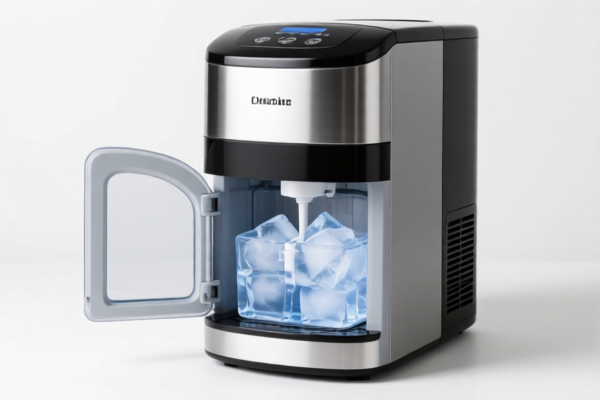
Product Images



AI Analysis
🍦 Ice Cream Scoop (Commercial & Home Use)
🌐 HS Code Reference & Customs Clearance Guide | 2026 Latest Tariff Analysis | Professional Strategy
📌 I. Product Definition & Classification: What is an "Ice Cream Scoop"?
An ice cream scoop is a specialized tool designed for portioning and serving frozen desserts. In international trade, it is classified based on its application, motorization, and integration:
- Commercial Electric Ice Cream Scoops (Machine): Large, motorized units used in commercial settings to dispense or portion hard-frozen ice cream. These are classified as machinery for the preparation of food.
- Home Electric Ice Cream Scoops (Appliance): Smaller, portable, battery or cord-operated handheld devices for home use. These are often classified under electro-mechanical household appliances.
- Manual/Non-motorized Scoops: (Not covered in the provided data, typically falls under utensils or cutlery).
⚠️ Key Distinction for Classification:
- If it is a large, stationary industrial machine for food processing → Go to 8438.
- If it is a portable, battery/cord-powered home device with a motor → Go to 8509.
- If it is a spare part or accessory for the above machines → Go to 8438.90.
📦 II. HS Code Classification Details (2026 Official Tariff Reference)
Based on the provided data, here is the breakdown of the specific HS Codes and their logic:
| HS Code | Product Description | Application Logic | Tax Detail Breakdown |
|---|---|---|---|
8438.80.00.00 |
Electric Ice Cream Scoop (Commercial/Industrial) | Classified as a mechanical device for food preparation. It fits the definition of "machinery for the preparation or manufacture of food or drink." | Base: 0% Add-on: 25% (Section 301) 122 Clause: 10% Total: 35% |
8509.80.50.95 |
Home Electric Scoop (Specialized Electronic Component) | Classified as electro-mechanical household appliance. The motor and electronic components place it under "other electro-mechanical household appliances." | Base: 4.2% Add-on: 0% 122 Clause: 10% Total: 14.2% |
8509.80.10.00 |
Home Electric Scoop (General Appliance) | Fits the broad category of "Motor-driven household appliances." It matches the standard form and function of electric home tools. | Base: 0% Add-on: 0% 122 Clause: 10% Total: 10% |
8438.90.90.90 |
Spare Parts / Accessories | Classified as parts for food preparation machinery. If sold separately or as a replacement unit for the commercial scoops. | Base: 2.8% Add-on: 25% (Section 301) 122 Clause: 10% Total: 37.8% |
🔍 Critical Logic Check:
- Commercial Machines (Large) incur the highest tax due to Section 301 add-ons (25%). - Home Appliances (Small, motorized) avoid the 25% Section 301 tariff, making them significantly cheaper to import (10%–14.2%). - Parts are taxed at the highest rate (37.8%) because they inherit the industrial classification of the main machine.
💰 III. 2026 Tariff Rate Deep Dive (Including Add-ons & Policy Surcharges)
✅ Origin: China (CN)
✅ Destination: United States (US)
✅ Effective Date: Current regulations including 122 Clause and Section 301.
🎯 1. 8438.80.00.00 — Commercial Electric Ice Cream Scoop (The "Heavy Hitter")
| Item | Content |
|---|---|
| Base Tariff | 0.0% (Free Trade Agreement potential or standard MFN) |
| Section 301 Add-on | +25.0% (Imposed on industrial food machinery from China) |
| Section 122 Clause | +10.0% (Additional tariff on specific Chinese imports) |
| Total Tariff | 35.0% |
| Tax Calculation | CIF Value × 35% |
| Exemption Possibility | ❌ None (Highly restricted category) |
| Legal Basis | Section 301: Industrial Food Machinery + Section 122: Specific List |
📌 Explanation:
This classification treats the scoop as industrial machinery. The 25% add-on is triggered by trade policies targeting Chinese manufacturing of processing equipment. The 10% 122 Clause is a specific surcharge on this product line. Result: 35% is the final duty.
🎯 2. 8509.80.50.95 — Home Electric Scoop (High-Tech Electronic)
| Item | Content |
|---|---|
| Base Tariff | 4.2% |
| Section 301 Add-on | 0.0% (Not classified as heavy industrial machinery) |
| Section 122 Clause | +10.0% |
| Total Tariff | 14.2% |
| Tax Calculation | CIF Value × 14.2% |
| Exemption Possibility | ❌ No |
| Legal Basis | HTSUS: 8509.80.50 + Section 122 |
📌 Explanation:
Because this is categorized as a consumer household appliance (electronic component), it avoids the heavy 25% industrial surcharge. However, the 122 Clause (10%) still applies, keeping the total at 14.2%.
🎯 3. 8509.80.10.00 — Home Electric Scoop (General Purpose)
| Item | Content |
|---|---|
| Base Tariff | 0.0% |
| Section 301 Add-on | 0.0% |
| Section 122 Clause | +10.0% |
| Total Tariff | 10.0% |
| Tax Calculation | CIF Value × 10% |
| Exemption Possibility | ❌ No |
| Legal Basis | HTSUS: 8509.80.10 + Section 122 |
📌 Explanation:
This is the most tax-efficient category for electric scoops. If the product can be clearly defined as a general motor-driven household appliance (without complex electronic "components" triggering the 50.95 subheading), the base tariff drops to 0%, leaving only the 10% 122 Clause.
🎯 4. 8438.90.90.90 — Spare Parts / Accessories
| Item | Content |
|---|---|
| Base Tariff | 2.8% |
| Section 301 Add-on | +25.0% (Applies to parts of industrial machinery) |
| Section 122 Clause | +10.0% |
| Total Tariff | 37.8% |
| Tax Calculation | CIF Value × 37.8% |
| Exemption Possibility | ❌ No |
| Legal Basis | HTSUS: 8438.90 + Section 301 + Section 122 |
📌 Explanation:
Parts are expensive. Even a small attachment for a commercial ice cream machine inherits the industrial classification and the 25% surcharge. The base tariff of 2.8% is the only "discount" here, but the total hits 37.8%.
🛠️ IV. Customs Clearance Practical Advice (Real-World Strategy)
✅ 1. Documentation Checklist (Critical for Approval)
| Document | Requirement | Purpose |
|---|---|---|
| Product Technical Manual | ✔️ Mandatory | Must explicitly state Application (Industrial vs. Home) and Power Source (Motor specs). |
| Schematic Diagram | ✔️ Mandatory | Proves if it is a standalone appliance (8509) or a food processing unit (8438). |
| Commercial Invoice | ✔️ Mandatory | Naming is key: Use "Home Electric Ice Cream Scoop" for 8509; "Commercial Ice Cream Dispensing Machine" for 8438. |
| Product Photos | ✔️ Mandatory | Show size relative to human hand (Home) vs. industrial floor unit (Commercial). |
| Battery/Power Certs | ✔️ Mandatory | FCC/UL reports to verify it's a consumer appliance. |
✅ 2. Classification Strategy (The "How-To")
🔥 Golden Rule: "Define the User, Not the Shape."
| Scenario | Recommended HS Code | Strategy |
|---|---|---|
| Small, handheld, for home kitchens | 8509.80.10.00 or 8509.80.50.95 |
Highlight "Household Use" in marketing docs. Avoid industrial language. |
| Large, floor-standing, for shops | 8438.80.00.00 |
Be honest about industrial use. Expect 35% tax. |
| Spare parts (motors, blades, bowls) | 8438.90.90.90 |
Do not ship as "parts" if the main unit is home-use. Ship the main unit as 8509. |
| Kit containing scoop + commercial base | 8438.80.00.00 |
The "principal character" is the machine, not the accessory. |
✅ 3. Special Considerations & Pitfalls
| Issue | Solution |
|---|---|
| "Ice Cream Scoop" vs. "Ice Cream Machine" | A simple scoop is an appliance (8509). A machine that melts, churns, and dispenses is machinery (8438). Do not confuse them. |
| Mixed Shipments | If you ship 10 commercial units and 5 home units, declare separately. Mixing categories can lead to the whole shipment being re-rated to the highest tax (37.8%). |
| 122 Clause Application | The 10% surcharge applies to both commercial and home versions. There is no exemption for the 122 clause in this data. |
🌍 V. Market Comparison & Final Verdict
| Market | Recommended HS Code | Total Tax | Status |
|---|---|---|---|
| USA (China Origin) | 8509.80.10.00 |
10% | ✅ Best Choice (Lowest duty) |
| USA (China Origin) | 8438.80.00.00 |
35% | ⚠️ High Duty (Industrial) |
| USA (Parts) | 8438.90.90.90 |
37.8% | ❌ Avoid if possible |
📌 Conclusion:
For home-use electric ice cream scoops, the goal is to classify under 8509 to avoid the 25% Section 301 industrial tariff.
- Target Rate: 10% (if 8509.80.10.00) or 14.2% (if 8509.80.50.95).
- Avoid: Classifying home scoops as "food preparation machinery" (8438) which incurs 35%+.
🎯 VI. Final Pro Tips (Action Plan)
- Product Labeling: Ensure the product name on the box and manual says "Electric Ice Cream Scoop (Household Use)" and NOT "Commercial Ice Cream Dispensing System."
- Power Specs: List the motor wattage as standard household power (e.g., 12V DC battery or 120V AC) to support the 8509 classification.
- Pre-Alert: If importing large quantities, request a Binding Tariff Ruling from CBP (US Customs) before shipping to confirm the 10% rate.
- Cost Calculation: Always budget for the 122 Clause 10% surcharge; it is non-negotiable in the provided data.
🚀 Final Thought:
"A scoop for the home is a toy (appliance). A scoop for the shop is a weapon (machinery). Know the difference to save 25%!"
✨ Professional Customs Clearance starts with the right HS Code!
💼 Save money, avoid delays, and get your ice cream scoops on the shelves faster.
Customer Reviews
About HS Code Classification
The Harmonized System (HS) is an internationally standardized nomenclature developed by the World Customs Organization (WCO) to classify traded products. Over 200 countries use the HS system as the basis for customs tariffs, trade statistics, and import/export regulations.
Each HS code follows a hierarchical structure:
- Chapter (2 digits) — Broad category of goods (e.g., Chapter 84: Machinery and Mechanical Appliances)
- Heading (4 digits) — More specific grouping within the chapter
- Subheading (6 digits) — Internationally standardized breakdown, used by all WCO member countries
- National subdivisions (8-10 digits) — Country-specific extensions for further classification, such as US HTSUS 10-digit codes
Correct HS code classification is essential for smooth customs clearance, accurate duty payment, and compliance with trade regulations. Misclassification can lead to customs delays, overpayment of duties, or penalties.
When importing from CN to US, the applicable tariff rates may include:
- Most-Favored-Nation (MFN) rate — The standard duty rate applied to WTO members
- General rate — Applied to countries without trade agreements
- Trade remedy duties — Additional tariffs such as Section 301 (anti-dumping), Section 232 (national security), or countervailing duties
The information provided on this page is for reference purposes only. For official classification, please consult with your local customs authority or a licensed customs broker.