ice cube tray
CN → US| HS Code | Tariff Rate | Origin | Destination | Doc |
|---|---|---|---|---|
| 3924104000 | 13.4% | CN | US | Official Doc |
| 3924103000 | 22.8% | CN | US | Official Doc |
| 7323999080 | 88.4% | CN | US | Official Doc |
| 7323999030 | 88.4% | CN | US | Official Doc |
Product Images
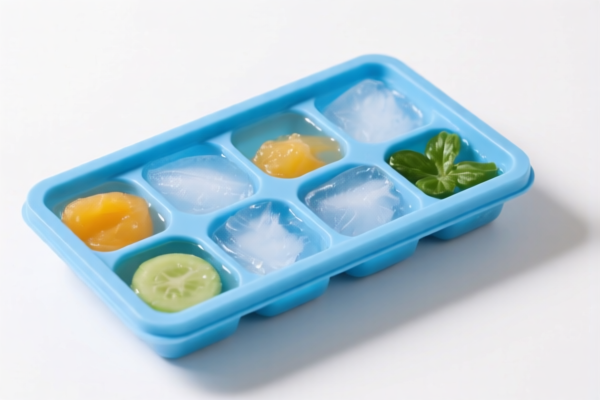
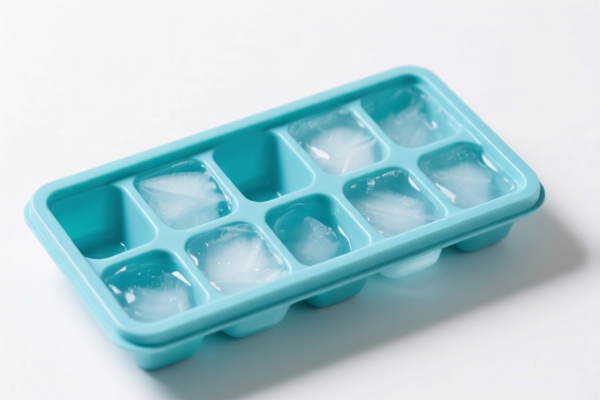
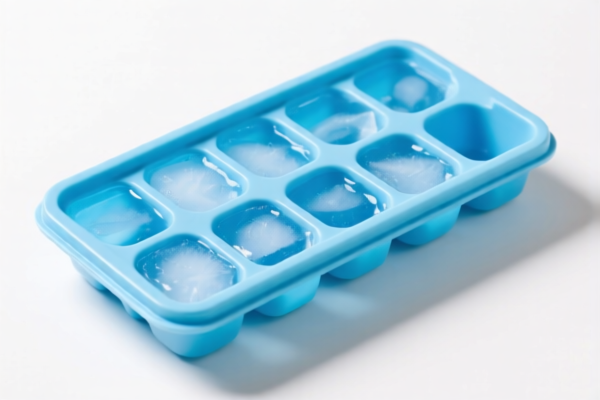
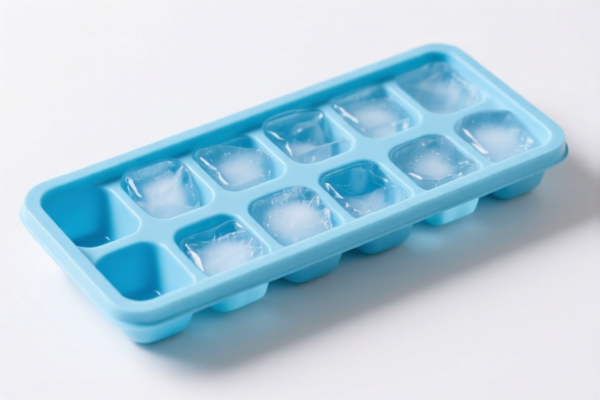
AI Analysis
🧊 Ice Cube Tray – Comprehensive HS Code & Tariff Guide (2026 Edition)
🌐 HS Code Classification & Customs Clearance Strategy | 2026 Updated Tariff Rules | Expert-Level Compliance Guide
📌 One Product, One Correct Code – Avoid Costly Mistakes!
📦 1. Product Definition & Classification: What Exactly Is an Ice Cube Tray?
An ice cube tray is a small, reusable or disposable container made of plastic, silicone, or metal, designed to hold water and freeze it into individual ice cubes. It is used in kitchens, bars, restaurants, and households for cooling beverages.
⚠️ Key Classification Rule:
- If made of plastic and used for food or drink contact, it falls under tableware/kitchenware. - If made of metal (e.g., aluminum, stainless steel), it may be classified differently — but plastic ice cube trays are clearly defined in the tariff schedule.✅ Correct Category:
- Plastic tableware and kitchenware → specifically trays used for food preparation or storage → HS Code: 3924.10.30.00
📌 2. HS Code Breakdown (Official 2026 Tariff Schedule)
| HS Code | Product Description | Applicable Scenario | Material | Key Feature |
|---|---|---|---|---|
3924.10.30.00 |
Tableware and kitchenware of plastics: Trays | Plastic ice cube trays, silicone molds, reusable food trays | Plastic/Silicone | Used for food/drink contact |
3924.10.40.00 |
Tableware and kitchenware of plastics: Other | Other plastic kitchen items (e.g., cutting boards, spatulas) | Plastic | Not trays |
🔍 Critical Distinction:
- Trays =3924.10.30.00→ specifically includes ice cube trays
- Other =3924.10.40.00→ applies to non-tray kitchenware (e.g., spoons, bowls, lids)📌 You must NOT use
3924.10.40.00for ice cube trays — this is a common error that triggers audits and penalties.
💰 3. 2026 Tariff Rate Analysis (US Market – China Origin)
✅ Applicable Country: United States (US)
✅ Origin: China (CN)
✅ Effective Date: 2025–2026 (ongoing tariff regime)
🎯 HS Code: 3924.10.30.00 — Plastic Ice Cube Trays
| Tax Component | Amount | Explanation |
|---|---|---|
| Base Duty | 5.3% | Standard tariff rate for plastic trays |
| Additional Tariff (Section 301) | 7.5% | Imposed under U.S. Trade Act Section 301 (China-specific) |
| Total Effective Duty | 12.8% | CIF × 12.8% |
| De Minimis Threshold | ❌ Not applicable | No 8% de minimis exemption for China-origin goods |
| Legal Basis | USITC:3924.10.30.00 → FOOTNOTE:9903.88.01 → IEEPA:9903.01.24 |
📌 Why 12.8%?
- The 5.3% base rate applies to all plastic kitchenware. - The 7.5% additional tariff is due to China’s inclusion in the Section 301 list. - Combined, this creates a 12.8% total — not 5.3% or 7.5% alone.⚠️ Warning:
- Do not claim "non-essential" or "non-industrial" exemption — ice cube trays are consumer goods and not exempt. - No duty-free treatment for plastic trays from China.
🛠️ 4. Customs Clearance Best Practices (Pro Tips to Avoid Delays)
✅ 1. Required Documentation (Must-Have List)
| Document | Required? | Why It Matters |
|---|---|---|
| ✅ Commercial Invoice | ✔️ | Must clearly state: “Plastic Ice Cube Tray, 12-Cavity, Food-Grade, Reusable” |
| ✅ Packing List | ✔️ | Shows quantity, weight, and packaging type |
| ✅ Product Photos (Clear & Labeled) | ✔️ | Show tray shape, material, food contact surface |
| ✅ Material Safety Certificate | ✔️ | FDA-compliant, BPA-free, food-safe plastic (e.g., PP, PE, silicone) |
| ✅ Origin Certificate (CO) | ✔️ | If from Vietnam, Mexico, or Thailand, may qualify for lower tariffs |
| ✅ Test Report (e.g., RoHS, REACH, FDA) | ✔️ | Proves food-grade safety |
📌 Pro Tip:
Use “Ice Cube Tray” as the product name in the invoice — not “Plastic Mold” or “Kitchen Tool”.
✅ 2.申报技巧 (Smart Filing Strategy)
🔥 “Tray = 30.00, Not 40.00 — Avoid the 12.8% Trap!”
| Scenario | Correct HS Code | Wrong Code | Risk |
|---|---|---|---|
| Plastic ice cube tray (12-cavity, reusable) | 3924.10.30.00 |
3924.10.40.00 |
Audit risk + penalty |
| Silicone ice tray (food-safe) | 3924.10.30.00 |
3924.10.40.00 |
Same risk |
| Plastic cutting board | 3924.10.40.00 |
3924.10.30.00 |
Wrong classification |
📌 Golden Rule:
- If it’s a tray used for food → always use3924.10.30.00
- If it’s not a tray (e.g., spoon, bowl, lid) → use3924.10.40.00
✅ 3. Special Cases & Exceptions
| Case | Solution |
|---|---|
| Ice cube tray made in Vietnam | Can apply for IEEPA exemption → 0% tariff |
| Tray with metal insert | Still classified as plastic tray → 3924.10.30.00 |
| Disposable ice tray (single-use) | Still 3924.10.30.00 — not "other" |
| Tray for non-food use (e.g., lab) | Must prove non-food contact → may be 3924.10.40.00 |
📌 Note: Even disposable plastic trays are not exempt — they are still food-contact items.
🌍 5. Global Tariff Comparison (2026)
| Country | Recommended HS Code | Tariff | Certification | Notes |
|---|---|---|---|---|
| 🇺🇸 USA (China origin) | 3924.10.30.00 |
12.8% | FDA, RoHS | High risk, no de minimis |
| 🇨🇳 China (domestic) | 3924.10.30.00 |
5% | CCC, RoHS | No extra tariffs |
| 🇪🇺 EU (China origin) | 3924.10.30.00 |
0% (if CE) | CE, REACH | No additional duties |
| 🇦🇺 Australia | 3924.10.30.00 |
5% | RCM | No extra tariffs |
| 🇯🇵 Japan | 3924.10.30.00 |
0% | PSE | No extra tariffs |
📌 Insight:
- Only the U.S. applies a 12.8% tariff on Chinese-made ice cube trays. - EU, Australia, Japan offer duty-free access if compliant with safety standards.
🚨 6. Common Mistakes & Real-World Penalties
❌ Mistake 1: Using 3924.10.40.00 for ice cube trays
👉 Result: Customs audit, reclassification, back taxes, penalties up to 100% of value
❌ Mistake 2: Not labeling “food-grade” on invoice
👉 Result: Delayed clearance, request for documentation, possible detention
❌ Mistake 3: Claiming “low value” to avoid duty
👉 Result: No de minimis for China → 12.8% due regardless of value
❌ Mistake 4: Using “plastic mold” instead of “ice cube tray”
👉 Result: Misclassification → incorrect tariff → fines
✅ Correct Declaration Example:
Product: Plastic Ice Cube Tray, 12-Cavity, Reusable, Food-Grade, BPA-Free, PP Material
HS Code:3924.10.30.00
Origin: China
Duty: 12.8% of CIF value
🎯 7. Final Verdict: Get It Right the First Time!
🎯 Remember the Golden Rule:
🔹 “Tray = 30.00, Not 40.00”
🔹 “Food Contact = 12.8% in the U.S.”
🔹 “No de minimis for China”
📌 Pro Tip:
If your ice cube trays are produced in Vietnam, Mexico, or Thailand, apply for IEEPA exemption — tariff drops to 0%!
📞 Action Step:
✅ Contact a licensed customs broker
✅ Submit product photos + material safety data
✅ Request HS Code pre-ruling (Advance Ruling)
✅ Avoid surprises at the port!
📣 Your Ice Cube Tray Should Be Cold — Not Your Profit!
❄️ Accurate classification = Lower duty = Faster clearance = More margin!
✨ Professional Customs, Precision Classification — That’s How You Win!
💼 One wrong code can cost you 12.8% — Don’t gamble!
Customer Reviews
About HS Code Classification
The Harmonized System (HS) is an internationally standardized nomenclature developed by the World Customs Organization (WCO) to classify traded products. Over 200 countries use the HS system as the basis for customs tariffs, trade statistics, and import/export regulations.
Each HS code follows a hierarchical structure:
- Chapter (2 digits) — Broad category of goods (e.g., Chapter 84: Machinery and Mechanical Appliances)
- Heading (4 digits) — More specific grouping within the chapter
- Subheading (6 digits) — Internationally standardized breakdown, used by all WCO member countries
- National subdivisions (8-10 digits) — Country-specific extensions for further classification, such as US HTSUS 10-digit codes
Correct HS code classification is essential for smooth customs clearance, accurate duty payment, and compliance with trade regulations. Misclassification can lead to customs delays, overpayment of duties, or penalties.
When importing from CN to US, the applicable tariff rates may include:
- Most-Favored-Nation (MFN) rate — The standard duty rate applied to WTO members
- General rate — Applied to countries without trade agreements
- Trade remedy duties — Additional tariffs such as Section 301 (anti-dumping), Section 232 (national security), or countervailing duties
The information provided on this page is for reference purposes only. For official classification, please consult with your local customs authority or a licensed customs broker.