ice hockey offensive gloves
CN → US| HS Code | Tariff Rate | Origin | Destination | Doc |
|---|---|---|---|---|
| 6217909095 | 32.1% | CN | US | Official Doc |
| 6217909085 | 32.1% | CN | US | Official Doc |
Product Images
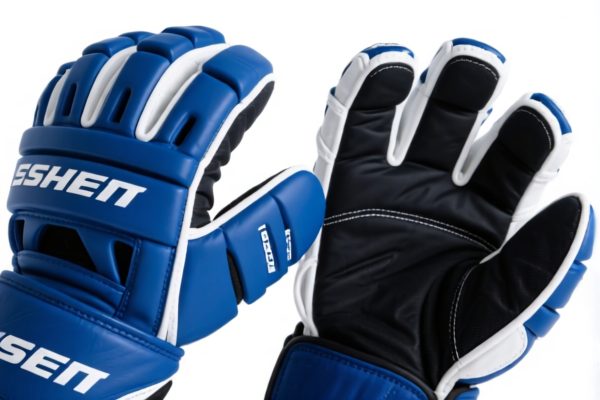
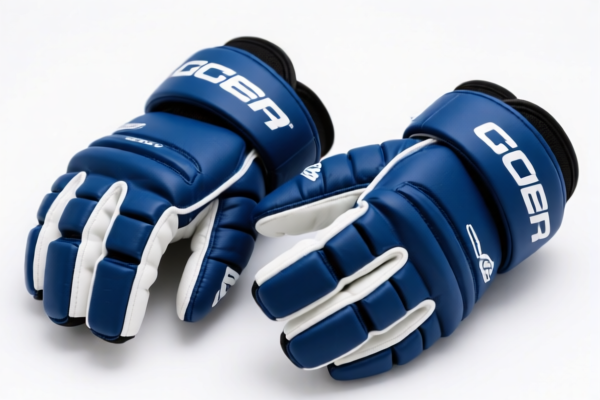
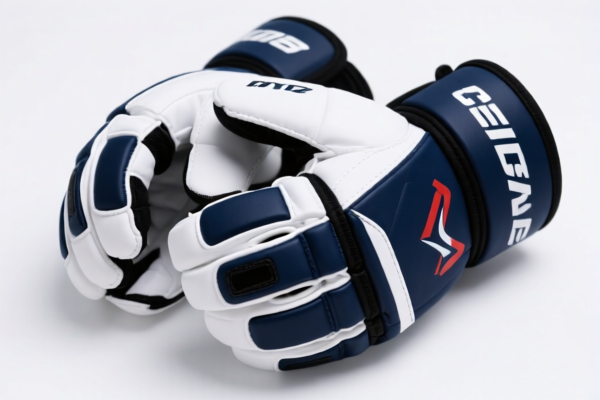
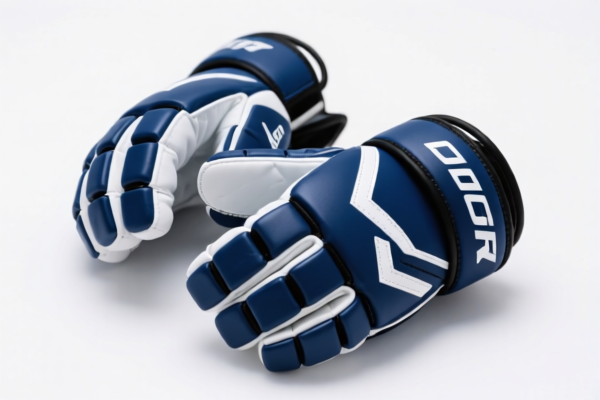
AI Analysis
🏒 Ice Hockey Offensive Gloves
🌐 HS Code Reference & Customs Clearance Guide | 2026 Latest Tariff Analysis | Professional Clearance Strategy
📌 I. Product Definition & Classification: Do You Really Understand "Offensive Gloves"?
Ice Hockey Offensive Gloves (often referred to simply as Hockey Gloves) are essential protective equipment designed to protect a player’s hands and wrists while allowing for maximum dexterity in handling the stick and puck. In international trade, these are classified under Chapter 62: Articles of Apparel and Clothing Accessories, Not Knitted or Crocheted, specifically as "Other made up clothing accessories" or "Parts of garments or clothing accessories".
⚠️ Key Distinction:
- If the gloves are knitted or crocheted → They fall under Chapter 61 (e.g., 6116).
- If the gloves are not knitted or crocheted (most modern hockey gloves with synthetic leather, foam, and plastic components) → They fall under Chapter 62, specifically heading 6217.
📦 II. HS Code Classification Details (2026 Latest Tariff Authority Comparison)
| HS Code | Product Description | Application Scenario | Material Composition |
|---|---|---|---|
6217.90.90.95 |
Other made up clothing accessories; parts of garments or of clothing accessories, other than those of heading 6212: Parts: Other Other: Other | General hockey gloves with mixed materials (leather, synthetic, foam) | Mixed materials |
6217.90.90.85 |
Other made up clothing accessories; parts of garments or of clothing accessories, other than those of heading 6212: Parts: Other Other: Of man-made fibers | Hockey gloves primarily made from synthetic fabrics, polyester, nylon | Man-made fibers |
🔍 Important Note:
- Most modern ice hockey gloves are not knitted or crocheted, hence they are not in Chapter 61.
- They are classified as "parts of clothing accessories" under heading 6217.
- The sub-category depends on the primary material:
- If primarily man-made fibers (polyester, nylon, etc.) →6217.90.90.85
- If primarily other materials (leather, rubber, mixed) →6217.90.90.95
💰 III. 2026 Latest Tariff Rate Details (Including Additional Taxes, Policy Surcharges)
✅ Applicable Country: United States (US)
✅ Origin: China (CN)
✅ Effective Date: From November 10, 2025 (including subsequent imports)
🎯 1. 6217.90.90.95 —— Other Made-Up Clothing Accessories (Parts)
| Item | Content |
|---|---|
| Base Tariff Rate | 0% (ad valorem) |
| USITC Surcharge | 0% |
| IEEPA Surcharge | 0% |
| Total Tariff Rate | 0% |
| Tax Calculation | CIF Value × 0% = $0 |
| Eligible for De Minimis Exemption? | ❌ No (deny_de_minimis) |
| Legal Basis Path | USITC:6217.90.90.95 |
📌 Explanation:
- As of 2026, hockey gloves classified under6217.90.90.95are exempt from both base tariffs and additional surcharges from the US.
- This makes them a highly favorable classification for cost-sensitive shipments.
🎯 2. 6217.90.90.85 —— Parts of Clothing Accessories (Of Man-Made Fibers)
| Item | Content |
|---|---|
| Base Tariff Rate | 0% (ad valorem) |
| USITC Surcharge | 0% |
| IEEPA Surcharge | 0% |
| Total Tariff Rate | 0% |
| Tax Calculation | CIF Value × 0% = $0 |
| Eligible for De Minimis Exemption? | ❌ No (deny_de_minimis) |
| Legal Basis Path | USITC:6217.90.90.85 |
📌 Explanation:
- Similar to the above, hockey gloves made primarily of man-made fibers also enjoy a 0% total tariff rate under US regulations in 2026.
- This classification is often more common for mass-produced, synthetic-heavy gloves.
🛠️ IV. Customs Clearance Practical Advice (Real-World Pitfall Avoidance Guide)
✅ 1. Required Documentation Checklist (All Mandatory)
| Document | Must Provide | Description |
|---|---|---|
| ✅ Product Specification Sheet | ✔️ | Includes size, material composition (e.g., 80% polyester, 20% leather), padding type |
| ✅ Product Photos (with labels) | ✔️ | Clear images of gloves, showing brand, model, and material tags |
| ✅ Commercial Invoice | ✔️ | Must state "Ice Hockey Gloves" and specify material breakdown |
| ✅ Packing List | ✔️ | Details package dimensions, weight, and quantity |
| ✅ Certificate of Origin (CO) | ✔️ | Required if claiming preferential treatment (though not applicable here due to 0% rate) |
| ✅ Third-Party Test Report | ✔️ | If applicable, include safety certifications (e.g., CE, CPSC) |
✅ 2. Declaration Tips (Key Mantra)
🔥 “Declare as ‘Hockey Gloves,’ not ‘Sports Gear’; Specify Material, Avoid Ambiguity!”
| Scenario | Correct Declaration | Incorrect Practice |
|---|---|---|
| Gloves made primarily of synthetic fabric | 6217.90.90.85 |
Misdeclaring as "sports gloves" without material detail |
| Gloves made primarily of leather/rubber | 6217.90.90.95 |
Misdeclaring as "knitted gloves" → Incorrect Chapter 61 |
| Mixed material gloves | 6217.90.90.95 (default if unclear) |
Not specifying material → Risk of audit |
| Knitted gloves (rare in hockey) | 6116.93.00.00 (Chapter 61) |
Declaring under Chapter 62 → Misclassification |
✅ 3. Special Handling Cases
| Scenario | Handling Advice |
|---|---|
| OEM Custom Gloves | Provide design blueprints + material specs to avoid "undisclosed materials" flag |
| Gloves with Embedded Tech (e.g., sensors) | Still classified under 6217.90.90.95 if primary function is protection |
| Sample Shipments | Even for samples, declare accurately; de minimis does not apply |
| Returns/Exchanges | Keep original HS code; do not change to "used goods" category |
🌍 V. Global Market Clearance Comparison (2026 Latest)
| Country/Region | Recommended HS Code | Tariff Rate | Certification Required | Notes |
|---|---|---|---|---|
| 🇺🇸 United States | 6217.90.90.95 / 6217.90.90.85 |
0% | None specific | No additional surcharges |
| 🇨🇳 China | 6217.90.90.95 |
5% | CCC (if applicable) | Standard import tariff |
| 🇪🇺 European Union | 6217.90.90.95 |
0% | CE (if safety-related) | No surcharges |
| 🇦🇺 Australia | 6217.90.90.95 |
5% | ACCC | No surcharges |
| 🇯🇵 Japan | 6217.90.90.95 |
0% | PSE (if electronics involved) | No surcharges |
📌 Conclusion:
- The US currently offers 0% tariff for ice hockey gloves under Chapter 62, making it a cost-effective destination.
- China, Australia impose 5% base tariffs, but no surcharges.
- EU, Japan also offer 0%, but require CE/PSE certifications if safety standards apply.
📌 VI. Common Mistakes & Pitfall Avoidance (Lessons Learned the Hard Way)
❌ Mistake 1: Declaring gloves as "Sports Accessories" without specifying material
👉 Consequence: Customs may reclassify to a higher tariff category → Unexpected taxes
❌ Mistake 2: Claiming gloves are "knitted" when they are actually not knitted
👉 Consequence: Misclassification under Chapter 61 → Penalties + delays
❌ Mistake 3: Not providing a material breakdown
👉 Consequence: Customs cannot determine between 6217.90.90.85 and 6217.90.90.95 → Audit risk
❌ Mistake 4: Assuming "de minimis" applies
👉 Consequence: No de minimis exemption for apparel accessories → Full inspection
✅ Correct Practice:
“Ice Hockey Gloves, Size L, Material: 80% Polyester, 20% Synthetic Leather, with Foam Padding, Model XYZ, CE Certified”
🎯 VII. Conclusion: Professional Declaration, Time-Saving, Cost-Efficient!
🎯 Remember the Mantra:
🔹 “Hockey gloves are Chapter 62, not 61; Specify material, avoid ambiguity!”
🔹 “0% tariff in US, 5% in China; Declare accurately, save thousands!”
📌 Pro Tip:
- If your gloves are originating from Vietnam, Mexico, or Thailand, you may still face 0% tariffs under US rules, but verify IEEPA exemptions for specific manufacturers.
- Always pre-apply for an Advance Ruling if unsure about material composition → Avoid clearance delays.
📣 Take Action Now:
📞 Contact a professional customs broker + Provide product photos + Apply for HS Code pre-classification
🚀 Ensure your ice hockey gloves clear customs smoothly, efficiently, and profitably!
✨ Professional clearance starts with accurate classification!
💼 Every cent counts in international trade!
Customer Reviews
About HS Code Classification
The Harmonized System (HS) is an internationally standardized nomenclature developed by the World Customs Organization (WCO) to classify traded products. Over 200 countries use the HS system as the basis for customs tariffs, trade statistics, and import/export regulations.
Each HS code follows a hierarchical structure:
- Chapter (2 digits) — Broad category of goods (e.g., Chapter 84: Machinery and Mechanical Appliances)
- Heading (4 digits) — More specific grouping within the chapter
- Subheading (6 digits) — Internationally standardized breakdown, used by all WCO member countries
- National subdivisions (8-10 digits) — Country-specific extensions for further classification, such as US HTSUS 10-digit codes
Correct HS code classification is essential for smooth customs clearance, accurate duty payment, and compliance with trade regulations. Misclassification can lead to customs delays, overpayment of duties, or penalties.
When importing from CN to US, the applicable tariff rates may include:
- Most-Favored-Nation (MFN) rate — The standard duty rate applied to WTO members
- General rate — Applied to countries without trade agreements
- Trade remedy duties — Additional tariffs such as Section 301 (anti-dumping), Section 232 (national security), or countervailing duties
The information provided on this page is for reference purposes only. For official classification, please consult with your local customs authority or a licensed customs broker.