indoor plastic floor tiles
CN → US| HS Code | Tariff Rate | Origin | Destination | Doc |
|---|---|---|---|---|
| 5904901000 | 35.0% | CN | US | Official Doc |
| 3926906090 | 39.2% | CN | US | Official Doc |
| 3926909989 | 22.8% | CN | US | Official Doc |
| 3918101040 | 40.3% | CN | US | Official Doc |
| 3925900000 | 40.3% | CN | US | Official Doc |
| 5904909000 | 35.0% | CN | US | Official Doc |
Product Images

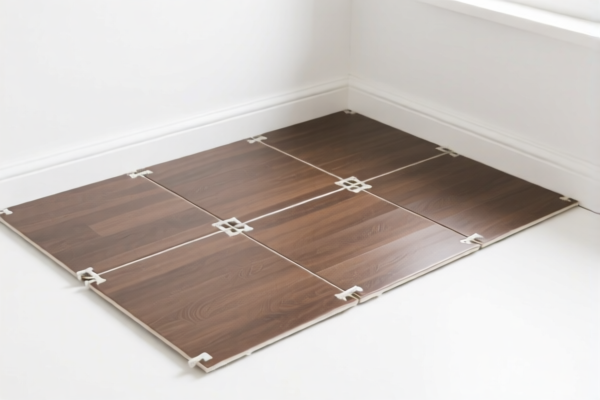
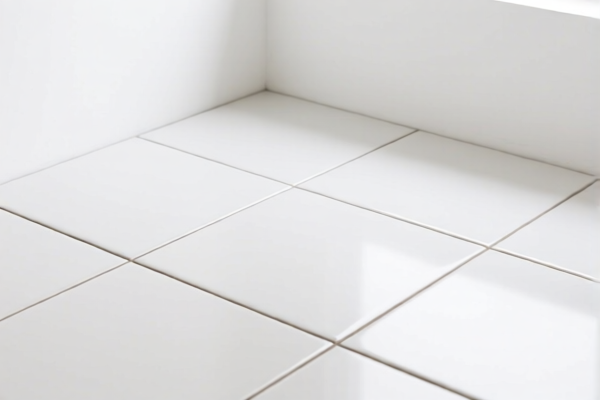
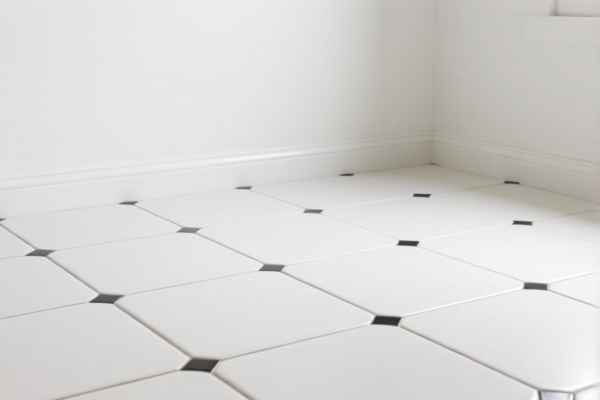
AI Analysis
🏠 Indoor Plastic Floor Tiles (Plastic Flooring)
🌐 HS Code Reference & Customs Clearance Guide | 2026 Latest Tariff Analysis | Professional Clearance Strategy
📌 Part I: Product Definition & Classification: Do You Really Understand "Plastic Floor Tiles"?
Indoor plastic floor tiles are versatile flooring solutions widely used in residential, commercial, and office spaces. In international trade, their classification depends heavily on the material composition, structure (textile base vs. pure plastic), and application form.
Key Distinction:
- Textile-based with Plastic Coating: If the product has a textile backing with a plastic layer applied, it falls under Chapter 59.
- Pure Plastic/Construction Material: If the product is made entirely of plastics (e.g., PVC, PE) without a textile base, it falls under Chapter 39.
⚠️ Critical Classification Point:
- If the product is a textile fabric coated with plastic → Chapter 59 (5904)
- If the product is a solid plastic floor tile → Chapter 39 (3918,3925,3926)
📦 Part II: HS Code Classification Details (2026 Latest Tariff Authority Comparison)
Based on the provided data, here are the possible HS Codes for "Indoor Plastic Floor Tiles" and the rationale for each:
| HS Code | Product Description & Rationale | Tax Rate |
|---|---|---|
5904.90.10.00 |
Textile-based flooring: Plastic floor tiles classified as flooring coverings where the material is a textile base with a plastic coating/covering. No material conflict. | 35.0% |
3926.90.60.90 |
Plastic Articles: The material is plastic, fitting Chapter 39. Form is considered "Other articles." | 39.2% |
3926.90.99.89 |
Plastics Articles: Fits the material requirement for plastics (3926909989). Form is a plastic article with no material conflict. |
22.8% |
3918.10.10.40 |
Plastic Floor Coverings: Product name includes "Plastic" and use is "Floor." Fits the logic for floor coverings made of PVC or other plastics. | 40.3% |
3925.90.00.00 |
Plastic Building Components: Material is plastic, form is a construction component (flooring). Fits characteristics of other plastic building components. | 40.3% |
5904.90.90.00 |
Other Floor Coverings: Matches material as carpet/covering category. Plastic material inferred as coating/covering form, fitting the general category logic. | 35.0% |
🔍 Important Note:
-5904codes are for flooring where the primary identity is a textile fabric coated with plastic.
-3918is specifically for floor coverings of plastics (e.g., PVC flooring).
-3925and3926are more generic "building components" or "other articles," often used as fallbacks if specific descriptions don't fit, but may have different duty implications.
-3926.90.99.89offers the lowest total tax (22.8%) among the plastic-only classifications.
💰 Part III: 2026 Latest Tariff Rate Details (Including Surcharges & Policy Add-ons)
✅ Applicable Country: United States (US)
✅ Origin: China (CN)
✅ Effective Time: Ongoing (as per current trade policy)
🎯 1. 5904.90.10.00 & 5904.90.90.00 — Textile-based Plastic Floor Coverings
| Item | Content |
|---|---|
| Basic Tariff | 0.0% (ad valorem) |
| Section 301 Surcharge | +25.0% |
| Section 122 Surcharge | +10.0% |
| Total Tax Rate | 35.0% |
| Tax Calculation | CIF Value × 35.0% |
| De Minimis Eligibility | ❌ No (deny_de_minimis) |
| Legal Basis Path | Section 301: 8501 → Section 122: 9903.01.25 → USITC: 5904.90.10.00 |
📌 Explanation:
- The 0% basic tariff applies to many textile products, but the 25% Section 301 and 10% Section 122 surcharges significantly increase the cost.
- Total: 35%. This is a high-duty classification due to the surcharges.
🎯 2. 3926.90.60.90 — Plastic Articles (Other)
| Item | Content |
|---|---|
| Basic Tariff | 4.2% |
| Section 301 Surcharge | +25.0% |
| Section 122 Surcharge | +10.0% |
| Total Tax Rate | 39.2% |
| Tax Calculation | CIF Value × 39.2% |
| De Minimis Eligibility | ❌ No |
| Legal Basis Path | Section 301: 8501 → Section 122: 9903.01.25 → USITC: 3926.90.60.90 |
📌 Explanation:
- Higher basic tariff (4.2%) compared to Chapter 59.
- Total: 39.2%. This is the highest total tax among the options.
🎯 3. 3926.90.99.89 — Plastics Articles (Other)
| Item | Content |
|---|---|
| Basic Tariff | 5.3% |
| Section 301 Surcharge | +7.5% |
| Section 122 Surcharge | +10.0% |
| Total Tax Rate | 22.8% |
| Tax Calculation | CIF Value × 22.8% |
| De Minimis Eligibility | ❌ No |
| Legal Basis Path | Section 301: 8501 → Section 122: 9903.01.25 → USITC: 3926.90.99.89 |
📌 Explanation:
- Lowest total tax (22.8%) among the listed codes.
- Note: The Section 301 surcharge is only 7.5% for this specific subheading, unlike the 25% for others.
- Recommendation: If the product can be accurately classified here, it offers significant cost savings.
🎯 4. 3918.10.10.40 & 3925.90.00.00 — Plastic Floor Coverings & Building Components
| Item | Content |
|---|---|
| Basic Tariff | 5.3% |
| Section 301 Surcharge | +25.0% |
| Section 122 Surcharge | +10.0% |
| Total Tax Rate | 40.3% |
| Tax Calculation | CIF Value × 40.3% |
| De Minimis Eligibility | ❌ No |
| Legal Basis Path | Section 301: 8501 → Section 122: 9903.01.25 → USITC: 3918.10.10.40 / 3925.90.00.00 |
📌 Explanation:
- Highest total tax (40.3%).
- These codes are for specific plastic floor coverings or building components.
- Recommendation: Avoid if possible due to high duty cost, unless the product strictly fits this description.
🛠️ Part IV: Customs Clearance Practical Advice (Battle-Tested Pitfall Avoidance)
✅ 1. Preparation Checklist (Mandatory)
| Material | Must Provide | Description |
|---|---|---|
| ✅ Product Specification Sheet | ✔️ | Includes material composition (e.g., PVC, PE, Textile backing), dimensions, thickness |
| ✅ Material Test Report | ✔️ | Confirm if textile base is present (for Chapter 59) or if it's pure plastic (Chapter 39) |
| ✅ Product Photos (including labeling) | ✔️ | Clear images showing texture, backing, and any branding |
| ✅ Commercial Invoice | ✔️ | Must accurately describe the product (e.g., "PVC Floor Tile" vs. "Textile-backed Plastic Flooring") |
| ✅ Packing List | ✔️ | Details packaging to avoid confusion with accessories |
✅ 2. Declaration Strategy (Key Mantra)
🔥 "Material Defines Chapter, Structure Defines Subheading, Accuracy Saves Money!"
| Scenario | Correct Declaration | Incorrect Action |
|---|---|---|
| Textile Backing + Plastic Coating | 5904.90.10.00 or 5904.90.90.00 |
Misdeclare as "Pure Plastic" → 3926 → Potential mismatch |
| Pure PVC/Plastic Tile | 3918.10.10.40 (if specific) or 3926.90.99.89 (if generic) |
Misdeclare as 5904 → Customs may question lack of textile evidence |
| Mixed Material (e.g., Wood + Plastic) | Must declare primary material/function | Ambiguous description → Delay or reclassification |
✅ 3. Special Case Handling
| Scenario | Handling Advice |
|---|---|
| OEM Custom Floor Tiles | Provide design drawings and material specs to justify HS Code |
| Product with Anti-Slip Backing (Non-Textile) | Ensure it's not classified under 5904; use 3926 or 3918 |
| Sample vs. Bulk | Ensure declaration matches the actual bulk shipment; sample declaration may differ |
| High-Value vs. Low-Value | All these codes are not eligible for de minimis, so proper classification is critical for cost control |
🌍 Part V: Global Market Comparison (2026 Latest)
| Country/Region | Recommended HS Code | Tariff (China Origin) | Certification Required | Notes |
|---|---|---|---|---|
| 🇺🇸 USA | 3926.90.99.89 (if applicable) |
22.8% | FCC, RoHS (if electronic components) | 3918 & 3925 higher at 40.3%; 5904 at 35.0% |
| 🇨🇳 China | 3918.10.10.40 |
5% - 10% | CCC (if applicable) | Lower base tariffs, no Section 301/122 |
| 🇪🇺 EU | 3918.10.10.10 |
4.5% | CE, REACH | No surcharges; different subheading structure |
| 🇬🇧 UK | 3918.10.10.10 |
4.5% | UKCA, REACH | Post-Brexit rules apply; no US-style surcharges |
📌 Conclusion:
- USA has the highest effective duty rate due to Section 301 and Section 122 surcharges.
-3926.90.99.89offers the best cost efficiency (22.8%) among US-bound shipments, provided the product can be legally classified there.
- Misclassification risks: Declaring a textile-backed tile as pure plastic (3926) to save duty can lead to penalties and seizure if customs proves textile content.
📌 Part VI: Common Mistakes & Pitfall Avoidance (Lessons Learned)
❌ Mistake 1: Declaring "Textile-backed plastic flooring" as "Pure Plastic Tile" (3926)
👉 Consequence: Customs inspection reveals textile backing → Retrospective duty adjustment (up to 40.3%) + Penalties
❌ Mistake 2: Using generic description "Flooring" without specifying material
👉 Consequence: Customs assigns highest default duty rate → Unnecessary cost increase
❌ Mistake 3: Assuming "Plastic" always means 3926
👉 Consequence: If textile is present, 5904 is correct. Misclassification leads to audit flags
❌ Mistake 4: Ignoring Section 122 & 301 surcharges in cost calculations
👉 Consequence: Profit margins eroded by 25-35% extra duty
✅ Best Practice:
"PVC Indoor Floor Tile, 100% Pure Plastic, Self-Adhesive, 12x12 inch, Model XYZ, RoHS Compliant"
or
"Textile-Backed Plastic Coated Floor Covering, 2mm Thick, Commercial Grade, Model ABC"
🎯 Part VII: Conclusion: Precision Classification, Cost Efficiency, Smooth Clearance
🎯 Remember:
🔹 "Material defines chapter, structure defines subheading, accuracy saves money!"
🔹 "HS Code determines destiny, duty difference of 25%, declaration one step wrong, thousands in penalties!"
🔹 "Textile-backed =5904(35%); Pure Plastic =3926(22.8% best case); PVC Floor =3918(40.3%)"
📌 Pro Tip:
If your product originates from Vietnam, Mexico, Thailand, or Malaysia, you may qualify for IEEPA exemptions or lower tariffs.
Recommendation: Apply for an Advance Ruling (Pre-Ruling) from US Customs (CBP) to confirm the HS Code before shipment.
📣 Take Action Now:
📞 Contact a professional customs broker + Provide product specs + Apply for HS Code Pre-Ruling
🚀 Ensure your plastic floor tiles pass customs smoothly, maximize profits, and scale globally!
✨ Professional clearance starts with precise classification!
💼 Every cent of your cost deserves accurate calculation!
Customer Reviews
About HS Code Classification
The Harmonized System (HS) is an internationally standardized nomenclature developed by the World Customs Organization (WCO) to classify traded products. Over 200 countries use the HS system as the basis for customs tariffs, trade statistics, and import/export regulations.
Each HS code follows a hierarchical structure:
- Chapter (2 digits) — Broad category of goods (e.g., Chapter 84: Machinery and Mechanical Appliances)
- Heading (4 digits) — More specific grouping within the chapter
- Subheading (6 digits) — Internationally standardized breakdown, used by all WCO member countries
- National subdivisions (8-10 digits) — Country-specific extensions for further classification, such as US HTSUS 10-digit codes
Correct HS code classification is essential for smooth customs clearance, accurate duty payment, and compliance with trade regulations. Misclassification can lead to customs delays, overpayment of duties, or penalties.
When importing from CN to US, the applicable tariff rates may include:
- Most-Favored-Nation (MFN) rate — The standard duty rate applied to WTO members
- General rate — Applied to countries without trade agreements
- Trade remedy duties — Additional tariffs such as Section 301 (anti-dumping), Section 232 (national security), or countervailing duties
The information provided on this page is for reference purposes only. For official classification, please consult with your local customs authority or a licensed customs broker.