inductive wood moisture meter
CN → US| HS Code | Tariff Rate | Origin | Destination | Doc |
|---|---|---|---|---|
| 9031808085 | 35.0% | CN | US | Official Doc |
| 9031499000 | 35.0% | CN | US | Official Doc |
| 9027894560 | 35.0% | CN | US | Official Doc |
| 9027894590 | 35.0% | CN | US | Official Doc |
| 9024800000 | 35.0% | CN | US | Official Doc |
Product Images
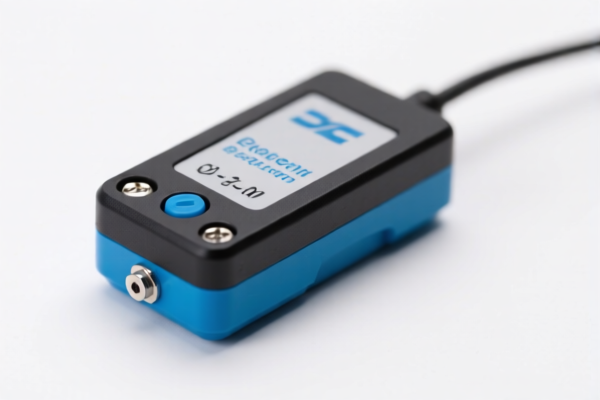
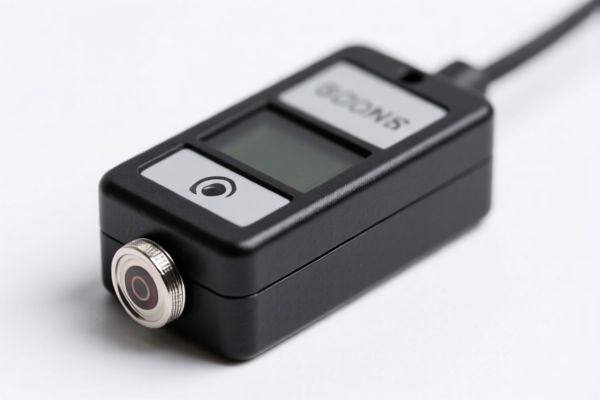
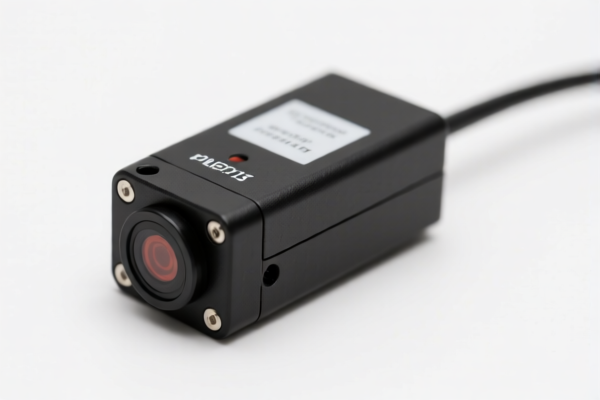
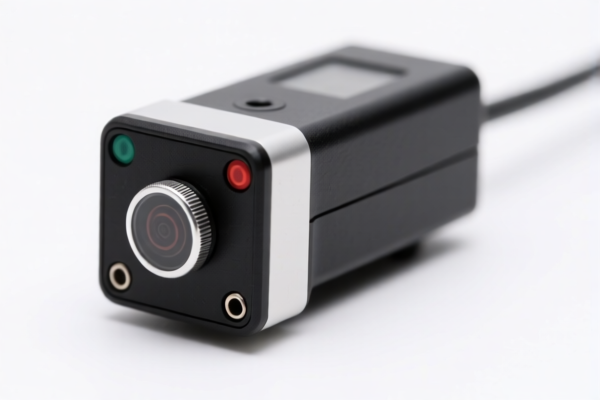
AI Analysis
🌲 Inductive Wood Moisture Meter (Inductive Wood Moisture Meter)
🌐 HS Code Reference & Customs Clearance Guide | 2024/2025 Latest Tariff Analysis | Professional Compliance Strategy
📌 I. Product Definition & Classification: Do You Really Understand the "Inductive Wood Moisture Meter"?
The Inductive Wood Moisture Meter is a specialized precision instrument used to measure the moisture content of wood without damaging the material. It operates on the principle of electromagnetic induction (or capacitance, depending on specific design, but "inductive" implies electromagnetic coupling) to detect water molecules within the wood fibers.
In international trade, this product falls under Chapter 90: Optical, photographic, cinematographic, measuring, checking, precision, medical or surgical instruments and apparatus. However, due to its specific function (testing material properties) and technology (electrical/electronic sensing), it can be classified into several potential sub-headings depending on the precise interpretation of "measuring" vs. "testing" vs. "optical/physical detection."
⚠️ Key Classification Dilemma:
- Is it a general measuring instrument for wood (9031)?
- Is it an optical/physical detection device (9031 or 9027)?
- Is it an electrical analysis/tester for material properties (9027 or 9024)?
📦 II. HS Code Classification Details (Based on Provided Data)
| HS Code | Summary/Reasoning | Total Tax Rate | Tax Breakdown |
|---|---|---|---|
| 9031.80.80.85 | Measurement/Inspection Instrument: Specifically defined as an instrument for measuring wood moisture. Falls under "Other measuring or checking instruments." | 35.0% | Base: 0% Add'l: 25% Section 122: 10% |
| 9031.49.90.00 | Optical/Physical Detection: Classified under other optical instruments/equipment. The inductive sensing is viewed as a physical/optical detection method. | 35.0% | Base: 0% Add'l: 25% Section 122: 10% |
| 9027.89.45.60 | Physical Analysis Apparatus: Deduced as a device inferring physical parameters (moisture) via induction. Fits under "Physical analysis instruments." | 35.0% | Base: 0% Add'l: 25% Section 122: 10% |
| 9027.89.45.90 | Electrical Analytical Detector: Classified as an electrical detection device. It is a "catch-all" for other electrical analytical instruments not specified elsewhere. | 35.0% | Base: 0% Add'l: 25% Section 122: 10% |
| 9024.80.00.00 | Material Testing Machine: Used to test mechanical/physical properties (moisture is a physical property). Fits under "Machines for testing materials." | 35.0% | Base: 0% Add'l: 25% Section 122: 10% |
🔍 Critical Insight:
- All 5 HS Codes listed above carry the EXACT SAME TOTAL TAX RATE of 35.0%.
- The classification debate is not about saving tax (since the rate is identical), but about compliance accuracy and customs acceptance.
- Misclassification (e.g., using a wrong chapter like 90 or 85 incorrectly) could lead to delays, even if the final tax might be similar.
💰 III. 2024/2025 Latest Tariff Rate Breakdown (Detailed)
✅ Applicable Country: United States (US)
✅ Origin: China (CN)
✅ Total Tax Rate: 35.0% (for all 5 listed HS Codes)
🎯 Breakdown of the 35% Tax
| Component | Rate | Source/Legal Basis | Explanation |
|---|---|---|---|
| Base Tariff | 0.0% | HTSUS General Rate | Most Chapter 90 instruments have 0% base duty. |
| Section 301 Tariff (Add'l) | 25.0% | USITC Footnote 9903.88.01 (approx.) | Standard additional tariff on Chinese goods under Section 301. |
| Section 122 Tariff | 10.0% | Section 122 (Trade Act of 1974) | Emergency safeguard tariff on specific Chinese imports. |
| TOTAL | 35.0% | - | Must be paid on CIF Value. |
📌 Explanation:
- The 0% Base reflects that Chapter 90 items are often valued as high-tech instruments.
- The 35% Total is a heavy burden for exporters. This is a high-tariff product for US customs clearance from China.
- No De Minimis Exemption: For shipments over $800, these tariffs apply fully. For smaller shipments, consider BOC (De Minimis) rules carefully, but 301 tariffs often still apply or require special handling.
🛠️ IV. Customs Clearance Practical Advice (Real-World Pitfall Guide)
✅ 1. Document Preparation Checklist (Non-negotiable)
| Document | Required? | Notes |
|---|---|---|
| ✅ Product Specification Sheet | ✔️ | Must clearly state: "Inductive Wood Moisture Meter," measurement range, accuracy, power supply, and non-destructive testing method. |
| ✅ Technical Manual/Manual of Operation | ✔️ | To prove it is an instrument (Chapter 90) and not a general electronic tool (Chapter 85). |
| ✅ Photos (Front, Back, Display, Probe/Sensor) | ✔️ | Show the "inductive" sensor head. Avoid images that look like simple "plastic tools." |
| ✅ Commercial Invoice | ✔️ | Must use precise English description: "Electronic Inductive Instrument for Measuring Wood Moisture Content." Avoid vague terms like "Wood Tester." |
| ✅ Packing List | ✔️ | List accessories (calibration blocks, batteries, case). |
| ✅ Certificate of Origin | ✔️ | Proof of Chinese origin is mandatory for 301/122 tariffs. |
✅ 2. Declaration Strategy (Key Tips)
🔥 “Be Specific, Be Professional, Avoid Vague Terms!”
| Scenario | Recommended Description | Why? |
|---|---|---|
| General Declaration | Inductive Wood Moisture Meter |
✅ Clear, matches HS Code reasoning. |
| Vague Declaration | Wood Testing Tool |
❌ Too vague. May be classified under 8205 (hand tools) or 9031 with scrutiny. |
| Too Broad | Electronic Tester |
❌ Likely to be rejected or downgraded to general electronics (higher base duty). |
| Component Claim | Moisture Sensor Module |
❌ If it's a complete meter, this is fraud. If it's a module, use 8543 or 9031 parts codes. |
✅ 3. Special Considerations for These 5 HS Codes
| HS Code | Best Use Case | Reason |
|---|---|---|
| 9031.80.80.85 | Safest General Choice | Directly mentions "measuring wood moisture." Most straightforward for customs officers. |
| 9031.49.90.00 | If Optical/Physical Emphasis | Use if the device uses electromagnetic waves that are analyzed physically. |
| 9027.89.45.60/90 | If Analytical/Complex | Use if the device is more complex, lab-grade, or uses advanced electrical analysis. |
| 9024.80.00.00 | If Marketed as "Tester" | Use if the product is explicitly sold as a "Material Testing Machine" rather than a "Meter." |
📌 Recommendation:
- 9031.80.80.85 is the most intuitive and likely to face minimal scrutiny because the summary explicitly mentions "measuring wood moisture."
- Ensure your invoice description matches the HS Code summary closely.
🌍 V. Global Market Comparison (2024/2025)
| Country/Region | Recommended HS Code | Est. Tariff (China Origin) | Notes |
|---|---|---|---|
| 🇺🇸 USA | 9031.80.80.85 | 35.0% | Highest cost. 301 + 122 tariffs apply. |
| 🇨🇳 China (Import) | 9031.49.90.00 | ~0-5% | Low duty. Focus on certification (CCC if applicable). |
| 🇪🇺 EU | 9031.80 | 0-4% | Generally low duty. CE marking required. |
| 🇬🇧 UK | 9031.80 | 0-5% | Low duty. Post-Brexit rules apply. |
| 🇦🇺 Australia | 9031.80 | 0-5% | Low duty. ACMA certification may be needed. |
📌 Conclusion:
- The USA is the most expensive market for this product due to Section 301 and Section 122 tariffs.
- For other markets, the duty is significantly lower.
- Strategy: If targeting the US, consider cost absorption or price adjustment. If possible, explore third-country assembly (e.g., Vietnam, Mexico) to mitigate tariffs, but ensure substantial transformation.
📌 VI. Common Mistakes & Pitfalls (Lessons Learned)
❌ Mistake 1: Using generic terms like "Wood Checker" or "Moisture Device"
👉 Consequence: Customs may misclassify as 8543 (Electrical machines) or 9031 with higher scrutiny.
👉 Solution: Use precise technical terms: "Inductive Wood Moisture Meter."
❌ Mistake 2: Claiming it is a "Tool" (Chapter 82) or "Appliance" (Chapter 85)
👉 Consequence: Base duty may be higher (e.g., 85% for some tools), plus tariffs.
👉 Solution: Emphasize its measuring/analytical function (Chapter 90).
❌ Mistake 3: Ignoring the 35% Total Tax
👉 Consequence: Unexpected costs at customs.
👉 Solution: Factor 35% into your FOB/CIF pricing. Do not quote without tax implications.
❌ Mistake 4: Using 9031.49.90.00 without proof of "optical/physical" nature
👉 Consequence: Customs may request more technical docs.
👉 Solution: Provide a technical brief explaining the inductive/physical principle.
🎯 VII. Conclusion: Precision in Classification, Profit in Clearance
🎯 Key Takeaway:
🔹 All 5 HS Codes lead to a 35% total tariff.
🔹 Choose 9031.80.80.85 for the clearest, most direct compliance path.
🔹 Prepare detailed technical documents to prove it is a measuring instrument (Chapter 90).
🔹 Budget for 35% tax in your US sales pricing.
📌 Pro Tip:
If you are exporting to the US, consider pre-clearance consultations or binding rulings from US Customs if your shipment volume is high. This provides legal certainty for the 9031.80.80.85 classification.
📣 Immediate Action:
📞 Contact a licensed customs broker to verify the latest Section 122 status.
📄 Draft your commercial invoice with the exact description: "Inductive Wood Moisture Meter, Model XYZ, for measuring moisture content in wood."
🚀 Ensure smooth clearance by being precise, professional, and proactive!
✨ Professional clearance starts with accurate classification!
💼 Every percentage point of tariff counts!
Customer Reviews
About HS Code Classification
The Harmonized System (HS) is an internationally standardized nomenclature developed by the World Customs Organization (WCO) to classify traded products. Over 200 countries use the HS system as the basis for customs tariffs, trade statistics, and import/export regulations.
Each HS code follows a hierarchical structure:
- Chapter (2 digits) — Broad category of goods (e.g., Chapter 84: Machinery and Mechanical Appliances)
- Heading (4 digits) — More specific grouping within the chapter
- Subheading (6 digits) — Internationally standardized breakdown, used by all WCO member countries
- National subdivisions (8-10 digits) — Country-specific extensions for further classification, such as US HTSUS 10-digit codes
Correct HS code classification is essential for smooth customs clearance, accurate duty payment, and compliance with trade regulations. Misclassification can lead to customs delays, overpayment of duties, or penalties.
When importing from CN to US, the applicable tariff rates may include:
- Most-Favored-Nation (MFN) rate — The standard duty rate applied to WTO members
- General rate — Applied to countries without trade agreements
- Trade remedy duties — Additional tariffs such as Section 301 (anti-dumping), Section 232 (national security), or countervailing duties
The information provided on this page is for reference purposes only. For official classification, please consult with your local customs authority or a licensed customs broker.