industrial coniferous pulp
CN → US| HS Code | Tariff Rate | Origin | Destination | Doc |
|---|---|---|---|---|
| 4403220108 | 35.0% | CN | US | Official Doc |
| 4701000000 | 35.0% | CN | US | Official Doc |
| 4403240104 | 35.0% | CN | US | Official Doc |
Product Images
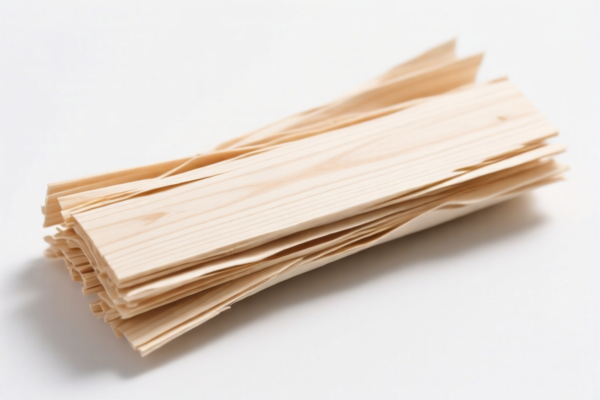
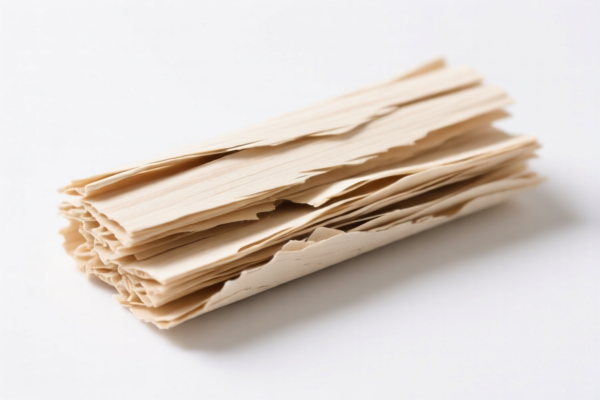
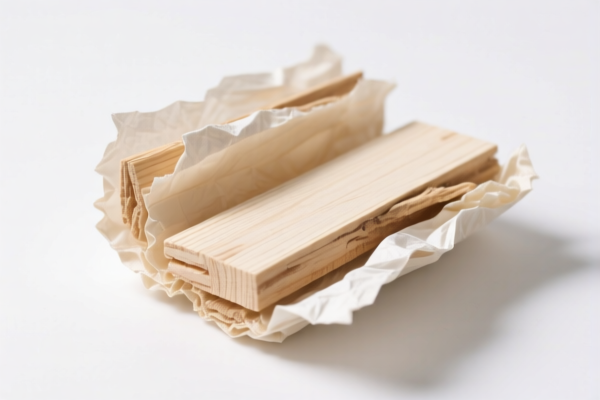
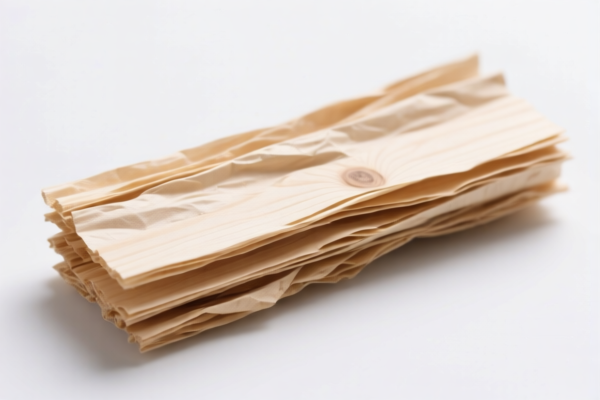
AI Analysis
🌲 Industrial Coniferous Pulp: HS Code Classification & 2026 Tariff Guide
🌐 HS Code Reference & Customs Clearance Guide | 2026 Latest Tariff Analysis | Professional Clearance Strategy
📌 I. Product Definition & Classification: What is "Industrial Coniferous Pulp"?
Industrial Coniferous Pulp refers to cellulose fibers derived from coniferous trees (softwood), processed for industrial use, primarily in papermaking or chemical applications. In international trade, classification depends heavily on the physical form and processing degree of the wood.
⚠️ Key Distinction:
- Wood for Pulping (Raw Material): Logs, chips, or billets intended specifically for pulp production →归入 Chapter 44 (Timber).
- Pulp (Processed Product): Mechanically or chemically processed fibers →归入 Chapter 47 (Pulp).🔍 Critical Note:
If the material is raw wood (logs/chips) specifically for pulping, it falls under HS 4403.
If the material is already processed pulp (mechanical/chemical), it falls under HS 4701.
📦 II. HS Code Classification Details (2026 Latest Tariff Authority)
| HS Code | Product Description | Applicable Scenario | Material & Purpose Match |
|---|---|---|---|
4403.22.01.08 |
Wood treated with preservatives or not, whether or not stripped of bark or sapwood, or in the form of chips or particles: Coniferous wood for pulping | Raw coniferous wood/logs/chips intended for pulp manufacturing | ✅ Matches: Coniferous material + Pulp purpose |
4701.00.00.00 |
Mechanical wood pulp | Processed wood fibers, mechanical form | ✅ Matches: Mechanical pulp form + Coniferous origin |
4403.24.01.04 |
Wood treated with preservatives or not, whether or not stripped of bark or sapwood, or in the form of chips or particles: Coniferous wood for pulping | Raw coniferous wood logs/billets intended for pulp manufacturing | ✅ Matches: Coniferous material + Pulp purpose |
🔍 Important Reminder:
- HS 4403 Series: Applies to raw wood (logs, chips, particles) destined for pulping.
- HS 4701.00.00.00: Applies only to mechanical pulp (processed fibers).
- Do not confuse "wood for pulping" (Chapter 44) with "pulp" (Chapter 47). The form determines the code.
💰 III. 2026 Latest Tariff Rate Breakdown (Including Surtaxes, Policy Add-ons)
✅ Applicable Country: United States (US)
✅ Origin: China (CN)
✅ Effective Date: November 10, 2025 (for subsequent imports)
🎯 1. 4403.22.01.08 & 4403.24.01.04 — Coniferous Wood for Pulping (Raw Material)
| Item | Content |
|---|---|
| Base Duty Rate | 0% (ad valorem) |
| Section 301 Surtax | +25% (from USITC Footnote related to Chinese wood products) |
| Section 122 Clause Tariff | +10% (specificly applied to certain Chinese timber/wood products under trade measures) |
| Total Duty Rate | 35.0% |
| Tax Calculation | CIF Value × 35% |
| De Minimis Eligibility | ❌ Not Eligible (deny_de_minimis) |
| Legal Basis Path | Section 301: 25% + Section 122: 10% → Total 35% |
📌 Explanation:
- "Base 0%": Standard Most Favored Nation (MFN) rate for wood is often 0%.
- "Section 301 Surtax 25%": Imposed on many Chinese goods under U.S. trade law.
- "Section 122 Clause Tariff 10%": A specific additional duty applied to certain wood products from China.
- Total 35%: High cost due to combined surtaxes. Must be factored into procurement costs!
🎯 2. 4701.00.00.00 — Mechanical Wood Pulp (Processed)
| Item | Content |
|---|---|
| Base Duty Rate | 0% (ad valorem) |
| Section 301 Surtax | +25% (from USITC Footnote related to Chinese pulp/paper products) |
| Section 122 Clause Tariff | +10% (applied to specific Chinese pulp imports) |
| Total Duty Rate | 35.0% |
| Tax Calculation | CIF Value × 35% |
| De Minimis Eligibility | ❌ Not Eligible (deny_de_minimis) |
| Legal Basis Path | Section 301: 25% + Section 122: 10% → Total 35% |
📌 Note:
- Even though it's "pulp" (Chapter 47), it still faces the same total surtaxes as raw wood (Chapter 44) in this specific dataset.
- Both raw wood and processed mechanical pulp from China are subject to 35% total duty.
🛠️ IV. Customs Clearance Practical Advice (Avoid Pitfalls)
✅ 1. Documentation Checklist (Essential)
| Document | Required | Description |
|---|---|---|
| ✅ Product Specification Sheet | ✔️ | Clearly state: Species (e.g., Pine, Spruce), Form (Chips, Logs, Pulp), Purpose (Pulping) |
| ✅ Commercial Invoice | ✔️ | Must explicitly mention "Coniferous Wood for Pulping" or "Mechanical Wood Pulp" |
| ✅ Certificate of Origin (CO) | ✔️ | Proof of Chinese origin triggers the 35% tariff |
| ✅ Phytosanitary Certificate | ✔️ | Required for wood products to prevent pest spread |
| ✅ Packing List | ✔️ | Detailed weight and volume breakdown |
| ✅ Processing Statement | ✔️ | If claiming HS 4701, provide evidence of mechanical processing |
✅ 2. Declaration Tips (Key Mantras)
🔥 "Form Defines Code, Purpose Defines Fit, Name Must Be Precise!"
| Scenario | Correct Declaration | Wrong Practice |
|---|---|---|
| Raw wood chips for pulping | 4403.22.01.08 / 4403.24.01.04 |
Misdeclare as "Pulp" → May cause customs delay or reclassification |
| Mechanical pulp (processed) | 4701.00.00.00 |
Misdeclare as "Wood" → Wrong chapter, penalty risk |
| Non-coniferous wood | ❌ Not applicable | Only coniferous species fit these HS codes |
| Mixed wood types | ❌ Not applicable | Must segregate coniferous from hardwoods |
✅ 3. Special Cases Handling
| Situation | Advice |
|---|---|
| Mixed Shipments (Coniferous + Hardwood) | Must declare separately. Hardwood may have different HS codes and potentially different tariffs. |
| Treated Wood | If wood is treated with preservatives, ensure it matches the specific subheading under 4403. |
| Chip Size Variation | For 4403.22, "chips or particles" is a key descriptor. Ensure packaging and description match. |
| Origin Mislabeling | If wood is from non-Chinese origin, the 35% tariff may not apply (check FTAs). |
🌍 V. Global Market Comparison (2026 Latest)
| Country/Region | Recommended HS Code | Tariff (China Origin) | Certification Requirements | Notes |
|---|---|---|---|---|
| 🇺🇸 USA | 4403.22.01.08 / 4701.00.00.00 |
35% (25% + 10%) | Phytosanitary Cert. | High tariff impact |
| 🇨🇳 China | 4403.22.01.08 / 4701.00.00.00 |
0-5% (varies) | None | Lower cost if exporting to China |
| 🇪🇺 EU | 4403.22.01.08 / 4701.00.00.00 |
0% | FSC/PEFC (Recommended) | No extra surtaxes like US |
| 🇯🇵 Japan | 4403.22.01.08 / 4701.00.00.00 |
0-3% | Phytosanitary | Low tariff |
📌 Conclusion:
- The US market imposes the highest barriers with the 35% combined tariff.
- EU and Japan are more tariff-friendly, though phytosanitary rules are strict.
- Cost Optimization: Consider sourcing from non-Chinese origins if targeting the US market.
📌 VI. Common Errors & Pitfall Guide (Lessons Learned)
❌ Error 1: Declaring "Wood Chips" as "Pulp"
👉 Consequence: Customs may reject the declaration or impose penalties for misclassification. Raw wood ≠ Pulp.
❌ Error 2: Ignoring the "Section 122" 10% Surtax
👉 Consequence: Underestimating costs by 10% → Profit margin erosion.
❌ Error 3: Using Generic Terms Like "Timber"
👉 Consequence: Vague descriptions lead to customs holds. Use precise terms: "Coniferous Wood for Pulping."
❌ Error 4: Failing to Provide Phytosanitary Certificate
👉 Consequence: Immediate quarantine or return of shipment.
✅ Correct Approach:
"Coniferous Wood Chips (Pine/Spruce), for Pulping, Unprocessed, Origin: China"
HS Code:4403.22.01.08
Total Duty: 35%
🎯 VII. Conclusion: Precise Classification Saves Money!
🎯 Remember the Mantra:
🔹 "Wood for Pulp? HS 4403. Processed Pulp? HS 4701. Total Duty? 35%!"
🔹 "China Origin = High Tariff, Prepare Budget, Avoid Surprises!"
📌 Pro Tip:
If your wood is sourced from Vietnam, Russia, or Scandinavia, the 25% Section 301 tariff does not apply. This could save you 25% of the duty cost.
Recommendation: Evaluate supply chain origin before shipping to the US.
📣 Immediate Action:
📞 Consult a customs broker + Provide Species & Form Details + Apply for Advance Ruling if unsure.
🚀 Ensure smooth clearance, accurate tax calculation, and competitive pricing!
✨ Professional Customs Clearance Starts with Accurate Classification!
💼 Every Percent of Duty Counts in Your Bottom Line!
Customer Reviews
About HS Code Classification
The Harmonized System (HS) is an internationally standardized nomenclature developed by the World Customs Organization (WCO) to classify traded products. Over 200 countries use the HS system as the basis for customs tariffs, trade statistics, and import/export regulations.
Each HS code follows a hierarchical structure:
- Chapter (2 digits) — Broad category of goods (e.g., Chapter 84: Machinery and Mechanical Appliances)
- Heading (4 digits) — More specific grouping within the chapter
- Subheading (6 digits) — Internationally standardized breakdown, used by all WCO member countries
- National subdivisions (8-10 digits) — Country-specific extensions for further classification, such as US HTSUS 10-digit codes
Correct HS code classification is essential for smooth customs clearance, accurate duty payment, and compliance with trade regulations. Misclassification can lead to customs delays, overpayment of duties, or penalties.
When importing from CN to US, the applicable tariff rates may include:
- Most-Favored-Nation (MFN) rate — The standard duty rate applied to WTO members
- General rate — Applied to countries without trade agreements
- Trade remedy duties — Additional tariffs such as Section 301 (anti-dumping), Section 232 (national security), or countervailing duties
The information provided on this page is for reference purposes only. For official classification, please consult with your local customs authority or a licensed customs broker.