industrial grade hexyl ester
CN → US| HS Code | Tariff Rate | Origin | Destination | Doc |
|---|---|---|---|---|
| 3814005090 | 41.0% | CN | US | Official Doc |
| 3814005010 | 41.0% | CN | US | Official Doc |
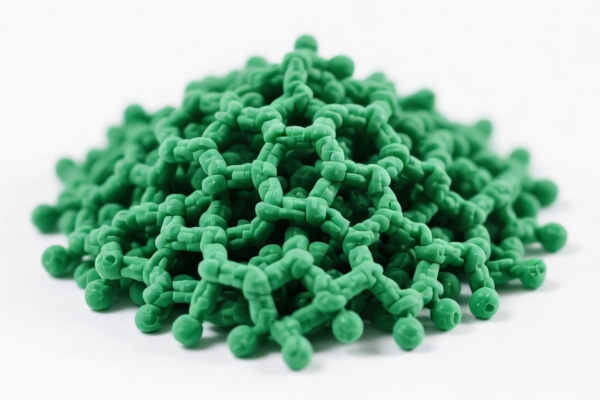
Product Images


AI Analysis
🧪 Industrial Grade Hexyl Ester (Organic Composite Solvents)
🌐 HS Code Reference & Customs Clearance Guide | 2026 Latest Tariff Analysis | Professional Strategy for Chemical Imports
📌 I. Product Definition & Classification: What Exactly is "Hexyl Ester"?
Hexyl Esters are a class of organic compounds formed by the reaction of hexanol with various carboxylic acids (such as acetic acid, forming hexyl acetate, or butyric acid, forming hexyl butyrate). In the context of international trade and the provided data, these products are classified under Chapter 38: Miscellaneous Chemical Products, specifically as Organic Composite Solvents and Thinners.
⚠️ Critical Distinction:
- "Hexyl Ester" alone is a chemical family. For customs purposes, it is treated as a solvent/thinner if it is mixed or prepared for industrial cleaning, painting, or thinning applications.
- The classification depends heavily on the chemical composition (specifically the presence of restricted halogenated compounds) and whether it is a "prepared" mixture or a pure substance not elsewhere specified.
📦 II. HS Code Classification Details (Based on Provided Data)
The provided data restricts the classification to two specific subheadings under 3814.00 (Organic composite solvents and thinners; prepared paint or varnish removers).
| HS Code | Product Description | Key Characteristic | Chemical Composition Focus |
|--------|--------------------------|--------------------------|
| 3814.00.50.10 | Other Containing methyl chloroform (1,1,1-trichloro-ethane) or carbon tetrachloride | Restricted/Hazardous | Contains specific chlorinated solvents (often used as co-solvents or impurities in older formulations) |
| 3814.00.50.90 | Other (Not Elsewhere Specified or Included) | Standard General Solvent | Pure hexyl esters or other composite solvents NOT containing methyl chloroform or carbon tetrachloride |
🔍 Classification Logic:
- Step 1: Determine if the product is a "preparer paint or varnish remover" or "composite solvent." Hexyl esters are commonly used as industrial solvents, fitting this description.
- Step 2: Check for Methyl Chloroform or Carbon Tetrachloride.
- ✅ If YES: Use3814.00.50.10.
- ✅ If NO (Pure Hexyl Ester or mixed with non-restricted solvents): Use3814.00.50.90.
💰 III. 2026 Latest Tariff Rate Breakdown
✅ Applicable Country: United States (US)
✅ Origin: China (CN) (Inferred from tax structure in DATA)
✅ Effective Date: Current tariffs apply as per data.
🎯 1. 3814.00.50.90 — Other Organic Composite Solvents (Standard)
| Item | Content |
|---|---|
| Base Tariff Rate | 6.0% (Ad Valorem) |
| Additional Tariff (Section 301) | +25.0% |
| Total Tax Rate | 31.0% |
| Tax Calculation | CIF Value × 31.0% |
| De Minimis Exemption | ❌ Not Applicable (Commercial shipment) |
| Tax Detail Source | Base: 6.0%, Additional: 25.0% |
📌 Explanation:
- The 6.0% is the standard Most Favored Nation (MFN) duty rate for composite solvents.
- The 25.0% is the Section 301 tariff imposed on Chinese goods in this category.
- Total Cost Impact: High. This is a significant cost factor for industrial solvents.
🎯 2. 3814.00.50.10 — Containing Methyl Chloroform/Carbon Tetrachloride (Restricted)
| Item | Content |
|---|---|
| Base Tariff Rate | 6.0% (Ad Valorem) |
| Additional Tariff (Section 301) | +25.0% |
| Total Tax Rate | 31.0% |
| Tax Calculation | CIF Value × 31.0% |
| De Minimis Exemption | ❌ Not Applicable |
| Tax Detail Source | Base: 6.0%, Additional: 25.0% |
📌 Important Note:
- Although the tariff rate is identical (31.0%), this HS Code triggers stricter regulatory scrutiny due to the presence of ozone-depleting substances (Methyl Chloroform) or hazardous air pollutants (Carbon Tetrachloride).
- EPA (Environmental Protection Agency) and DOT (Department of Transportation) regulations are significantly more stringent for this category.
🛠️ IV. Customs Clearance Practical Advice (Pitfall Avoidance Guide)
✅ 1. Documentation Checklist (Must-Haves)
| Document | Required? | Notes |
|---|---|---|
| ✅ Safety Data Sheet (SDS) | ✔️ | Must clearly list all components, including percentages. Crucial for distinguishing between 50.10 and 50.90. |
| ✅ Product Specification Sheet | ✔️ | Confirm if it is a "pure" hexyl ester or a "composite" mixture. |
| ✅ Commercial Invoice | ✔️ | Must specify "Hexyl Ester Solvent" or "Industrial Solvent Mixture." |
| ✅ Certificate of Origin | ✔️ | To verify Chinese origin for Section 301 applicability. |
| ✅ EPA/DOT Declarations | ✔️ | Critical for 3814.00.50.10. If methyl chloroform is present, additional environmental compliance docs are needed. |
✅ 2. Declaration Tips (Key Rules)
🔥 "Check the Chlorine, Declare the Mix, Avoid the Penalty!"
| Scenario | Correct HS Code | Why? |
|---|---|---|
| Pure Hexyl Acetate or Butyrate (No restricted halogens) | 3814.00.50.90 |
Falls under "Other" not elsewhere specified. |
| Hexyl Ester mixed with trace Methyl Chloroform | 3814.00.50.10 |
Even small amounts of listed chemicals trigger this code. |
| Hexyl Ester used as a paint thinner | 3814.00.50.90 |
Classified by function + composition. |
| Pure Hexanol (Alcohol, not Ester) | Not in DATA | Would likely fall under Chapter 29 (Organic Chemicals), e.g., 2905.16.00.00. |
✅ 3. Special Handling for 3814.00.50.10
If your product contains Methyl Chloroform or Carbon Tetrachloride:
1. EPA Compliance: Ensure you have the necessary EPA notifications. Importing these substances is heavily regulated.
2. Labeling: Packages must comply with DOT hazardous materials labeling if applicable.
3. Risk: Misdeclaring 3814.00.50.10 as 3814.00.50.90 to avoid scrutiny can lead to seizure, fines, and legal action.
🌍 V. Global Market Comparison (2026)
| Country/Region | Recommended HS Code | Tariff (China Origin) | Key Requirements | Notes |
|---|---|---|---|---|
| 🇺🇸 USA | 3814.00.50.90 |
31.0% (6% + 25%) | SDS, EPA Compliance | High tariff impact. |
| 🇨🇳 China | 2915.xx.xx |
Varies | REACH-like standards | May classify as pure organic chemical (Ch 29) rather than solvent (Ch 38) if pure. |
| 🇪🇺 EU | 3814 00 00 |
Various | REACH Registration | Hexyl esters often require REACH registration. |
| 🇯🇵 Japan | 3814 00 00 |
Various | Fire Services Act | Solvents are often regulated as flammable materials. |
📌 Conclusion:
- The US market presents a high tariff barrier (31%).
- The chemical composition is the single most critical factor for classification.
- Avoid misclassification between "pure chemical" (Ch 29) and "composite solvent" (Ch 38).
📌 VI. Common Errors & Pitfalls (Blood Lessons)
❌ Error 1: Declaring a composite solvent as "Hexyl Acetate" (Ch 29) to avoid Ch 38 duties.
👉 Consequence: If it’s a mixture/prepared for solvent use, it must be Ch 38. Misclassification leads to penalties.
❌ Error 2: Failing to disclose trace Methyl Chloroform.
👉 Consequence: If found, goods will be detained for EPA review, causing delays of weeks or months.
❌ Error 3: Using vague descriptions like "Industrial Cleaner" without SDS.
👉 Consequence: Customs cannot determine HS Code → Hold for Examination → Increased storage fees.
✅ Correct Practice:
"Hexyl Ester Composite Solvent, for Industrial Use, Not Containing Methyl Chloroform or Carbon Tetrachloride. SDS Attached."
🎯 VII. Conclusion: Precise Classification Saves Money!
🎯 Remember:
🔹 "Pure Ester? Check Ch 29. Composite Solvent? Ch 38.
🔹 Contains Chloroform? Code .10. Pure Mix? Code .90.
🔹 31% Tax is Real, SDS is Your Shield!"
📌 Pro Tip:
If you are importing pure hexyl esters (not mixtures), consider consulting a customs broker about Chapter 29 classification (e.g., 2915.15.25 for hexyl acetate). Pure chemicals sometimes have lower tariffs than "composite solvents."
Example: Pure Hexyl Acetate might be 2915.15.25 with a lower base rate, avoiding the "composite" label. Verify this with a professional!
📣 Immediate Action:
📞 Review your SDS: Does it contain Methyl Chloroform?
📦 Check Composition: Is it a pure chemical or a mixture?
🚀 Consult a Customs Broker: To decide between Ch 29 (Pure) vs. Ch 38 (Composite) and optimize duty costs.
✨ Professional Clearance Starts with Precise Classification!
💼 Your Cost Efficiency Depends on It!
Customer Reviews
About HS Code Classification
The Harmonized System (HS) is an internationally standardized nomenclature developed by the World Customs Organization (WCO) to classify traded products. Over 200 countries use the HS system as the basis for customs tariffs, trade statistics, and import/export regulations.
Each HS code follows a hierarchical structure:
- Chapter (2 digits) — Broad category of goods (e.g., Chapter 84: Machinery and Mechanical Appliances)
- Heading (4 digits) — More specific grouping within the chapter
- Subheading (6 digits) — Internationally standardized breakdown, used by all WCO member countries
- National subdivisions (8-10 digits) — Country-specific extensions for further classification, such as US HTSUS 10-digit codes
Correct HS code classification is essential for smooth customs clearance, accurate duty payment, and compliance with trade regulations. Misclassification can lead to customs delays, overpayment of duties, or penalties.
When importing from CN to US, the applicable tariff rates may include:
- Most-Favored-Nation (MFN) rate — The standard duty rate applied to WTO members
- General rate — Applied to countries without trade agreements
- Trade remedy duties — Additional tariffs such as Section 301 (anti-dumping), Section 232 (national security), or countervailing duties
The information provided on this page is for reference purposes only. For official classification, please consult with your local customs authority or a licensed customs broker.