industrial grade microfilm
CN → US| HS Code | Tariff Rate | Origin | Destination | Doc |
|---|---|---|---|---|
| 3920992000 | 39.2% | CN | US | Official Doc |
| 3919905060 | 40.8% | CN | US | Official Doc |
| 3919102055 | 40.8% | CN | US | Official Doc |
| 3921190090 | 41.5% | CN | US | Official Doc |
| 3920991000 | 41.0% | CN | US | Official Doc |
| 3921905050 | 39.8% | CN | US | Official Doc |
Product Images
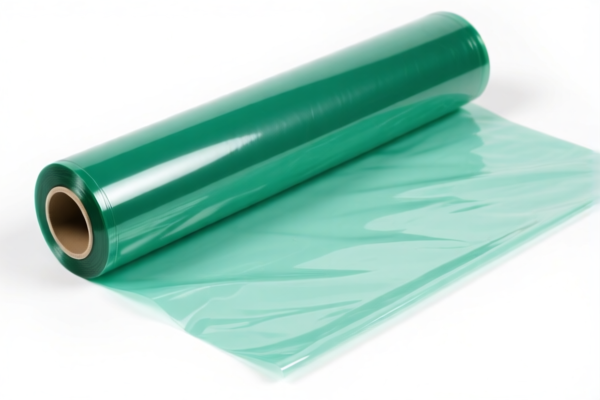
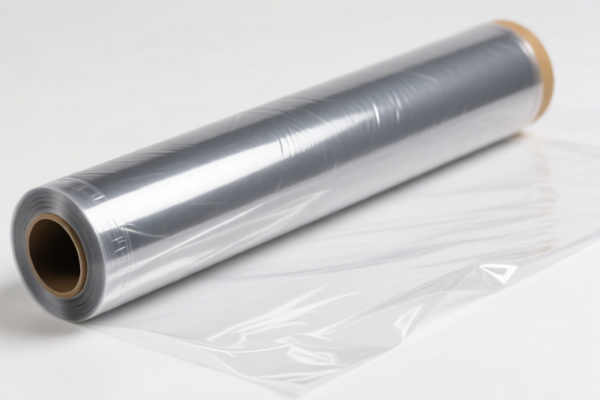
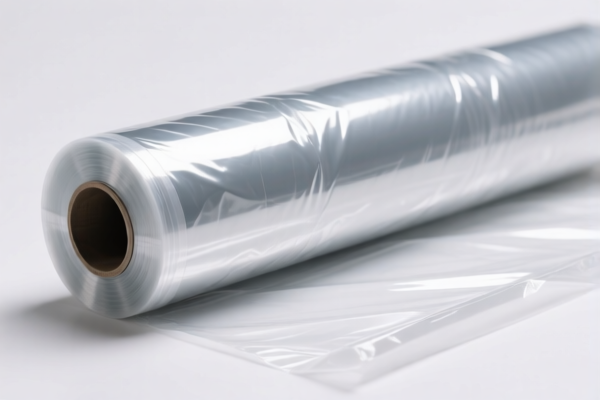
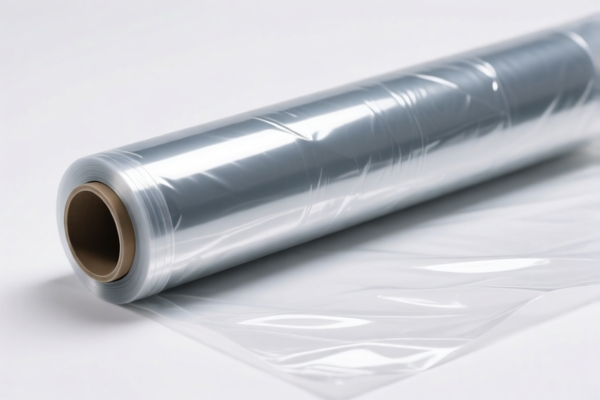
AI Analysis
🎞️ Industrial Grade Microfilm (and Flexible Plastic Films)
🌐 HS Code Reference & Customs Clearance Guide | 2026 Latest Tariff Analysis | Professional Clearance Strategy
📌 I. Product Definition & Classification: What is "Industrial Grade Microfilm"?
In international trade, the term "Industrial Grade Microfilm" is often a generic or slightly inaccurate description for Flexible Plastic Films or Plastic Sheets/Foils. True "Microfilm" (photographic film on plastic or acetate support) falls under Chapter 37, but when the term is used in an industrial context, it usually refers to:
- Plastic Films for Industrial Use: Thin, flexible sheets used for packaging, insulation, protection, or lamination.
- Plastic Sheets/Foils: Slightly thicker rigid or semi-rigid plastic plates used in machinery, construction, or electronics.
⚠️ Key Classification Point:
- If the product is a thin, flexible plastic film (e.g., for packaging, lamination, protection) → Likely Chapter 39 (Plastics), specifically Heading 3920 or 3921.
- If the product is a rigid or semi-rigid plastic sheet/plate → Likely Heading 3920.
- ❌ Not Chapter 37: If it is not photographic film, do not use Chapter 37 codes (3701-3703), as this leads to immediate customs rejection for misdeclaration.
📦 II. HS Code Classification Details (Based on Provided Data)
Based on the provided <DATA>, the classification focuses on Plastic Films/Sheets under Chapter 39. The specific HS codes vary by material properties, thickness, and form (rolled film vs. cut sheet).
| HS Code | Product Description | Summary from Data | Tax Rate |
|---|---|---|---|
| 3920.99.20.00 | Industrial Film, Form: Film, Material: Plastic | "Industrial grade film, form is film, inferred material is plastic, fits 'other plastic flexible film' category" | 39.2% |
| 3919.90.50.60 | Industrial Film, Form: Film, Material: Plastic | "Industrial grade film, form is film, inferred material is plastic, belongs to 'catch-all' category" | 40.8% |
| 3919.10.20.55 | Industrial Film, Form: Film, Material: Plastic | "Industrial grade film, form is film, inferred material is plastic, fits 'plastic film' category" | 40.8% |
| 3921.19.00.90 | Industrial Film, Form: Film/Sheet/Foil, Material: Other Plastic | "Industrial grade film, form is film/sheet/foil, inferred material is other plastic, no material conflict" | 41.5% |
| 3920.99.10.00 | Industrial Film, Form: Film/Foil, Material: Plastic | "Industrial grade film, form is film/foil, inferred material is plastic, belongs to 'other' category with no material conflict" | 41.0% |
| 3921.90.50.50 | Industrial Film, Form: Film, Material: Plastic | "Industrial grade film, form is film, inferred material is plastic, fits plastic products under 3921" | 39.8% |
🔍 Critical Note:
- The term "Microfilm" is risky. If customs officers suspect it is photographic film (Ch 37), they will penalize you.
- The safest approach is to declare as "Plastic Film" or "Plastic Sheet" under HS Code 3920/3921, as per the provided data.
- 3919 codes are for Self-Adhesive Films. If your film is not self-adhesive, using 3919 codes (like 3919.10.20.55 or 3919.90.50.60) may be incorrect unless the product is indeed adhesive-backed.
- 3920/3921 are generally for Non-Adhesive plastic films/sheets.
💰 III. 2026 Latest Tariff Rate Breakdown (Including Surcharges)
✅ Applicable Country: United States (US)
✅ Country of Origin: China (CN)
✅ Effective Date: As per standard US trade policies (Section 301 & IEEPA)
🎯 1. 3920.99.20.00 – Other Plastic Films (Non-Adhesive, Other)
| Item | Details |
|---|---|
| Base Tariff | 4.2% |
| Section 301 Surcharge | +25.0% |
| IEEPA Surcharge (122) | +10.0% |
| Total Tax Rate | 39.2% |
| Calculation | CIF Value × 39.2% |
| De Minimis Exemption | ❌ No (Highly taxable) |
📌 Explanation:
- This is likely the lowest tax rate among the provided options if the product is a standard non-adhesive plastic film.
- The 4.2% base rate is relatively low compared to others.
🎯 2. 3921.90.50.50 – Other Plastic Plates, Sheets, etc.
| Item | Details |
|---|---|
| Base Tariff | 4.8% |
| Section 301 Surcharge | +25.0% |
| IEEPA Surcharge (122) | +10.0% |
| Total Tax Rate | 39.8% |
| Calculation | CIF Value × 39.8% |
| De Minimis Exemption | ❌ No |
📌 Explanation:
- Slightly higher than 3920.99.20.00, but still competitive.
- Use this if the product is classified as a Sheet rather than a Film (depending on thickness and flexibility).
🎯 3. 3919.90.50.60 & 3919.10.20.55 – Self-Adhesive Plastic Films
| Item | Details |
|---|---|
| Base Tariff | 5.8% |
| Section 301 Surcharge | +25.0% |
| IEEPA Surcharge (122) | +10.0% |
| Total Tax Rate | 40.8% |
| Calculation | CIF Value × 40.8% |
| De Minimis Exemption | ❌ No |
📌 Explanation:
- Higher base rate (5.8%) leads to a higher total tax.
- Only use if the film is self-adhesive. If it is not, misclassification could lead to penalties.
🎯 4. 3920.99.10.00 – Other Plastic Films
| Item | Details |
|---|---|
| Base Tariff | 6.0% |
| Section 301 Surcharge | +25.0% |
| IEEPA Surcharge (122) | +10.0% |
| Total Tax Rate | 41.0% |
| Calculation | CIF Value × 41.0% |
| De Minimis Exemption | ❌ No |
🎯 5. 3921.19.00.90 – Other Plastic Sheets/Foils
| Item | Details |
|---|---|
| Base Tariff | 6.5% |
| Section 301 Surcharge | +25.0% |
| IEEPA Surcharge (122) | +10.0% |
| Total Tax Rate | 41.5% |
| Calculation | CIF Value × 41.5% |
| De Minimis Exemption | ❌ No |
📌 Explanation:
- This is the highest tax rate among the options.
- Use only if the product is clearly a Sheet/Foil (thicker, less flexible) and fits this specific subheading.
🛠️ IV. Customs Clearance Practical Advice (Pitfall Avoidance Guide)
✅ 1. Documentation Checklist (Mandatory)
| Document | Required | Notes |
|---|---|---|
| ✅ Product Specification Sheet | ✔️ | Must clearly state: Material (e.g., PE, PP, PVC), Thickness, Width, Length, Non-Adhesive or Adhesive. |
| ✅ Product Photos | ✔️ | Show the roll/sheet, label, and any markings. Avoid using the word "Microfilm" in photos if possible. |
| ✅ Commercial Invoice | ✔️ | Use terms like "Plastic Film" or "Plastic Sheet" instead of "Industrial Microfilm". |
| ✅ Packing List | ✔️ | Detail weight, dimensions, and packaging type. |
| ✅ Certificate of Origin | ✔️ | Required for origin determination. |
✅ 2. Declaration Tips (Key Mnemonic)
🔥 "Don't Say Microfilm, Say Plastic Film! Base Rate Matters, 3920 is King!"
| Scenario | Recommended HS Code | Risk |
|---|---|---|
| Standard Non-Adhesive Plastic Film | 3920.99.20.00 (39.2%) |
✅ Low Tax, High Accuracy |
| Self-Adhesive Plastic Film | 3919.10.20.55 (40.8%) |
✅ Accurate if adhesive |
| Thick Plastic Sheet/Foil | 3921.19.00.90 (41.5%) |
⚠️ Highest Tax |
| Photographic Film (True Microfilm) | ❌ Do Not Use | ⚠️ Chapter 37, different rules, potential penalty for misdeclaration |
📌 Critical Warning:
- Avoid the term "Microfilm" in customs declarations unless it is strictly photographic film. Customs may flag it for Chapter 37 review, causing delays.
- Clarify Adhesiveness: If it is not self-adhesive, do not use 3919 codes. Use 3920 or 3921.
- Clarify Form: If it is a roll, "Film" is appropriate. If it is cut sheets, "Sheet" may be more accurate, but flexibility is the key determinant.
✅ 3. Special Cases
| Case | Handling Advice |
|---|---|
| OEM Custom Film | Provide customer order + technical datasheet to prove material composition. |
| Multilayer Film | Declare as "Laminated Plastic Film" under 3920 or 3921. |
| Films with Printing | Still classified under 3920/3921, but specify "Printed" in description. |
| Industrial Protective Film | Often classified under 3920.99.20.00 (non-adhesive) or 3919 (if adhesive). |
🌍 V. Global Market Clearance Comparison (2026 Latest)
| Country/Region | Recommended HS Code | Tariff (China Origin) | Notes |
|---|---|---|---|
| 🇺🇸 USA | 3920.99.20.00 |
39.2% | Includes Section 301 (25%) + IEEPA (10%). High cost! |
| 🇨🇳 China | 3920.99.20.00 |
~6.5% | Low import duty, no surcharges. |
| 🇪🇺 EU | 3920.99.20.00 |
~6.5% | Standard MFN rate, no Section 301. |
| 🇯🇵 Japan | 3920.99.20.00 |
~5-6% | Low duty, FTAs may apply. |
| 🇦🇺 Australia | 3920.99.20.00 |
~5% | Low duty. |
📌 Conclusion:
- USA has the highest total tariff (39.2%–41.5%) due to Section 301 and IEEPA surcharges.
- Plan your supply chain accordingly. Consider tariff engineering (e.g., changing material or form) or supply chain diversification (e.g., sourcing from Vietnam/Mexico) to mitigate costs.
📌 VI. Common Mistakes & Pitfalls (Lessons Learned)
❌ Mistake 1: Using "Microfilm" in the declaration
👉 Consequence: Customs may reclassify under Chapter 37, causing delays and potential penalties.
✅ Solution: Use "Plastic Film" or "Plastic Sheet".
❌ Mistake 2: Misclassifying Non-Adhesive Film as Self-Adhesive (3919)
👉 Consequence: Higher tax rate (40.8% vs 39.2%) or misdeclaration penalty.
✅ Solution: Check if the product has adhesive backing. If not, use 3920.
❌ Mistake 3: Not specifying Material Composition
👉 Consequence: Customs cannot determine the correct subheading, leading to higher estimated taxes or holds.
✅ Solution: Clearly state material (PE, PP, PVC, PET, etc.) in the description.
❌ Mistake 4: Ignoring Section 301 and IEEPA Surcharges
👉 Consequence: Unexpected high costs.
✅ Solution: Factor in the additional 35% (25% + 10%) on top of the base rate in your cost calculations.
🎯 VII. Conclusion: Professional Declaration, Save Time, Reduce Costs!
🎯 Remember the Mnemonic:
🔹 "Say Plastic, Not Micro! 3920 is Best for Non-Adhesive! 3919 is for Adhesive!"
🔹 "HS Code Defines Life, Tax Difference is 2.3%, One Step Wrong, Thousands Lost!"
📌 Pro Tip:
If your film is originating from Vietnam, Mexico, Thailand, or Malaysia, you may apply for IEEPA Exemptions or lower tariffs under FTAs.
Consider applying for an Advance Ruling from US Customs and Border Protection (CBP) to confirm the correct HS Code and tariff liability before shipment.
📣 Immediate Action:
📞 Contact a professional customs broker + Provide Product Specs + Apply for HS Code Advance Ruling
🚀 Ensure your plastic film clears customs smoothly, efficiently, and profitably!
✨ Professional clearance starts with accurate classification!
💼 Every cent of your cost deserves precise calculation!
Customer Reviews
About HS Code Classification
The Harmonized System (HS) is an internationally standardized nomenclature developed by the World Customs Organization (WCO) to classify traded products. Over 200 countries use the HS system as the basis for customs tariffs, trade statistics, and import/export regulations.
Each HS code follows a hierarchical structure:
- Chapter (2 digits) — Broad category of goods (e.g., Chapter 84: Machinery and Mechanical Appliances)
- Heading (4 digits) — More specific grouping within the chapter
- Subheading (6 digits) — Internationally standardized breakdown, used by all WCO member countries
- National subdivisions (8-10 digits) — Country-specific extensions for further classification, such as US HTSUS 10-digit codes
Correct HS code classification is essential for smooth customs clearance, accurate duty payment, and compliance with trade regulations. Misclassification can lead to customs delays, overpayment of duties, or penalties.
When importing from CN to US, the applicable tariff rates may include:
- Most-Favored-Nation (MFN) rate — The standard duty rate applied to WTO members
- General rate — Applied to countries without trade agreements
- Trade remedy duties — Additional tariffs such as Section 301 (anti-dumping), Section 232 (national security), or countervailing duties
The information provided on this page is for reference purposes only. For official classification, please consult with your local customs authority or a licensed customs broker.