industrial grade sodium lignosulfonate
CN → US| HS Code | Tariff Rate | Origin | Destination | Doc |
|---|---|---|---|---|
| 3824999397 | 40.0% | CN | US | Official Doc |
| 3824997550 | 38.7% | CN | US | Official Doc |
| 1302199140 | 17.5% | CN | US | Official Doc |
| 1302199120 | 17.5% | CN | US | Official Doc |
| 3913902090 | 40.8% | CN | US | Official Doc |
Product Images
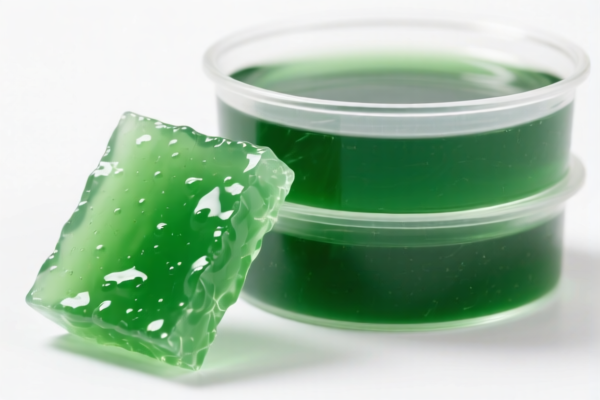

AI Analysis
🌿 Industrial Grade Sodium Lignosulfonate
🌐 HS Code Reference & Customs Clearance Guide | 2026 Latest Tariff Analysis | Professional Clearance Strategy
📌 I. Product Definition & Classification: What is "Sodium Lignosulfonate"?
Sodium Lignosulfonate is a brown powder or granular byproduct obtained from the mechanical or chemical pulping of wood (specifically the sulfite process). It is a natural polyelectrolyte with excellent dispersing, binding, and anti-reduction properties.
In international trade, it is primarily used in: * Concrete Admixtures: As a water reducer in cement/concrete. * Animal Feed: As a binder and source of trace minerals (Zinc). * Pigments/Dyes: As a dispersant. * Agriculture: As a soil conditioner.
⚠️ Key Distinction:
- Is it a plant extract (Chapter 13)? → If defined as a refined botanical derivative.
- Is it a chemical preparation (Chapter 38)? → If defined as an industrial-grade chemical mixture or inorganic salt.
- Is it a polymer derivative (Chapter 39)? → Rare, but possible if structurally modified like a sulfonated polysaccharide.
📦 II. HS Code Classification Details (2026 Latest Tariff Authority Comparison)
Based on the provided data, there are 5 potential HS Code matches depending on the specific chemical interpretation and regulatory view of the product's "nature" (Extract vs. Chemical Salt vs. Polymer).
| HS Code | Product Description | Application Scenario | Classification Logic |
|---|---|---|---|
3824.99.93.97 |
Chemical Preparations Unspecified Elsewhere | General industrial chemical mixture, dispersant, binder | Industrial Chemical: Treated as a generic chemical preparation/mixture. No specific salt/extract category fits better. |
3824.99.75.50 |
Naphthenic Acids & Insoluble Salts/Esters (Other) | Zinc Salt Category | Inorganic Salt: Interpreted as a "metal salt" (Zinc Sulfonate variant) under "Other" insoluble salts. Note: Sodium Lignosulfonate is usually soluble, but this code is suggested for "Metal Salt" logic. |
1302.19.91.40 |
Vegetable Juice & Extracts (Other) | Plant-based extract, natural origin | Plant Extract: Derived directly from wood pulp, classified as a non-specific vegetable extract. |
1302.19.91.20 |
Vegetable Juice & Extracts (Other - Specific) | Chemical compound/Plant extract hybrid | Plant Extract: Specifically categorized under a sub-heading for plant/chemical extracts with no material conflict. |
3913.90.20.90 |
Natural Polymers (Other) | Modified polysaccharide/dispersant | Polymer Derivative: Inferred as a sulfonated polysaccharide (sugar chain derivative), falling under natural polymers. |
🔍 Critical Analysis:
- Most Common for Industrial Grade:3824.99.93.97or3824.99.75.50(if viewed as a chemical salt/preparation).
- If sold as "Natural/Organic":1302.19.91.40or1302.19.91.20(Plant Extracts).
- If marketed as "Polymer/Dispersant":3913.90.20.90(Natural Polymers).
💰 III. 2026 Latest Tariff Rate Breakdown (Including Surtaxes & Policy Add-ons)
✅ Applicable Country: USA (US)
✅ Origin: China (CN)
✅ Effective Time: Post-November 10, 2025 (Including subsequent imports)
🎯 1. 3824.99.93.97 — Chemical Preparations (General)
| Item | Content |
|---|---|
| Base Tariff | 5.0% |
| Section 301 Surtax | +25.0% |
| Section 122 Tariff | +10.0% |
| Total Rate | 40.0% |
| Tax Calculation | CIF Value × 40% |
| De Minimis Eligibility | ❌ No (Deny de minimis) |
| Legal Path | USITC:3824.99.93.97 + Footnote 9903.88.01 + IEEPA |
📌 Explanation:
- This is the broadest chemical catch-all.
- High tariff (40%) due to the combination of Base (5%) + Section 301 (25%) + Section 122 (10%).
- Risk: High cost, but safe if the product is clearly an "industrial preparation."
🎯 2. 3824.99.75.50 — Naphthenic Acids/Insoluble Salts (Other)
| Item | Content |
|---|---|
| Base Tariff | 3.7% |
| Section 301 Surtax | +25.0% |
| Section 122 Tariff | +10.0% |
| Total Rate | 38.7% |
| Tax Calculation | CIF Value × 38.7% |
| De Minimis Eligibility | ❌ No |
| Legal Path | USITC:3824.99.75.50 + Footnote 9903.88.01 + IEEPA |
📌 Explanation:
- Slightly lower total tariff than3824.99.93.97.
- Relies on classifying the product as a "Salt" (specifically Zinc Salt, even though it's Sodium, the logic in the data links "Metal Salt" to this code).
- Caution: Ensure the product is not rejected for being "Soluble" if this code specifies "Insoluble."
🎯 3. 1302.19.91.40 — Vegetable Extracts (Other)
| Item | Content |
|---|---|
| Base Tariff | 0.0% |
| Section 301 Surtax | +7.5% |
| Section 122 Tariff | +10.0% |
| Total Rate | 17.5% |
| Tax Calculation | CIF Value × 17.5% |
| De Minimis Eligibility | ❌ No |
| Legal Path | USITC:1302.19.91.40 + Footnote 9903.75.25 + IEEPA |
📌 Explanation:
- Significant Cost Saving! Only 17.5% vs. 40%.
- Requires proving the product is a "Plant Extract" (wood pulp derivative).
- Risk: Must provide COA (Certificate of Analysis) showing natural origin, no synthetic chemicals added.
🎯 4. 1302.19.91.20 — Vegetable Extracts (Other - Specific)
| Item | Content |
|---|---|
| Base Tariff | 0.0% |
| Section 301 Surtax | +7.5% |
| Section 122 Tariff | +10.0% |
| Total Rate | 17.5% |
| Tax Calculation | CIF Value × 17.5% |
| De Minimis Eligibility | ❌ No |
| Legal Path | USITC:1302.19.91.20 + Footnote 9903.75.25 + IEEPA |
📌 Explanation:
- Same favorable rate as1302.19.91.40.
- Specific sub-category for plant/chemical extracts.
- Best for: Products marketed as "Natural," "Organic," or "Bio-based."
🎯 5. 3913.90.20.90 — Natural Polymers (Other)
| Item | Content |
|---|---|
| Base Tariff | 5.8% |
| Section 301 Surtax | +25.0% |
| Section 122 Tariff | +10.0% |
| Total Rate | 40.8% |
| Tax Calculation | CIF Value × 40.8% |
| De Minimis Eligibility | ❌ No |
| Legal Path | USITC:3913.90.20.90 + Footnote 9903.88.01 + IEEPA |
📌 Explanation:
- Highest Tariff (40.8%).
- Classifies as a Modified Polysaccharide (Sulfonated).
- Only use if competitors are also classifying under Chapter 39 (Polymers) and you have strong technical justification. Otherwise, avoid due to high cost.
🛠️ IV. Customs Clearance Practical Advice (Battle-Tested Pitfall Guide)
✅ 1. Document Checklist (Mandatory)
| Document | Required | Notes |
|---|---|---|
| ✅ COA (Certificate of Analysis) | ✔️ | Must show % Lignin, Moisture, Sodium Content, Ash. Critical for distinguishing between "Extract" (Ch 13) and "Chemical Salt" (Ch 38). |
| ✅ TDS (Technical Data Sheet) | ✔️ | Show solubility, pH, molecular weight. |
| ✅ Product Photos | ✔️ | Show packaging, label, and product state (powder/granule). |
| ✅ Commercial Invoice | ✔️ | Clearly state: "Industrial Grade Sodium Lignosulfonate, Derived from Wood Pulp" |
| ✅ Plant Extract Proof | ✔️ | If claiming Ch 13 (17.5%), provide Source of Wood and Extraction Process details. |
| ✅ Section 301 Exclusion? | ❌ | Check: Is this product eligible for any 301 tariff exclusion? (Currently, most lignosulfonates are NOT excluded). |
✅ 2. Declaration Tips (Key Mantra)
🔥 "Natural Origin = 17.5%, Chemical Salt = 38-40%, Polymer = 40.8%"
| Scenario | Correct Declaration | Mistake |
|---|---|---|
| Marketing as "Natural/Concrete Admixture" | Use 1302.19.91.40 or 1302.19.91.20 (17.5%) |
Declare as "Chemical" → 40% |
| Industrial Grade, Generic Use | Use 3824.99.93.97 (40%) |
Try to force "Plant Extract" without proof → Audit Risk |
| High Purity, Zinc-Enriched | Use 3824.99.75.50 (38.7%) |
Misdeclare as "Feed Additive" without proper license |
| Sulfonated Wood Residue | Use 3913.90.20.90 (40.8%) |
Only if structurally modified like a polymer |
✅ 3. Special Handling
| Situation | Advice |
|---|---|
| "Industrial Grade" vs. "Food Grade" | If Food Grade, additional FDA compliance needed. If Industrial, stick to HS Codes above. |
| Customs Audit Trigger | If declaring 1302 (Plant Extract), Customs may ask for Extraction Method. Ensure your process is mechanical/chemical pulping, not synthetic polymerization. |
| Section 122 (10%) | Applies to all China-origin goods under these codes. No escape. |
| Section 301 (25%) | Applies to all China-origin goods under these codes. No escape. |
🌍 V. Global Market Clearance Comparison (2026 Latest)
| Country/Region | Recommended HS Code | Tariff (China Origin) | Key Requirement | Notes |
|---|---|---|---|---|
| 🇺🇸 USA | 1302.19.91.40 (Best) |
17.5% | COA proving Plant Origin | Highest savings. |
| 🇺🇸 USA | 3824.99.93.97 (Safe) |
40.0% | Technical Sheet | Safe but expensive. |
| 🇪🇺 EU | 1302.19.90 |
0% - 6.5% | REACH Compliance | Lower tariffs, but strict REACH registration. |
| 🇨🇳 China | 1302.19.90 |
6.5% | None | Domestic standard. |
| 🇮🇳 India | 1302.19.90 |
7.5% | BIS Certification | Check for anti-dumping. |
📌 Conclusion:
- USA is the most complex market due to high Section 301 and Section 122 surtaxes.
- Strategy: If you can scientifically justify "Plant Extract" status, aim for1302.19.91.40(17.5%). This saves 22.5% compared to the chemical classification.
- If not: Fall back to3824.99.75.50(38.7%) or3824.99.93.97(40.0%). Avoid3913.90.20.90unless necessary.
📌 VI. Common Errors & Pitfall Guide (Lessons Learned)
❌ Error 1: Declaring as "Plant Extract" (1302) but providing a Synthetic COA
👉 Consequence: Customs reclassifies to 3824 → Back taxes + Penalty!
❌ Error 2: Using 3913 (Polymer) for standard Sodium Lignosulfonate
👉 Consequence: Unjustified high tariff (40.8%) and potential audit for misclassification.
❌ Error 3: Ignoring Section 122 (10%) in cost calculation
👉 Consequence: Profit margin erosion. Many exporters forget this 10% surtax.
❌ Error 4: Not specifying "Industrial Grade" in Invoice
👉 Consequence: Customs may assume "Food/Medical Grade," requiring additional FDA/USP certifications → Delay/Return.
✅ Correct Practice:
"Sodium Lignosulfonate, Industrial Grade, Powder, Derived from Sulfite Wood Pulp, Used as Concrete Water Reducer. COA Attached."
🎯 VII. Conclusion: Smart Classification, Cost Optimization!
🎯 Remember the Mantra:
🔹 "Plant Extract = 17.5% (Save 22.5%)!"
🔹 "Chemical Salt = 38.7% (Save 1.3%)!"
🔹 "Polymer = 40.8% (Avoid if possible)!"
🔹 "Always include Section 301 (25%) + Section 122 (10%)."
📌 Pro Tip:
If your Sodium Lignosulfonate is sourced from Southeast Asia (e.g., Vietnam, Thailand), you may avoid Section 301/122 tariffs.
Suggestion:
📞 Apply for Advance Ruling (Pre-classification) from US Customs & Border Protection (CBP) to lock in the 17.5% rate if you qualify as a Plant Extract.
🚀 Let your profit flow, not your taxes!
✨ Professional Customs Clearance Starts with Precise Classification!
💼 Your Every Dollar is Worth Calculating!
Customer Reviews
About HS Code Classification
The Harmonized System (HS) is an internationally standardized nomenclature developed by the World Customs Organization (WCO) to classify traded products. Over 200 countries use the HS system as the basis for customs tariffs, trade statistics, and import/export regulations.
Each HS code follows a hierarchical structure:
- Chapter (2 digits) — Broad category of goods (e.g., Chapter 84: Machinery and Mechanical Appliances)
- Heading (4 digits) — More specific grouping within the chapter
- Subheading (6 digits) — Internationally standardized breakdown, used by all WCO member countries
- National subdivisions (8-10 digits) — Country-specific extensions for further classification, such as US HTSUS 10-digit codes
Correct HS code classification is essential for smooth customs clearance, accurate duty payment, and compliance with trade regulations. Misclassification can lead to customs delays, overpayment of duties, or penalties.
When importing from CN to US, the applicable tariff rates may include:
- Most-Favored-Nation (MFN) rate — The standard duty rate applied to WTO members
- General rate — Applied to countries without trade agreements
- Trade remedy duties — Additional tariffs such as Section 301 (anti-dumping), Section 232 (national security), or countervailing duties
The information provided on this page is for reference purposes only. For official classification, please consult with your local customs authority or a licensed customs broker.