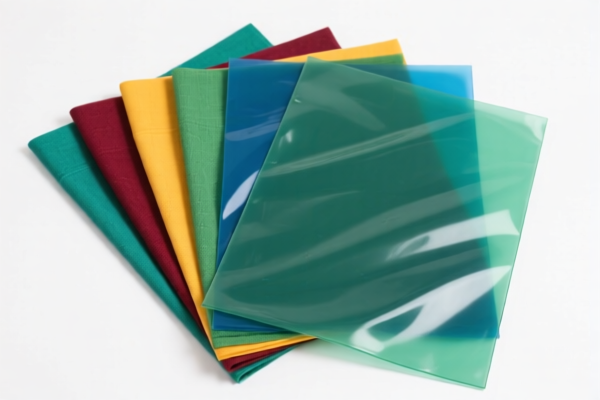
industrial grade textile plastic sheet
CN → US| HS Code | Tariff Rate | Origin | Destination | Doc |
|---|---|---|---|---|
| 3926905900 | 37.4% | CN | US | Official Doc |
| 3926905700 | 41.5% | CN | US | Official Doc |
| 5911900080 | 38.8% | CN | US | Official Doc |
| 3920992000 | 39.2% | CN | US | Official Doc |
| 3920995000 | 40.8% | CN | US | Official Doc |
Product Images



AI Analysis
🏭 Industrial Grade Textile Plastic Sheet
🌐 HS Code Reference & Customs Clearance Guide | 2026 Latest Tariff Analysis | Professional Customs Strategy
📌 I. Product Definition & Classification: What Exactly is an "Industrial Grade Textile Plastic Sheet" ?
This product presents a unique classification challenge because it combines two distinct material characteristics: Plastic and Textile Fiber. In international trade, the classification depends heavily on whether the plastic acts as the primary structural component (forming the sheet itself) or merely as a coating/impregnation on a textile substrate.
Based on the provided data, there are 5 potential HS Codes depending on the specific physical form (sheet vs. board/film) and functional end-use (general plastic goods vs. technical textile applications).
⚠️ Key Classification Logic:
- If it is a plastic sheet with minor textile attributes → Classify under Chapter 39 (Plastics).
- If it is a technical textile impregnated/coated with plastic → Classify under Chapter 59 (Impregnated Textiles).
- The presence of US Tariffs (Section 301 & 122) applies to all entries, significantly increasing landing costs.
📦 II. HS Code Classification Details (2026 Latest Tariff Authority Comparison)
| HS Code | Product Description & Logic | Application Scenario | Key Feature |
|---|---|---|---|
3926.90.59.00 |
Other plastic articles; Plastic sheet with textile fiber attributes | General-purpose plastic sheets with some textile content | "Other plastic products"; includes textile fiber attribute |
3926.90.57.00 |
Other plastic articles; Plastic sheet (intermediate/semi-finished) | Intermediate goods or semi-finished plastic sheeting | "Intermediate/Semi-finished" characteristics |
5911.90.00.80 |
Technical textile products; Plastic-coated/impregnated textile sheet | Technical/Industrial use textiles where material conflict is resolved in favor of textile | "Technical textile product"; no material conflict |
3920.99.20.00 |
Other plastic plates, sheets, etc.; Other plastic sheet | General plastic sheet classified by exclusion principle | "Other category inference"; fits general plastic sheet |
3920.99.50.00 |
Other plastic plates, sheets, etc.; Plastic plate/sheet/film/foil/belt | Plastic sheet fitting the definition of plate, sheet, film, foil, or belt | Fits "Plate, Sheet, Film, Foil, Belt" characteristics |
🔍 Critical Reminder:
- All five codes attract significant additional tariffs due to US-China trade policies.
- The base tariff varies from 2.4% to 6.5%, but the added tariffs are the dominant cost factor.
- Misclassification between Chapter 39 (Plastics) and Chapter 59 (Textiles) can lead to customs delays or penalties.
💰 III. 2026 Latest Tariff Rate Breakdown (Including Surcharges & Policy Add-ons)
✅ Applicable Country: United States (US)
✅ Country of Origin: China (CN)
✅ Effective Date: Current rates apply to imports including those from late 2025/2026.
🎯 1. 3926.90.59.00 —— Plastic Sheet with Textile Fiber Attributes
| Item | Detail |
|---|---|
| Base Tariff | 2.4% |
| Additional Tariff (Section 301) | +25.0% |
| 122 Clause Tariff | +10.0% |
| Total Effective Rate | 37.4% |
| Tax Calculation | CIF Value × 37.4% |
| De Minimis Exemption | ❌ Not Eligible (High tariff burden exceeds exemption thresholds) |
| Legal Basis | 3926.90.59.00 + USITC Footnotes + IEEPA Sections |
📌 Explanation:
- This code is for plastic sheets where textile fibers are present but do not change the essential character of the plastic article.
- The 37.4% total rate is a heavy cost burden.
🎯 2. 3926.90.57.00 —— Plastic Sheet (Intermediate/Semi-finished)
| Item | Detail |
|---|---|
| Base Tariff | 6.5% |
| Additional Tariff (Section 301) | +25.0% |
| 122 Clause Tariff | +10.0% |
| Total Effective Rate | 41.5% |
| Tax Calculation | CIF Value × 41.5% |
| De Minimis Exemption | ❌ Not Eligible |
| Legal Basis | 3926.90.57.00 + USITC Footnotes + IEEPA Sections |
📌 Note:
- This is the highest tariff among the plastic-based classifications.
- Use only if the product is clearly a semi-finished intermediate good.
🎯 3. 5911.90.00.80 —— Technical Textile Product (Plastic-Coated)
| Item | Detail |
|---|---|
| Base Tariff | 3.8% |
| Additional Tariff (Section 301) | +25.0% |
| 122 Clause Tariff | +10.0% |
| Total Effective Rate | 38.8% |
| Tax Calculation | CIF Value × 38.8% |
| De Minimis Exemption | ❌ Not Eligible |
| Legal Basis | 5911.90.00.80 + USITC Footnotes + IEEPA Sections |
📌 Important:
- If the product is deemed a "technical textile" (e.g., for filtration, insulation, or industrial strengthening) rather than just a plastic sheet, this code applies.
- No material conflict exists because the primary function is textile-based.
🎯 4. 3920.99.20.00 —— Other Plastic Sheet (General Category)
| Item | Detail |
|---|---|
| Base Tariff | 4.2% |
| Additional Tariff (Section 301) | +25.0% |
| 122 Clause Tariff | +10.0% |
| Total Effective Rate | 39.2% |
| Tax Calculation | CIF Value × 39.2% |
| De Minimis Exemption | ❌ Not Eligible |
| Legal Basis | 3920.99.20.00 + USITC Footnotes + IEEPA Sections |
📌 Note:
- This is a "catch-all" for plastic sheets that don’t fit more specific subheadings.
- Applies the "exclusion principle" if the product doesn’t meet other specific plastic criteria.
🎯 5. 3920.99.50.00 —— Plastic Plate, Sheet, Film, Foil, Belt
| Item | Detail |
|---|---|
| Base Tariff | 5.8% |
| Additional Tariff (Section 301) | +25.0% |
| 122 Clause Tariff | +10.0% |
| Total Effective Rate | 40.8% |
| Tax Calculation | CIF Value × 40.8% |
| De Minimis Exemption | ❌ Not Eligible |
| Legal Basis | 3920.99.50.00 + USITC Footnotes + IEEPA Sections |
📌 Note:
- Use this if the product strictly fits the physical description of "plate, sheet, film, foil, or belt" under Chapter 39.
🛠️ IV. Customs Clearance Practical Advice (Avoid Pitfalls)
✅ 1. Required Documentation Checklist (Mandatory)
| Document | Must Provide | Description |
|---|---|---|
| ✅ Product Specification Sheet | ✔️ | Must detail: Material composition (% Plastic vs. % Textile), Thickness, Width, Length, Density, and Intended Industrial Use. |
| ✅ Structure Diagram | ✔️ | Show layers: Is it a single-layer plastic sheet with fiber additives? Or a multi-layer laminate (textile core + plastic coating)? |
| ✅ Product Photos | ✔️ | Clear images of the sheet, edges, and any packaging labels showing material composition. |
| ✅ Commercial Invoice | ✔️ | Must clearly state: "Industrial Plastic Sheet with Textile Fiber Attributes" or "Technical Textile Sheet." Avoid vague terms like "Generic Sheet." |
| ✅ Packing List | ✔️ | Detail dimensions and weight to verify if it fits "Sheet" vs. "Article" classification. |
| ✅ Origin Certificate | ✔️ | Critical for proving Chinese origin (triggering additional tariffs) or potential exemption claims if routed through third countries (check trade agreements). |
✅ 2. Declaration Strategy (Key Mnemonic)
🔥 "Material First, Function Second, Declare Accurately!"
| Scenario | Correct Declaration | Incorrect Practice |
|---|---|---|
| Plastic-rich sheet (>50% plastic by weight/value) | 3926.90.59.00 or 3920.99.xxxxxx |
Declaring as pure textile → Risk of misclassification penalty |
| Textile-rich sheet (Textile is essential character) | 5911.90.00.80 |
Declaring as pure plastic → Underpayment risk if deemed textile |
| Semi-finished goods | 3926.90.57.00 |
Declaring as finished article → Potential duty difference |
| Vague "Plastic Sheet" | Specify subtype: Film, Foil, Board, or General Sheet | Using generic term → Customs may select highest duty code |
✅ 3. Special Circumstances Handling
| Situation | Recommendation |
|---|---|
| Mixed Material Composition | If >50% plastic → Use Chapter 39. If textile is essential → Use Chapter 59. Provide lab test results. |
| Industrial Use Proof | If claiming 5911.90.00.80, provide proof of technical use (e.g., filtration, insulation, reinforcement). |
| Third-Country Transshipment | ⚠️ Warning: Simply transshipping through Vietnam/Mexico may not avoid Section 301/122 tariffs if "substantial transformation" does not occur. |
| De Minimis Eligibility | ❌ Not Eligible. Due to total tariffs >25%, shipments cannot use de minimis exemptions for small parcels. |
🌍 V. Global Market Clearance Comparison (2026 Latest)
| Country/Region | Recommended HS Code | Total Tariff (China Origin) | Certification Requirements | Notes |
|---|---|---|---|---|
| 🇺🇸 USA | 3926.90.59.00 / 5911.90.00.80 |
37.4% – 41.5% | None specific, but accurate material declaration is key | High tariffs due to Section 301 & 122 |
| 🇨🇳 China | 3926.90.59.00 / 5911.90.00.80 |
~10% – 13% (Import Duty) | None specific | Lower entry barriers |
| 🇪🇺 EU | 3920.99.00 / 5911.90 |
~6.5% – 9.5% | REACH, RoHS (if plastic) | No Section 301 equivalent |
| 🇬🇧 UK | 3920.99.00 / 5911.90 |
~6.5% – 9.5% | UKCA, REACH | Post-Brexit rules apply |
| 🇦🇺 Australia | 3920.99.00 / 5911.90 |
~5% – 10% | RCM (if electrical components) | No high additional tariffs |
📌 Conclusion:
- The US market is uniquely challenging due to the叠加 (stacking) of Base Tariff + Section 301 (25%) + Section 122 (10%).
- Total tariffs range from 37.4% to 41.5%, making cost control critical.
- Europe and Asia offer significantly lower tariff burdens but require strict material compliance (REACH/RoHS).
📌 VI. Common Errors & Pitfalls (Lessons Learned)
❌ Error 1: Declaring a "Textile-Reinforced Plastic Sheet" as pure "Textile" (5911) to avoid plastic tariffs.
👉 Consequence: Customs detects plastic dominance → Re-classified to Chapter 39 → Back taxes + penalties.
❌ Error 2: Using "Plastic Sheet" without specifying the textile attribute.
👉 Consequence: Customs may assign a higher base rate or request excessive documentation → Delays at border.
❌ Error 3: Assuming small shipments are exempt from tariffs.
👉 Consequence: De Minimis does not apply to goods with Section 301/122 tariffs → Full duty collected even on small samples.
❌ Error 4: Misidentifying "Intermediate" vs. "Finished" goods.
👉 Consequence: Using 3926.90.57.00 for a finished product may trigger audits → Audit risk.
✅ Correct Practice:
"Industrial Plastic Sheet, 0.5mm thickness, reinforced with polyester fibers, for insulation use, Model XYZ, Material: 80% PP / 20% Polyester"
🎯 VII. Conclusion: Professional Declaration for Cost Efficiency
🎯 Remember:
🔹 "37% to 41% is the US reality for this product!"
🔹 "Material composition dictates the HS Code, not the marketing name."
🔹 "No de minimis exemption for China-origin plastic/textile hybrids."
📌 Pro Tip:
If your supply chain allows, consider substantial transformation in a third country (e.g., Vietnam) where the plastic and textile are combined into a new product form that changes the HS Code chapter entirely.
Recommendation:
📞 Apply for an Advance Ruling (Pre-Ruling) from US Customs and Border Protection (CBP) before shipment.
🚀 Accurate classification saves thousands in potential back-duties and delays!
✨ Professional Customs Clearance Starts with Precise Classification!
💼 Every percentage point of tariff matters – optimize your supply chain today!
Customer Reviews
About HS Code Classification
The Harmonized System (HS) is an internationally standardized nomenclature developed by the World Customs Organization (WCO) to classify traded products. Over 200 countries use the HS system as the basis for customs tariffs, trade statistics, and import/export regulations.
Each HS code follows a hierarchical structure:
- Chapter (2 digits) — Broad category of goods (e.g., Chapter 84: Machinery and Mechanical Appliances)
- Heading (4 digits) — More specific grouping within the chapter
- Subheading (6 digits) — Internationally standardized breakdown, used by all WCO member countries
- National subdivisions (8-10 digits) — Country-specific extensions for further classification, such as US HTSUS 10-digit codes
Correct HS code classification is essential for smooth customs clearance, accurate duty payment, and compliance with trade regulations. Misclassification can lead to customs delays, overpayment of duties, or penalties.
When importing from CN to US, the applicable tariff rates may include:
- Most-Favored-Nation (MFN) rate — The standard duty rate applied to WTO members
- General rate — Applied to countries without trade agreements
- Trade remedy duties — Additional tariffs such as Section 301 (anti-dumping), Section 232 (national security), or countervailing duties
The information provided on this page is for reference purposes only. For official classification, please consult with your local customs authority or a licensed customs broker.