industrial machinery component hs code 1605100590
CN → US| HS Code | Tariff Rate | Origin | Destination | Doc |
|---|---|---|---|---|
| 7326908688 | 87.9% | CN | US | Official Doc |
| 8487100080 | 35.0% | CN | US | Official Doc |
| 7326190080 | 87.9% | CN | US | Official Doc |
| 8487900080 | 88.9% | CN | US | Official Doc |
| 8487900080 | 88.9% | CN | US | Official Doc |
Product Images
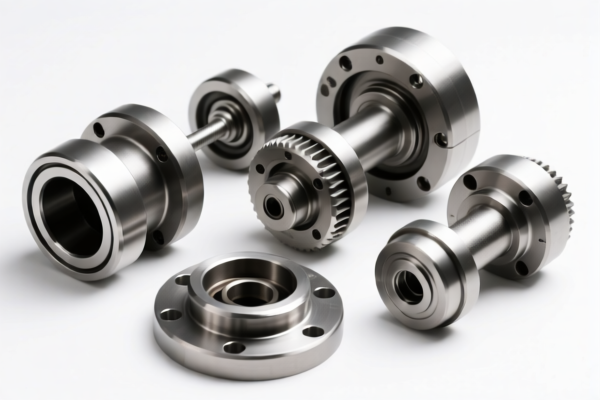
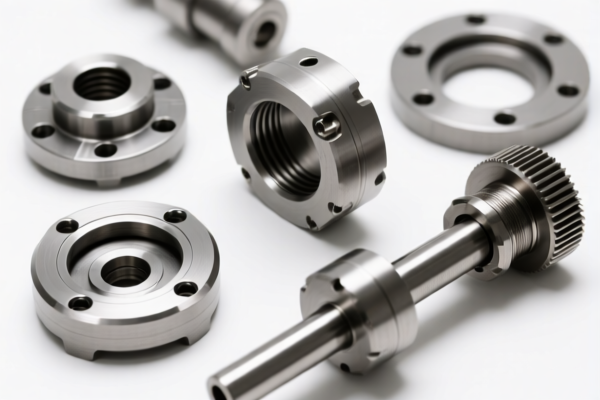
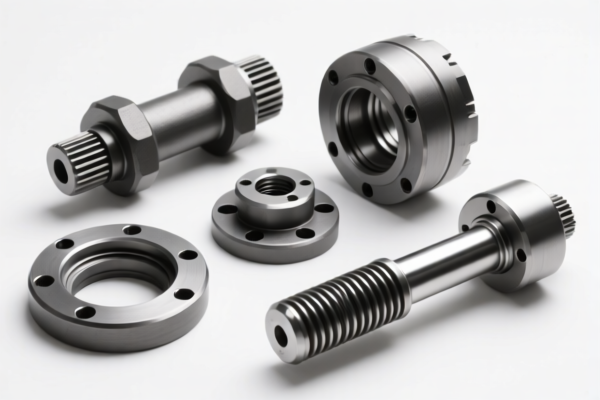
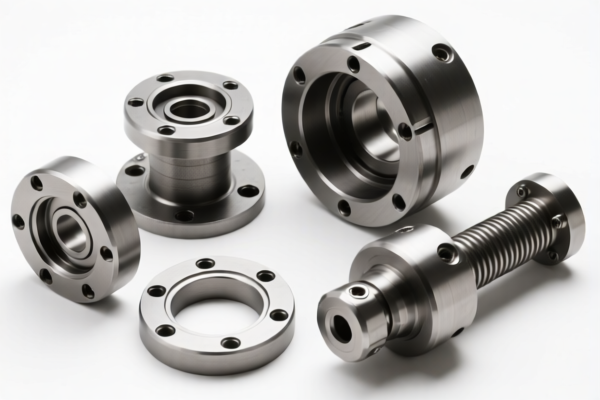
AI Analysis
🏭 Industrial Machinery Component (HS Code: 8487.10.00.80 & 8487.90.00.80)
🌐 HS Code Reference & Customs Clearance Guide | 2026 Latest Tariff Analysis | Professional Clearance Strategy
📌 I. Product Definition and Classification: What exactly is "Industrial Machinery Component"?
Industrial machinery components are essential parts used in the manufacturing, processing, or operation of industrial equipment. In international trade, these are generally classified under Chapter 84: Nuclear reactors, boilers, machinery and mechanical appliances; parts thereof.
However, the specific HS Code depends heavily on: 1. Function: Is it a propeller? A general mechanical part? 2. Material: Is it made of iron/steel, aluminum, or copper? 3. Electrical Features: Does it contain connectors, insulators, or coils?
⚠️ Key Distinction:
- If it is a ship/boat propeller →归类 to 8487.10.00.80
- If it is a general machinery part (no electrical features) →归类 to 8487.90.00.80
- If it is a forged/stamped iron/steel article not elsewhere specified →归类 to 7326.19.00.80 or 7326.90.86.88
📦 II. HS Code Classification Details (2026 Latest Tariff Authority Comparison)
Based on the provided data, here are the exact HS Codes and their corresponding tax structures. Note that the user input 1605100590 is incorrect for standard industrial machinery components (it belongs to Chapter 16: Food Preparations). The correct classifications are below:
| HS Code | Product Description | Applicable Scenario | Electrical Features? |
|---|---|---|---|
8487.10.00.80 |
Ships' or boats' propellers and blades therefor; Other machinery parts not elsewhere specified | Marine propulsion systems, specialized non-electrical industrial parts | ❌ No |
8487.90.00.80 |
Other machinery parts (not containing electrical connectors, insulators, etc.) | General mechanical parts for factories, engines, conveyors | ❌ No |
7326.19.00.80 |
Other articles of iron or steel: Forged or stamped, but not further worked | Simple forged/stamped steel parts (e.g., brackets, basic plates) | ❌ N/A |
7326.90.86.88 |
Other articles of iron or steel: Other (e.g., cast, welded, fabricated) | Complex iron/steel structures, welded assemblies, custom fabricated parts | ❌ N/A |
🔍 Important Reminder:
- All parts must NOT contain electrical features (connectors, insulators, coils, contacts) to fall under Chapter 84 or 73. If they do, they may fall under Chapter 85. - Material matters: Iron/steel parts (Chapter 73) have different tariffs than other machinery parts (Chapter 84).
💰 III. 2026 Latest Tariff Rate Breakdown (Including Additional Taxes)
✅ Applicable Country: United States (US)
✅ Origin: China (CN)
✅ Effective Time: Current 2025/2026 tariffs apply
🎯 1. 8487.10.00.80 – Ships' Propellers & Blades
| Item | Content |
|---|---|
| Base Tariff | 0.0% |
| Additional Tariff (Section 301) | +25.0% |
| Total Tariff | 25.0% |
| Tax Calculation | CIF Value × 25% |
| De Minimis Exemption | ❌ Not Applicable |
| Legal Basis | Section 301 Tariff List |
📌 Explanation:
- This is the lowest risk category among the options. - No additional "Steel/Aluminum/Copper" surcharge applies because it is not classified under the specific steel/aluminum tariffs (which typically target structural or raw materials).
🎯 2. 8487.90.00.80 – Other Machinery Parts
| Item | Content |
|---|---|
| Base Tariff | 3.9% |
| Additional Tariff (Section 301) | +25.0% |
| Steel/Aluminum/Copper Surcharge | +50.0% ⚠️ |
| Total Tariff | 78.9% |
| Tax Calculation | CIF Value × 78.9% |
| De Minimis Exemption | ❌ Not Applicable |
| Legal Basis | Section 301 + Steel/Aluminum Tariffs |
📌 Critical Note:
- This is a HIGH COST category. - The 78.9% rate includes a 50% surcharge for steel/aluminum/copper products. - Even if the part is small, if it is made of steel/aluminum/copper and not specified elsewhere, it triggers this surcharge.
🎯 3. 7326.19.00.80 – Forged/Stamped Iron/Steel Articles
| Item | Content |
|---|---|
| Base Tariff | 2.9% |
| Additional Tariff (Section 301) | +25.0% |
| Steel/Aluminum/Copper Surcharge | +50.0% ⚠️ |
| Total Tariff | 77.9% |
| Tax Calculation | CIF Value × 77.9% |
| De Minimis Exemption | ❌ Not Applicable |
| Legal Basis | Section 301 + Steel/Aluminum Tariffs |
📌 Explanation:
- Similar to8487.90.00.80, but base rate is slightly lower (2.9% vs 3.9%). - Still subject to the 50% surcharge if made of steel.
🎯 4. 7326.90.86.88 – Other Iron/Steel Articles
| Item | Content |
|---|---|
| Base Tariff | 2.9% |
| Additional Tariff (Section 301) | +25.0% |
| Steel/Aluminum/Copper Surcharge | +50.0% ⚠️ |
| Total Tariff | 77.9% |
| Tax Calculation | CIF Value × 77.9% |
| De Minimis Exemption | ❌ Not Applicable |
| Legal Basis | Section 301 + Steel/Aluminum Tariffs |
📌 Explanation:
- Applies to more complex iron/steel articles (welded, cast, etc.). - Same high tariff burden as forged parts.
🛠️ IV. Customs Clearance Practical Advice (Real-World Pitfall Avoidance)
✅ 1. Document Checklist (Required)
| Document | Mandatory? | Notes |
|---|---|---|
| ✅ Product Specification Sheet | ✔️ | Must detail dimensions, material, weight, function |
| ✅ Material Declaration | ✔️ | Explicitly state if steel, aluminum, copper, or other |
| ✅ Photo of Product (with label) | ✔️ | Clear view of part number, brand, and physical appearance |
| ✅ Commercial Invoice | ✔️ | Must match HS Code description exactly |
| ✅ Packing List | ✔️ | Include net/gross weight |
| ✅ Certificate of Origin (CO) | ✔️ | If claiming preferential rates (not applicable here for CN-US) |
✅ 2. Classification Strategy (Key Mantra)
🔥 "Propellers Low Tax, Steel Parts High Tax, Electrical Features Change Everything!"
| Scenario | Correct HS Code | Tariff Rate | Risk |
|---|---|---|---|
| Ship Propeller | 8487.10.00.80 |
25% | ✅ Low |
| General Non-Electrical Part | 8487.90.00.80 |
78.9% | ⚠️ High (Steel surcharge) |
| Forged/Stamped Steel Part | 7326.19.00.80 |
77.9% | ⚠️ High (Steel surcharge) |
| Complex Steel Part | 7326.90.86.88 |
77.9% | ⚠️ High (Steel surcharge) |
| Part with Electrical Features | NOT Listed Above | Varies | ❌ Misclassification Risk |
📌 Avoid These Mistakes:
- Do not classify a steel propeller as7326.90.86.88→ You pay 77.9% instead of 25%. - Do not classify a simple steel bracket as8487.10.00.80→ Customs will reject it; it's not a propeller. - Do not assume "machinery part" automatically means 25%. If it's steel and not a propeller, it's likely ~78%.
✅ 3. Special Handling Tips
| Situation | Recommendation |
|---|---|
| Mixed Shipment | Separate propellers (25%) from other steel parts (78%) in declaration to optimize costs if possible |
| Material Substitution | If possible, use non-ferrous materials (e.g., aluminum, plastic, composite) that are not subject to the 50% steel surcharge, but check HS Code rules carefully |
| Pre-Ruling | Apply for a US CBP Advance Ruling before shipping to confirm if your part qualifies for 8487.10.00.80 (25%) or 8487.90.00.80 (78.9%) |
| Electrical Components | If the part has any wire, connector, or coil, do not use these codes. It may fall under Chapter 85, which has different tariffs |
🌍 V. Global Market Comparison (2026 Update)
| Country/Region | Recommended HS Code | Estimated Tariff (China Origin) | Notes |
|---|---|---|---|
| 🇺🇸 USA | 8487.10.00.80 |
25.0% | Best option if applicable |
| 🇺🇸 USA | 8487.90.00.80 |
78.9% | High cost for general steel parts |
| 🇪🇺 EU | Varies | 0-6.5% | No Section 301 tariffs |
| 🇨🇳 China | Varies | 0-10% | Import duty for foreign machinery parts |
| 🇯🇵 Japan | Varies | 0-7.5% | Generally low tariffs |
📌 Conclusion:
- USA is the most expensive market for industrial machinery components due to Section 301 and Steel/Aluminum tariffs. - Propellers (8487.10.00.80) are significantly cheaper (25%) than other machinery parts (78.9%). - Strategic Advice: If your product is a propeller, ensure it is clearly described as such. If it's a general part, consider if material substitution (e.g., non-steel) can reduce tariff burden, but verify HS Code rules first.
📌 VI. Common Errors & Pitfalls (Lessons Learned)
❌ Error 1: Classifying a steel bolt/nut as 8487.10.00.80
👉 Consequence: Denied entry; reclassified to 7318 (screws/nuts) with different, possibly higher tariffs.
❌ Error 2: Ignoring the 50% Steel Surcharge on 8487.90.00.80
👉 Consequence: Budget overrun by ~50% on CIF value.
❌ Error 3: Using HS Code 1605.10.05.90 (as in user input)
👉 Consequence: Complete Misclassification. This code is for Packaged Prepared Fish. Your machinery part will be seized or heavily fined.
❌ Error 4: Omitting Material Declaration
👉 Consequence: Customs cannot verify the 50% surcharge applicability → Delays and penalties.
✅ Correct Approach:
"Marine Propeller, Steel, Model XYZ, No Electrical Features" → 8487.10.00.80
"General Machinery Bracket, Steel, Forged, No Electrical Features" → 7326.19.00.80 or 8487.90.00.80
🎯 VII. Conclusion: Professional Classification Saves Money!
🎯 Remember the Mantra:
🔹 "Propellers Pay 25%, Steel Parts Pay 78%!"
🔹 "Electrical Features? Think Again!"
🔹 "Never Use Chapter 16 for Machinery!"
📌 Pro Tip:
If your component is aluminum or plastic, check if it still triggers the steel surcharge. Usually, the 50% surcharge is specific to steel and aluminum products from China. If you can use composite materials, you might avoid the surcharge, but confirm with a customs broker.
📣 Immediate Action:
📞 Contact a licensed customs broker
📄 Prepare product specs and material declaration
🚀 Apply for CBP Advance Ruling to lock in the 25% tariff if applicable!
✨ Professional clearance starts with accurate classification!
💼 Every dollar of tariff saved is pure profit!
Customer Reviews
About HS Code Classification
The Harmonized System (HS) is an internationally standardized nomenclature developed by the World Customs Organization (WCO) to classify traded products. Over 200 countries use the HS system as the basis for customs tariffs, trade statistics, and import/export regulations.
Each HS code follows a hierarchical structure:
- Chapter (2 digits) — Broad category of goods (e.g., Chapter 84: Machinery and Mechanical Appliances)
- Heading (4 digits) — More specific grouping within the chapter
- Subheading (6 digits) — Internationally standardized breakdown, used by all WCO member countries
- National subdivisions (8-10 digits) — Country-specific extensions for further classification, such as US HTSUS 10-digit codes
Correct HS code classification is essential for smooth customs clearance, accurate duty payment, and compliance with trade regulations. Misclassification can lead to customs delays, overpayment of duties, or penalties.
When importing from CN to US, the applicable tariff rates may include:
- Most-Favored-Nation (MFN) rate — The standard duty rate applied to WTO members
- General rate — Applied to countries without trade agreements
- Trade remedy duties — Additional tariffs such as Section 301 (anti-dumping), Section 232 (national security), or countervailing duties
The information provided on this page is for reference purposes only. For official classification, please consult with your local customs authority or a licensed customs broker.