industrial o ring
CN → US| HS Code | Tariff Rate | Origin | Destination | Doc |
|---|---|---|---|---|
| 4016935010 | 37.5% | CN | US | Official Doc |
| 4016931010 | 37.5% | CN | US | Official Doc |
| 3926904510 | 38.5% | CN | US | Official Doc |
| 3926904510 | 38.5% | CN | US | Official Doc |
| 4016931010 | 37.5% | CN | US | Official Doc |
Product Images

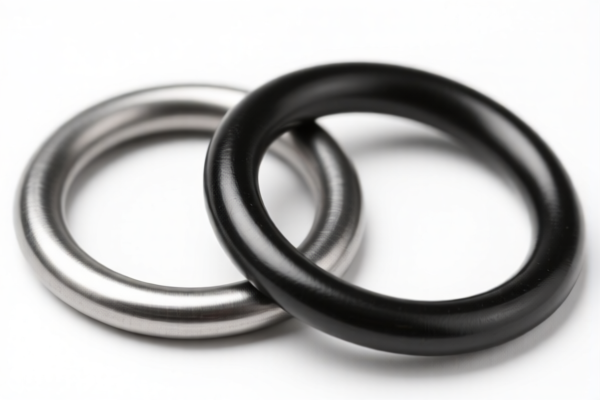

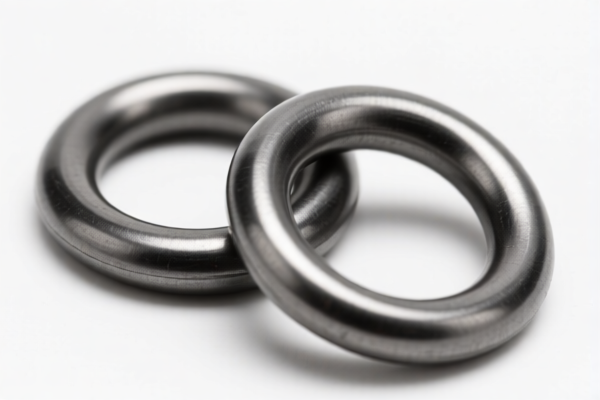
AI Analysis
🛠️ Industrial O-Rings (Sealing Gaskets)
🌐 HS Code Reference & Customs Clearance Guide | 2026 Latest Tariff Analysis | Professional Compliance Strategy
📌 I. Product Definition: What Exactly is an "Industrial O-Ring"?
An Industrial O-Ring is a simple yet critical mechanical seal in the shape of a torus (doughnut). It is placed in a groove between two or more mating surfaces, compressed to form a leak-proof seal. In international trade, the classification hinges almost entirely on the material composition, specifically whether it is made of rubber or plastic.
⚠️ Critical Distinction:
- If the O-ring is made of Vulcanized Rubber (natural or synthetic) → It falls under Chapter 40 (Rubber).
- If the O-ring is made of Plastic (and no rubber is specified) → It falls under Chapter 39 (Plastics).
- Note: Most industrial O-rings are rubber. If the material is unknown, customs may default to the plastic classification or request proof, leading to delays.
📦 II. HS Code Classification Details (2026 Latest Tariff Data)
Based on the provided data, here are the specific HS Codes for "Industrial O-Rings" and the rationale for each classification.
| HS Code | Product Description | Material/State | Rationale for Classification | Total Tax Rate |
|---|---|---|---|---|
4016.93.50.10 |
O-Ring (Standard) | Vulcanized Rubber | Matches shape/form. Inferred material is vulcanized rubber based on industrial standard usage. | 37.5% |
4016.93.10.10 |
O-Ring (General) | Vulcanized Rubber | Matches shape and use (sealing). Explicitly identified as vulcanized rubber. | 37.5% |
4016.93.10.10 |
Food-Grade O-Ring | Vulcanized Rubber | Food-safe application, shape matches, material is explicitly vulcanized rubber. | 37.5% |
3926.90.45.10 |
O-Ring (Plastic/Unknown) | Plastic (or Unspecified) | Specific use/shape matches, but no material conflict noted implies plastic or unspecified origin. | 38.5% |
3926.90.45.10 |
O-Ring (Generic) | Plastic (or Unspecified) | Shape and use match perfectly, but material not explicitly defined. Defaults to plastic classification if rubber is not proven. | 38.5% |
🔍 Key Insight:
- Rubber O-Rings (4016...) are generally cheaper in total tax (37.5%) compared to Plastic O-Rings (3926...) which are 38.5% in this specific dataset. - Do not misclassify: Claiming a rubber O-ring as "plastic" to avoid rubber-specific regulations is risky. Conversely, declaring a plastic O-ring as "rubber" can lead to penalties if material tests prove otherwise.
💰 III. 2026 Latest Tariff Rate Breakdown (High Detail)
✅ Applicable Country: United States (US)
✅ Origin: China (CN)
✅ Effective Date: Post-November 2025 (Current Status)
🎯 1. For Vulcanized Rubber O-Rings (4016.93.50.10 & 4016.93.10.10)
| Item | Detail |
|---|---|
| Base Tariff | 2.5% (Most Favored Nation rate for rubber articles) |
| Section 301 Add-on | +25.0% (Trade remedy tariffs against China) |
| Section 122 Add-on | +10.0% (Specific statutory add-on, often linked to certain manufacturing or emergency powers) |
| Total Effective Rate | 37.5% |
| Calculation Basis | CIF Value (Cost + Insurance + Freight) × 37.5% |
| De Minimis Exemption | ❌ NOT APPLICABLE (deny_de_minimis) |
| Legal Path | USITC:4016.93.10.10 → Section 301: Footnote 9903.88.01 → Section 122 |
📌 Explanation:
- Even though the base duty is low (2.5%), the Section 301 (25%) and Section 122 (10%) tariffs make the total burden significant. - Section 122 is a crucial detail here. While Section 301 is well-known, Section 122 is a specific statutory provision that adds an additional layer of duty on certain goods, often used for national security or economic reasons. It applies explicitly to these rubber classifications in the provided data.
🎯 2. For Plastic/Unspecified O-Rings (3926.90.45.10)
| Item | Detail |
|---|---|
| Base Tariff | 3.5% (Plastic articles tariff) |
| Section 301 Add-on | +25.0% (Trade remedy tariffs against China) |
| Section 122 Add-on | +10.0% (Same statutory add-on as above) |
| Total Effective Rate | 38.5% |
| Calculation Basis | CIF Value × 38.5% |
| De Minimis Exemption | ❌ NOT APPLICABLE (deny_de_minimis) |
| Legal Path | USITC:3926.90.45.10 → Section 301 → Section 122 |
📌 Note:
- Plastic O-rings are 1% more expensive in total duty than rubber O-rings in this specific dataset (38.5% vs 37.5%). - This is counter-intuitive as rubber is often considered "more regulated," but here the base rate for plastic (3.5%) is higher than for rubber (2.5%).
🛠️ IV. Customs Clearance Practical Advice (Avoid Pitfalls)
✅ 1. Required Documentation Checklist
| Document | Mandatory? | Purpose |
|---|---|---|
| Product Specification Sheet | ✅ YES | Must explicitly state Material Composition (e.g., "Vulcanized Nitrile Rubber" or "PTFE Plastic"). |
| Material Test Report | ✅ YES | Especially if classifying as Rubber (4016...). Customs may require proof that it is NOT plastic. |
| Commercial Invoice | ✅ YES | Description must be precise: "Vulcanized Rubber O-Ring, Part No. XYZ, Used for Hydraulic Sealing". |
| Certificate of Origin (CO) | ✅ YES | Proves Origin: China. Essential for applying the correct Section 301/122 duties. |
| Packaging List | ✅ YES | Details quantity, weight, and dimensions. |
✅ 2. Classification Strategy & Tips
🔥 "Material First, Shape Second. Don't Guess, Prove!"
| Scenario | Correct Classification | Incorrect Classification | Consequence of Error |
|---|---|---|---|
| Rubber O-Ring | 4016.93.10.10 (37.5%) |
3926.90.45.10 (38.5%) |
Overpayment of duty (minor) OR misdeclaration penalty if plastic content is detected. |
| Plastic O-Ring | 3926.90.45.10 (38.5%) |
4016.93.10.10 (37.5%) |
Underpayment of duty. Customs will reclassify and charge the difference + interest + penalties. |
| Unknown Material | HIGH RISK | Any | Delay for examination. Customs may take a sample for lab testing. |
📌 Crucial Tip:
If you are importing Food-Grade O-rings, ensure you specify "Food-Grade Vulcanized Rubber" in the description. This confirms the material is rubber (4016...) but meets additional safety standards. It does not change the HS Code base, but it may affect FDA requirements (not tariff).
✅ 3. Special Circumstances
| Situation | Advice |
|---|---|
| Mixed Shipments | If a shipment contains both Rubber and Plastic O-rings, separate them on the invoice. Do not combine into one line item. Misclassification of one part can jeopardize the whole shipment. |
| Origin Change | If the O-rings are not from China (e.g., Vietnam, Malaysia), the Section 301 (25%) and Section 122 (10%) tariffs may be waived. Check for FTAs (Free Trade Agreements). |
| "122 Clause" Confusion | Do not ignore the Section 122 tariff. It is not an optional fee. It is a statutory duty applied to specific Chinese imports. Ensure your broker includes it in the calculation. |
🌍 V. Global Market Comparison (2026 Snapshot)
| Market | Recommended HS Code | Base Duty | Section 301/122? | Total Est. Rate | Notes |
|---|---|---|---|---|---|
| 🇺🇸 USA | 4016.93.10.10 (Rubber) |
2.5% | ✅ Yes (+25% +10%) | 37.5% | High barriers. Material proof is key. |
| 🇨🇳 China | 4016.93.10.10 |
~5-10% | ❌ No | ~15-20% | Lower barriers for imports into China. |
| 🇪🇺 EU | 4016.93.00 |
~3.7% | ❌ No | ~3.7% | No Section 301/122. CE marking may be needed. |
| 🇬🇧 UK | 4016.93.00 |
~3.7% | ❌ No | ~3.7% | Post-Brexit rules apply. |
📌 Conclusion:
The USA is the most complex market for O-Rings due to the Section 301 and Section 122 tariffs. The total duty of 37.5-38.5% is significant. For non-Chinese origins, the duty drops dramatically.
📌 VI. Common Errors & Pitfalls (Blood & Tears Lessons)
❌ Error 1: Declaring "O-Ring" without specifying material.
👉 Result: Customs delays for lab testing. If rubber is found but declared as plastic, you pay back taxes + penalties.
❌ Error 2: Ignoring the Section 122 tariff.
👉 Result: Underpayment. Customs will assess the 10% add-on later, plus interest. Always include it in your landed cost calculation.
❌ Error 3: Claiming "De Minimis" exemption.
👉 Result: Rejection. O-Rings (HS 4016/3926) are explicitly denied de minimis status under current US law. Every shipment, even small samples, is subject to duty.
❌ Error 4: Using "Gasket" or "Seal" vague terms.
👉 Result: Ambiguity. Use precise terms: "Vulcanized Rubber O-Ring" or "PTFE Plastic O-Ring".
✅ Correct Declaration Example:
"O-RING, VULCANIZED RUBBER, BLACK, 1/2'ID X 1/4' CROSS SEC, PART #A123, MADE IN CHINA. USE: HYDRAULIC SEALING."
🎯 VII. Conclusion: Professional Classification Saves Money!
🎯 Remember the Formula:
🔹 Rubber O-Ring →
4016.93.10.10→ 37.5% (2.5 Base + 25 Sec301 + 10 Sec122)
🔹 Plastic O-Ring →3926.90.45.10→ 38.5% (3.5 Base + 25 Sec301 + 10 Sec122)
🔹 Non-China Origin → Check for 0% Sec301/122 → Duty drops to 2.5% or 3.5%!🔹 "Material Defines the Code, Origin Defines the Cost, Section 122 Defines the Surprise!"
📌 Pro Tip:
If you are importing large volumes, consider supply chain diversification to countries like Vietnam or Mexico. Even with similar products, avoiding Section 301 and Section 122 tariffs can save you 35% in duty costs.
📞 Action: Contact your customs broker before shipping. Provide material safety data sheets (MSDS) to prove rubber vs. plastic.
✨ Accurate Classification is the First Step to Profitable Export!
💼 Don't Let Hidden Duties Eat Your Margins!
Customer Reviews
About HS Code Classification
The Harmonized System (HS) is an internationally standardized nomenclature developed by the World Customs Organization (WCO) to classify traded products. Over 200 countries use the HS system as the basis for customs tariffs, trade statistics, and import/export regulations.
Each HS code follows a hierarchical structure:
- Chapter (2 digits) — Broad category of goods (e.g., Chapter 84: Machinery and Mechanical Appliances)
- Heading (4 digits) — More specific grouping within the chapter
- Subheading (6 digits) — Internationally standardized breakdown, used by all WCO member countries
- National subdivisions (8-10 digits) — Country-specific extensions for further classification, such as US HTSUS 10-digit codes
Correct HS code classification is essential for smooth customs clearance, accurate duty payment, and compliance with trade regulations. Misclassification can lead to customs delays, overpayment of duties, or penalties.
When importing from CN to US, the applicable tariff rates may include:
- Most-Favored-Nation (MFN) rate — The standard duty rate applied to WTO members
- General rate — Applied to countries without trade agreements
- Trade remedy duties — Additional tariffs such as Section 301 (anti-dumping), Section 232 (national security), or countervailing duties
The information provided on this page is for reference purposes only. For official classification, please consult with your local customs authority or a licensed customs broker.