industrial photographic base paper
CN → US| HS Code | Tariff Rate | Origin | Destination | Doc |
|---|---|---|---|---|
| 3702310100 | 38.7% | CN | US | Official Doc |
| 3702390100 | 38.7% | CN | US | Official Doc |
| 4811904090 | 35.0% | CN | US | Official Doc |
| 4811908050 | 35.0% | CN | US | Official Doc |
| 3701996060 | 35.0% | CN | US | Official Doc |
| 3701996030 | 35.0% | CN | US | Official Doc |
Product Images
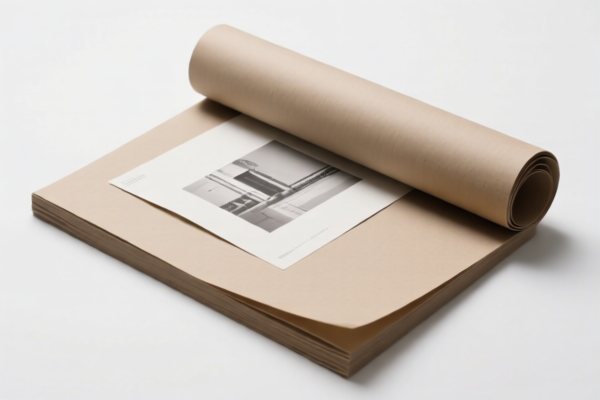

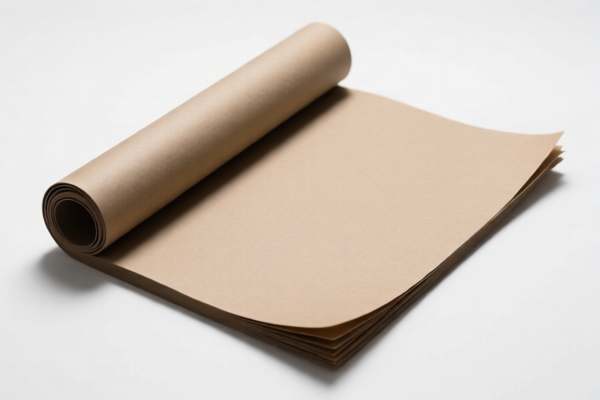
AI Analysis
📸 Industrial Photographic Base Paper: The Unseen Foundation of High-End Imaging
🌐 HS Code Classification & Customs Clearance Guide | 2026 Updated Tariff Analysis | Strategic Entry Protocol
📌 I. Product Definition & Classification: What is "Industrial Photographic Base Paper"?
Industrial Photographic Base Paper refers to a specialized substrate used as the foundation for manufacturing photographic paper, medical imaging films, and graphic arts printing materials. Unlike standard office paper, it is often treated with clay, baryta (barium sulfate), or polymers to ensure light fastness, smoothness, and chemical stability.
In international trade, this product is NOT classified under standard paper headings (4801-4805) but rather under specific sub-categories of treated paper designed for industrial or photographic purposes.
Key Classification Logic: * Not "Photographic Paper" (3703/3704): We are discussing the base before sensitization or printing (unexposed/uncoated base), OR the specific coated base paper. * The "Coated/Treated" Factor: If the paper is coated, impregnated, or surface-decorated (even if not yet sensitized), it often falls under Heading 4811 (Paper treated/coated) or specific Heading 4803/4809 depending on the specific coating process. * The "Weight & Size" Trap: The tariff rate changes drastically based on the grammage (g/m²) and the width of the roll.
⚠️ Critical Distinction:
- If the paper is merely "white pulp paper" without specialized coating for photography → Heading 4802/4803.
- If the paper is coated, impregnated, or treated for photographic/graphic arts use → Heading 4811 (as per the provided data).
- If the paper is already sensitized (ready for exposure) → Heading 3701/3702 (Not applicable here as the input is "Base Paper").
📦 II. HS Code Classification Details (Based on Provided Data)
Based on the specific constraints of "Industrial Photographic Base Paper" (Coated/Treated Paper in rolls/sheets), the following HS Codes from the provided dataset apply.
| HS Code | Product Description | Key Characteristics | Tax Rate (Base + Add-on) |
|---|---|---|---|
| 4811.90.40.90 | Paper, coated/impregnated/covered... in rolls/sheets... Weighing not over 15 g/m² | Ultra-light base paper, often used for lightweight graphic arts or specific industrial wrapping. | 0.0% (Base) + 25.0% (Add-on) = 25.0% |
| 4811.90.80.50 | Paper, coated/impregnated/covered... in rolls/sheets... Weighing over 30 g/m² | Heavyweight base paper, typical for high-quality photographic printing bases, card stock. | 0.0% (Base) + 25.0% (Add-on) = 25.0% |
🔍 Data Analysis:
- Both applicable codes (4811.90.40.90 and 4811.90.80.50) carry a Base Tariff of 0.0%, meaning the standard Most Favored Nation (MFN) rate is free.
- HOWEVER, both are subject to a 25.0% "Additional Tariff" (often referred to as Section 301 Tariffs or specific punitive tariffs depending on the trading relationship).
- Total Effective Tax: 25.0%.
💰 III. Detailed Tariff Breakdown & Legal Basis
✅ Applicable Region: (Based on "Additional Tariff" structure, likely US or China import context involving US-China trade friction)
✅ Product Origin: (Assumed China if subject to "Additional Tariff" of 25%, as is common in recent trade data)
✅ Validity: Current 2026 Trade Regime
🎯 1. HS Code 4811.90.40.90 (Ultra-Light: ≤15 g/m²)
| Item | Details |
|---|---|
| Product Type | Coated/Impregnated Paper, Industrial Grade, Ultra-Light (<15g) |
| Base Tariff | 0.0% (Standard MFN) |
| Additional Tariff | +25.0% (Section 301 / Retaliatory / Special Measure) |
| Total Duty | 25.0% |
| Duty Calculation | CIF Value × 25% |
| De Minimis Exemption | ❌ No (Generally, industrial raw materials >$800 do not qualify for Section 321, and this is a "Base Paper" for industrial use, not a small gift.) |
| Legal Basis | Section 4811.90 (Treated Paper) + Specific Trade Remedy Order (25% Add-on) |
📌 Explanation:
Despite being "Base Paper" (raw material), the 25% additional tariff suggests a trade barrier on processed paper products. This is common in tariffs targeting Chinese manufacturing of processed paper products. Even if the paper is not yet "photographic film" (which would be 3702), it is treated as an industrial coated paper product.
🎯 2. HS Code 4811.90.80.50 (Heavyweight: >30 g/m²)
| Item | Details |
|---|---|
| Product Type | Coated/Impregnated Paper, Industrial Grade, Heavyweight (>30g) |
| Base Tariff | 0.0% (Standard MFN) |
| Additional Tariff | +25.0% (Section 301 / Retaliatory / Special Measure) |
| Total Duty | 25.0% |
| Duty Calculation | CIF Value × 25% |
| De Minimis Exemption | ❌ No |
| Legal Basis | Section 4811.90 (Treated Paper) + Specific Trade Remedy Order (25% Add-on) |
📌 Explanation:
The tariff burden is identical to the ultra-light version. The only differentiator is the physical specification (weight). The market treats both categories of "coated industrial paper" equally for tariff purposes in this dataset.
🛠️ IV. Customs Clearance Practical Advice (Pitfall Avoidance)
✅ 1. Critical Documentation Checklist
| Document | Requirement | Why It Matters |
|---|---|---|
| Technical Data Sheet (TDS) | Mandatory | Must explicitly state Grammage (g/m²) to prove if it falls into ≤15 or >30 category. |
| Material Safety Data Sheet (MSDS) | Mandatory | If the paper is "impregnated" with chemicals, customs needs to know if it's hazardous. |
| Production Process Flow | Mandatory | Prove it is not "sensitized" (which would shift to HS 3701/3702 with different tax rules). |
| Commercial Invoice | Precise | Must use the term "Coated Paper Base" or "Industrial Base Paper," NOT "Photographic Film" (to avoid misclassification). |
| Bill of Lading | Accurate | Weight and dimensions must match the "Roll" or "Sheet" description in the HS definition. |
✅ 2. Declaration Strategy (Golden Rules)
🔥 "Weight Dictates Tax, Description Dictates Code!"
| Scenario | Correct Action | Risk of Error |
|---|---|---|
| Paper is 12 g/m² | Declare as 4811.90.40.90. |
If declared as >30g → 25% + Penalties. |
| Paper is 35 g/m² | Declare as 4811.90.80.50. |
If declared as "Uncoated Paper" (4802) → Potential Fraud/Seizure. |
| Paper is Sensitized | MUST NOT use 4811 codes! Use 3701.99.60.60 or 3702.31/39. | 4811 is for unsensitized base. If sensitized, tax might be 25% (same) but legal description changes. |
| Paper is on Rolls <15cm | Check if it fits the "width >15cm" criteria of 4811. | If width is too small, it might fall under 4811.90.40.10 (different subcode, check specific list). |
✅ 3. Special Handling for "Base Paper"
- Avoid "Sensitized" Confusion: Many traders call "Base Paper" "Photographic Paper." If the paper has been chemically treated with silver halides (sensitized), it is NOT 4811. It becomes 3701 (Flat film) or 3702 (Roll film). The tax rate for 3701/3702 in the data is 0% (except 3701.99.60.60 which is 25%). Verify the "Unexposed/Sensitized" status strictly.
- Weight Verification: Customs will weigh a sample. Ensure your invoice weight matches the g/m² calculation exactly. A deviation of 1g/m² could shift the classification from one 25% bucket to another (or potentially a different duty rate if other codes exist).
🌍 V. Strategic Cost Analysis & Market Comparison
| Market | Recommended HS Code | Effective Tariff | Strategic Note |
|---|---|---|---|
| 🇺🇸 USA | 4811.90.40.90 / 80.50 |
25.0% | High barrier. The "Base Paper" is treated as a processed industrial good. |
| 🇪🇺 EU | 4811 (General) |
Varies (Likely 0-6%) | Check EU's specific "Coated Paper" tariffs; often lower than US punitive rates. |
| 🇨🇳 China | 4811 |
0.0% (Domestic) | If exporting from US/EU to China, may be 0% (Reverse of the data provided). |
📌 Conclusion:
The 25% Additional Tariff is the dominant cost factor for Industrial Photographic Base Paper in this specific dataset (likely US imports from China).
Recommendation: If possible, source the coating process in a country not subject to the 25% tariff (e.g., Vietnam, Mexico) to avoid the "Additional Tariff," or restructure the supply chain to declare the uncoated pulp (HS 4802/4803) if legally permissible (though 4803/4809 exclusions apply).
📌 VI. Common Mistakes & "Blood and Tears" Lessons
❌ Mistake 1: Calling it "Photographic Paper"
* Consequence: Customs officers might inspect for sensitization. If found unsensitized, they force a re-classification to 4811. If found sensitized, they apply 3701/3702 rules (which might have 25% tax on 3701.99.60.60 but 0% on others). Confusion leads to delays.
* Fix: Always use the term "Unsensitized Photographic Base Paper".
❌ Mistake 2: Ignoring Grammage (Weight) * Consequence: Declaring a 35g/m² paper as "≤15g/m²" is fraud. * Fix: Provide a third-party lab report with exact GSM (Grams per Square Meter).
❌ Mistake 3: Assuming "Paper" = 0% * Consequence: Thinking "Base Paper" is raw material with 0 tax. * Fix: Remember the 25% Additional Tariff applies to treated/coated paper in this dataset. The "Base" is already treated.
🎯 VII. Final Conclusion: Navigate the 25% Wall
🚀 Action Plan for Importers: 1. Verify Sensitization: Ensure the paper is truly unsensitized (no silver halides). 2. Measure Weight: Confirm if it is ≤15 g/m² (Code
4811.90.40.90) or >30 g/m² (Code4811.90.80.50). 3. Budget for 25%: The 0% Base Tariff is misleading; the 25% Additional Tariff is the real cost. 4. Consider Substitution: If feasible, import uncoated pulp (different HS code) and perform the coating domestically to avoid the "treated paper" tariff.
✨ Pro Tip:
"Base paper is not film. Coated is taxed. Sensitized is different. Weight defines the code."
Don't let a 25% tariff eat your margins. Verify the coating process and gsm before shipping!
📣 Contact a Customs Specialist to review your TDS and secure the correct HS Code!
💼 Precision in description = Precision in cost.
Customer Reviews
About HS Code Classification
The Harmonized System (HS) is an internationally standardized nomenclature developed by the World Customs Organization (WCO) to classify traded products. Over 200 countries use the HS system as the basis for customs tariffs, trade statistics, and import/export regulations.
Each HS code follows a hierarchical structure:
- Chapter (2 digits) — Broad category of goods (e.g., Chapter 84: Machinery and Mechanical Appliances)
- Heading (4 digits) — More specific grouping within the chapter
- Subheading (6 digits) — Internationally standardized breakdown, used by all WCO member countries
- National subdivisions (8-10 digits) — Country-specific extensions for further classification, such as US HTSUS 10-digit codes
Correct HS code classification is essential for smooth customs clearance, accurate duty payment, and compliance with trade regulations. Misclassification can lead to customs delays, overpayment of duties, or penalties.
When importing from CN to US, the applicable tariff rates may include:
- Most-Favored-Nation (MFN) rate — The standard duty rate applied to WTO members
- General rate — Applied to countries without trade agreements
- Trade remedy duties — Additional tariffs such as Section 301 (anti-dumping), Section 232 (national security), or countervailing duties
The information provided on this page is for reference purposes only. For official classification, please consult with your local customs authority or a licensed customs broker.