industrial technical textiles
CN → US| HS Code | Tariff Rate | Origin | Destination | Doc |
|---|---|---|---|---|
| 5911101000 | 37.9% | CN | US | Official Doc |
| 5911310020 | 38.8% | CN | US | Official Doc |
Product Images
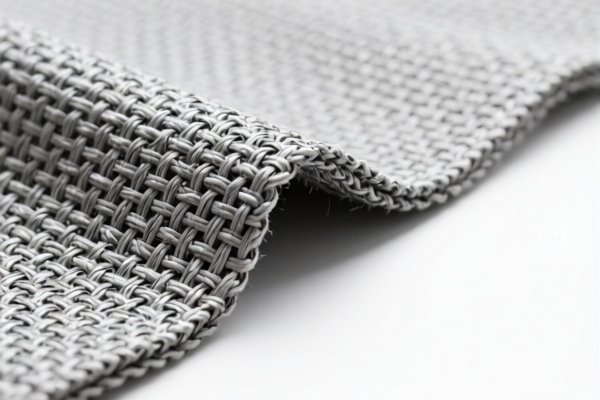
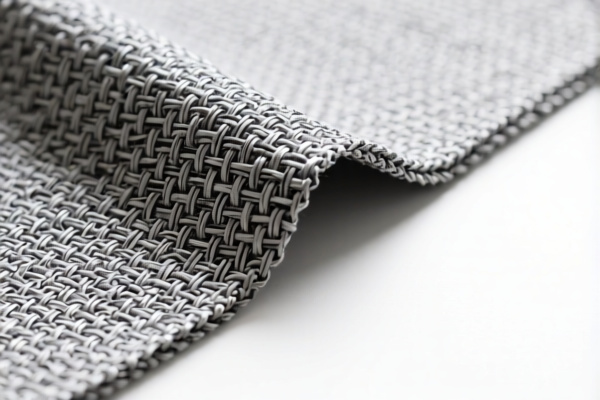
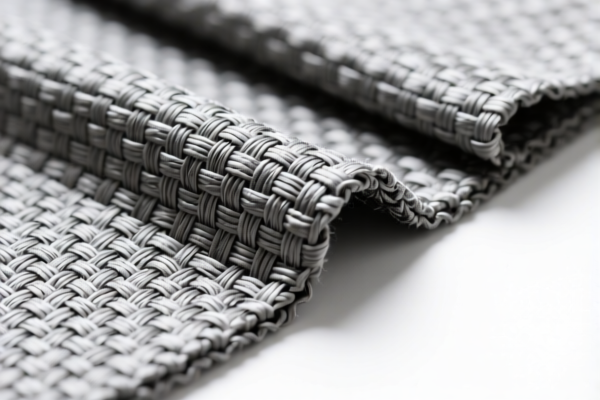
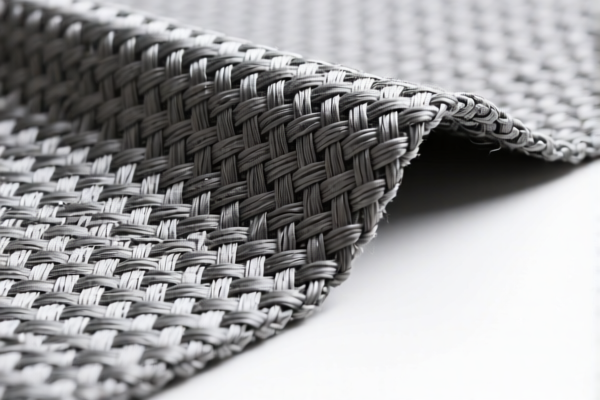
AI Analysis
🏭 Industrial Technical Textiles (For Technical Uses)
🌐 HS Code Reference & Customs Clearance Guide | 2026 Latest Tariff Analysis | Professional Clearance Strategy
📌 I. Product Definition & Classification: Do You Really Understand "Technical Textiles"?
Industrial technical textiles are specialized fabric products engineered for specific functional purposes beyond traditional clothing or household use. In international trade, they are strictly defined under Chapter 59, Note 8 of the Harmonized System (HS). This chapter covers textile products used in machinery, printing, and industrial processing.
Based on the provided data, there are two distinct sub-categories: 1. Card Clothing & Similar Technical Fabrics: Textile fabrics, felt, or laminated materials used for card clothing (used in fiber processing) or other technical purposes, including narrow velvet fabrics impregnated with rubber for weaving spindles. 2. Papermaking & Pulp Machinery Felts: Endless or linked textile felts/fabrics used in papermaking machines, specifically dryer felts and dryer fabrics weighing less than 650 g/m².
⚠️ Key Distinction Point:
- If the fabric is used for carding fibers or covering weaving beams →归入 5911.10.10.00
- If the fabric is an endless/linked felt for papermaking machines (specifically dryer fabrics) → 归入 5911.31.00.20
📦 II. HS Code Classification Details (2026 Latest Tariff Authority Comparison)
| HS Code | Product Description | Application Scenario | Weight/Type Specification |
|---|---|---|---|
5911.10.10.00 |
Printers' rubberized blankets; Card clothing fabrics; Technical felts coated/covered/laminated | Carding machines, weaving beams, printing presses, specialized industrial machinery | Fabrics used for card clothing or technical purposes (e.g., rubberized blankets for printing) |
5911.31.00.20 |
Dryer felts and dryer fabrics (for papermaking/pulp machines) | Paper mills, pulp processing facilities | Endless or linked felts, weighing < 650 g/m² |
🔍 Important Reminder:
- "Technical Use" is Critical: These codes apply ONLY to textiles specified in Note 8 to Chapter 59. General-purpose fabrics do not qualify. - Dryer Felts Specifics: For5911.31.00.20, the fabric must be a dryer felt or dryer fabric used in papermaking machines. Other types of industrial felts (e.g., filter fabrics, conveyor belts) may fall under different HS codes (e.g., 5911.90). - Weight Limit: The papermaking dryer felts must weigh less than 650 g/m² to qualify for this specific subheading.
💰 III. 2026 Latest Tariff Rate Details (Including Surcharges & Policy Add-ons)
✅ Applicable Countries: United States (US)
✅ Origin: China (CN)
✅ Effective Date: November 10, 2025 (and subsequent imports)
🎯 1. 5911.10.10.00 – Card Clothing & Rubberized Blankets (Technical Textiles)
| Item | Content |
|---|---|
| Basic Tariff Rate | 0.0% (Ad valorem) |
| USITC Surcharge | 0.0% |
| IEEPA Surcharge | 0.0% |
| Total Tariff Rate | 0.0% |
| Tax Calculation | CIF Value × 0% = $0 |
| De Minimis Eligibility | ✅ Yes (Standard de minimis rules apply, if applicable) |
| Legal Basis Path | USITC:5911.10.10.00 → No additional footnote surcharges for this specific technical textile category |
📌 Explanation:
- This category of technical textiles is classified under a favorable tariff line. - Unlike many electronics or steel products, card clothing and printer rubberized blankets are exempt from the additional 25% USITC and 10% IEEPA surcharges currently in effect for many Chinese imports. - Total Cost Impact: No additional tariff burden from these surcharges.
🎯 2. 5911.31.00.20 – Dryer Felts for Papermaking (Weight < 650 g/m²)
| Item | Content |
|---|---|
| Basic Tariff Rate | 0.0% (Ad valorem) |
| USITC Surcharge | 0.0% |
| IEEPA Surcharge | 0.0% |
| Total Tariff Rate | 0.0% |
| Tax Calculation | CIF Value × 0% = $0 |
| De Minimis Eligibility | ✅ Yes (Standard de minimis rules apply, if applicable) |
| Legal Basis Path | USITC:5911.31.00.20 → No additional footnote surcharges for this specific technical textile category |
📌 Explanation:
- Papermaking dryer felts, meeting the weight specification (<650 g/m²), are also exempt from additional surcharges. - This reflects the specialized nature of the product and its critical role in the paper industry, where competitive pricing is essential. - Total Cost Impact: No additional tariff burden from these surcharges.
🛠️ IV. Customs Clearance Practical Advice (Field Pitfall Avoidance Guide)
✅ 1. Preparation Document Checklist (None Can Be Omitted)
| Document | Required | Description |
|---|---|---|
| ✅ Product Specifications | ✔️ | Must explicitly state "Technical Use," "Card Clothing," or "Papermaking Dryer Felt" |
| ✅ Material Composition | ✔️ | Details on fabric type (velvet, felt, woven), coating/lamination (rubber, leather, other material) |
| ✅ Weight per Square Meter | ✔️ | Critical for 5911.31.00.20: Must prove weight is < 650 g/m² |
| ✅ Product Photos | ✔️ | Clear images showing texture, linking devices (for endless felts), or rubberized surface |
| ✅ Commercial Invoice | ✔️ | Must accurately describe the item as "Textile Product for Technical Use" or specific machine part |
| ✅ Packing List | ✔️ | Detailed breakdown of items to avoid confusion with general textile goods |
| ✅ Usage Declaration | ✔️ | Statement confirming use in carding, weaving, or papermaking machines |
✅ 2. Declaration Tips (Key Mnemonic)
🔥 "Specify Technical Use, Prove Weight < 650, Don't Call it 'Felt' Generically!"
| Scenario | Correct Declaration | Wrong Practice |
|---|---|---|
| Carding machine fabrics | 5911.10.10.00 |
Misdeclaring as "General Textile Fabric" → Risk of reclassification & penalties |
| Papermaking dryer felts | 5911.31.00.20 |
Failing to provide weight proof → Risk of denial for subheading |
| Rubberized printing blankets | 5911.10.10.00 |
Describing as "Blanket" without technical context → Customs may query origin of use |
| Generic Industrial Felt | ❌ Avoid | Do not use vague terms like "Industrial Felt" without specifying technical function |
✅ 3. Special Cases Handling
| Situation | Handling Advice |
|---|---|
| OEM Custom Technical Textiles | Provide customer purchase orders + design specs to prove specific technical application |
| Endless vs. Linked Felts | Clearly state if the felt is "endless" (seamless) or has "linking devices" for papermaking machines |
| Weight Borderline Cases | If weight is close to 650 g/m², provide third-party test reports to confirm it is under the limit |
| Mixed Shipments | Declare each HS code separately. Do not mix 5911.10.10.00 and 5911.31.00.20 in one line item without clear distinction |
🌍 V. Global Market Comparison for Technical Textiles (2026 Latest)
| Country/Region | Recommended HS Code | Tariff | Certification Requirements | Notes |
|---|---|---|---|---|
| 🇺🇸 USA | 5911.10.10.00 / 5911.31.00.20 |
0.0% | None specific for textiles | No surcharges apply |
| 🇨🇳 China | 5911.10.10.00 / 5911.31.00.20 |
0-13% | CCC (if applicable) | Depends on specific product type |
| 🇪🇺 EU | 5911.10.10 / 5911.31.00 |
0-4.5% | REACH (chemical compliance) | Generally low tariffs |
| 🇬🇧 UK | 5911.10.10 / 5911.31.00 |
0-4.5% | UKCA Mark (if regulated) | Post-Brexit trade rules |
| 🇯🇵 Japan | 5911.10.10 / 5911.31.00 |
0-3% | JIS Standards | No additional surcharges |
📌 Conclusion:
- USA offers 0% total tariff for these specific technical textile categories, making them highly competitive. - Documentation is Key: The lack of tariffs is contingent on strict adherence to the technical definitions and weight specifications.
📌 VI. Common Errors & Pitfall Guide (Lessons Learned)
❌ Error 1: Declaring dryer felts without providing weight verification
👉 Consequence: Customs may reassess to a higher general tariff rate if weight cannot be proven <650 g/m².
❌ Error 2: Using generic descriptions like "Textile Fabric" for card clothing
👉 Consequence: Increased scrutiny, potential delays, and risk of being classified under a different, potentially higher-tariff code.
❌ Error 3: Confusing "Printer's Rubberized Blankets" with general rubber-coated fabrics
👉 Consequence: Must prove use in printing/technical machinery. If not, it may fall under Chapter 40 (Rubber) or other Chapter 59 subheadings.
❌ Error 4: Failing to distinguish between "Card Clothing" and other technical felts
👉 Consequence: Misclassification can lead to incorrect duty assessments and compliance issues.
✅ Correct Practice:
"Technical Textile: Card Clothing Fabric for Fiber Processing, Woven, Rubber-Coated, Model XYZ, Use in Carding Machines"
🎯 VII. Conclusion: Precision Classification Saves Money!
🎯 Remember the Mnemonic:
🔹 "Technical Use is Key, Weight < 650 for Dryer Felts, 0% Tariff for Both!"
🔹 "Specify the Machine, Prove the Function, Avoid General Descriptions!"
📌 Pro Tip:
If your technical textiles are originating from Vietnam, Malaysia, or Thailand, ensure you have proper Certificate of Origin documents. While the US tariff is 0% for these items regardless of origin (based on the provided data), other markets may offer preferential rates.
📣 Immediate Action:
📞 Contact a professional customs broker + Provide product specs + Verify weight for dryer felts
🚀 Let your technical textiles clear customs smoothly, efficiently, and tax-efficiently!
✨ Professional Clearance Starts with Accurate Classification!
💼 Every zero tariff point is a profit point!
Customer Reviews
About HS Code Classification
The Harmonized System (HS) is an internationally standardized nomenclature developed by the World Customs Organization (WCO) to classify traded products. Over 200 countries use the HS system as the basis for customs tariffs, trade statistics, and import/export regulations.
Each HS code follows a hierarchical structure:
- Chapter (2 digits) — Broad category of goods (e.g., Chapter 84: Machinery and Mechanical Appliances)
- Heading (4 digits) — More specific grouping within the chapter
- Subheading (6 digits) — Internationally standardized breakdown, used by all WCO member countries
- National subdivisions (8-10 digits) — Country-specific extensions for further classification, such as US HTSUS 10-digit codes
Correct HS code classification is essential for smooth customs clearance, accurate duty payment, and compliance with trade regulations. Misclassification can lead to customs delays, overpayment of duties, or penalties.
When importing from CN to US, the applicable tariff rates may include:
- Most-Favored-Nation (MFN) rate — The standard duty rate applied to WTO members
- General rate — Applied to countries without trade agreements
- Trade remedy duties — Additional tariffs such as Section 301 (anti-dumping), Section 232 (national security), or countervailing duties
The information provided on this page is for reference purposes only. For official classification, please consult with your local customs authority or a licensed customs broker.