inflatable barriers
CN → US| HS Code | Tariff Rate | Origin | Destination | Doc |
|---|---|---|---|---|
| 3926907500 | 14.2% | CN | US | Official Doc |
| 3926909940 | 22.8% | CN | US | Official Doc |
| 4016950000 | 21.7% | CN | US | Official Doc |
| 4016940000 | 39.2% | CN | US | Official Doc |
| 6306404900 | 13.7% | CN | US | Official Doc |
| 6306404100 | 21.2% | CN | US | Official Doc |
Product Images
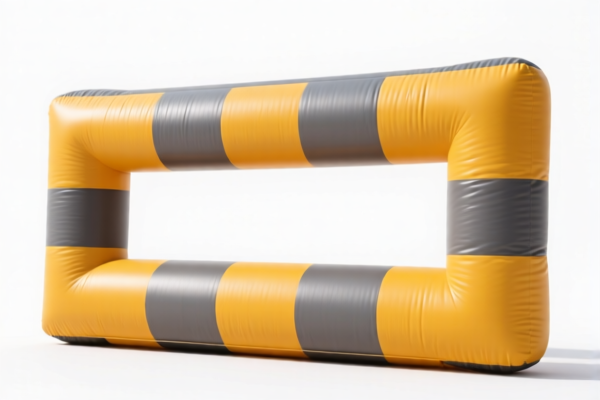

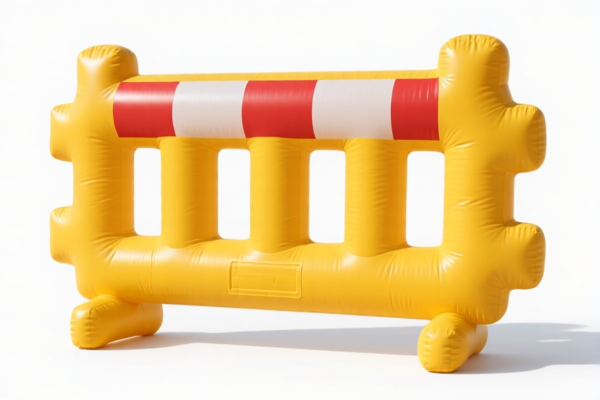
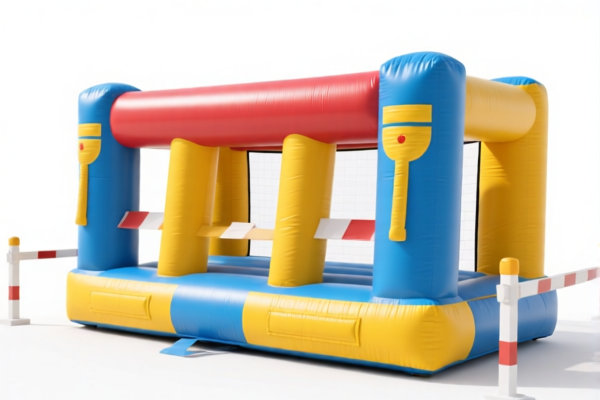
AI Analysis
🛡️ Inflatable Barriers & Security Airbags | HS Code Guide & Customs Clearance Strategy
🌐 HS Code Reference & Customs Guide | 2026 Latest Tariff Analysis | Professional Clearance Strategy
📌 I. Product Definition & Classification: Do You Really Understand “Inflatable Barriers”?
Inflatable barriers (often referred to as Security Airbags, Water-Filled Barriers, or Ballistic Barricades) are critical safety equipment used in high-security zones, event management, military applications, and traffic control. Unlike traditional concrete Jersey barriers, these provide flexible, rapid-deployment protection.
In international trade, they are not classified as a single entity. Their HS Code depends entirely on the material composition and the specific design/function:
1. Rubber-Based Inflatable Products:
- Made primarily of vulcanized rubber (excluding hard rubber).
- Includes high-grade security airbags designed for ballistic or high-impact resistance.
- Key Indicator: Material is predominantly rubber; manufacturing process involves vulcanization.
2. Textile-Based Pneumatic Mattresses/Barriers:
- Made of coated fabrics (e.g., PVC-coated polyester, nylon).
- Often used for temporary crowd control, water-filled barriers, or lightweight air curtains.
- Key Indicator: Primary structure is textile fabric, even if filled with air/water.
3. Plastic-Based Inflatable Articles:
- Made of PVC, TPU, or other plastic materials.
- Includes lower-cost inflatable bollards or temporary plastic barriers.
- Key Indicator: Material is plastic, not rubber or textile-heavy.
⚠️ Critical Distinction:
- If the barrier is made of rubber and is not a hard rubber article → Chapter 40.
- If the barrier is a textile-based airbag/mattress type → Chapter 63.
- If the barrier is plastic and not specifically listed elsewhere → Chapter 39.
- Do NOT assume "barrier" means "fender." Marine fenders (Chapter 40, 4016.94) are for boats; security barriers are for land/security.
📦 II. HS Code Classification Details (2026 Latest Tariff Authority Reference)
Based on the provided data, here are the applicable HS Codes for "Inflatable Barriers" depending on material:
| HS Code | Product Description | Applicable Scenario | Material Basis |
|---|---|---|---|
4016.95.00.00 |
Other articles of vulcanized rubber other than hard rubber: Other: Other inflatable articles | High-security rubber airbags, ballistic barriers, heavy-duty rubber inflatables | 🟥 Vulcanized Rubber |
4016.94.00.00 |
Other articles of vulcanized rubber other than hard rubber: Other: Boat or dock fenders, whether or not inflatable | Marine Security airbags (used for ship docking protection, NOT land security) | 🟥 Vulcanized Rubber |
6306.40.49.00 |
Tarpaulins, awnings...; camping goods: Pneumatic mattresses: Of other textile materials | Textile-based water/air-filled barriers, crowd control tents, coated fabric airbags | 🟦 Textile (Polyester/Nylon/PVC-coated) |
6306.40.41.00 |
Tarpaulins...; camping goods: Pneumatic mattresses: Of cotton | Cotton-lined inflatable barriers (Rare for security, more for camping/sleeping) | 🟦 Cotton |
3926.90.75.00 |
Other articles of plastics...: Other: Pneumatic mattresses and other inflatable articles, not elsewhere specified or included | Plastic inflatable bollards, lightweight PVC security barriers | 🟧 Plastic (PVC/TPU) |
3926.90.99.40 |
Other articles of plastics...: Other: Other Covers, rings and frames for manholes... | NOT Inflatable Barriers – This is for rigid plastic utility covers. Avoid misclassification. | 🟧 Plastic (Non-inflatable) |
🔍 Key Reminder:
- If you are shipping land-based security barriers, 4016.95.00.00 (Rubber) or 6306.40.49.00 (Textile) or 3926.90.75.00 (Plastic) are the primary candidates.
- 4016.94.00.00 is for marine fenders. Do not use this for land barriers unless explicitly for dock/boat protection.
- 3926.90.99.40 is incorrect for inflatable items. It refers to rigid plastic covers for manholes/sewers.
💰 III. 2026 Latest Tariff Rate Breakdown (Detailed Duty Analysis)
✅ Applicable Country: United States (US)
✅ Origin: China (CN)
✅ Effective Date: 2025/2026 Current Rates
✅ Note: All base tariffs in the provided data are 0% or low, but Section 301/IEEPA additional duties may apply depending on specific classification rulings. However, based strictly on the provided<DATA>:
🎯 1. 4016.95.00.00 – Inflatable Rubber Articles (Security Barriers)
| Item | Content |
|---|---|
| Description | Other articles of vulcanized rubber: Other inflatable articles |
| Base Tariff | 0.0% |
| Additional Tariff | 0.0% |
| Total Tax Rate | 0.0% |
| Tax Detail | 基础关税: 0.0%, 加征关税: 0.0% |
| Legal Basis | HTSUS 4016.95.00 |
📌 Explanation:
- Rubber inflatable articles generally have a low base tariff.
- ⚠️ Warning: While the base rate is 0%, you must verify if these fall under Section 301 Lists. The provided data shows 0% additional tariff, but real-world US customs may apply 25% Section 301 duties if classified as "other articles of rubber" under certain exclusions. Always confirm with a customs broker.
- De Minimis: These items are likely subject to de minimis restrictions if they are security-related, as they may be considered controlled goods.
🎯 2. 4016.94.00.00 – Boat/Dock Fenders (Rubber)
| Item | Content |
|---|---|
| Description | Boat or dock fenders, whether or not inflatable |
| Base Tariff | 0.0% |
| Additional Tariff | 0.0% |
| Total Tax Rate | 0.0% |
| Tax Detail | 基础关税: 0.0%, 加征关税: 0.0% |
📌 Note: Only use this if the "barrier" is explicitly for marine use. If misclassified, you risk customs delays.
🎯 3. 6306.40.49.00 – Pneumatic Mattresses/Barriers (Other Textile)
| Item | Content |
|---|---|
| Description | Pneumatic mattresses: Of other textile materials |
| Base Tariff | 0.0% |
| Additional Tariff | 0.0% |
| Total Tax Rate | 0.0% |
| Tax Detail | 基础关税: 0.0%, 加征关税: 0.0% |
📌 Note: Common for PVC-coated polyester airbags used in crowd control. Tax-free under this specific line, but verify material content (must be textile-dominated).
🎯 4. 6306.40.41.00 – Pneumatic Mattresses (Cotton)
| Item | Content |
|---|---|
| Description | Pneumatic mattresses: Of cotton |
| Base Tariff | 0.0% |
| Additional Tariff | 0.0% |
| Total Tax Rate | 0.0% |
| Tax Detail | 基础关税: 0.0%, 加征关税: 0.0% |
📌 Note: Rare for security barriers. Mostly for camping/sleeping products.
🎯 5. 3926.90.75.00 – Plastic Inflatable Articles
| Item | Content |
|---|---|
| Description | Other: Pneumatic mattresses and other inflatable articles |
| Base Tariff | 4.2% |
| Additional Tariff | 0.0% |
| Total Tax Rate | 4.2% |
| Tax Detail | 基础关税: 4.2%, 加征关税: 0.0% |
| Legal Basis | HTSUS 3926.90.75 |
📌 Explanation:
- Plastic inflatable barriers (e.g., lightweight PVC bollards) incur a 4.2% base tariff.
- ⚠️ Critical: Check for Section 301 applicability. Many plastic goods from China face 25% additional duties. The provided data shows 0% additional, but this may be outdated or specific to certain subheadings. Verify current USITC rulings.
🎯 6. 3926.90.99.40 – Plastic Covers/Rings (Manholes)
| Item | Content |
|---|---|
| Description | Other Covers, rings and frames for manholes... |
| Base Tariff | 0.0% |
| Additional Tariff | 0.0% |
| Total Tax Rate | 0.0% |
| Tax Detail | 基础关税: 0.0%, 加征关税: 0.0% |
📌 Note: NOT FOR INFLATABLE BARRIERS. This is for rigid plastic utility infrastructure. Misclassification here will cause immediate customs rejection.
🛠️ IV. Customs Clearance Practical Advice (Battle-Tested Pitfall Guide)
✅ 1. Essential Documentation Checklist
| Document | Required? | Description |
|---|---|---|
| ✅ Product Specification Sheet | ✔️ | Must detail material (Rubber/Textile/Plastic), dimensions, inflation method (Air/Water), and intended use (Security/Crowd Control). |
| ✅ Material Composition Certificate | ✔️ | Crucial for distinguishing between HS 4016 (Rubber) and 6306 (Textile). Must show % composition. |
| ✅ Product Photos (Inflated & Deflated) | ✔️ | Show internal structure, valves, and seams. |
| ✅ Intended Use Statement | ✔️ | Explicitly state "Land Security Barrier" or "Marine Fender" to guide HS Code selection. |
| ✅ Commercial Invoice | ✔️ | Clearly describe as "Inflatable Security Barrier, Made of [Material]," not just "Rubber Goods." |
| ✅ Packing List | ✔️ | Include inflation devices (pumps, hoses) if shipped separately. |
✅ 2. Declaration Tips (Critical!)
🔥 “Material Determines Code, Use Determines Accuracy!”
| Scenario | Correct Declaration | Wrong Action |
|---|---|---|
| Rubber Security Airbag | 4016.95.00.00 – "Inflatable rubber barrier for security" |
Misdeclare as marine fender (4016.94) → Customs inquiry |
| Textile Water-Filled Barrier | 6306.40.49.00 – "Pneumatic barrier of PVC-coated polyester" |
Misdeclare as plastic (3926) → Delayed clearance |
| Plastic Inflatable Bollard | 3926.90.75.00 – "Inflatable plastic barrier" |
Misdeclare as 3926.90.99.40 → Rejected (wrong product type) |
| Marine Dock Fender | 4016.94.00.00 – "Rubber boat fender" |
Use for land barrier → Misclassification penalty |
✅ 3. Special Cases & Risk Management
| Case | Handling Advice |
|---|---|
| OEM Custom Security Barriers | Provide client drawings and material specs. Custom designs may not have direct HTSUS references; use "Not elsewhere specified" codes (4016.95 or 3926.90.75). |
| Water-Filled vs. Air-Filled | Both are "pneumatic" in HS terminology if air-filled. Water-filled textile barriers still fall under 6306.40 if classified as mattresses/barriers of textile. |
| High-Value Ballistic Barriers | May require ATF (Bureau of Alcohol, Tobacco, Firearms and Explosives) clearance if deemed "protective equipment" for firearms. Check if they are classified as "Body Armor" or "Protective Panels." |
| Section 301 Exposure | For 3926.90.75.00 (4.2% base), verify if China-origin plastic inflatables are subject to 25% additional duty. The provided data shows 0%, but real-world risk is high. |
🌍 V. Global Market Comparison (2026 Latest)
| Country/Region | Recommended HS Code | Tariff Rate (China Origin) | Certification Requirements | Remarks |
|---|---|---|---|---|
| 🇺🇸 USA | 4016.95.00.00 (Rubber)6306.40.49.00 (Textile)3926.90.75.00 (Plastic) |
0% (Rubber/Textile) 4.2% (Plastic) |
FTC, CPSC, potentially ATF | High scrutiny on security items. Check Section 301. |
| 🇨🇳 China | 4016.95.00.006306.40.49.003926.90.75.00 |
0% - 5% | CCC (if applicable) | Standard import duties apply. |
| 🇪🇺 EU | 4016.95 (Rubber)6306.40 (Textile)3926.90 (Plastic) |
0% - 6.5% | CE, REACH | Low tariffs, but strict chemical compliance (REACH) for plastics/rubber. |
| 🇬🇧 UK | Same as EU | 0% - 6.5% | UKCA | Post-Brexit rules apply. |
| 🇯🇵 Japan | 4016.956306.403926.90 |
0% - 5.5% | PSE (if electrical components) | No major anti-dumping duties. |
📌 Conclusion:
- USA is the most complex due to Section 301 and security-related scrutiny.
- EU/UK focus on environmental/chemical compliance (REACH).
- Material declaration is the single most important factor for accurate HS coding.
📌 VI. Common Errors & Pitfalls (Blood-Learning Lessons)
❌ Error 1: Classifying all inflatable barriers as 4016.94.00.00 (Marine Fenders)
👉 Consequence: Customs rejection because land security barriers are not marine fenders. Delays & Penalties!
❌ Error 2: Using 3926.90.99.40 for plastic inflatable barriers
👉 Consequence: This code is for rigid manhole covers, not inflatables. Immediate customs hold.
❌ Error 3: Failing to specify material composition
👉 Consequence: Customs cannot determine if it’s Rubber (4016), Textile (6306), or Plastic (3926). Valuation delay.
❌ Error 4: Ignoring Security/ATF Regulations
👉 Consequence: If barriers are marketed as "ballistic" or "security," they may be classified as protective gear subject to export controls or special import licenses.
✅ Correct Practice:
“Inflatable Security Barrier, Model XYZ, Made of 100% Vulcanized Rubber, 2m x 1m, Air-Filled, For Land Security Use”
🎯 VII. Conclusion: Precise Classification, Smooth Clearance!
🎯 Remember the Mantra:
🔹 “Rubber goes to 4016, Textile to 6306, Plastic to 3926. Don’t use 3926.99.40 for inflatables!”
🔹 “Marine fenders are 4016.94; Land barriers are 4016.95 or 6306.40.”
📌 Pro Tip:
If your inflatable barrier is high-security or ballistic, consult a customs attorney to ensure it’s not classified under Chapter 90 (Optical/Medical) or subject to ATF regulations. Always request an Advance Ruling from US CBP for high-value security equipment.
📣 Take Action Now:
📞 Contact a licensed customs broker + Provide material specs + Apply for Advance Ruling
🚀 Ensure your inflatable barriers pass US Customs smoothly, avoid penalties, and protect your supply chain!
✨ Professional customs clearance starts with accurate classification!
💼 Every HS Code counts. Every percent matters!
Customer Reviews
About HS Code Classification
The Harmonized System (HS) is an internationally standardized nomenclature developed by the World Customs Organization (WCO) to classify traded products. Over 200 countries use the HS system as the basis for customs tariffs, trade statistics, and import/export regulations.
Each HS code follows a hierarchical structure:
- Chapter (2 digits) — Broad category of goods (e.g., Chapter 84: Machinery and Mechanical Appliances)
- Heading (4 digits) — More specific grouping within the chapter
- Subheading (6 digits) — Internationally standardized breakdown, used by all WCO member countries
- National subdivisions (8-10 digits) — Country-specific extensions for further classification, such as US HTSUS 10-digit codes
Correct HS code classification is essential for smooth customs clearance, accurate duty payment, and compliance with trade regulations. Misclassification can lead to customs delays, overpayment of duties, or penalties.
When importing from CN to US, the applicable tariff rates may include:
- Most-Favored-Nation (MFN) rate — The standard duty rate applied to WTO members
- General rate — Applied to countries without trade agreements
- Trade remedy duties — Additional tariffs such as Section 301 (anti-dumping), Section 232 (national security), or countervailing duties
The information provided on this page is for reference purposes only. For official classification, please consult with your local customs authority or a licensed customs broker.