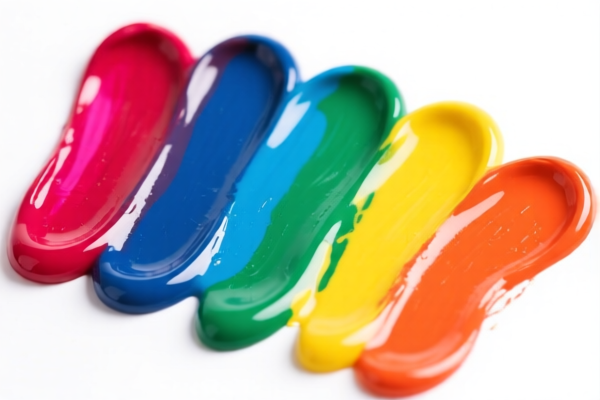
ink mixture
CN → US| HS Code | Tariff Rate | Origin | Destination | Doc |
|---|---|---|---|---|
| 3208900000 | 38.2% | CN | US | Official Doc |
| 3208100000 | 38.7% | CN | US | Official Doc |
| 3210000000 | 36.8% | CN | US | Official Doc |
Product Images



AI Analysis
🎨 Ink Mixture (Coating & Paint Mixtures)
🌐 HS Code Reference & Customs Clearance Guide | 2026 Latest Tariff Analysis | Professional Clearance Strategy
📌 I. Product Definition & Classification: Do You Really Understand "Ink Mixture"?
Ink Mixtures, in the context of international trade and chemical products, often refer to complex liquid preparations used for coatings, paints, varnishes, or specialized industrial inks. Unlike simple printing inks (Chapter 32, Heading 32.15), these mixtures are typically characterized by their polymer bases (synthetic or modified) and their application as protective or decorative coatings.
The classification depends heavily on the specific chemical composition (e.g., polyester-based vs. acrylic-based) and the final use (general coating vs. specialized lacquer).
⚠️ Key Distinction Point:
- If the mixture is primarily a polyester or synthetic polymer base intended for general coating → Likely 3208.10 or 3208.90.
- If the mixture is a general paint/varnish alternative without specific polymer constraints or conflict → Likely 3210.00.
📦 II. HS Code Classification Details (2026 Latest Tariff Authority对照)
Based on the provided data, the Ink Mixture can be classified into three primary HS Codes, each carrying specific tax implications.
| HS Code | Summary / Rationale | Key Characteristic |
|---|---|---|
3208.90.00.00 |
Coating mixtures classified as paint and varnish, inferred based on consistent usage and synthetic/modifying polymer system. | Polymer-Based: Relies on synthetic or modified polymer systems. |
3208.10.00.00 |
Coating mixtures fall under the category of paint and varnish, inferred based on polyester or synthetic polymer material. | Polyester/Synthetic: Specifically inferred based on polyester or synthetic polymer materials. |
3210.00.00.00 |
Coating mixtures belong to the category of paints and varnishes, as there is no material or shape conflict with other categories. | General Category: A broader category where no specific material conflict exists. |
🔍 Critical Reminder:
- 3208 Subheadings: These are highly specific to the chemical base (synthetic/polymers). If your product is a solvent-based or water-based coating using synthetic resins, this is the most accurate classification.
- 3210 Subheading: This is a "catch-all" for paints/varnishes that don’t fit into more specific subheadings (like 3208 or 3209). It is often used when the exact polymer type is not the defining factor or when it’s a general-purpose mixture.
- Do not confuse with Chapter 32.15 (Printing Ink). If this is for coating (paint/varnish), do not use 32.15.
💰 III. 2026 Latest Tariff Rate Breakdown (Including Surcharge & Policy Surcharge)
✅ Applicable Country: United States (US)
✅ Origin: China (CN)
✅ Effective Date: 2025 onwards (Includes subsequent imports)
🎯 1. 3208.90.00.00 – Coating Mixtures (Synthetic/Modified Polymers)
| Item | Detail |
|---|---|
| Base Tariff | 3.2% |
| Section 301 Surcharge | 25.0% |
| Section 122 Tariff | 10% |
| Total Tax Rate | 38.2% |
| Calculation | CIF Value × 38.2% |
| De Minimis Eligibility | ❌ Not Eligible (High tariff rate implies standard declaration required) |
| Legal Basis Path | USITC: 3208.90.00.00 → Section 301 Footnote → Section 122 Provision |
📌 Explanation:
- "Section 301 Surcharge (25%)": Applied to Chinese goods under U.S. Trade Law Section 301.
- "Section 122 Tariff (10%)": A specific surcharge applied to certain imported goods (often related to national security or trade balance measures).
- Total 38.2% is a high-cost category. Importers must factor this into landed cost calculations.
🎯 2. 3208.10.00.00 – Coating Mixtures (Polyester/Synthetic Polymer)
| Item | Detail |
|---|---|
| Base Tariff | 3.7% |
| Section 301 Surcharge | 25.0% |
| Section 122 Tariff | 10% |
| Total Tax Rate | 38.7% |
| Calculation | CIF Value × 38.7% |
| De Minimis Eligibility | ❌ Not Eligible |
| Legal Basis Path | USITC: 3208.10.00.00 → Section 301 Footnote → Section 122 Provision |
📌 Note:
- Slightly higher base tariff (3.7%) compared to 3208.90 (3.2%) due to specific material inference (polyester).
- Same total surcharges (35%) apply.
- Use this code if the MSDS/Technical Data Sheet explicitly highlights polyester or specific synthetic resins.
🎯 3. 3210.00.00.00 – Other Paints & Varnishes
| Item | Detail |
|---|---|
| Base Tariff | 1.8% |
| Section 301 Surcharge | 25.0% |
| Section 122 Tariff | 10% |
| Total Tax Rate | 36.8% |
| Calculation | CIF Value × 36.8% |
| De Minimis Eligibility | ❌ Not Eligible |
| Legal Basis Path | USITC: 3210.00.00.00 → Section 301 Footnote → Section 122 Provision |
📌 Strategy:
- This code offers the lowest total tax rate (36.8%) among the three options.
- Caution: Only use if the product genuinely fits the "general paint/varnish" category without being strictly defined by the specific polymer types covered in 3208. Misclassification here can lead to customs audits if the product is clearly a specialized synthetic coating.
🛠️ IV. Customs Clearance Practical Advice (Combat Pitfalls Guide)
✅ 1. Required Documentation Checklist (Essential)
| Document | Required? | Explanation |
|---|---|---|
| ✅ Technical Data Sheet (TDS) | ✔️ | Must specify chemical composition, especially polymer type (Polyester, Acrylic, etc.). |
| ✅ MSDS (SDS) | ✔️ | Crucial for hazardous material determination (flammability, VOC content). |
| ✅ Product Photos | ✔️ | Show container, label, and consistency (liquid, paste, etc.). |
| ✅ Commercial Invoice | ✔️ | Clearly state "Ink Mixture for Coating/Paint" or "Synthetic Resin Coating". Avoid vague terms like "Liquid". |
| ✅ Certificate of Origin (CO) | ✔️ | To confirm China origin (triggers Section 301). |
| ✅ Labeling Proof | ✔️ | Ensure labels comply with US EPA/OSHA regulations for chemical products. |
✅ 2. Declaration Strategy (Key Mnemonics)
🔥 “Polymer Base Dictates Code, Section 122 is the Silent Killer!”
| Scenario | Correct Declaration | Wrong Practice |
|---|---|---|
| Product is Polyester-based synthetic coating | 3208.10.00.00 (38.7%) |
Misclassifying as 3210 to save 1.9% → Audit Risk! |
| Product is General Synthetic Polymer coating | 3208.90.00.00 (38.2%) |
Declaring as "Paint" without specifying polymer → Rejection |
| Product is General Purpose paint, no specific polymer conflict | 3210.00.00.00 (36.8%) |
Over-classifying to 3208 if not strictly required → Higher Cost |
| Product is Printing Ink (not coating) | 3215.19.00.00 |
Declaring as Coating/Ink Mixture → Wrong Chapter |
✅ 3. Special Circumstances Handling
| Situation | Handling Advice |
|---|---|
| Customs Inquiry on Polymer Type | Provide a Chemical Abstracts Service (CAS) number or detailed ingredient list from the manufacturer. |
| Mixed Shipments | If shipping both 3208 and 3210 items in one container, separate entries are required to avoid misclassification penalties. |
| VOC Content High | May trigger additional EPA (Environmental Protection Agency) regulations. Ensure compliance beyond just HS Code. |
| Section 122 Targeting | Since Section 122 is applied to all three codes, cannot be avoided by changing HS Code within these three. Focus on accurate classification to avoid delays. |
🌍 V. Global Market Comparison (2026 Latest)
| Country/Region | Recommended HS Code | Tariff (China Origin) | Certification Required | Notes |
|---|---|---|---|---|
| 🇺🇸 USA | 3208.90.00.00 |
38.2% | SDS, EPA Labeling | High combined tax (38.2%). Section 301 + 122. |
| 🇨🇳 China | 3208.90.00.00 |
~5-10% | None | No Section 301/122 for imports into China. |
| 🇪🇺 EU | 3208.90 |
~0-6.5% | REACH, CLP Labeling | No Section 301. REACH registration critical. |
| 🇬🇧 UK | 3208.90 |
~6.5% | UK REACH | Post-Brexit rules apply. |
| 🇯🇵 Japan | 3208.90 |
~5-6% | JIS Standard | No Section 301. |
📌 Conclusion:
- USA is the most expensive market for these products due to the 35% cumulative surcharge (301 + 122).
- Margin Compression: A 1.9% difference between3208.90(38.2%) and3210(36.8%) is significant for high-volume shipments. Accurate classification is profit protection.
📌 VI. Common Errors & Pitfall Guide (Lessons from Tears)
❌ Error 1: Using generic term "Ink" without specifying "Coating/Paint"
👉 Consequence: Customs may classify under Chapter 32.15 (Printing Ink) or reject for ambiguity.
👉 Fix: Use "Coating Mixture" or "Paint Preparation" in description.
❌ Error 2: Assuming "Ink" = 3215 (Printing Ink)
👉 Consequence: If used for coating, this is incorrect. 3215 has different tariffs and regulations.
👉 Fix: Verify end-use. If it coats surfaces like paint, use 3208/3210.
❌ Error 3: Ignoring Section 122 Tariff
👉 Consequence: Unexpected 10% charge at customs.
👉 Fix: Factor 38%+ into CIF+D+122 cost model from day one.
❌ Error 4: Misclassifying Polyester-based as General (3210)
👉 Consequence: Customs audit, potential penalties, and back-payment of 1.9% + interest.
👉 Fix: Check MSDS. If Polyester/Synthetic Resin is dominant, use 3208.
✅ Correct Practice:
“Synthetic Resin Coating Mixture, Polyester-Based, For Industrial Application, CAS No. XXX-XX-X, Volatile Organic Compounds < XX%”
🎯 VII. Conclusion: Precision Classification Saves Costs!
🎯 Remember the Mnemonic:
🔹 “Polyester is 3208.10, Synthetic is 3208.90, General is 3210.”
🔹 “301 is 25%, 122 is 10%. Total is 38%+. Plan your margin!”
🔹 “HS Code defines your tax. One digit wrong, thousands lost.”
📌 Pro Tip:
If your product is originating from Vietnam, Mexico, or Thailand, you may exempt from Section 301, reducing the tax burden significantly.
- Section 301 Exemption: If goods are transshipped or sufficiently transformed in a third country (subject to strict rules).
- Recommendation: Consult with a customs broker to explore FTZ (Foreign Trade Zone) storage or substantial transformation strategies if applicable.
📣 Immediate Action:
📞 Contact a Professional Customs Broker + Provide MSDS/TDS + Apply for Pre-Ruling (if available).
🚀 Ensure Smooth Customs Clearance, Efficient Global Trade, and Maximized Profit!
✨ Professional Clearance Starts with Precise Classification!
💼 Every Percent of Tax Savings Counts!
Customer Reviews
About HS Code Classification
The Harmonized System (HS) is an internationally standardized nomenclature developed by the World Customs Organization (WCO) to classify traded products. Over 200 countries use the HS system as the basis for customs tariffs, trade statistics, and import/export regulations.
Each HS code follows a hierarchical structure:
- Chapter (2 digits) — Broad category of goods (e.g., Chapter 84: Machinery and Mechanical Appliances)
- Heading (4 digits) — More specific grouping within the chapter
- Subheading (6 digits) — Internationally standardized breakdown, used by all WCO member countries
- National subdivisions (8-10 digits) — Country-specific extensions for further classification, such as US HTSUS 10-digit codes
Correct HS code classification is essential for smooth customs clearance, accurate duty payment, and compliance with trade regulations. Misclassification can lead to customs delays, overpayment of duties, or penalties.
When importing from CN to US, the applicable tariff rates may include:
- Most-Favored-Nation (MFN) rate — The standard duty rate applied to WTO members
- General rate — Applied to countries without trade agreements
- Trade remedy duties — Additional tariffs such as Section 301 (anti-dumping), Section 232 (national security), or countervailing duties
The information provided on this page is for reference purposes only. For official classification, please consult with your local customs authority or a licensed customs broker.