inkjet printer
CN → US| HS Code | Tariff Rate | Origin | Destination | Doc |
|---|---|---|---|---|
| 8443321040 | 17.5% | CN | US | Official Doc |
| 8471601050 | 35.0% | CN | US | Official Doc |
| 8471609050 | 35.0% | CN | US | Official Doc |
| 8485909000 | 35.0% | CN | US | Official Doc |
| 7326908688 | 87.9% | CN | US | Official Doc |
Product Images
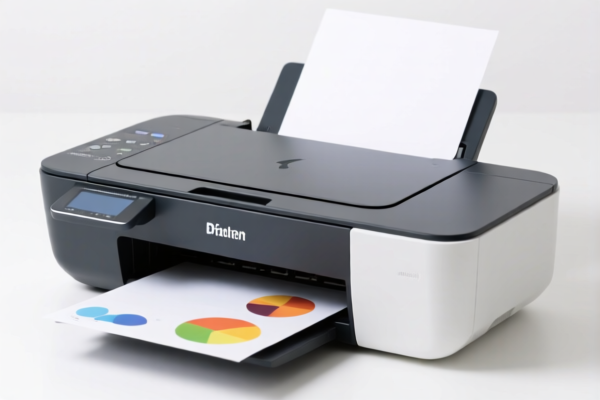
AI Analysis
🖨️ Inkjet Printer (喷墨打印机)
🌐 HS Code Reference & Customs Clearance Guide | 2026 Latest Tariff Analysis | Professional Entry Strategy
📌 I. Product Definition & Classification: Do You Really Understand "Inkjet Printers"?
Inkjet printers are output devices that create images by propelling droplets of ink onto paper. In international trade, their classification depends heavily on their intended use and functional integration with other data processing equipment. The critical distinction lies in whether the printer is an independent office device or merely a peripheral component of a larger system.
⚠️ Key Distinction Point:
- If it is a standalone office device with its own controls, power supply, and user interface → Classify under 8443.32.10.40.
- If it is a dedicated output unit/component strictly for an Automatic Data Processing Machine (ADPM), often lacking independent control features → Classify under 8471.60.10.50 or 8471.60.90.50.
- If it is a metal nozzle for additive manufacturing (industrial application) → Classify under 8485.90.90.00 or 7326.90.86.88.
📦 II. HS Code Classification Details (2026 Latest Tariff Authority Comparison)
| HS Code | Product Description | Application Scenario | Classification Logic |
|---|---|---|---|
8443.32.10.40 |
Inkjet Office Printers | Matched with inkjet technology and printer unit purposes | ✅ Independent office equipment |
8471.60.10.50 |
Inkjet Office Printers | As an output unit for Automatic Data Processing Machines (ADPM) | ✅ Integrated ADPM component (Unit) |
8471.60.90.50 |
Inkjet Office Printers | As an output component for Automatic Data Processing Machines (ADPM) | ✅ Integrated ADPM component (Part/Other) |
8485.90.90.00 |
Metal Print Nozzles | Parts of additive manufacturing equipment | ✅ Industrial/3D Printing component |
7326.90.86.88 |
Metal Print Nozzles | Other articles of iron or steel | ✅ Raw material/Steel article |
🔍 Important Reminder:
- Office Printers: Most consumer/business inkjet printers fall under 8443 or 8471.60. The difference is subtle: 8443 is for printers designed for office use, while 8471 is for printers specifically designed as output units for computers. Misclassification here leads to massive tax differences.
- Nozzles/Parts: If you are importing only the metal nozzles (not the whole printer), do NOT use the printer HS codes. Use 8485 or 7326 depending on whether they are specialized parts for additive manufacturing or general steel articles.
💰 III. 2026 Latest Tariff Rate Breakdown (Including Surtaxes & Policy Add-ons)
✅ Applicable Country: United States (US)
✅ Origin: China (CN)
✅ Effective Time: Current enforcement (Section 301 & Section 122 rules)
🎯 1. 8443.32.10.40 —— Inkjet Office Printer (Standalone)
| Item | Content |
|---|---|
| Base Tariff | 0.0% (Ad Valorem) |
| Surtax (Section 301) | +7.5% |
| Section 122 Surcharge | +10% |
| Total Rate | 17.5% |
| Tax Calculation | CIF Value × 17.5% |
| De Minimis Exemption | ❌ Not Eligible (High value items) |
| Legal Path | HTSUS:8443.32.10.40 → USITC Footnote → IEEPA |
📌 Explanation:
- This is the most favorable rate for functional inkjet printers.
- "Base Tariff 0%" reflects the free trade treatment for machinery.
- The 17.5% total includes a specific lower Section 301 rate (+7.5%) compared to other categories, plus the mandatory 122 Clause (+10%).
- Strategy: Ensure the printer is marketed and structured as a standalone "Office Printer" to utilize this lower tax bracket.
🎯 2. 8471.60.10.50 & 8471.60.90.50 —— Inkjet Printer as ADPM Output Unit
| Item | Content |
|---|---|
| Base Tariff | 0.0% |
| Surtax (Section 301) | +25.0% |
| Section 122 Surcharge | +10% |
| Total Rate | 35.0% |
| Tax Calculation | CIF Value × 35.0% |
| De Minimis Exemption | ❌ Not Eligible |
| Legal Path | HTSUS:8471.60.10.50 / 90.50 → USITC → IEEPA |
📌 Explanation:
- These codes apply if the printer is classified strictly as a "component" of a computer system.
- The Section 301 Surtax is significantly higher at 25% (vs. 7.5% for 8443).
- Combined with the 10% Section 122 surcharge, the total hits 35%.
- Risk: If Customs determines your "standalone" printer is actually an ADPM output unit, they may reclassify it here, doubling your tax burden.
🎯 3. 8485.90.90.00 —— Metal Print Nozzles (Additive Manufacturing Parts)
| Item | Content |
|---|---|
| Base Tariff | 0.0% |
| Surtax (Section 301) | +25.0% |
| Section 122 Surcharge | +10% |
| Total Rate | 35.0% |
| Tax Calculation | CIF Value × 35.0% |
| De Minimis Exemption | ❌ Not Eligible |
📌 Note:
- Applies to specialized metal nozzles intended for industrial additive manufacturing (3D printing).
- Same high tax rate as the ADPM printer classification.
🎯 4. 7326.90.86.88 —— Metal Print Nozzles (Iron/Steel Articles)
| Item | Content |
|---|---|
| Base Tariff | 2.9% |
| Surtax (Section 301) | +25.0% |
| Section 122 Surcharge | +10% |
| Steel/Aluminum/Copper Surcharge | +50% (Specific to steel articles) |
| Total Rate | 87.9% |
| Tax Calculation | CIF Value × 87.9% |
| De Minimis Exemption | ❌ Not Eligible |
📌 Critical Warning:
- This is the highest tax bracket in the dataset.
- It applies to generic iron or steel parts (nozzles) that are NOT specifically classified as high-tech additive manufacturing components.
- The 50% surcharge on steel products is a punitive measure often applied to basic metal articles.
- Avoid: Do not import printer nozzles under this code unless they are truly generic steel parts with no special printing function.
🛠️ IV. Customs Clearance Practical Advice (Actionable Pitfall Guide)
✅ 1. Preparation Checklist (Non-negotiable)
| Document | Required | Notes |
|---|---|---|
| ✅ Product Specification Sheet | ✔️ | Must detail: Printing technology (Inkjet), Resolution, Connectivity (USB/Ethernet/Wi-Fi). |
| ✅ Functional Description | ✔️ | Crucial: Define if it is "Standalone Office Equipment" or "ADPM Output Unit". |
| ✅ Circuit Diagram/Internal Structure | ✔️ | To prove if it has independent control boards (supports 8443 classification). |
| ✅ Commercial Invoice | ✔️ | Clear description: "Inkjet Printer Model X" vs. "Print Head Assembly". |
| ✅ Origin Certificate (CO) | ✔️ | Mandatory for verifying China origin and applying surcharges correctly. |
| ✅ Packing List | ✔️ | Separate packaging for nozzles/parts if applicable to avoid mixed classification. |
✅ 2. Declaration Strategy (Key Mantra)
🔥 "Function Defines HS Code, Office vs. ADPM, Nozzle Type Matters, Tax Difference is Huge!"
| Scenario | Correct Declaration | Consequence of Error |
|---|---|---|
| Standalone Office Inkjet Printer | 8443.32.10.40 |
17.5% Tax |
| Printer as PC Peripheral | 8471.60.10.50 |
35.0% Tax (+17.5% penalty!) |
| Generic Steel Nozzle | 7326.90.86.88 |
87.9% Tax (Catastrophic loss) |
| Industrial 3D Printing Nozzle | 8485.90.90.00 |
35.0% Tax |
💡 Pro Tip:
- If you are selling standalone printers, ensure the marketing materials, manual, and physical design emphasize "Office Use" and "Independent Operation" to support 8443.
- If you are importing only nozzles, clearly state "Metal Nozzles for Additive Manufacturing" to aim for 8485 rather than 7326. Never describe industrial parts as "Iron Steel Articles".
🌍 V. Global Market Customs Comparison (2026 Update)
| Country/Region | Recommended HS Code | Tariff Rate (China Origin) | Key Requirement | Note |
|---|---|---|---|---|
| 🇺🇸 USA | 8443.32.10.40 |
17.5% | FCC Certification | Best rate for office printers. |
| 🇺🇸 USA | 8471.60.10.50 |
35.0% | FCC Certification | Higher rate if classified as ADPM part. |
| 🇪🇺 EU | 8443.32.00 |
~0% - 2% | CE Marking, RoHS | No Section 122/301 equivalent. |
| 🇨🇳 China | 8443.32.00 |
~6% - 8% | CCC (if applicable) | Standard import duty. |
📌 Conclusion:
- The USA is the most complex market due to the layered surcharges (301 + 122).
- Correct Classification is Cost-Sensitive: The difference between 17.5% and 35% is 17.5 percentage points. On a $100,000 shipment, that’s a $17,500 difference.
- Steel Nozzle Trap: Misclassifying nozzles as generic steel results in an 87.9% tax. Always specify the technical function.
📌 VI. Common Errors & Pitfalls (Lessons Learned)
❌ Error 1: Declaring a standalone printer as "Part of Computer System"
👉 Consequence: Tax jumps from 17.5% to 35%.
👉 Fix: Use product descriptions highlighting "Independent Operation," "Built-in Control Panel," "Office Application."
❌ Error 2: Declaring industrial nozzles as "Iron Steel Articles"
👉 Consequence: Tax skyrockets to 87.9%.
👉 Fix: Specify "Additive Manufacturing Components" and provide technical specs proving non-generic use.
❌ Error 3: Ignoring Section 122 Surcharge
👉 Consequence: Underpayment by 10% on all goods.
👉 Fix: Ensure all invoices account for the additional 10% surcharge regardless of HS Code.
✅ Correct Declaration Example:
"Inkjet Printer, Model XYZ, Standalone Office Device, Wi-Fi/USB Enabled, Independent Control System. NOT a part of automatic data processing machine."
HS Code:8443.32.10.40
🎯 VII. Conclusion: Precision in Classification, Profit in Clearance
🎯 Remember the Mantra:
🔹 "Office Printer = 17.5%, ADPM Part = 35%, Steel Part = 87.9%!"
🔹 "Describe the Function, Not Just the Material!"
📌 Pro Tip:
- For high-volume shipments, consider applying for an Advanced Ruling (Binding Tariff Information) with US Customs (CBP) to lock in the 8443 classification if the product boundaries are ambiguous.
- Always separate printers and nozzles in different shipments if possible to avoid mixed classification risks.
📣 Immediate Action:
📞 Consult a Licensed Customs Broker
📄 Prepare Detailed Product Specifications
🚀 Ensure Your Inkjet Printers Clear Customs Efficiently and Cost-Effectively!
✨ Professional Customs Clearance Starts with Accurate Classification!
💼 Every Percent of Tax Saved is Pure Profit!
Customer Reviews
About HS Code Classification
The Harmonized System (HS) is an internationally standardized nomenclature developed by the World Customs Organization (WCO) to classify traded products. Over 200 countries use the HS system as the basis for customs tariffs, trade statistics, and import/export regulations.
Each HS code follows a hierarchical structure:
- Chapter (2 digits) — Broad category of goods (e.g., Chapter 84: Machinery and Mechanical Appliances)
- Heading (4 digits) — More specific grouping within the chapter
- Subheading (6 digits) — Internationally standardized breakdown, used by all WCO member countries
- National subdivisions (8-10 digits) — Country-specific extensions for further classification, such as US HTSUS 10-digit codes
Correct HS code classification is essential for smooth customs clearance, accurate duty payment, and compliance with trade regulations. Misclassification can lead to customs delays, overpayment of duties, or penalties.
When importing from CN to US, the applicable tariff rates may include:
- Most-Favored-Nation (MFN) rate — The standard duty rate applied to WTO members
- General rate — Applied to countries without trade agreements
- Trade remedy duties — Additional tariffs such as Section 301 (anti-dumping), Section 232 (national security), or countervailing duties
The information provided on this page is for reference purposes only. For official classification, please consult with your local customs authority or a licensed customs broker.