inorganic sterilizing spray
CN → US| HS Code | Tariff Rate | Origin | Destination | Doc |
|---|---|---|---|---|
| 8479899599 | 87.5% | CN | US | Official Doc |
| 8419200020 | 10.0% | CN | US | Official Doc |
| 8419200010 | 10.0% | CN | US | Official Doc |
| 9022298000 | 35.0% | CN | US | Official Doc |
| 8479896500 | 20.3% | CN | US | Official Doc |
Product Images
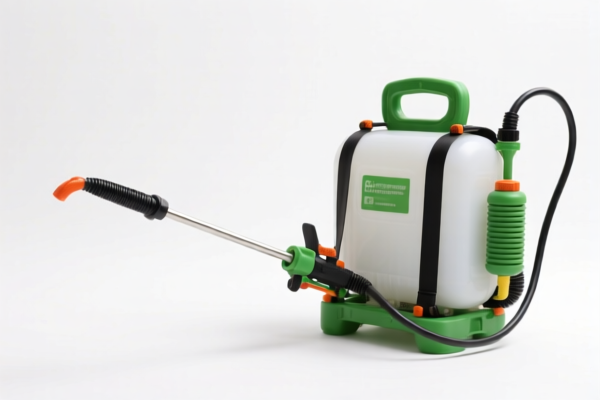
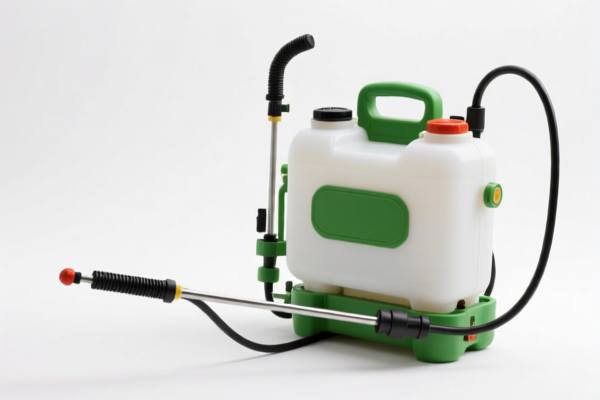
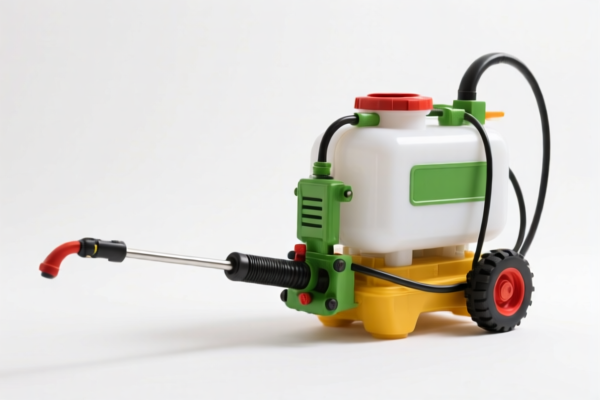

AI Analysis
🌫️ Inorganic Sterilizing Spray (Chemical Sanitizer)
🌐 HS Code Reference & Customs Clearance Guide | 2026 Latest Tariff Analysis | Professional Clearance Strategy 📌 I. Product Definition & Classification: What is "Inorganic Sterilizing Spray"?
Inorganic Sterilizing Sprays are typically chemical agents based on inorganic compounds (such as chlorine-based, iodine-based, or silver-ion solutions) designed to kill microorganisms. In international trade, their classification depends heavily on whether they are considered chemical preparations, medical devices, machinery for sterilization, or radiation equipment.
⚠️ Key Distinction Point:
- If it is a liquid/chemical mixture in a spray bottle: It is generally classified under chemical headings (e.g., Chapter 38). Note: The provided data does not contain Chapter 38 codes, implying the user's specific dataset focuses on mechanical/radiation/device classifications. - If it is a machine/unit that dispenses or generates the spray for sterilization: It falls under machinery (Chapter 84) or medical/radiation apparatus (Chapter 90). - Crucial Note on Provided Data: The input data exclusively lists HS Codes for Machinery and Apparatus (Sterilizers, Radiation Devices), not chemical products. Therefore, this guide interprets "Inorganic Sterilizing Spray" as equipment or devices used to administer or generate such sterilization, based strictly on the provided<DATA>.
📦 II. HS Code Classification Details (Based on Provided Data Only)
| HS Code | Summary from Data | Tax Rate | Key Characteristics |
|---|---|---|---|
8479.89.95.99 |
Independent-function machinery, metal/high-temp material body | 87.5% | Heavy machinery, subject to multiple tariffs (Section 301, 232, 122). |
8419.20.00.20 |
Laboratory sterilization equipment | 10.0% | Lab use, low base duty, no Section 301 add-on. |
8419.20.00.10 |
Medical/Surgical sterilization | 10.0% | Healthcare use, low base duty, no Section 301 add-on. |
9022.29.80.00 |
Ionizing radiation sterilization device | 35.0% | Uses radiation, high Section 301 add-on. |
8479.89.65.00 |
Independent-function electromechanical sterilization device | 20.3% | General industrial/machine sterilization, moderate tariffs. |
🔍 Important Note:
The provided<DATA>contains NO HS codes for chemical sprays (e.g., 3808, 3307). All listed codes are for devices/machines. If you are importing actual liquid spray, these codes are incorrect. If you are importing a spray sterilization machine/device, the following analysis applies.
💰 III. 2026 Latest Tariff Rate Breakdown (Including Surcharges)
✅ Applicable Country: United States (US)
✅ Origin: China (CN)
✅ Effective Date: Current tariff structure as per data snippet
🎯 1. 8479.89.95.99 — Heavy Industrial Sterilization Machinery
| Item | Detail |
|---|---|
| Base Duty | 2.5% |
| Section 301 Surcharge | +25.0% |
| Section 122 Surcharge | +10% (Steel/Aluminum/Copper products) |
| Section 232 Surcharge | +50% (Steel/Aluminum/Copper products) |
| Total Tax Rate | 87.5% |
| Calculation | CIF Value × 87.5% |
| De Minimis Eligibility | ❌ Not Eligible |
| Legal Path | HTSUS:8479.89.95.99 → USITC Footnotes |
📌 Explanation:
- This code attracts the highest tariff burden among the options.
- The 50% surcharge is likely due to Section 232 (National Security) on steel/aluminum components.
- Recommendation: Avoid this code unless the machine is irrefutably industrial-grade with heavy metal content and no alternative classification exists.
🎯 2. 8419.20.00.20 — Laboratory Sterilization Equipment
| Item | Detail |
|---|---|
| Base Duty | 0.0% |
| Section 301 Surcharge | 0.0% |
| Section 122 Surcharge | +10% |
| Total Tax Rate | 10.0% |
| Calculation | CIF Value × 10.0% |
| De Minimis Eligibility | ❌ Not Eligible |
| Legal Path | HTSUS:8419.20.00.20 → USITC Footnotes |
📌 Explanation:
- Lowest cost option for lab equipment.
- The 10% tax is likely a Section 122 or specific statutory surcharge, but no 301 tariff.
- Requirement: Must be strictly for laboratory use. Misuse as industrial medical equipment could lead to reclassification.
🎯 3. 8419.20.00.10 — Medical/Surgical Sterilization Equipment
| Item | Detail |
|---|---|
| Base Duty | 0.0% |
| Section 301 Surcharge | 0.0% |
| Section 122 Surcharge | +10% |
| Total Tax Rate | 10.0% |
| Calculation | CIF Value × 10.0% |
| De Minimis Eligibility | ❌ Not Eligible |
| Legal Path | HTSUS:8419.20.00.10 → USITC Footnotes |
📌 Explanation:
- Identical tax rate to lab equipment (8419.20.00.20).
- Requirement: Must be for medical or surgical sterilization.
- Key Difference: End-use is healthcare, not research/lab. FDA registration may be required for US import.
🎯 4. 9022.29.80.00 — Ionizing Radiation Sterilization Device
| Item | Detail |
|---|---|
| Base Duty | 0.0% |
| Section 301 Surcharge | +25.0% |
| Section 122 Surcharge | +10% |
| Total Tax Rate | 35.0% |
| Calculation | CIF Value × 35.0% |
| De Minimis Eligibility | ❌ Not Eligible |
| Legal Path | HTSUS:9022.29.80.00 → USITC Footnotes |
📌 Explanation:
- Applies to devices using ionizing radiation (e.g., gamma, X-ray, electron beam).
- Warning: Requires strict NRC (Nuclear Regulatory Commission) or FDA approval for radiation-emitting devices.
- Higher tax than8419codes due to 301 surcharge.
🎯 5. 8479.89.65.00 — General Independent-Function Electromechanical Sterilization Device
| Item | Detail |
|---|---|
| Base Duty | 2.8% |
| Section 301 Surcharge | +7.5% |
| Section 122 Surcharge | +10% |
| Total Tax Rate | 20.3% |
| Calculation | CIF Value × 20.3% |
| De Minimis Eligibility | ❌ Not Eligible |
| Legal Path | HTSUS:8479.89.65.00 → USITC Footnotes |
📌 Explanation:
- Middle-ground option for general industrial sterilization machinery.
- Lower 301 surcharge (7.5%) compared to8479.89.95.99(25%).
- Requirement: Must be an "independent function" machine, not a part of another system.
🛠️ IV. Customs Clearance Practical Advice (Pitfall Avoidance Guide)
✅ 1. Documentation Checklist (Mandatory)
| Document | Required? | Note |
|---|---|---|
| Product Specifications | ✔️ | Must clearly state: Function (Sterilization), Method (Heat, Radiation, Chemical Dispensing), Power Source. |
| User Manual/Instructions | ✔️ | Proves intended use (Lab vs. Medical vs. Industrial). |
| FDA Registration (if applicable) | ✔️ | For 8419.20.00.10 (Medical) and 9022.29.80.00 (Radiation), FDA 510(k) or registration is critical. |
| Material Declaration | ✔️ | For 8479.89.95.99 and 8479.89.65.00, prove steel/aluminum content to justify Section 232/122 if claimed, or challenge it if inaccurate. |
| Commercial Invoice | ✔️ | Must match HS Code description exactly. |
| Bill of Lading/Air Waybill | ✔️ | Standard. |
✅ 2. Declaration Tips (Key Mnemonic)
🔥 “Use Determines Code, Lab/Medical is Cheaper, Radiation Needs FDA, Steel Triggers 301!”
| Scenario | Correct HS Code | Wrong HS Code | Consequence |
|---|---|---|---|
| Medical Sterilizer | 8419.20.00.10 |
8479.89.95.99 |
Avoid 87.5% tax. |
| Lab Sterilizer | 8419.20.00.20 |
9022.29.80.00 |
Avoid 35% radiation tax. |
| Radiation Sterilizer | 9022.29.80.00 |
8419.20.00.10 |
Must declare radiation; FDA required. |
| General Industrial Machine | 8479.89.65.00 |
8479.89.95.99 |
Save ~67% tax by choosing 65.00 over 95.99. |
✅ 3. Special Situations
| Situation | Handling Advice |
|---|---|
| Chemical Spray (Liquid) | ❌ DO NOT use any of the above codes. Use Chapter 38 (e.g., 3808.93.00). Using machinery codes for liquid will cause seizure. |
| Hybrid Machine (Chemical + Heat) | Classify as machinery (8419 or 8479) if the machine is the primary function. Declare chemical separately if needed. |
| Radiation Device | Ensure NRC/FDA compliance. Without it, customs will block entry. |
| Steel Content Dispute | If using 8479.89.95.99, provide Bill of Materials (BOM) to prove if Section 232 (50%) is truly applicable. If <50% steel, argue for lower code. |
🌍 V. Global Market Comparison (2026 Latest)
| Country/Region | Recommended HS Code | Tariff | Certification | Note |
|---|---|---|---|---|
| 🇺🇸 USA | 8419.20.00.10 (Medical) |
10% | FDA + Section 301 Exemption? | Lowest cost among machines. |
| 🇺🇸 USA | 8479.89.95.99 (Heavy) |
87.5% | None | Highest cost. Avoid if possible. |
| 🇪🇺 EU | 8419.20.00 |
~5-8% | CE Mark + MDR | No 301 tariffs. |
| 🇨🇳 China | 8419.20.00 |
~5% | CCC | Import duties lower. |
| 🇯🇵 Japan | 8419.20.00 |
~0-5% | PSE + PMDA | Low tariffs. |
📌 Conclusion:
- US Importers should prioritize8419.20.00.10(Medical) or8419.20.00.20(Lab) to minimize tariff at 10%.
- Avoid8479.89.95.99due to 87.5% total tax.
- If the product is a liquid spray, this entire<DATA>set is invalid. You must use chemical HS codes.
📌 VI. Common Errors & Pitfall Guide (Lessons Learned)
❌ Error 1: Declaring Liquid Spray as Sterilization Machine
👉 Consequence: Customs mismatch. Goods seized for incorrect classification.
👉 Fix: Use Chapter 38 codes (e.g., 3808.93) for liquids.
❌ Error 2: Using 8419.20.00.10 (Medical) for Non-Medical Lab Equipment
👉 Consequence: FDA rejection or customs fine.
👉 Fix: Use 8419.20.00.20 if it’s for research/lab only.
❌ Error 3: Ignoring Radiation Certification for 9022.29.80.00
👉 Consequence: Import blocked by NRC/FDA.
👉 Fix: Secure radiation safety approval before shipment.
❌ Error 4: Not Checking Section 232 Steel Content for 8479.89.95.99
👉 Consequence: Paying 50% extra for steel when product is mostly plastic/electronic.
👉 Fix: Provide material breakdown to contest Section 232 applicability.
🎯 VII. Conclusion: Professional Declaration, Save Costs, Ensure Compliance!
🎯 Remember Mnemonics:
🔹 “Liquid is Chapter 38, Machine is Chapter 84/90.”
🔹 “Lab/Medical is 10%, Steel Machine is 87.5%.”
🔹 “Radiation needs FDA, Chemical needs separate declaration.”
📌 Pro Tip:
- If your product is a pure liquid spray, STOP. Do not use these codes.
- If it is a machine, choose
8419.20.00.10(Medical) or8419.20.00.20(Lab) for the lowest 10% tax.- Always request an Advance Ruling from US Customs if unsure about the boundary between "Machine" and "Chemical Dispenser".
📣 Immediate Action:
📞 Consult a licensed customs broker.
📄 Provide Product Photos, Manuals, and Material Composition.
🚀 Clear customs smoothly, avoid penalties, and maximize profit!
✨ Professional customs clearance starts with accurate classification!
💼 Every percentage point of tax matters!
Customer Reviews
About HS Code Classification
The Harmonized System (HS) is an internationally standardized nomenclature developed by the World Customs Organization (WCO) to classify traded products. Over 200 countries use the HS system as the basis for customs tariffs, trade statistics, and import/export regulations.
Each HS code follows a hierarchical structure:
- Chapter (2 digits) — Broad category of goods (e.g., Chapter 84: Machinery and Mechanical Appliances)
- Heading (4 digits) — More specific grouping within the chapter
- Subheading (6 digits) — Internationally standardized breakdown, used by all WCO member countries
- National subdivisions (8-10 digits) — Country-specific extensions for further classification, such as US HTSUS 10-digit codes
Correct HS code classification is essential for smooth customs clearance, accurate duty payment, and compliance with trade regulations. Misclassification can lead to customs delays, overpayment of duties, or penalties.
When importing from CN to US, the applicable tariff rates may include:
- Most-Favored-Nation (MFN) rate — The standard duty rate applied to WTO members
- General rate — Applied to countries without trade agreements
- Trade remedy duties — Additional tariffs such as Section 301 (anti-dumping), Section 232 (national security), or countervailing duties
The information provided on this page is for reference purposes only. For official classification, please consult with your local customs authority or a licensed customs broker.