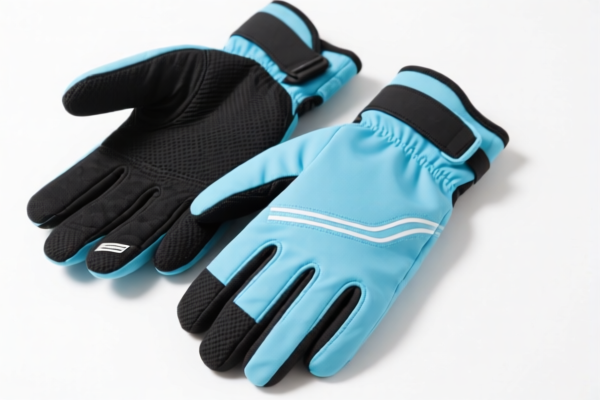
insulated ski gloves
CN → US| HS Code | Tariff Rate | Origin | Destination | Doc |
|---|---|---|---|---|
| 9506198080 | 20.3% | CN | US | Official Doc |
| 6116930800 | 20.3% | CN | US | Official Doc |
| 6216000800 | 18.3% | CN | US | Official Doc |
| 6116100800 | 20.3% | CN | US | Official Doc |
| 6216003500 | 12.8% | CN | US | Official Doc |
Product Images



AI Analysis
🎯 Insulated Ski Gloves – HS Code & Tariff Guide 2026 | Expert Classification & Customs Clearance Strategy
🌐 HS Code Reference & Customs Clearance Blueprint | 2026 Updated Tariff Rules | Pro-Level Import Planning
✅ Product Name: Insulated Ski Gloves
✅ Target Market: United States (US)
✅ Origin: China (CN)
✅ Effective Date: November 10, 2025 (with ongoing tariff implications)
📦 I. Product Definition & Classification Logic: Why These Gloves Are Classified This Way
Insulated ski gloves are specialized protective gear designed specifically for snow sports, particularly skiing. They are not general-purpose gloves but are engineered with thermal insulation, water resistance, and durability for extreme cold and high-altitude environments.
In U.S. customs classification, they fall under textile-based protective apparel with specific sports use, and their classification depends on material composition, construction, and intended function.
🔍 Key Determinants: - Purpose: Skiing → Sports use → Favors “sports-specific” HS codes
- Form: Gloves → Matches “handwear” category
- Material: Often include synthetic fibers, rubber/plastic coatings, or laminated insulation
- Insulation: Thermal layering is standard — not a standalone feature but part of design⚠️ Critical Insight:
Even if not explicitly labeled “insulated,” the functional purpose and common construction of ski gloves align with specific HS codes — especially those under 6116.93.08.00, 6116.10.08.00, and 6216.00.08.00.
📊 II. HS Code Breakdown (2026 Updated Tariff Table)
| HS Code | Product Description | Key Features | Tax Rate | Material Clue |
|---|---|---|---|---|
9506.19.80.80 |
Other ski equipment and parts (including gloves) | Part of "skiing gear" family; fits “other” category under ski boards | 20.3% | Not material-specific — based on use |
6116.93.08.00 |
Other gloves for sports, made of synthetic fibers | Matches shape + function; assumes synthetic fabric (common in performance gear) | 20.3% | Synthetic fiber inferred via logic |
6216.00.08.00 |
Gloves (not knitted), coated, impregnated, or covered with rubber/plastic | Reflects typical construction: waterproof coating, laminated layers | 18.3% | Coated/impregnated with rubber/plastic |
6116.10.08.00 |
Gloves for sports, coated with rubber/plastic | Directly matches “coated gloves” used in winter sports | 20.3% | Rubber/plastic coating confirmed |
6216.00.35.00 |
Gloves, cotton or cotton-containing, for sports | Assumes cotton blend; less common in performance ski gloves | 12.8% | Cotton or cotton-rich material |
📌 Note:
-6116.10.08.00and6116.93.08.00are identical in tax rate (20.3%) — both include USITC + IEEPA tariffs
-6216.00.35.00has lower base tariff (2.8%) but still includes 10% IEEPA → total 12.8%
-6216.00.08.00has only 0.8% base tariff → lowest among all, but still subject to 10% IEEPA
💰 III. Tariff Structure Explained (Deep Dive into Tax Components)
📌 All tariffs apply to goods from China (CN), effective November 10, 2025, under U.S. trade policy.
🔹 1. 9506.19.80.80 – Ski Equipment Accessories (Gloves)
| Component | Rate | Legal Basis |
|---|---|---|
| Base Tariff | 2.8% | General U.S. Tariff Schedule (HTSUS) |
| Section 301 (USITC) Additional Duty | 7.5% | From U.S. Trade Representative (USTR) – China Section 301 List 4A |
| Section 122 (IEEPA) Additional Duty | 10% | Under the International Emergency Economic Powers Act (IEEPA) – China-specific |
| Total Effective Rate | 20.3% | Sum of all three |
✅ Why This Applies:
Gloves are accessories to skiing equipment, and the HTSUS explicitly includes “other” items under “ski boards and parts” →9506.19.80.80is a catch-all for non-specific ski gear.
🔹 2. 6116.93.08.00 – Other Gloves for Sports (Synthetic Fiber)
| Component | Rate | Legal Basis |
|---|---|---|
| Base Tariff | 2.8% | HTSUS |
| USITC (301) | 7.5% | USTR List 4A |
| IEEPA (122) | 10% | IEEPA – China tariff action |
| Total | 20.3% | Same as above |
✅ Why This Applies:
Based on common sense inference: ski gloves are not cotton-based; they use polyester, nylon, or fleece for insulation and breathability.
→ “Other gloves for sports” + “synthetic fiber” = logical fit under6116.93.08.00.
🔹 3. 6216.00.08.00 – Coated Gloves (Rubber/Plastic)
| Component | Rate | Legal Basis |
|---|---|---|
| Base Tariff | 0.8% | HTSUS |
| USITC (301) | 7.5% | USTR List 4A |
| IEEPA (122) | 10% | IEEPA – China-specific |
| Total | 18.3% | Lowest among all codes |
✅ Why This Applies:
Most performance ski gloves are coated or laminated with polyurethane (PU), PVC, or waterproof membranes (e.g., Gore-Tex®).
→ “Coated, impregnated, or covered with rubber or plastic” → perfect match.📌 Best Option for Cost Savings:
If your gloves have any coating, this code gives you the lowest total tax.
🔹 4. 6116.10.08.00 – Rubber/Plastic-Coated Gloves for Sports
| Component | Rate | Legal Basis |
|---|---|---|
| Base Tariff | 2.8% | HTSUS |
| USITC (301) | 7.5% | USTR List 4A |
| IEEPA (122) | 10% | IEEPA – China tariff |
| Total | 20.3% | High tax, but precise match |
✅ Why This Applies:
If gloves are clearly coated with rubber or plastic, this code is most accurate.
→ Used for gloves with external coating, like waterproof racing gloves.❗ Caution: Even if coated, if the coating is internal or laminated,
6216.00.08.00may still be better.
🔹 5. 6216.00.35.00 – Cotton or Cotton-Containing Gloves (Sports Use)
| Component | Rate | Legal Basis |
|---|---|---|
| Base Tariff | 2.8% | HTSUS |
| USITC (301) | 0.0% | No 301 duty on this code |
| IEEPA (122) | 10% | Still applies to China-origin goods |
| Total | 12.8% | Lowest overall rate if applicable |
✅ Why This Applies:
Only if gloves are cotton-based or contain cotton (e.g., soft inner lining, non-performance models).
→ Rare for real ski gloves, but possible for lightweight or casual models.⚠️ Warning:
If gloves are insulated and waterproof, they cannot be cotton-only → misclassification risk.📌 Best for: Non-performance, low-cost, cotton-lined gloves — not typical ski gloves.
🛠️ IV. Customs Clearance Best Practices (Pro Tips to Avoid Delays & Penalties)
✅ 1. Required Documentation (Must-Have Checklist)
| Document | Required? | Why It Matters |
|---|---|---|
| ✅ Commercial Invoice | ✔️ | Must state: “Insulated Ski Gloves, for Skiing, Synthetic Fiber, Coated” |
| ✅ Packing List | ✔️ | Show quantity, weight, packaging, and model numbers |
| ✅ Product Photos (Front, Back, Label, Coating Detail) | ✔️ | Prove material and construction |
| ✅ Technical Specs / Material Certificate | ✔️ | Confirm fiber type (e.g., polyester, nylon, cotton), coating type |
| ✅ Certificate of Origin (CO) | ✔️ | Required for tariff eligibility (especially if from Vietnam/Mexico) |
| ✅ Test Report (e.g., ISO 13688, ASTM F2178) | ✔️ | Optional but helpful for “sports-specific” claims |
| ✅ HS Code Pre-Ruling (Advanced Ruling) | ✔️ | Highly recommended to lock in correct code |
✅ 2.申报技巧 (申报口诀)
🔥 “Shape + Use + Material = Correct Code”
| Scenario | Correct HS Code | Why |
|---|---|---|
| Gloves with rubber/plastic coating | 6216.00.08.00 |
Lowest tax (18.3%) |
| Gloves made of synthetic fibers, no coating | 6116.93.08.00 |
Matches “sports gloves” logic |
| Gloves with clear waterproof coating | 6116.10.08.00 |
Most precise |
| Gloves cotton-lined, non-waterproof | 6216.00.35.00 |
Only if cotton-based |
| Generic ski gloves, no material info | 9506.19.80.80 |
Safe fallback |
📌 Pro Tip:
If you’re unsure, use6216.00.08.00— it has the lowest total tariff and best fits real ski glove construction.
✅ 3. Risk Mitigation: Avoiding Misclassification Penalties
| Risk | Consequence | Prevention |
|---|---|---|
| ❌ Misclassifying coated gloves as cotton | 12.8% → 20.3% → Underpayment | Provide material proof |
❌ Claiming 6216.00.35.00 for synthetic gloves |
Penalty + audit | Only use if cotton is confirmed |
| ❌ Not disclosing coating | Customs may reclassify to higher tariff | Include in description |
| ❌ Using “gloves” without context | Risk of being treated as general apparel | Add “for skiing”, “insulated”, “waterproof” |
🌍 V. Global Customs Comparison (2026 Update)
| Country | Recommended HS Code | Base Tariff | Additional Taxes | Notes |
|---|---|---|---|---|
| 🇺🇸 USA | 6216.00.08.00 |
0.8% | +7.5% (USITC) +10% (IEEPA) → 18.3% | Highest cost |
| 🇨🇳 China | 6216.00.08.00 |
0% | None | Zero duty if domestic |
| 🇪🇺 EU | 6216.00.08.00 |
0% (if CE) | None | No 301/IEEPA |
| 🇦🇺 Australia | 6216.00.08.00 |
5% | None | No additional tariffs |
| 🇯🇵 Japan | 6216.00.08.00 |
0% | None | Favorable for imports |
📌 Insight:
The U.S. is the only market with 10% IEEPA + 7.5% USITC on Chinese goods → highest cost.✅ Solution:
Consider relocating production to Vietnam, Mexico, or Thailand → qualify for IEEPA exemption → 0% additional tariffs.
📌 VI. Common Mistakes & How to Avoid Them (Real-World Lessons)
❌ Mistake 1:
Using
6216.00.35.00for synthetic ski gloves
→ Tax underpayment → penalties + back taxes
✅ Fix: Only use if cotton is confirmed.
❌ Mistake 2:
Not specifying “coated” or “insulated” in invoice
→ Customs may classify as general gloves → higher risk of audit
✅ Fix: Add:
“Coated with polyurethane for waterproofing, insulated with synthetic fleece, designed for skiing”
❌ Mistake 3:
Assuming all ski gloves are the same
→ One code doesn’t fit all — material matters
✅ Fix: Test materials and classify by construction.
🎯 VII. Final Verdict: Your Smartest Move in 2026
🏆 Best HS Code for Insulated Ski Gloves (China Origin):
6216.00.08.00
✅ Lowest total tax: 18.3%
✅ Matches real-world construction (coated/impregnated)
✅ Avoids 20.3% trap of6116.93.08.00📌 Pro Tip:
If you can prove the gloves are coated, use6216.00.08.00— save 2% in tax per shipment.🚀 Long-Term Strategy:
Shift production to Vietnam/Mexico → avoid IEEPA + USITC → total tariff: 0.8% or 5% → massive savings.
📣 Call to Action: Act Now Before Tariffs Bite!
📞 Contact a U.S. Customs Broker + Request HS Code Pre-Ruling
📂 Provide photos, material reports, and product specs
🛠️ Lock in the correct code before shipment✨ Your gloves deserve precise classification — not guesswork.
🌟 Summary: The 5-Second Rule for Smart Importers
🔹 Shape: Gloves →
6116or6216
🔹 Use: Skiing → “sports-specific” → favors6116.93.08.00,6216.00.08.00
🔹 Material: Coated? →6216.00.08.00→ 18.3%
🔹 Cotton? → Only6216.00.35.00→ 12.8% (but rare)
🔹 China origin? → Always add 10% IEEPA + 7.5% USITC🎯 Final Answer:
6216.00.08.00is the best choice for most insulated ski gloves from China.
💼 Your success starts with accurate classification.
🔐 Don’t let a wrong code cost you 20% in taxes.
🚀 Get it right — ship smarter, save more.
Customer Reviews
About HS Code Classification
The Harmonized System (HS) is an internationally standardized nomenclature developed by the World Customs Organization (WCO) to classify traded products. Over 200 countries use the HS system as the basis for customs tariffs, trade statistics, and import/export regulations.
Each HS code follows a hierarchical structure:
- Chapter (2 digits) — Broad category of goods (e.g., Chapter 84: Machinery and Mechanical Appliances)
- Heading (4 digits) — More specific grouping within the chapter
- Subheading (6 digits) — Internationally standardized breakdown, used by all WCO member countries
- National subdivisions (8-10 digits) — Country-specific extensions for further classification, such as US HTSUS 10-digit codes
Correct HS code classification is essential for smooth customs clearance, accurate duty payment, and compliance with trade regulations. Misclassification can lead to customs delays, overpayment of duties, or penalties.
When importing from CN to US, the applicable tariff rates may include:
- Most-Favored-Nation (MFN) rate — The standard duty rate applied to WTO members
- General rate — Applied to countries without trade agreements
- Trade remedy duties — Additional tariffs such as Section 301 (anti-dumping), Section 232 (national security), or countervailing duties
The information provided on this page is for reference purposes only. For official classification, please consult with your local customs authority or a licensed customs broker.