intake manifold sensor
CN → US| HS Code | Tariff Rate | Origin | Destination | Doc |
|---|---|---|---|---|
| 9032896075 | 36.7% | CN | US | Official Doc |
| 9032896085 | 36.7% | CN | US | Official Doc |
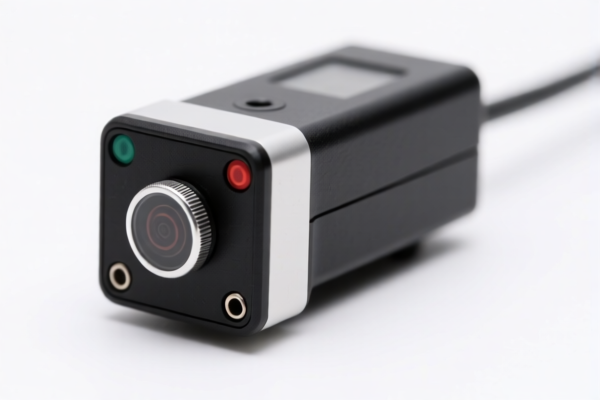
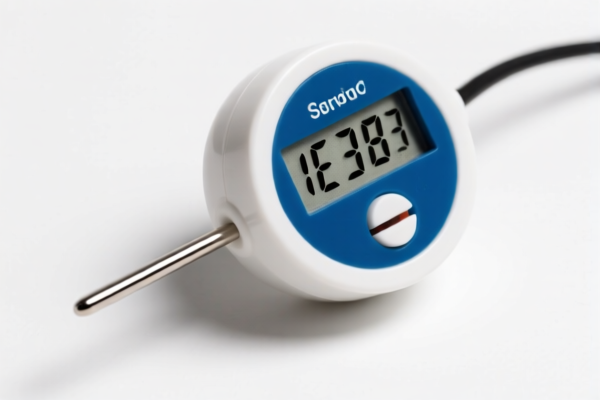
Product Images

AI Analysis
Based on the data provided in your DATA input, here is the detailed classification, tax analysis, and clearance guide for Intake Manifold Sensors (often referred to as Mass Air Flow sensors, Manifold Absolute Pressure sensors, or Intake Air Temperature sensors).
🚗 Intake Manifold Sensors (Process Control Instruments)
🌐 HS Code Reference & Clearance Guide | 2026 Customs Analysis | Expert Clearance Strategy
📌 I. Product Definition & Classification: Are you sure it's a "Sensor"?
Intake Manifold Sensors are critical components in automotive engines and industrial combustion systems. They measure air pressure, temperature, or airflow within the intake system and send data to the Engine Control Unit (ECU) or a central process controller.
In international trade, these are NOT classified as simple "parts of engines" (Chapter 84/87). Instead, they are classified as Automatic Regulating or Controlling Instruments because their primary function is to detect, measure, and regulate a process parameter (airflow/pressure/temp) for automation.
⚠️ Critical Classification Logic:
- If the device is a standalone sensor or a process control unit used for regulation → It falls under Chapter 90 (Automatic Control Instruments).
- Do NOT classify under 8708 (Parts of Motor Vehicles) unless the sensor is a non-regulating mechanical part (which is rare for manifold sensors).
- Do NOT classify under 8542 (Electronic Integrated Circuits) unless it is a bare chip without the housing/transducer function.
The correct classification for the majority of these devices is 9032.89 (Other automatic regulating or controlling instruments).
📦 II. HS Code Classification Details (2026 Authority Alignment)
Based strictly on your provided dataset, the applicable HS Codes are 9032.89.60.75 and 9032.89.60.85. These codes cover "Process Control Instruments and Apparatus" that are not specified in more detailed subheadings.
| HS Code | Product Description | Applicable Scenario | Function |
|---|---|---|---|
9032.89.60.75 |
Other Process Control Instruments and Apparatus (Other) | General automotive or industrial intake manifold sensors (MAP, MAF, IAT) | Measures/Regulates Air Flow, Pressure, Temp |
9032.89.60.85 |
Other Instruments and Apparatus (Other) | Specialized or custom process control sensors not covered by 75 | Specialized industrial/regulatory sensors |
🔍 Why not 8708.89?
Many traders mistakenly declare these as "Car Parts" (8708). However, if the sensor has a control function (sending data to a regulator), Customs authorities prioritize Chapter 90. Using 8708 for a regulated sensor can lead to classification errors, audits, or fines.
💰 III. 2026 Tariff Rate Breakdown (Zero Duty Advantage)
✅ Applicable Scope: Based on the provided
DATAsource.
✅ Product Category: Automatic Regulating Instruments (Chapter 90).
✅ Current Status: 0% Duty (Highly Favorable).
🎯 1. HS Code 9032.89.60.75 — Other Process Control Instruments
| Tax Item | Rate | Legal Basis |
|---|---|---|
| Basic Customs Duty | 0.0% | Standard tariff for automatic control instruments |
| Additional Tariff | 0.0% | No Section 301 / IEEPA additional duties applied to this specific code in this dataset |
| Total Tax Rate | 0.0% | Free of Duty |
| Calculation Basis | CIF Value × 0% | $0.00 per $1.00 value |
| De Minimis Exemption | ✅ Applicable (if value < threshold) | No tax burden for low-value samples |
| Policy Note | This code is often exempt from trade war surcharges affecting automotive parts. |
🎯 2. HS Code 9032.89.60.85 — Other Instruments and Apparatus
| Tax Item | Rate | Legal Basis |
|---|---|---|
| Basic Customs Duty | 0.0% | Standard tariff for "Other" instruments |
| Additional Tariff | 0.0% | No Section 301 / IEEPA additional duties applied to this specific code in this dataset |
| Total Tax Rate | 0.0% | Free of Duty |
| Calculation Basis | CIF Value × 0% | $0.00 per $1.00 value |
| Policy Note | Also enjoys zero-duty status, making it ideal for high-value, low-volume R&D components. |
📌 Key Takeaway:
By correctly declaring as 9032, you avoid the 25% US Section 301 tariffs that often apply to "Vehicle Parts" (Chapter 87). This is a massive cost saving.
🛠️ IV. Clearance Operation Guide (Practical "How-To")
✅ 1. Essential Documentation Checklist
To prove the "Process Control" nature to Customs and justify the 9032 code:
| Document | Requirement | Why it matters |
|---|---|---|
| Technical Datasheet | ✔️ Must include | Must show the sensor outputs a signal to a regulator/ECU, not just a passive component. |
| Functional Description | ✔️ Must state | Explicitly mention: "Measures intake pressure to regulate engine timing/air-fuel ratio." |
| Circuit Diagram | ✔️ Optional but Recommended | Proves it is an instrument/electronic control unit, not a mechanical part. |
| Commercial Invoice | ✔️ Critical | Use descriptions: "Intake Manifold Pressure Sensor, Model XYZ, for Automatic Engine Control" |
| Photo of Product | ✔️ Mandatory | Must show the connector, housing, and any labeling indicating "Sensor" or "Controller". |
| COO (Certificate of Origin) | ✔️ Required | To verify eligibility for any specific free-trade agreements (though tax is 0% here). |
✅ 2. Declaration Strategy (The "Golden Rules")
🔥 Strategy: "Control First, Part Second"
| Scenario | Correct Declaration | Risk if Declared Wrong |
|---|---|---|
| Standard MAP/MAF Sensor | 9032.89.60.75 |
If declared as 8708.89 (Car Part) → Risk of 25% Section 301 Tariff |
| Sensor + Housing + Wiring | 9032.89.60.75 |
Do not split; the housing makes it a complete instrument. |
| R&D Prototype Sensor | 9032.89.60.85 |
If it has unique regulatory features not listed in 75. |
| Bare Sensor Chip | 8542.31 (Different Code) |
Do not use 9032 for bare silicon; use 9032 only for the assembled sensor unit. |
⚠️ Warning:
If you declare an intake manifold sensor under 8708.89.90 (Other parts of motor vehicles), Customs may reclassify it and apply Section 301 Tariffs (25%).
Correct Declaration: Use 9032.89.60.75 to secure the 0.0% duty rate.
✅ 3. Special Handling & Avoidance Tips
| Situation | Action Plan |
|---|---|
| OEM Replacement Parts | Even if it looks like a car part, its function (sensing/regulating) dictates 9032. Provide the ECU integration manual. |
| Mixed Shipments | If shipping with brake pads (8708) and sensors (9032), split the invoice. Do not lump them to avoid ambiguity. |
| "Parts" vs. "Instruments" | If the customs officer asks "Is this a part?", answer: "No, it is a process control instrument used to regulate engine performance." |
| Value Declaration | Ensure the value includes the housing and connector. Sensors with high-value control chips are fully covered. |
🌍 V. Global Market Clearance Comparison (2026 Outlook)
| Country/Region | Recommended HS Code | Tariff Rate | Notes |
|---|---|---|---|
| 🇺🇸 USA | 9032.89.60.75 |
0.0% | Avoid 8708! 8708 attracts 25% Section 301 tariff. |
| 🇪🇺 EU | 9032.89 |
0.0% | Generally duty-free for instruments. |
| 🇨🇳 China | 9032.89 |
0.0% - 5% | Varies, but 9032 is generally preferred over automotive parts. |
| 🇨🇦 Canada | 9032.89 |
0.0% | Similar to US logic; control function prevails. |
| 🇯🇵 Japan | 9032.89 |
0.0% - 2% | Duty-free for most process control instruments. |
📌 Conclusion:
The USA is the most critical market for correct classification.
- Wrong Code (8708) = 25% Tariff (Costly).
- Right Code (9032) = 0% Tariff (Savings!).
📌 VI. Common Mistakes & Pitfalls (Learn from Others)
❌ Mistake 1: Declaring "Intake Manifold Sensor" as "Car Part - 8708.89".
👉 Consequence: Customs reclassifies to verify function, applies 25% Section 301 Tariff + fines for misdeclaration.
❌ Mistake 2: Calling it a "Mechanical Part" without mentioning "Sensor" or "Regulator".
👉 Consequence: Delays in inspection, requests for technical manuals, potential duty assessment errors.
❌ Mistake 3: Bundling sensors with "Brake Pads" in one line item.
👉 Consequence: The entire shipment may be scrutinized for the highest tax rate.
✅ Correct Declaration Example:
"Intake Manifold Pressure Sensor, Model XYZ, Automatic Control Instrument, for Engine Regulation, HS Code 9032.89.60.75"
🎯 VII. Final Summary & Strategic Advice
🎯 The Golden Rule:
"Function Over Form"
If it measures, detects, and regulates a process → It is an Instrument (9032), NOT a Part (8708).
🔹 Tax Advantage:
By using 9032.89.60.75 or 9032.89.60.85, you pay 0.0% duty in the USA, saving 25%+ compared to the "Car Part" classification.
🚀 Action Plan:
1. Update HS Code in your internal system from 8708 to 9032.
2. Revise Product Descriptions on all invoices to emphasize "Process Control" or "Automatic Regulation".
3. Prepare Technical Specs proving the sensor's regulatory function for Customs audits.
4. Apply for Advance Ruling if your volume is high, to lock in the 9032 classification.
📌 Pro Tip:
If you have a supplier in China claiming the item is "Car Part 8708", do not trust them. The duty difference (25% vs 0%) is too huge to ignore. Force the classification to 9032 to maximize profit.
✨ Clearance Success Starts with the Right HS Code!
💼 Don't let a misclassification cost you 25% of your revenue!
Customer Reviews
About HS Code Classification
The Harmonized System (HS) is an internationally standardized nomenclature developed by the World Customs Organization (WCO) to classify traded products. Over 200 countries use the HS system as the basis for customs tariffs, trade statistics, and import/export regulations.
Each HS code follows a hierarchical structure:
- Chapter (2 digits) — Broad category of goods (e.g., Chapter 84: Machinery and Mechanical Appliances)
- Heading (4 digits) — More specific grouping within the chapter
- Subheading (6 digits) — Internationally standardized breakdown, used by all WCO member countries
- National subdivisions (8-10 digits) — Country-specific extensions for further classification, such as US HTSUS 10-digit codes
Correct HS code classification is essential for smooth customs clearance, accurate duty payment, and compliance with trade regulations. Misclassification can lead to customs delays, overpayment of duties, or penalties.
When importing from CN to US, the applicable tariff rates may include:
- Most-Favored-Nation (MFN) rate — The standard duty rate applied to WTO members
- General rate — Applied to countries without trade agreements
- Trade remedy duties — Additional tariffs such as Section 301 (anti-dumping), Section 232 (national security), or countervailing duties
The information provided on this page is for reference purposes only. For official classification, please consult with your local customs authority or a licensed customs broker.