integrated circuit microprocessor
CN → US| HS Code | Tariff Rate | Origin | Destination | Doc |
|---|---|---|---|---|
| 8542310050 | 60.0% | CN | US | Official Doc |
| 8471500110 | 35.0% | CN | US | Official Doc |
| 8542310045 | 60.0% | CN | US | Official Doc |
| 8543906800 | 35.0% | CN | US | Official Doc |
| 8543901500 | 35.0% | CN | US | Official Doc |
| 8471500150 | 35.0% | CN | US | Official Doc |
Product Images
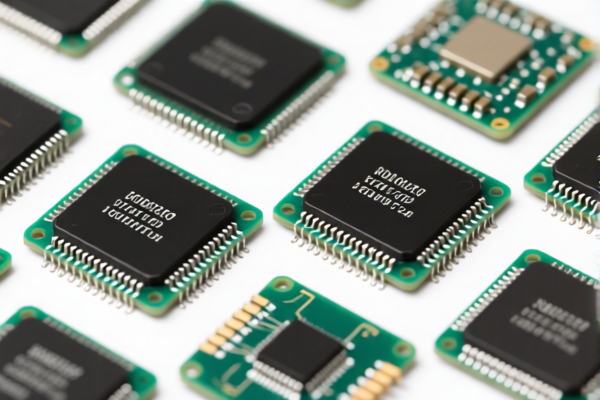
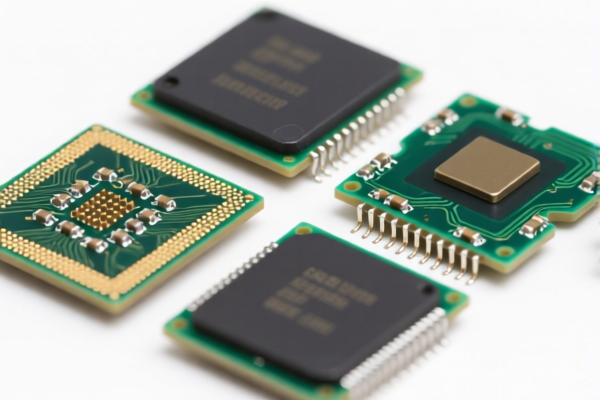


AI Analysis
🧠 Integrated Circuit Microprocessor (Microcontrollers & CPUs)
🌐 HS Code Reference & Customs Clearance Guide | 2026 Latest Tariff Analysis | Professional-Level Strategy for Semiconductor Imports
📌 I. Product Definition & Classification: What Exactly is a "Microprocessor"?
An Integrated Circuit Microprocessor is the central processing unit (CPU) of a computer or digital system. It is an electronic circuit manufactured on a semiconductor material (usually silicon) that performs the basic arithmetic, logic, controlling, and input/output (I/O) operations of a system.
In international trade, these chips are not all treated equally. The classification depends heavily on: 1. Function: Is it a general-purpose CPU or a specialized processor? 2. Integration: Does it include memory/storage, or is it just the logic core? 3. Application: Is it used in a general computer, a specific machine, or as a component?
⚠️ Key Distinction Points:
- Microprocessors (CPUs): General-purpose processors intended for data processing equipment → HS 8471.50 / 8542.31
- Specialized/Peripheral Chips: If the chip is primarily for signal processing, power management, or specific interface control, it may fall under HS 8543 or other 85xx categories.
- Assembly Status: Bare dies, packaged chips, or mounted on printed circuit boards (PCBs) affect the HS code choice.
📦 II. HS Code Classification Details (2026 Latest Tariff Authority Comparison)
Based on the provided data for Chinese-origin goods imported into the US (implied by the "Section 301/122" context), here is the breakdown:
| HS Code | Product Description | Application/Summary | Key Attribute |
|---|---|---|---|
| 8542.31.00.50 | Electronic Integrated Circuits: Microprocessors | Direct match for electronic ICs and processors. | High Risk/High Tax: Specific microprocessor classification. |
| 8471.50.01.10 | Units of Automatic Data Processing Machines (ADPM) | Core processing unit of ADPMs. | Core CPU: Treated as part of the computer system. |
| 8542.31.00.45 | Electronic ICs: Microprocessors | Corresponds to material; Microprocessor matches CPU usage. | High Risk/High Tax: Similar to .50, high scrutiny. |
| 8543.90.68.00 | Electrical Machines/Apparatus with Individual Functions | IC category, fits printed circuit assembly attributes. | Alternative: Used if not strictly a general-purpose CPU. |
| 8543.90.15.00 | Electrical Machines/Apparatus with Individual Functions | IC chip category, fits printed circuit assembly attributes. | Alternative: Another variant for specialized ICs. |
| 8471.50.01.50 | Units of ADPMs | Core processing unit, fits semiconductor chip attributes. | Core CPU: Similar to .10, part of the ADPM family. |
🔍 Critical Insight:
- 8542.31.xxxx codes are for Integrated Circuits (ICs) specifically designed as microprocessors. These are subject to the highest tariffs in this dataset (60%).
- 8471.50.xxxx codes are for Units of Automatic Data Processing Machines. If the microprocessor is sold with or as part of a computer system or is clearly defined as a "unit" of an ADPM, it may fall here (35% tax).
- 8543.90.xxxx codes are often used for specialized electronic machines or components that don't fit neatly into 8542 (ICs) or 8471 (ADPMs). These are also taxed at 35%.
💰 III. 2026 Latest Tariff Rate Breakdown (Including Surtaxes & Policy Add-ons)
✅ Applicable Country: United States (US)
✅ Country of Origin: China (CN)
✅ Effective Date: Ongoing (Current Trade War Rates)
🎯 1. 8542.31.00.50 & 8542.31.00.45 —— Microprocessors (Integrated Circuits)
| Item | Details |
|---|---|
| Base Tariff | 0.0% (Ad Valorem) |
| Section 301 Surcharge | 50.0% (Specific to these HS codes from China) |
| Section 122 Tariff | 10.0% (Additional surcharge for certain electronics) |
| Total Tariff Rate | 60.0% |
| Tax Calculation | CIF Value × 60% |
| De Minimis Eligibility | ❌ None (Deny De Minimis) |
| Legal Basis | Section 301 + Section 122 (US Trade Act) |
📌 Explanation:
- These are Microprocessors (CPUs) under Chapter 85 (Electrical Machinery).
- The 50% Section 301 tariff is the primary trade war penalty.
- The 10% Section 122 tariff is an additional layer for specific electronic components.
- Total Cost Impact: For every $10,000 of goods, you pay $6,000 in duties. This is extremely high and requires careful supply chain planning.
🎯 2. 8471.50.01.10 & 8471.50.01.50 —— ADPM Processing Units
| Item | Details |
|---|---|
| Base Tariff | 0.0% (Ad Valorem) |
| Section 301 Surcharge | 25.0% |
| Section 122 Tariff | 10.0% |
| Total Tariff Rate | 35.0% |
| Tax Calculation | CIF Value × 35% |
| De Minimis Eligibility | ❌ None (Deny De Minimis) |
| Legal Basis | Section 301 + Section 122 |
📌 Explanation:
- These codes classify the microprocessor as a unit of Automatic Data Processing Machines.
- While still high, the Section 301 rate is lower (25% vs 50%) compared to the 8542 codes.
- This classification is often preferred if the chip is marketed as part of a computer system or if the specific subheading allows for this broader interpretation.
🎯 3. 8543.90.68.00 & 8543.90.15.00 —— Other Electrical Machines/ICs
| Item | Details |
|---|---|
| Base Tariff | 0.0% (Ad Valorem) |
| Section 301 Surcharge | 25.0% |
| Section 122 Tariff | 10.0% |
| Total Tariff Rate | 35.0% |
| Tax Calculation | CIF Value × 35% |
| De Minimis Eligibility | ❌ None (Deny De Minimis) |
| Legal Basis | Section 301 + Section 122 |
📌 Explanation:
- These are fallback categories for ICs that may not fit strictly into "Microprocessors" (8542) but are still electronic assemblies.
- They benefit from the lower 25% Section 301 rate, resulting in the same 35% total tariff as the 8471 codes.
🛠️ IV. Customs Clearance Practical Advice (Avoid Pitfalls)
✅ 1. Preparation Checklist (Mandatory)
| Document | Required | Notes |
|---|---|---|
| ✅ Product Data Sheet | ✔️ | Must specify: Architecture (e.g., x86, ARM), Frequency, Pin count, Application. |
| ✅ Circuit Diagram/Schematic | ✔️ | Crucial to prove it's a CPU/Microprocessor vs. a simple logic gate or amplifier. |
| ✅ Photos (Bare & Packaged) | ✔️ | Show markings, part numbers, and packaging type. |
| ✅ Commercial Invoice | ✔️ | Clearly state "Microprocessor" or "CPU". Avoid vague terms like "Chip". |
| ✅ Packing List | ✔️ | Detail quantities and weights. |
| ✅ Origin Certificate | ✔️ | Confirm Country of Origin is China to apply correct tariffs. |
✅ 2. Declaration Strategy (Key Mantras)
🔥 "Function Defines Code, Document Defines Truth!"
| Scenario | Recommended HS Code | Reason |
|---|---|---|
| General Purpose CPU (e.g., Intel Core, AMD Ryzen chips sold loose) | 8542.31.00.50 or 8542.31.00.45 | Strictly classified as Microprocessors. High tax (60%). |
| CPU sold as part of a Computer System | 8471.50.01.10 or 8471.50.01.50 | Classified as ADPM Unit. Lower tax (35%). |
| Specialized Microcontroller/Processor (e.g., for IoT, Automotive) | 8543.90.68.00 or 8543.90.15.00 | Classified as other electrical machines. Lower tax (35%). |
| Bare Die / Unpackaged Wafer | Consult Legal | May require different classification (e.g., 8541.40). Not in provided data. |
⚠️ Warning:
- Do not misdeclare a 60% item as a 35% item. Customs will audit the technical specs.
- If the chip is a Microcontroller (CPU + RAM/ROM on one chip), it often falls under 8542.31 (Microprocessors) or 8542.39 (Controllers). The provided data groups them under 8542.31.
✅ 3. Special Cases & Mitigation
| Situation | Advice |
|---|---|
| Re-export from Third Country | If the chip is shipped from Vietnam/Malaysia, ensure substantial transformation occurred. Simple transshipment may still trigger Chinese origin rules. |
| R&D Samples | Still subject to duties unless declared as non-commercial samples (may still require duty payment, but allows faster clearance). |
| Kit/Assembly | If the CPU is mounted on a motherboard, the whole assembly might be classified as a motherboard or computer unit, potentially changing the HS code entirely. |
🌍 V. Global Market Comparison (2026)
| Market | Typical HS for CPU | Base Tariff | US Section 301 | Total (China Origin) | Notes |
|---|---|---|---|---|---|
| 🇺🇸 USA | 8542.31 / 8471.50 | 0% | 25% - 50% | 35% - 60% | Highest Risk. Section 122 adds 10%. |
| 🇨🇳 China | 8542.31 | 0% - 5% | N/A | 0% - 5% | No trade war tariffs. |
| 🇪🇺 EU | 8542.31 | 0% | N/A | 0% | No Section 301. GSP may apply. |
| 🇯🇵 Japan | 8542.31 | 0% | N/A | 0% | Favorable trade agreements. |
📌 Conclusion:
- The USA is the only major market with these punitive tariffs on Chinese semiconductors.
- 35% vs 60%: Choosing between 8542.31 (60%) and 8471.50/8543.90 (35%) can save $25,000 per $100,000 of goods.
- Legal Compliance is Key: Misclassification can lead to seizures, fines, and loss of import privileges.
📌 VI. Common Mistakes & Pitfalls (Blood Lessons)
❌ Mistake 1: Declaring a Microprocessor as "Electronic Component" (Generic)
👉 Consequence: Customs will reclassify to 8542.31. Back-taxes + Penalties!
❌ Mistake 2: Ignoring Section 122 Tariff
👉 Consequence: Even if you get Section 301 right, forgetting the 10% Section 122 tariff results in an underpayment of 10% on top of the base rates.
❌ Mistake 3: Using "CPU" in Description but Declaring under "Memory Chips"
👉 Consequence: Audit Trigger. Customs will compare technical specs. If it's a CPU, it must be 8542.31 or 8471.50.
❌ Mistake 4: Assuming De Minimis (Under $800) Applies
👉 Consequence: De Minimis is denied for these HS codes from China. You must pay duties even on small packages.
✅ Correct Approach:
"Microprocessor, Model XYZ, x86 Architecture, 3.5GHz, Surface Mount, No. 12345"
HS Code:8542.31.00.50(if strictly CPU) or8471.50.01.10(if ADPM unit).
🎯 VII. Conclusion: Precision Saves Money!
🎯 Remember the Golden Rule:
🔹 "60% for pure Microprocessors (8542.31)"
🔹 "35% for ADPM Units (8471) or Specialized ICs (8543)"
🔹 "No De Minimis! Pay Duties on Everything!"
📌 Pro Tip:
If your product is a Microcontroller (with integrated memory), check if it fits better under 8542.39 (not in data) or 8543.90. If it is a General Purpose CPU, you are stuck with the 60% rate under 8542.31 unless you can prove it is a "unit of ADPM."
📣 Immediate Action:
📞 Consult a Customs Broker: Provide your Datasheet and Application.
🚀 Get an Advance Ruling: Lock in your HS code with CBP before shipping to avoid surprise bills.
💡 Optimize Supply Chain: Consider shipping from non-China origins if tariffs are too high.
✨ Professional Clearance Starts with Precise Classification!
💼 Your Bottom Line Depends on These Digits!
Customer Reviews
About HS Code Classification
The Harmonized System (HS) is an internationally standardized nomenclature developed by the World Customs Organization (WCO) to classify traded products. Over 200 countries use the HS system as the basis for customs tariffs, trade statistics, and import/export regulations.
Each HS code follows a hierarchical structure:
- Chapter (2 digits) — Broad category of goods (e.g., Chapter 84: Machinery and Mechanical Appliances)
- Heading (4 digits) — More specific grouping within the chapter
- Subheading (6 digits) — Internationally standardized breakdown, used by all WCO member countries
- National subdivisions (8-10 digits) — Country-specific extensions for further classification, such as US HTSUS 10-digit codes
Correct HS code classification is essential for smooth customs clearance, accurate duty payment, and compliance with trade regulations. Misclassification can lead to customs delays, overpayment of duties, or penalties.
When importing from CN to US, the applicable tariff rates may include:
- Most-Favored-Nation (MFN) rate — The standard duty rate applied to WTO members
- General rate — Applied to countries without trade agreements
- Trade remedy duties — Additional tariffs such as Section 301 (anti-dumping), Section 232 (national security), or countervailing duties
The information provided on this page is for reference purposes only. For official classification, please consult with your local customs authority or a licensed customs broker.