integrated circuit other
CN → USProduct Images
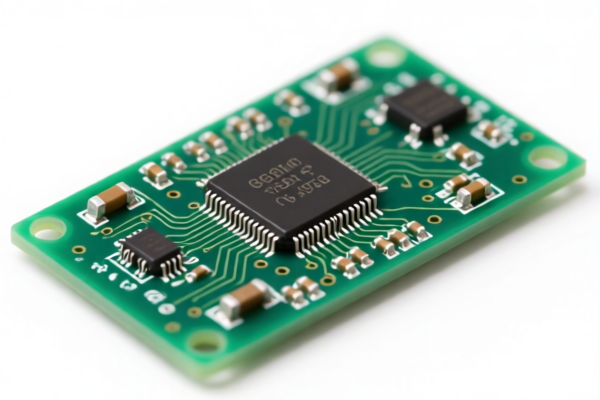
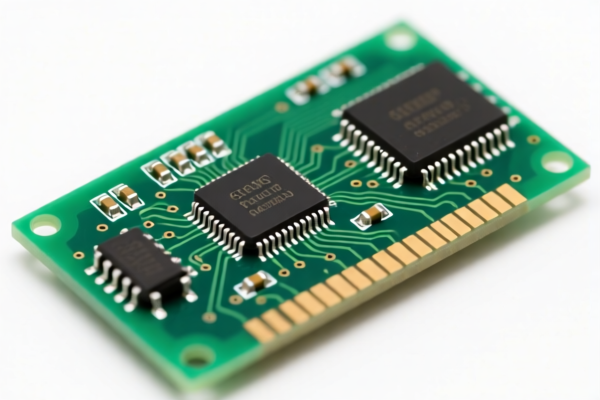
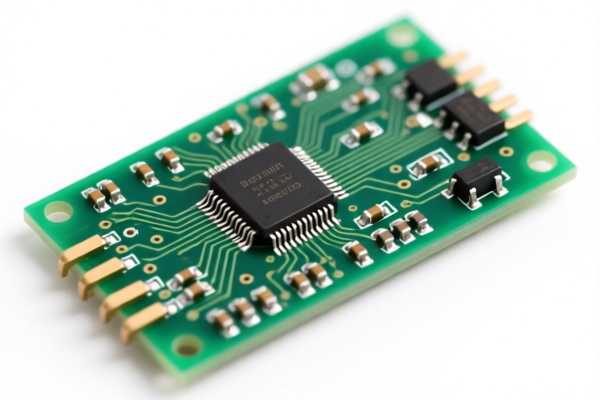
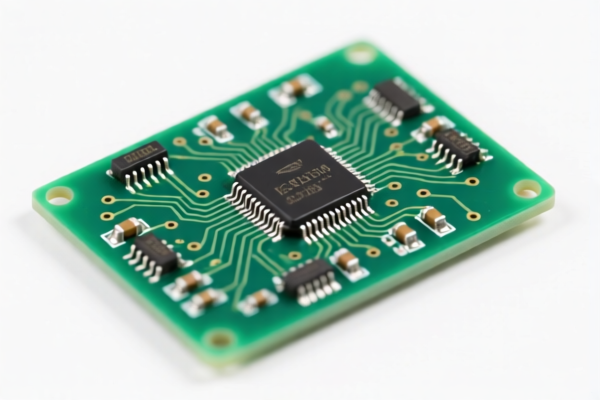
AI Analysis
🔌 Integrated Circuits (Other)
🌐 HS Code Reference & Customs Clearance Guide | 2026 Latest Tariff Analysis | Professional-Level Strategy for "Other" ICs
📌 Part 1: Product Definition & Classification: Do You Truly Understand "Other" Integrated Circuits?
In international trade, "Integrated Circuits" (ICs) are primarily divided into Microprocessors, Controllers, Memory Chips, and "Other" ICs. The term "Other" (归类于 8542.31 or 8542.39) refers to ICs that do not fall into the specific categories of microprocessors/controllers, memories, or amplifiers. This includes:
Complex Logic Circuits & Gate Arrays: Programmable logic devices (PLDs), FPGA (Field-Programmable Gate Arrays), CPLD, ASICs (Application-Specific Integrated Circuits) that are not strictly memory or processor. Mixed-Signal ICs: Circuits combining analog and digital functions that don't fit standard amplifier or memory definitions. Special Purpose ICs: Timer ICs, voltage regulators (if not simple discrete), interface drivers, and other specialized electronic components.
⚠️ Key Distinction Point:
- If the chip is a Microprocessor, Microcontroller, or Memory (DRAM/Flash) → Do NOT use "Other". Use8542.31(specific subcodes) or8542.39carefully based on function.
- If it is a Logic Gate, FPGA, CPLD, or Specialized Driver → It falls under "Other Integrated Circuits", primarily8542.31.00.00or8542.39.00.00.
- Critical Warning: Misclassifying an FPGA as a "Processor" or a "Memory" can lead to significant tariff differences and customs audits.
📦 Part 2: HS Code Classification Details (2026 Latest Tariff Authority Comparison)
| HS Code | Product Description | Application Scenario | Functional Characteristic |
|---|---|---|---|
8542.31.00.00 |
Integrated circuits: Processors and controllers (Note: Often overlaps with "Other" in practice for complex logic) | High-end FPGAs, ASICs, Complex Logic Devices | ⚠️ Check Specific Function: If it performs data processing/control not covered by 8542.31.10 (Microprocessors), it may fall here or 8542.39. See Note 1. |
8542.39.00.00 |
Integrated circuits: Other | FPGAs, CPLDs, Gate Arrays, Specialized Interface Chips, Mixed-Signal ICs (non-amplifier/non-memory) | ✅ "Other" Category: For ICs not classified as Microprocessors, Memories, or Amplifiers. |
8542.32.00.00 |
Integrated circuits: Memories | DRAM, SRAM, Flash Memory, ROM | ❌ Excluded: Do not use for "Other" logic ICs. |
8542.33.00.00 |
Integrated circuits: Amplifiers | Audio/RF Amplifiers | ❌ Excluded: Do not use for logic ICs. |
8541.10.00.00 |
Diodes (other than photosensitive or LED) | Simple rectifiers, Zener diodes | ❌ Excluded: Discrete components, not ICs. |
🔍 Important Reminder:
- FPGAs/CPLDs: Often classified under8542.31.00.00(as "Other Processors/Controllers") OR8542.39.00.00(as "Other") depending on the specific customs authority interpretation and the chip's primary function. US Customs (CBP) often leans towards8542.31.00.00for complex programmable logic.
- ASICs: Typically8542.39.00.00("Other") unless they are clearly defined as microprocessors or memories.
- Do Not Split: Shipment of "Mixed ICs" (some memory, some logic) should ideally be separated or declared accurately to avoid misclassification penalties.
💰 Part 3: 2026 Latest Tariff Rate Details (Including Additional Taxes & Policy Add-ons)
✅ Applicable Country: United States (US)
✅ Country of Origin: China (CN)
✅ Effective Date: From November 10, 2025 (including subsequent imports)
🎯 1. 8542.31.00.00 —— Integrated Circuits: Processors and Controllers (Including Complex Logic/FPGAs)
| Item | Content |
|---|---|
| Base Tariff Rate | 0% (ad valorem) |
| USITC Additional Tariff | +25% (Under Section 301, USITC Footnote 9903.88.01 for most ICs) |
| IEEPA Additional Tariff | +10% (For China/Hong Kong products, effective Nov 10, 2025) |
| Total Tariff Rate | 45% |
| Tax Calculation | CIF Value × 45% |
| De Minimis Exemption | ❌ Not Available (deny_de_minimis) |
| Legal Basis Path | IEEPA:9903.01.25 → IEEPA:9903.01.24 → USITC:8542.31.00.00 → FOOTNOTE:9903.88.01 |
📌 Explanation:
- The 25% USITC surcharge applies to most integrated circuits under Section 301.
- The 10% IEEPA surcharge is a new additional tax for Chinese-origin electronics.
- Total: 45%. This is a high-risk, high-cost classification. Ensure your product description is precise.
🎯 2. 8542.39.00.00 —— Integrated Circuits: Other (e.g., Specialized ASICs, Mixed-Signal, Non-Logic/Memory/Processor)
| Item | Content |
|---|---|
| Base Tariff Rate | 0% |
| USITC Additional Tariff | +25% (Under Section 301) |
| IEEPA Additional Tariff | +10% |
| Total Tariff Rate | 45% |
| Tax Calculation | CIF × 45% |
| De Minimis Exemption | ❌ Not Available |
| Legal Basis Path | IEEPA:9901.25 → IEEPA:9903.01.24 → USITC:8542.39.00.00 → FOOTNOTE:9903.88.01 |
📌 Note:
- Even for "Other" ICs, the 301 and IEEPA tariffs apply.
- No Tariff Advantage: Unlike some consumer goods, "Other" ICs do not escape the 301 surcharges.
- Customs Scrutiny: High risk of being questioned because "Other" is a residual category. You must prove the chip is NOT a memory, processor, or amplifier.
🛠️ Part 4: Customs Clearance Practical Advice (Combat Pitfall Avoidance Guide)
✅ 1. Required Documentation Checklist (All Are Mandatory)
| Document | Must Provide | Description |
|---|---|---|
| ✅ Technical Datasheet | ✔️ | Must specify: Function (e.g., "FPGA," "Logic Gate"), Pin Count, Voltage, Package Type. |
| ✅ Circuit Diagram/Block Diagram | ✔️ | Critical to prove it is NOT a memory or processor. Show no memory cells or CPU cores. |
| ✅ Product Photos (Markings) | ✔️ | Clear image of the part number, brand, and marking code. |
| ✅ Third-Party Test Report | ✔️ | RoHS, REACH (if applicable). FCC/CE not always mandatory for components, but helpful. |
| ✅ Commercial Invoice | ✔️ | Clearly state: "Integrated Circuit, Other, Model XYZ, For Use in [Device]" |
| ✅ Packing List | ✔️ | Show quantity, weight, and packaging details. |
| ✅ Origin Certificate | ✔️ | Proof of Chinese origin (triggers tariffs). |
✅ 2. Declaration Tips (Key Mnemonic)
🔥 "Identify Function, Not Just Form! Logic is 'Other', Memory is 'Memory'!"
| Situation | Correct Declaration | Wrong Practice |
|---|---|---|
| FPGA/CPLD | 8542.31.00.00 (as Processor/Controller) or 8542.39.00.00 (as Other). Check CBP Rulings. |
Declare as "Electronic Component" → Ambiguous, high audit risk. |
| ASIC | 8542.39.00.00 |
Declare as "Microprocessor" → Misclassification, penalty. |
| Mixed Bag (Memory + Logic) | Separate! Declare Memory under 8542.32 and Logic under 8542.39. |
Lump all under "Other" → High risk of rejection. |
| Simple Logic Gate (e.g., 74LS00) | 8542.39.00.00 |
Declare as "Discrete Semiconductor" → Wrong HTS, penalty. |
✅ 3. Special Case Handling
| Scenario | Handling Advice |
|---|---|
| OEM Custom ICs | Provide customer design specs or non-disclosure agreements with functional descriptions. |
| Bare Die vs. Packaged | Both are ICs. Bare die still requires function description. |
| Evaluation Boards | If ICs are on a board, the board may be classified differently (8534 or 8543), but the ICs themselves remain 8542. |
| Smuggling/Evasion Risk | Customs is increasingly targeting ICs to avoid tariffs. Ensure legitimate business purpose. |
🌍 Part 5: Global Major Market Comparison (2026 Latest)
| Country/Region | Recommended HS Code | Tariff (China Origin) | Certification Required | Notes |
|---|---|---|---|---|
| 🇺🇸 USA | 8542.31 / 8542.39 |
45% (25% + 10%) | FCC (if end-use), RoHS | High scrutiny on "Other" ICs. |
| 🇨🇳 China | 8542.39.00.00 |
0% - 5% | CCC (if end-use) | No additional tariffs. |
| 🇪🇺 EU | 8542.31 / 8542.39 |
0% - 4% | CE, RoHS, REACH | No Section 301 equivalent. |
| 🇬🇧 UK | 8542.31 / 8542.39 |
0% - 4% | UKCA, RoHS | Post-Brexit rules apply. |
| 🇯🇵 Japan | 8542.31 / 8542.39 |
0% | PSE (if end-use) | Low tariffs, but strict quality checks. |
📌 Conclusion:
- USA is the ONLY major market with 45% effective tariff on "Other" ICs due to IEEPA and Section 301.
- Supply Chain Strategy: Consider sourcing from Vietnam, Malaysia, or Singapore (if substantial transformation occurs) to avoid Chinese origin tariffs.
- EU/Asia: Generally more favorable for IC imports.
📌 Part 6: Common Mistakes & Pitfalls (Blood & Tears Lessons)
❌ Mistake 1: Classifying all ICs as 8542.39.00.00 ("Other") without justification.
👉 Consequence: Customs may reclassify as 8542.31 (Processors) if it's an FPGA, leading to penalties and back taxes.
❌ Mistake 2: Declaring FPGAs as "Microprocessors" (8542.31.10) when they are not.
👉 Consequence: Audit failure. FPGAs are programmable logic, not fixed-function processors. Must use correct subcode.
❌ Mistake 3: Not providing Datasheets for "Other" ICs.
👉 Consequence: Customs cannot determine function → Delays, Demurrage, or Return.
❌ Mistake 4: Ignoring IEEPA 10% surcharge.
👉 Consequence: Underpayment of duties → Fines and Seizure.
✅ Correct Approach:
"Field-Programmable Gate Array (FPGA), Model XYZ, 100K Logic Elements, 256-Pin BGA, For Use in Industrial Control System, No Memory/Processor Function, RoHS Compliant"
🎯 Part 7: Conclusion: Precision Classification Saves Cost!
🎯 Remember the Mantra:
🔹 "Logic is 'Other', Memory is 'Memory', Processor is 'Processor'! 45% Tax is Real, Don't Guess, Just Check!"
🔹 "FPGA: 8542.31 or .39? Ask Customs! ASIC: 8542.39! Don't Blend Them!"
📌 Pro Tip:
- If your ICs are critical components for defense/aerospace, apply for exclusions or specific licenses.
- Consider Advance Ruling from CBP (US Customs) if you have a high-volume, high-value shipment of "Other" ICs. This locks in the classification and protects you from audits.
📣 Immediate Action:
📞 Consult a Licensed Customs Broker + Provide Full Datasheets + Verify IEEPA Applicability
🚀 Ensure Smooth Clearance, Avoid Delays, and Optimize Your landed Cost!
✨ Professional Customs Clearance Starts with Accurate Classification!
💼 Your Bottom Line Depends on the Right HS Code!
Customer Reviews
About HS Code Classification
The Harmonized System (HS) is an internationally standardized nomenclature developed by the World Customs Organization (WCO) to classify traded products. Over 200 countries use the HS system as the basis for customs tariffs, trade statistics, and import/export regulations.
Each HS code follows a hierarchical structure:
- Chapter (2 digits) — Broad category of goods (e.g., Chapter 84: Machinery and Mechanical Appliances)
- Heading (4 digits) — More specific grouping within the chapter
- Subheading (6 digits) — Internationally standardized breakdown, used by all WCO member countries
- National subdivisions (8-10 digits) — Country-specific extensions for further classification, such as US HTSUS 10-digit codes
Correct HS code classification is essential for smooth customs clearance, accurate duty payment, and compliance with trade regulations. Misclassification can lead to customs delays, overpayment of duties, or penalties.
When importing from CN to US, the applicable tariff rates may include:
- Most-Favored-Nation (MFN) rate — The standard duty rate applied to WTO members
- General rate — Applied to countries without trade agreements
- Trade remedy duties — Additional tariffs such as Section 301 (anti-dumping), Section 232 (national security), or countervailing duties
The information provided on this page is for reference purposes only. For official classification, please consult with your local customs authority or a licensed customs broker.