interchangeable hand tool accessories
CN → US| HS Code | Tariff Rate | Origin | Destination | Doc |
|---|---|---|---|---|
| 8206000000 | 0.0% | CN | US | Official Doc |
| 8207904500 | 39.8% | CN | US | Official Doc |
| 8207907585 | 38.7% | CN | US | Official Doc |
| 8205593080 | 35.0% | CN | US | Official Doc |
| 8205513060 | 38.7% | CN | US | Official Doc |
Product Images
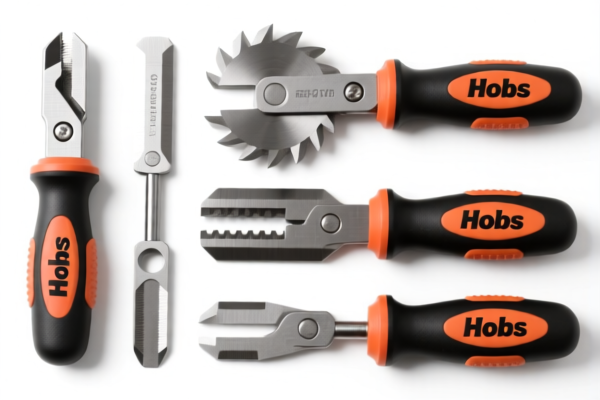
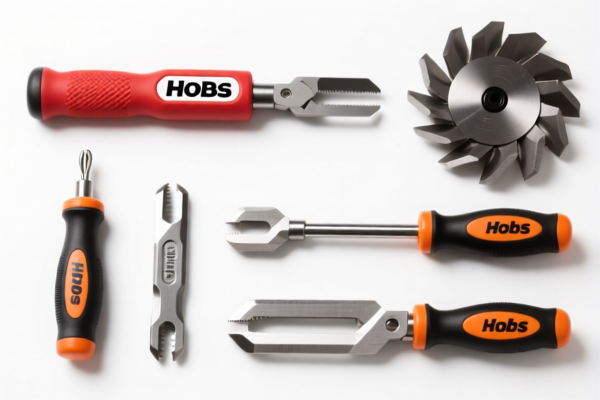
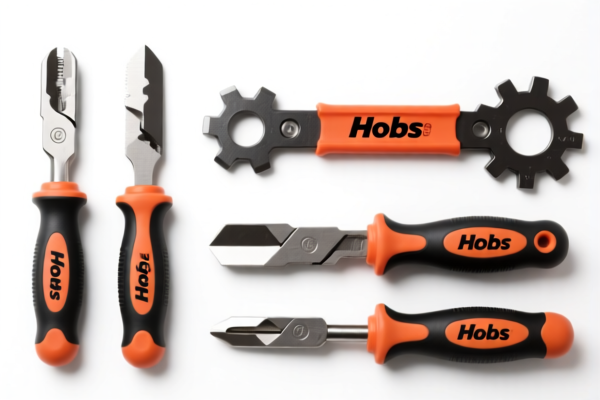
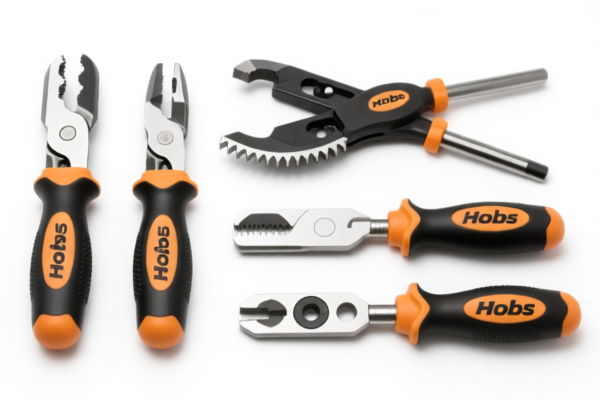
AI Analysis
🛠️ Interchangeable Hand Tool Accessories (Hand Tools & Attachments)
🌐 HS Code Reference & Customs Clearance Guide | 2026 Latest Tariff Analysis | Professional Compliance Strategy
📌 I. Product Definition & Classification: Understanding "Interchangeable" Hand Tools
Interchangeable hand tool accessories refer to components designed to be attached to handles or power sources to perform specific tasks. In international trade, the classification hinges on functionality, material, and whether they are sold as part of a set.
Key Categories Identified in Data: 1. General Sets (HS 8206.00.00.00): Kits where tools define their own category, often sold as retail sets. 2. Metal Work Parts (HS 8207.90.45.00): Interchangeable tools where the working part is inferred to be metal. 3. Other/Residual Parts (HS 8207.90.75.85): Fallback classification for tool parts not fitting specific material/use descriptions. 4. Generic Hand Tools (HS 8205.59.30.80): Hand tools where "interchangeable" is a functional feature, materials inferred as metal/composite. 5. Other Manual Tools with Parts (HS 8205.51.30.60): Tools implying inclusion of parts, fitting "other" categories without material conflict.
⚠️ Critical Distinction:
- If the item is a complete retail set defining the tool class → 8206.00.00.00
- If it is a specific metal attachment/working part → 8207.90.45.00
- If it is a miscellaneous part with no specific conflict → 8207.90.75.85
- If it is a general hand tool with interchangeable features → 8205.59.30.80 or 8205.51.30.60
📦 II. HS Code Classification Details (2026 Latest Tariff Authority Comparison)
| HS Code | Product Description | Application Scenario | Material/Feature Inference |
|---|---|---|---|
8206.00.00.00 |
Interchangeable hand tools; scope conforms to tool category definitions, likely part of a retail set | Tool kits, multi-bit sets, retail packages | ✅ Set Logic |
8207.90.45.00 |
Interchangeable tools, working part inferred as metal, no classification conflict | Metal drill bits, saw blades, metal sockets | ✅ Metal |
8207.90.75.85 |
Interchangeable tools, classified under residual "other tools" logic, no material/use conflict | Non-standard tool parts, composite attachments | ✅ Residual/Other |
8205.59.30.80 |
Hand tool category, interchangeability is a functional feature, material inferred as metal or composite | General interchangeable hand tools, composite grips | ✅ Hand Tool |
8205.51.30.60 |
Hand tools, interchangeability implies inclusion of parts, fits "other" category, no material conflict | Tools with attached parts, general manual tools | ✅ Hand Tool w/ Parts |
🔍 Key Reminder:
- "Interchangeable" does not automatically mean "power tool part." If it’s used manually, it may fall under 8205.
- "Metal" is a strong classifier for 8207 working parts.
- Retail Sets trigger 8206 logic, but check for conflicting material descriptions.
💰 III. 2026 Latest Tariff Rate Breakdown (Including Surcharges & Policy Add-ons)
✅ Applicable Country: United States (US)
✅ Origin: China (CN)
✅ Effective Date: Current (Includes ongoing Section 301 & 122 tariffs)
🎯 1. 8206.00.00.00 — Interchangeable Hand Tools (Retail Sets)
| Item | Content |
|---|---|
| Base Rate | Variable (Subject to general duty rate for sets) |
| Section 301 Surcharge | +25.0% |
| Section 122 Tariff | +10.0% |
| Total Effective Rate | Subject to Base Rate + 35.0% Total Add-on |
| Tax Detail | Base Duty Applicable to Article in Set + 25% (Sec 301) + 10% (Sec 122) |
| Legal Basis | USITC Section 301; IEEPA Section 122 |
📌 Explanation:
- The "35.0%" represents the additional layers on top of the base rate.
- Section 301 (25%) applies to most Chinese-made tools.
- Section 122 (10%) is a specific surcharge applied to certain imports.
- Total Burden: High. Must account for base rate + 35%.
🎯 2. 8207.90.45.00 — Interchangeable Tools (Metal Working Parts)
| Item | Content |
|---|---|
| Base Rate | 4.8% |
| Section 301 Surcharge | +25.0% |
| Section 122 Tariff | +10.0% |
| Total Rate | 39.8% |
| Tax Calculation | CIF Value × 39.8% |
| De Minimis Eligibility | ❌ No (High value threshold excluded) |
| Legal Basis Path | IEEPA:9903.01.25 → USITC:8207.90.45.00 → FOOTNOTE:301 |
📌 Note:
- Base rate is 4.8%, which is moderate.
- However, 25% + 10% = 35% in additional tariffs.
- Total: 39.8%. This is a high-cost item for importers.
🎯 3. 8207.90.75.85 — Interchangeable Tools (Other/Residual)
| Item | Content |
|---|---|
| Base Rate | 3.7% |
| Section 301 Surcharge | +25.0% |
| Section 122 Tariff | +10.0% |
| Total Rate | 38.7% |
| Tax Calculation | CIF Value × 38.7% |
| De Minimis Eligibility | ❌ No |
| Legal Basis Path | IEEPA:9903.01.24 → USITC:8207.90.75.85 → FOOTNOTE:301 |
📌 Note:
- Base rate is 3.7%, lower than metal-specific parts.
- Total: 38.7%. Still very high due to fixed surcharges.
🎯 4. 8205.59.30.80 — Hand Tools (Interchangeable Feature)
| Item | Content |
|---|---|
| Base Rate | 0.0% |
| Section 301 Surcharge | +25.0% |
| Section 122 Tariff | +10.0% |
| Total Rate | 35.0% |
| Tax Calculation | CIF Value × 35.0% |
| De Minimis Eligibility | ❌ No |
| Legal Basis Path | IEEPA:9901.25 → USITC:8205.59.30.80 → FOOTNOTE:301 |
📌 Key Advantage:
- Base rate is 0%!
- Only 35% in additional tariffs.
- This is the lowest total effective rate among all options (35.0%).
- Strategy: If the product can be classified here, it saves ~5% compared to metal parts.
🎯 5. 8205.51.30.60 — Hand Tools (Other with Parts)
| Item | Content |
|---|---|
| Base Rate | 3.7% |
| Section 301 Surcharge | +25.0% |
| Section 122 Tariff | +10.0% |
| Total Rate | 38.7% |
| Tax Calculation | CIF Value × 38.7% |
| De Minimis Eligibility | ❌ No |
| Legal Basis Path | IEEPA:9903.01.24 → USITC:8205.51.30.60 → FOOTNOTE:301 |
📌 Note:
- Similar to8207.90.75.85in total rate.
- No significant cost advantage over other hand tools unless base rate varies.
🛠️ IV. Customs Clearance Practical Advice (Pitfall Avoidance Guide)
✅ 1. Preparation Checklist (Non-negotiable)
| Document | Mandatory | Explanation |
|---|---|---|
| ✅ Product Spec Sheet | ✔️ | Must detail "interchangeable" features, material composition (metal/composite), and function. |
| ✅ Product Photos | ✔️ | Clear images of the tool, handle, and interchangeable head/part. |
| ✅ Commercial Invoice | ✔️ | Describe items precisely: e.g., "Interchangeable Metal Socket Set" vs. "Hand Tool with Parts". |
| ✅ Packing List | ✔️ | Indicate if sold as a retail set (triggers 8206) or individual parts. |
| ✅ Origin Certificate | ✔️ | Crucial for verifying China origin and applicable surcharges. |
✅ 2. Declaration Tips (Key Mnemonics)
🔥 "Set Logic First, Metal Second, Hand Tool Last!"
| Scenario | Correct HS Code | Wrong Approach | Consequence |
|---|---|---|---|
| Retail Tool Kit | 8206.00.00.00 |
Splitting into individual parts | ❌ Higher duty on parts (up to 39.8%) |
| Metal Drill Bit | 8207.90.45.00 |
Misclassifying as hand tool | ❌ Audit risk, penalty |
| Plastic/Composite Handle | 8205.59.30.80 |
Classifying as metal part | ❌ Overpayment (35% vs 39.8%) |
| General Hand Tool | 8205.51.30.60 |
Ambiguous description | ❌ Delay for classification review |
✅ 3. Special Case Handling
| Scenario | Recommendation |
|---|---|
| OEM Custom Tools | Provide design drawings to prove "interchangeable" function. Avoid vague terms like "accessory". |
| Mixed Materials | If part is metal and part is plastic, 8207.90.45.00 (metal) is often safer if the working part is metal. |
| Retail Set vs. Bulk | If sold separately, do NOT use 8206. Use 8207 or 8205. |
| Origin Diversification | If sourced from Vietnam/Mexico, check for IEEPA exemptions to avoid 35% surcharges. |
🌍 V. Global Market Clearance Comparison (2026 Latest)
| Country/Region | Recommended HS Code | Tariff (China Origin) | Certification | Notes |
|---|---|---|---|---|
| 🇺🇸 USA | 8205.59.30.80 |
35.0% (Lowest) | None Required | High surcharges (35%) apply to all. |
| 🇺🇸 USA | 8207.90.45.00 |
39.8% | None Required | Metal parts attract higher base rate. |
| 🇪🇺 EU | 8206.00 / 8207 |
0% - 6% | CE Mark | No Section 301/122 equivalents. |
| 🇨🇳 China | 8206 / 8207 |
5% - 10% | CCC (if applicable) | No US-style surcharges. |
| 🇬🇧 UK | 8206 / 8207 |
0% - 6% | UKCA | Post-Brexit rules apply. |
📌 Conclusion:
- USA is the most expensive market due to Section 301 (25%) + Section 122 (10%).
- EU/UK/China have significantly lower tariffs.
- Strategy: If targeting USA, maximize use of8205.59.30.80(0% base) to minimize total cost.
📌 VI. Common Errors & Pitfalls (Lessons Learned)
❌ Error 1: Declaring a retail set as individual metal parts (8207.90.45.00).
👉 Result: Overpayment of duty (39.8% vs. set rate) + potential misdeclaration fine.
❌ Error 2: Using "Hand Tool" for a metal attachment without specifying material.
👉 Result: Customs may reclassify as 8207 (39.8%) instead of 8205 (35%), causing delays and back taxes.
❌ Error 3: Ignoring Section 122 (10%) in cost calculations.
👉 Result: Underestimating landed cost by 10% on every shipment.
❌ Error 4: Ambiguous description: "Tool Accessory".
👉 Result: Customs requires additional info, leading to storage fees and delayed release.
✅ Correct Practice:
"Interchangeable Hand Tool, Metal Working Head, Sold as Retail Set, Model ABC, Origin CN"
🎯 VII. Conclusion: Professional Declaration, Cost Efficiency, Risk Mitigation
🎯 Remember the Mnemonic:
🔹 "Set First, Metal Second, Hand Tool Last. 0% Base is King, 35% Total is Minimum."
🔹 "HS Code Dictates Duty, 35% is the Floor, 40% is the Peak, Declare Precise, Sleep Well."
📌 Pro Tip:
If your Hand Tool Accessories are sourced from Vietnam, Mexico, or Thailand, apply for IEEPA Exemptions or FTZ benefits to reduce the 35% surcharge to 0%~5%.
Recommendation: Apply for an Advance Ruling from US Customs to lock in the8205.59.30.80(35%) classification and avoid disputes.
📣 Take Action Now:
📞 Consult a Customs Broker + Provide Product Photos + Apply for HS Code Advance Ruling
🚀 Ensure Smooth Clearance, Reduce Costs, Maximize Profits!
✨ Professional Clearance Starts with Precise Classification!
💼 Every Cent of Your Cost Deserves Exact Calculation!
Customer Reviews
About HS Code Classification
The Harmonized System (HS) is an internationally standardized nomenclature developed by the World Customs Organization (WCO) to classify traded products. Over 200 countries use the HS system as the basis for customs tariffs, trade statistics, and import/export regulations.
Each HS code follows a hierarchical structure:
- Chapter (2 digits) — Broad category of goods (e.g., Chapter 84: Machinery and Mechanical Appliances)
- Heading (4 digits) — More specific grouping within the chapter
- Subheading (6 digits) — Internationally standardized breakdown, used by all WCO member countries
- National subdivisions (8-10 digits) — Country-specific extensions for further classification, such as US HTSUS 10-digit codes
Correct HS code classification is essential for smooth customs clearance, accurate duty payment, and compliance with trade regulations. Misclassification can lead to customs delays, overpayment of duties, or penalties.
When importing from CN to US, the applicable tariff rates may include:
- Most-Favored-Nation (MFN) rate — The standard duty rate applied to WTO members
- General rate — Applied to countries without trade agreements
- Trade remedy duties — Additional tariffs such as Section 301 (anti-dumping), Section 232 (national security), or countervailing duties
The information provided on this page is for reference purposes only. For official classification, please consult with your local customs authority or a licensed customs broker.