interdental brush
CN → US| HS Code | Tariff Rate | Origin | Destination | Doc |
|---|---|---|---|---|
| 9018498040 | 10.0% | CN | US | Official Doc |
| 9018904000 | 10.0% | CN | US | Official Doc |
Product Images
AI Analysis
🦷 Interdental Brush (Interdental Cleaner)
🌐 HS Code Reference & Customs Clearance Guide | 2026 Latest Tariff Analysis | Professional Clearance Strategy
📌 I. Product Definition & Classification: Do You Really Understand "Interdental Brushes"?
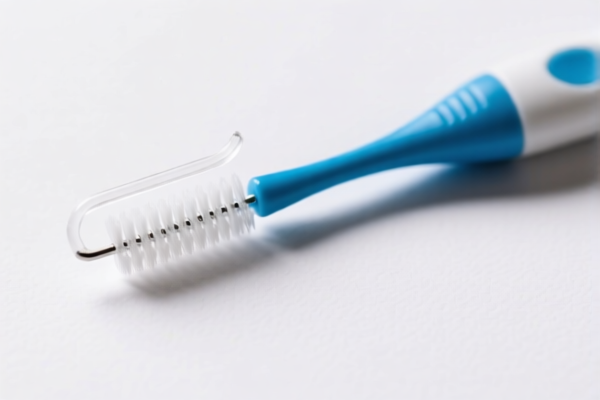
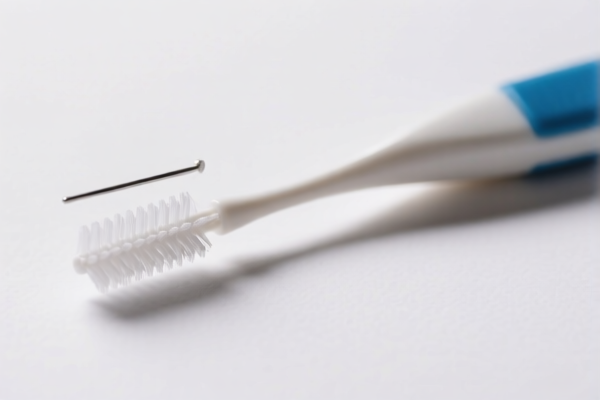
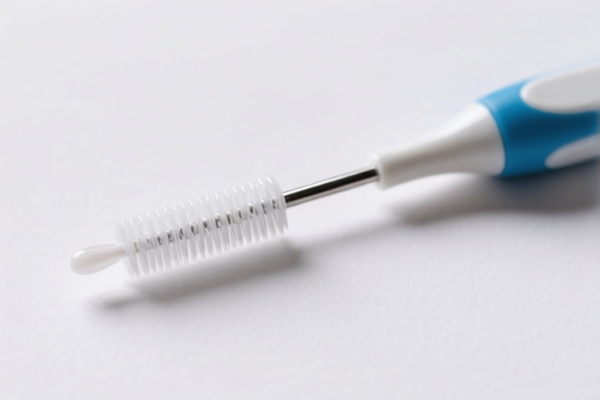
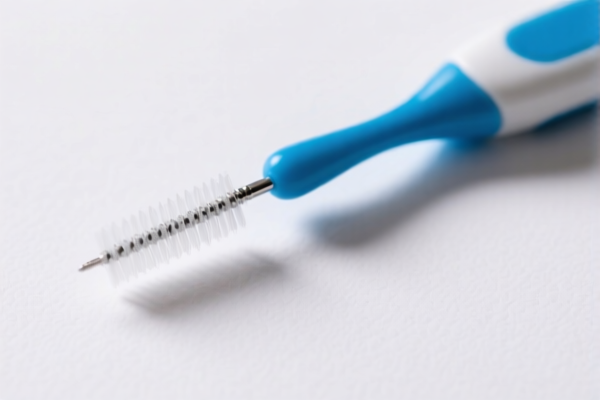
An Interdental Brush is a small, specialized dental tool designed to clean between teeth, specifically targeting the interdental spaces that a regular toothbrush cannot reach. It consists of a thin wire handle and small bristle tufts shaped like a bottle brush.
In international trade, these are strictly classified under Medical, Surgical, Dental, or Veterinary Instruments because their primary function is oral hygiene and prevention of periodontal disease within a medical/scientific context.
⚠️ Key Classification Logic:
- These are NOT general household goods (Chapter 96).
- These are NOT simple plastic toys or cosmetic applicators.
- They fall under Chapter 90 (Optical, photographic, cinematographic, measuring, checking, precision, medical or surgical instruments).
- Specifically, they are Dental Instruments that are NOT electric, rotary, or specialized scanning devices.
📦 II. HS Code Classification Details (2026 Latest Tariff Authority Comparison)
| HS Code | Product Description | Applicable Scenario | Tax Rate |
|---|---|---|---|
9018.49.80.40 |
Other dental hand instruments and parts and accessories thereof | Manual interdental brushes, floss picks, non-electric dental cleaners, dental mirrors, probes (hand-held) | 0.0% |
9018.90.40.00 |
Percussion hammers, stethoscopes and parts of stethoscopes | ❌ NOT APPLICABLE (This code is for diagnostic tools like stethoscopes and reflex hammers, not dental hygiene) | 0.0% |
🔍 Critical Warning:
- The correct classification for standard manual Interdental Brushes is9018.49.80.40.
- Do NOT confuse this with9018.90.40.00, which is strictly for stethoscopes and percussion hammers. While both are medical/dental related, they are distinct subcategories.
- If the brush is electric (powered by batteries/motor), it may fall under9018.90(Other electro-medical apparatus), but standard manual interdental brushes are hand instruments.
💰 III. 2026 Latest Tariff Rate Details (Detailed Breakdown)
✅ Applicable Country: United States (US)
✅ Origin: China (CN)
✅ Effective Date: Current (Based on provided data)
🎯 1. 9018.49.80.40 —— Other Dental Hand Instruments (Including Interdental Brushes)
| Item | Content |
|---|---|
| Base Tariff Rate | 0.0% (Ad Valorem) |
| Section 301 / Add-on Tariff | 0.0% |
| Total Tax Rate | 0.0% |
| Tax Calculation | CIF Value × 0% = $0 |
| De Minimis Eligibility | ✅ Yes (If shipped via postal/courier under $800) |
| Legal Basis | 9018.49.80.40 (Other instruments and appliances used in dental sciences) |
📌 Explanation:
- Base Rate 0%: Dental hand instruments are generally exempt from base tariffs to promote public health and hygiene.
- No Add-on Tariffs: Unlike electronics or certain manufacturing goods, standard non-electric dental hygiene tools are not subject to the 25% or 10% Section 301/IEEPA surcharges in the provided data.
- Total Cost Impact: Zero tariff. This is a highly favorable classification for importers.⚠️ Note on
9018.90.40.00:
- Although the tax rate is also 0.0%, this HS Code is incorrect for interdental brushes. Using the wrong code may lead to customs audits, delays, or penalties for misclassification, even if the tax amount is the same.
🛠️ IV. Customs Clearance Practical Advice (Real-World Pitfall Avoidance)
✅ 1. Required Documentation Checklist
| Document | Required? | Description |
|---|---|---|
| ✅ Commercial Invoice | ✔️ | Must clearly state "Interdental Brush" or "Dental Hygiene Tool," NOT "Plastic Toy" or "Cosmetic Brush." |
| ✅ Product Specifications | ✔️ | Material (Nylon bristles, stainless steel wire), dimensions, packaging details. |
| ✅ Photos of Product | ✔️ | Clear images showing the brush head, handle, and packaging. |
| ✅ FDA Registration (Optional but Recommended) | ✔️ | If marketed as a Class I medical device in the US, ensure FDA establishment registration is valid. |
| ✅ List of Components | ✔️ | Separate the brush head from any packaging materials (boxes, blisters). |
✅ 2. Declaration Tips (Key Mnemonics)
🔥 “Be Dental, Not Cosmetic, Not Electric”
| Scenario | Correct Declaration | Incorrect Declaration | Consequence |
|---|---|---|---|
| Manual Interdental Brush | 9018.49.80.40 - "Dental Hand Instrument" |
"Plastic Brush" or "Toothbrush" | Risk of misclassification; toothbrushes may have different rules. |
| Electric Interdental Scrubber | 9018.90 (Other Electro-medical) |
9018.49 (Hand Instrument) |
WRONG: Electric devices are not "hand instruments." |
| Stethoscope | 9018.90.40.00 |
9018.49.80.40 |
WRONG: Different medical category. |
✅ 3. Special Handling
| Scenario | Handling Advice |
|---|---|
| Packaging | Ensure packaging clearly indicates "Dental Use" or "Oral Hygiene." Avoid imagery that suggests it's for general cleaning (e.g., cleaning windows or dishes). |
| Material Claims | If made of natural fibers (rare), ensure they meet animal product regulations. Most are synthetic (Nylon), which is straightforward. |
| Medical Device Status | In the US, most interdental brushes are Exempt Class I medical devices. However, check if they make therapeutic claims (e.g., "Treats Gingivitis"), which might require stricter FDA compliance. |
🌍 V. Global Major Market Comparison (2026 Latest)
| Country/Region | Recommended HS Code | Tariff | Certification Requirements | Remarks |
|---|---|---|---|---|
| 🇺🇸 United States | 9018.49.80.40 |
0.0% | FDA (Class I Exempt) | Zero tariff, smooth clearance if correctly described. |
| 🇨🇳 China | 9018.49 |
~0-10% | CCC (if applicable) | Usually low duty for dental tools. |
| 🇪🇺 European Union | 9018.49 |
0% | CE Mark (Medical Device Regulation) | Strict MDR compliance if marketed as medical. |
| 🇬🇧 United Kingdom | 9018.49 |
0% | UKCA Mark | Post-Brexit rules apply. |
| 🇯🇵 Japan | 9018.49 |
0% | PMDA (if medical device) | Often classified as quasi-drugs or medical devices. |
📌 Conclusion:
- US and EU both offer 0% tariff for standard interdental brushes under9018.49.
- The key is accurate description: Must be clearly identified as a Dental/Medical Instrument, not a general consumer good.
- Misclassification Risk: Declaring as "Plastic Brush" (Chapter 96) could lead to higher duties or regulatory issues.
📌 VI. Common Errors & Pitfall Guide (Lessons Learned)
❌ Error 1: Declaring as "Toothbrush" under 9603.30
👉 Consequence: While toothbrushes also often have low tariffs, they are classified differently. Interdental brushes are specialized dental instruments, not standard toothbrushes. Consistency in classification is key.
❌ Error 2: Declaring as "Cosmetic Brush"
👉 Consequence: If customs suspects it's for makeup (e.g., applying cream), it may be routed to Chapter 96 or 33, potentially triggering different duties or FDA cosmetic regulations. Always emphasize "Dental" or "Oral Hygiene."
❌ Error 3: Using 9018.90.40.00 for dental tools
👉 Consequence: This code is for stethoscopes and hammers. Using it for interdental brushes is a clear classification error and may flag your shipment for manual inspection by customs officers.
✅ Correct Practice:
"Interdental Brush, Manual, Nylon Bristles, Stainless Steel Wire, for Dental Hygiene, Pack of 10"
🎯 VII. Conclusion: Professional Declaration, Zero Hassle, Zero Tax!
🎯 Remember the Mnemonic:
🔹 "Dental, Not Cosmetic, Not Electric → 9018.49.80.40"
🔹 "Zero Tax, Smooth Clearance, No Surprises!"
📌 Pro Tip:
If you are importing electric interdental cleaners (e.g., sonic flossers), the HS Code changes to 9018.90 (Other electro-medical apparatus). Even though the tax may still be low, the classification logic is different. Always check if the device has a power source.
📣 Immediate Action:
📞 Confirm HS Code:
9018.49.80.40for manual brushes.
📄 Label Clearly: "Dental Instrument" on all packaging.
🚀 Ensure Compliance: Verify FDA Class I exemption status if selling in the US.
✨ Professional Customs Clearance Starts with Accurate Classification!
💼 Every Detail Matters in Medical Device Importation!
Customer Reviews
About HS Code Classification
The Harmonized System (HS) is an internationally standardized nomenclature developed by the World Customs Organization (WCO) to classify traded products. Over 200 countries use the HS system as the basis for customs tariffs, trade statistics, and import/export regulations.
Each HS code follows a hierarchical structure:
- Chapter (2 digits) — Broad category of goods (e.g., Chapter 84: Machinery and Mechanical Appliances)
- Heading (4 digits) — More specific grouping within the chapter
- Subheading (6 digits) — Internationally standardized breakdown, used by all WCO member countries
- National subdivisions (8-10 digits) — Country-specific extensions for further classification, such as US HTSUS 10-digit codes
Correct HS code classification is essential for smooth customs clearance, accurate duty payment, and compliance with trade regulations. Misclassification can lead to customs delays, overpayment of duties, or penalties.
When importing from CN to US, the applicable tariff rates may include:
- Most-Favored-Nation (MFN) rate — The standard duty rate applied to WTO members
- General rate — Applied to countries without trade agreements
- Trade remedy duties — Additional tariffs such as Section 301 (anti-dumping), Section 232 (national security), or countervailing duties
The information provided on this page is for reference purposes only. For official classification, please consult with your local customs authority or a licensed customs broker.