interface connector
CN → US| HS Code | Tariff Rate | Origin | Destination | Doc |
|---|---|---|---|---|
| 8536904000 | 35.0% | CN | US | Official Doc |
| 8536908530 | 35.0% | CN | US | Official Doc |
| 8544429010 | 87.6% | CN | US | Official Doc |
| 8536694010 | 35.0% | CN | US | Official Doc |
| 8544429090 | 87.6% | CN | US | Official Doc |
| 8536694020 | 35.0% | CN | US | Official Doc |
Product Images
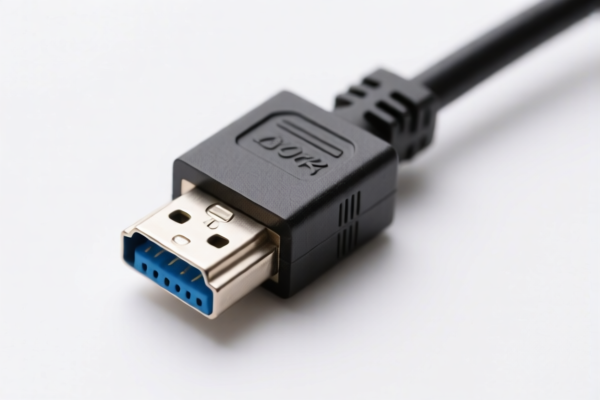
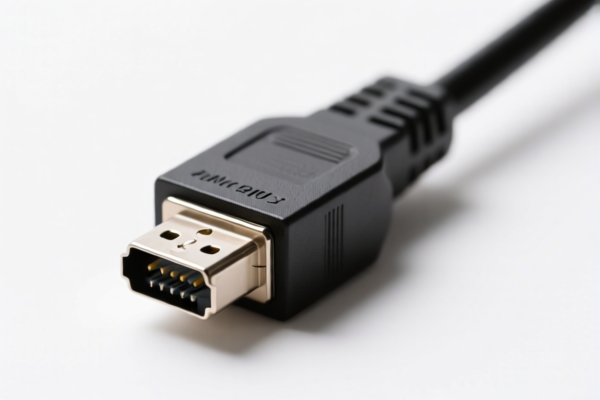
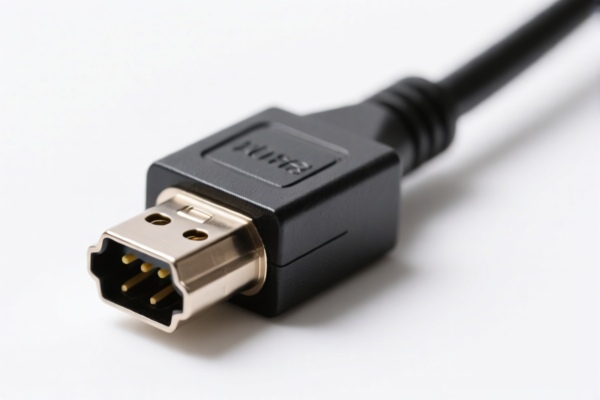
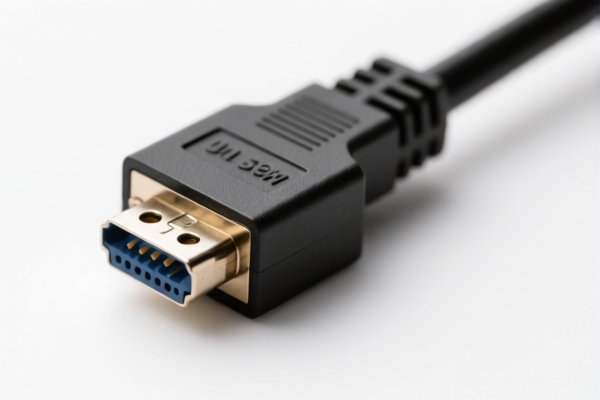
AI Analysis
🔌 Interface Connectors (Electrical & Data)
🌐 HS Code Reference & Customs Clearance Guide | 2026 Latest Tariff Analysis | Professional Clearance Strategy
📌 I. Product Definition & Classification: What Exactly is an "Interface Connector"?
In international trade, "Interface Connector" is a broad term covering various electrical connection components. Depending on the structure, function, and materials, these products fall into different HS Code categories. The critical distinction lies in whether the item is a passive junction component, a cable assembly with connectors, or a specific plug/socket device.
⚠️ Key Distinction Points:
- Wire Connectors / Splice Connectors: Used to join wires, often considered "parts of electrical apparatus" or "other electrical connectors."
- Cable Assemblies with Connectors: Wires pre-terminated with plugs/sockets. These often attract higher tariffs (Steel/Aluminum/Copper surcharges).
- Standard Plugs & Sockets: Specific mating devices for circuits, often grouped under coaxial or general-purpose connectors.
📦 II. HS Code Classification Details (2026 Latest Tariff Authority Comparison)
Based on the provided data, here are the valid HS Codes for "Interface Connectors" and their corresponding tax implications.
| HS Code | Product Description | Application Scenario | Material Conflict? | Total Tax Rate |
|---|---|---|---|---|
8536.90.40.00 |
Wire Connectors (Electrical Connection Components) | Matching wire terminals, splice joints; functional equivalents to terminal blocks. | ❌ No (Metal/Plastic compatible) | 35.0% |
8536.90.85.30 |
Circuit Connectors / Junction Boxes | Components for electrical回路 (circuits); matches "connectors" and "junction boxes"范畴. | ❌ No (Metal/Plastic compatible) | 35.0% |
8544.42.90.10 |
Connector Plugs (With-connector Conductors) | Pre-terminated electrical conductors; matches "other conductors with connectors." | ⚠️ High Risk (See Tax Detail) | 87.6% |
8536.69.40.10 |
Connector Plugs (Coaxial/General) | Matches plugs/sockets category; form factor aligns with coaxial connector classification. | ❌ No (Form/Material compatible) | 35.0% |
8544.42.90.90 |
Connector Plugs (General/Catch-all) | Parts/accessories of connectors with connectors; fallback category for other configurations. | ⚠️ High Risk (See Tax Detail) | 87.6% |
8536.69.40.20 |
Connector Plugs (Common Types) | Standard plugs; matches common forms; no material or usage conflict. | ❌ No (Material/Usage compatible) | 35.0% |
🔍 Critical Note:
- HS Codes starting with 8536.90 or 8536.69 typically attract a 35% total tax (25% Surcharge + 10% Section 122).
- HS Codes starting with 8544.42 attract a 87.6% total tax due to base tariffs (2.6%) PLUS a massive 50% Surcharge for Steel/Aluminum/Copper products (Section 232/201 logic combined with Section 301).
💰 III. 2026 Latest Tariff Rate Breakdown (Including Additional Taxes & Policy Surcharges)
✅ Applicable Country: United States (US)
✅ Origin: China (CN)
✅ Effective Date: Current rates apply based on provided data.
🎯 1. 8536.90.40.00 & 8536.90.85.30 —— Wire Connectors & Junction Components
These codes cover functional electrical connection components without the high material surcharges associated with conductive wires.
| Item | Content |
|---|---|
| Base Tariff | 0.0% (ad valorem) |
| Section 301 Surcharge | +25.0% |
| Section 122 Surcharge | +10.0% |
| Total Tax Rate | 35.0% |
| Tax Calculation | CIF Value × 35% |
| Material Surcharge | ❌ None |
| Legal Basis Path | Section 301 → Section 122 → USITC:8536.90.40.00 |
📌 Explanation:
- "Base Tariff 0%": Electrical connectors often have low or zero base MFN rates.
- "Section 301 25%": The standard trade war surcharge on Chinese goods.
- "Section 122 10%": Additional surcharge for specific strategic sectors.
- Result: A flat 35% total tax. This is the most cost-effective classification for simple wire connectors and junction boxes.
🎯 2. 8536.69.40.10 & 8536.69.40.20 —— Connector Plugs (Standard/Coaxial)
These codes apply to specific plug and socket types, categorized under electrical connectors/plugs.
| Item | Content |
|---|---|
| Base Tariff | 0.0% |
| Section 301 Surcharge | +25.0% |
| Section 122 Surcharge | +10.0% |
| Total Tax Rate | 35.0% |
| Tax Calculation | CIF Value × 35% |
| Material Surcharge | ❌ None (Assuming non-steel/aluminum/copper specific surcharge triggers, or covered under 301/122) |
| Legal Basis Path | Section 301 → Section 122 → USITC:8536.69.40.10 |
📌 Explanation:
- Similar to wire connectors, these are treated as electrical components.
- Crucial: Ensure the product is classified as a "connector/plug" rather than a "cable with connector" to avoid the 50% metal surcharge.
🎯 3. 8544.42.90.10 & 8544.42.90.90 —— Connector Plugs (Cable Assemblies/Conductors)
⚠️ WARNING: This category carries the highest tax burden due to base tariffs and material-specific surcharges.
| Item | Content |
|---|---|
| Base Tariff | 2.6% |
| Section 301 Surcharge | +25.0% |
| Section 122 Surcharge | +10.0% |
| Steel/Aluminum/Copper Surcharge | +50.0% |
| Total Tax Rate | 87.6% |
| Tax Calculation | CIF Value × 87.6% |
| De Minimis Exemption | ❌ Deny |
| Legal Basis Path | Section 301 → Section 122 → Steel/Al/Cu Surcharge → USITC:8544.42.90.10 |
📌 Explanation:
- "Base Tariff 2.6%": Conductors with connectors attract a base tariff.
- "Material Surcharge 50%": If the connector or the wire contains significant steel, aluminum, or copper, this additional 50% applies.
- Result: 87.6% total tax. This is extremely high and must be avoided if possible by reclassifying as a pure connector (8536 series) rather than a conductor assembly (8544 series).
🛠️ IV. Customs Clearance Practical Advice (Expert Pitfall Guide)
✅ 1. Documentation Checklist (Non-negotiable)
| Document | Required | Description |
|---|---|---|
| ✅ Product Specification Sheet | ✔️ | Must clearly state: "Electrical Connector," not "Cable." List materials (plastic housing, metal pins). |
| ✅ Circuit/Structure Diagram | ✔️ | Prove it is a component (part), not a complete wired assembly. Show it fits into a larger system. |
| ✅ Product Photos | ✔️ | Clear images of the connector housing, pins, and any labeling. |
| ✅ Commercial Invoice | ✔️ | Use precise descriptions: "Wire Connector," "Junction Box," or "Plastic Electrical Plug." Avoid generic "Interface Cable." |
| ✅ Packing List | ✔️ | Show items are not pre-assembled cables if claiming 35% tax. |
✅ 2. Classification Strategy (Key Mnemonic)
🔥 “Component = 35%, Cable = 87%!”
| Scenario | Correct Classification | Wrong Approach |
|---|---|---|
| Wire Splice Connectors (Plastic/Metal) | 8536.90.40.00 or 8536.90.85.30 |
Misdeclare as "Cable Assembly" → 87.6% |
| Junction Boxes | 8536.90.85.30 |
Misdeclare as "Steel Box" → Potential 50% Surcharge |
| Standard Plugs/Sockets (Coaxial/RJ45 etc.) | 8536.69.40.10 or 8536.69.40.20 |
Misdeclare as "Cable with Plug" → 87.6% |
| Pre-terminated Cables | 8544.42.90.10/.90 |
Attempt to hide as "Connector" → Customs audit risk + penalties |
✅ 3. Special Handling
| Scenario | Recommendation |
|---|---|
| Mixed Materials | If the connector has metal pins (copper) but is classified as a component (8536), the 50% steel/aluminum surcharge may be avoided. Consult a customs broker to prove it is not a "conductor." |
| OEM/Custom Connectors | Provide design drawings to prove the item is a specific component, not a generic wire. |
| Plastic Housing | Emphasize plastic in description to mitigate metal surcharge risks, though base classification (8536 vs 8544) is the primary driver. |
🌍 V. Global Market Comparison (2026 Update)
| Country/Region | Recommended HS Code | Estimated Tax | Key Certification | Notes |
|---|---|---|---|---|
| 🇺🇸 USA | 8536.90.40.00 |
35% | None specific | Avoid 8544 codes to save 52.6%. |
| 🇨🇳 China | 8536.90.40.00 |
Low/Moderate | CCC (if applicable) | No Section 301/122. |
| 🇪🇺 EU | 8536.90.40.00 |
~3-4% | CE/RoHS | No Section 301/122. |
| 🇬🇧 UK | 8536.90.40.00 |
~3-4% | UKCA | Post-Brexit rules apply. |
📌 Conclusion:
- USA is the critical market for tax optimization.
- Reclassify "Cables with Connectors" as "Connectors" (8536 series) wherever technically accurate to reduce tax from 87.6% to 35%.
- This requires proving the item is a component, not a finished wiring harness.
📌 VI. Common Errors & Pitfalls (Lessons Learned)
❌ Error 1: Declaring "RJ45 Jack" as "Network Cable Assembly"
👉 Consequence: Tax jumps from 35% to 87.6%.
👉 Fix: Declare as "Electrical Connector, RJ45 Type, Plugged/Housings only."
❌ Error 2: Ignoring the "Steel/Aluminum/Copper" surcharge for 8544 codes
👉 Consequence: Unexpected 50% penalty on top of 35.6%.
👉 Fix: If the item is a pure connector (8536), this surcharge does not apply.
❌ Error 3: Using vague terms like "Interface Cable"
👉 Consequence: Customs may interpret as a conductor (8544) with high base tariff.
👉 Fix: Use "Wire Connector," "Junction Block," or "Plastic Electrical Plug."
🎯 VII. Conclusion: Professional Declaration, Cost Saving!
🎯 Remember the Mnemonic:
🔹 "Component = 35%, Conductor = 87.6%!"
🔹 "Classify as Connector (8536), Not Cable (8544), Save 52.6%!"
📌 Pro Tip:
If your product is a pre-terminated cable, you may be forced into the 87.6% bracket. However, if you can separate the connector from the wire in your supply chain (or declare as loose connectors), you can achieve the 35% rate.
Consult a licensed customs broker to perform a Pre-Ruling (Advance Ruling) to confirm the 8536 classification for your specific product design.
📣 Immediate Action:
📞 Contact Customs Broker + Provide Technical Specs + Request HS Code Pre-Ruling
🚀 Ensure smooth clearance, avoid 87.6% traps, and maximize profit margins!
✨ Professional Customs Clearance Starts with Accurate Classification!
💼 Every percentage point saved is pure profit!
Customer Reviews
About HS Code Classification
The Harmonized System (HS) is an internationally standardized nomenclature developed by the World Customs Organization (WCO) to classify traded products. Over 200 countries use the HS system as the basis for customs tariffs, trade statistics, and import/export regulations.
Each HS code follows a hierarchical structure:
- Chapter (2 digits) — Broad category of goods (e.g., Chapter 84: Machinery and Mechanical Appliances)
- Heading (4 digits) — More specific grouping within the chapter
- Subheading (6 digits) — Internationally standardized breakdown, used by all WCO member countries
- National subdivisions (8-10 digits) — Country-specific extensions for further classification, such as US HTSUS 10-digit codes
Correct HS code classification is essential for smooth customs clearance, accurate duty payment, and compliance with trade regulations. Misclassification can lead to customs delays, overpayment of duties, or penalties.
When importing from CN to US, the applicable tariff rates may include:
- Most-Favored-Nation (MFN) rate — The standard duty rate applied to WTO members
- General rate — Applied to countries without trade agreements
- Trade remedy duties — Additional tariffs such as Section 301 (anti-dumping), Section 232 (national security), or countervailing duties
The information provided on this page is for reference purposes only. For official classification, please consult with your local customs authority or a licensed customs broker.