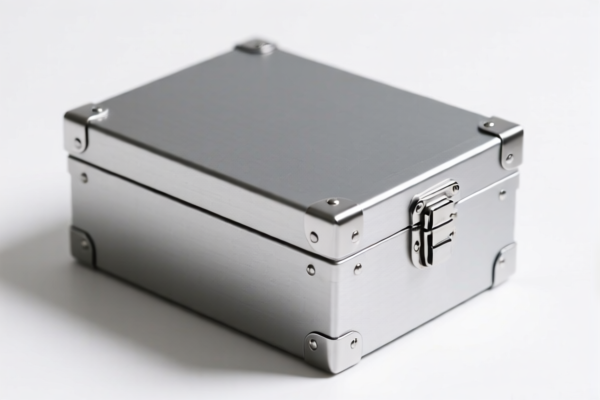
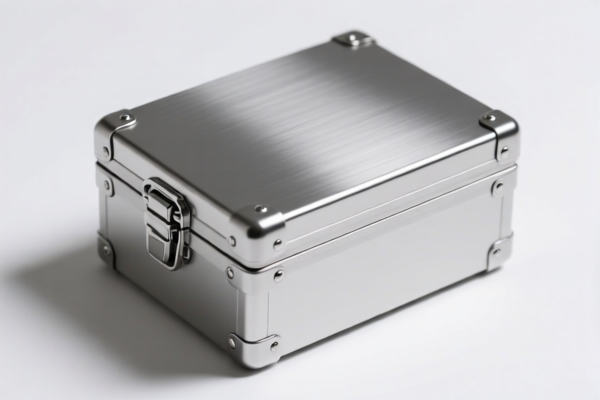
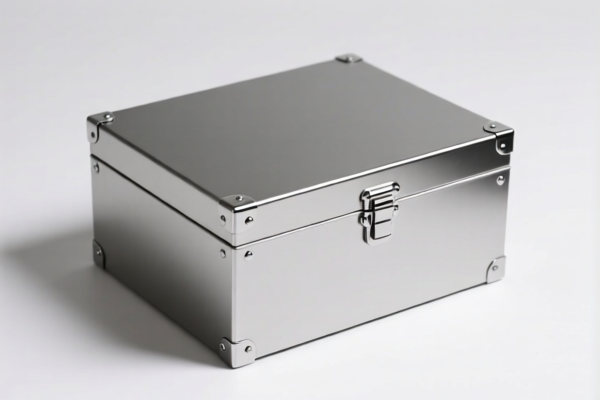
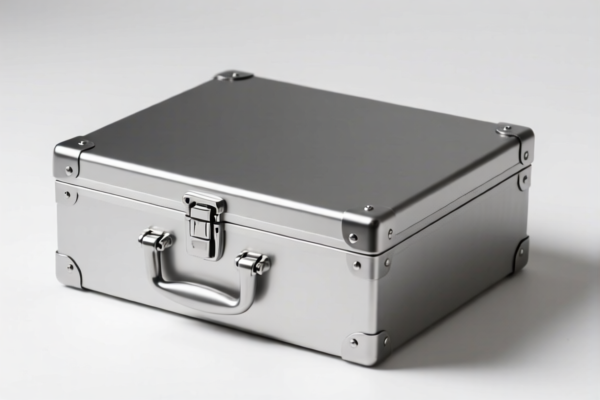
iron box
CN → US| HS Code | Tariff Rate | Origin | Destination | Doc |
|---|---|---|---|---|
| 8309900085 | 37.6% | CN | US | Official Doc |
| 8309900080 | 37.6% | CN | US | Official Doc |
| 7326901000 | 85.0% | CN | US | Official Doc |
| 7310100090 | 85.0% | CN | US | Official Doc |
| 7310290065 | 85.0% | CN | US | Official Doc |
| 7326908688 | 87.9% | CN | US | Official Doc |
Product Images
AI Analysis
📦 Iron Box (Tinplate Containers & Metal Closures)
🌐 HS Code Reference & Customs Clearance Guide | 2026 Latest Tariff Analysis | Professional Clearance Strategy
📌 I. Product Definition & Classification: Do You Really Understand "Iron Box"?
"Iron Box" is a generic term in international trade, often referring to tinplate containers, metal closures, or general steel articles. However, HS Code classification is strictly based on the specific form and function of the product. Misclassification can lead to drastically different tax liabilities—ranging from 37.6% to 87.9%.
In the US market, all iron/steel products originating from China are subject to severe punitive tariffs, including Section 301 duties (25%) and Section 1223 tariffs (10%).
⚠️ Key Distinction Points:
- Is it a closure/cap (e.g., bottle cap, screw top)? → Likely 8309.
- Is it a container (e.g., tin can, storage box)? → Likely 7310 or 7326.
- Is it a specific type of tinplate work (e.g., simple canning)? → Likely 7326.
📦 II. HS Code Classification Details (2026 Latest Tariff Authority对照)
Based on the provided data, here are the specific HS Codes for "Iron Boxes" and their corresponding tax structures.
| HS Code | Product Description | Form/Material | Total Tax Rate |
|---|---|---|---|
8309.90.00.85 |
Iron Caps/Plugs/Closures | Iron, Form: Plugs, Caps & Closing Accessories | 37.6% |
8309.90.00.80 |
Iron Box (Container Type) | Iron, Form: Box-shaped Container | 37.6% |
7326.90.10.00 |
Tinplate Products | Iron, Form: Tinplate Articles | 85.0% |
7310.10.00.90 |
Containers (Steel) | Iron, Form: Container | 85.0% |
7310.29.00.65 |
Containers (Other) | Iron, Form: Container | 85.0% |
7326.90.86.88 |
Other Steel Articles | Iron, Form: Other Unspecified Articles | 87.9% |
🔍 Critical Note:
- Low Tax Option: If the "iron box" is primarily a cap, plug, or closure (8309.90.00.85), the total tax is 37.6%.
- High Tax Option: If it is a container or general steel article (7310or7326series), the total tax jumps to 85.0% - 87.9% due to the additional 50% penalty on steel/aluminum/copper products.
💰 III. 2026 Latest Tariff Rate Breakdown (Including Surcharges & Policy Additions)
✅ Applicable Country: United States (US)
✅ Origin: China (CN)
✅ Effective Date: Current policies (Section 301 & Section 1223)
🎯 1. 8309.90.00.85 / 8309.90.00.80 —— Iron Closures or Box-shaped Containers
| Item | Content |
|---|---|
| Basic Tariff | 2.6% |
| Section 301 Surcharge | +25.0% |
| Section 1223 Tariff | +10.0% |
| Total Tax Rate | 37.6% |
| Tax Calculation | CIF Value × 37.6% |
| De Minimis Eligibility | ❌ Not Eligible (Deny De Minimis for Section 301/1223 goods) |
| Legal Basis Path | USITC:8309.90.00.85 → Section 301: 25% → Section 1223: 10% |
📌 Explanation:
- These codes are for closures or box-shaped containers.
- While lower than the "steel article" codes, the total burden is still significant at 37.6%.
- No extra 50% steel penalty applies here because Chapter 83 covers "Miscellaneous Articles of Base Metal," not "Works of Iron or Steel" (Chapter 73).
🎯 2. 7326.90.10.00 / 7310.10.00.90 / 7310.29.00.65 —— Steel Containers & Tinplate Products
| Item | Content |
|---|---|
| Basic Tariff | 0.0% |
| Section 301 Surcharge | +25.0% |
| Section 1223 Tariff | +10.0% |
| Steel/Aluminum/Copper Surcharge | +50.0% |
| Total Tax Rate | 85.0% |
| Tax Calculation | CIF Value × 85.0% |
| De Minimis Eligibility | ❌ Not Eligible |
| Legal Basis Path | USITC:7310/7326 → Section 301: 25% → Section 1223: 10% → Steel Penalty: 50% |
📌 Explanation:
- These codes fall under Chapter 73 (Articles of Iron or Steel).
- They are subject to an additional 50% penalty specifically targeting steel, aluminum, and copper products.
- Total tax is 85%, making these highly expensive for import.
🎯 3. 7326.90.86.88 —— Other Unspecified Steel Articles
| Item | Content |
|---|---|
| Basic Tariff | 2.9% |
| Section 301 Surcharge | +25.0% |
| Section 1223 Tariff | +10.0% |
| Steel/Aluminum/Copper Surcharge | +50.0% |
| Total Tax Rate | 87.9% |
| Tax Calculation | CIF Value × 87.9% |
| De Minimis Eligibility | ❌ Not Eligible |
| Legal Basis Path | USITC:7326.90.86.88 → Section 301: 25% → Section 1223: 10% → Steel Penalty: 50% |
📌 Explanation:
- This is a "catch-all" for other steel articles not explicitly listed elsewhere.
- Highest total tax rate at 87.9% due to the base tariff + all penalties.
🛠️ IV. Customs Clearance Practical Advice (Battle-Tested Pitfall Guide)
✅ 1. Preparation Checklist (Mandatory)
| Document | Required | Notes |
|---|---|---|
| ✅ Product Specification Sheet | ✔️ | Must clearly state: Material (Iron/Steel), Form (Cap/Box), Use. |
| ✅ Photographs | ✔️ | Clear images showing the product structure. Is it a cap? A can? A tin? |
| ✅ Commercial Invoice | ✔️ | Must describe the item accurately (e.g., "Iron Screw Cap" vs. "Iron Tin Can"). |
| ✅ Packing List | ✔️ | Weight, dimensions, and packaging details. |
| ✅ Certificate of Origin | ✔️ | To prove origin is China (triggering tariffs). |
✅ 2. Classification Strategy (Key Rules)
🔥 "Form Determines Code, Code Determines Cost!"
| Scenario | Recommended HS Code | Total Tax | Why? |
|---|---|---|---|
| Screw Caps, Bottle Lids, Closures | 8309.90.00.85 |
37.6% | Classified as "Misc. Base Metal Articles," NOT subject to 50% steel penalty. |
| Box-shaped Containers (e.g., storage tins) | 8309.90.00.80 |
37.6% | If defined as a "closing accessory" or specific container type under Ch 83. |
| Tin Cans, Food Containers, Steel Boxes | 7310 or 7326 |
85.0% - 87.9% | Classified as "Works of Iron/Steel," subject to extra 50% penalty. |
| Generic "Other" Steel Items | 7326.90.86.88 |
87.9% | Last resort, highest tax, avoid if possible. |
✅ 3. Special Handling Tips
| Situation | Advice |
|---|---|
| Misclassification Risk | Do NOT declare a "Tin Can" as a "Cap" to save tax. Customs will reject it. Be honest about the primary function. |
| Packaging Materials | If the "iron box" is just packaging for other goods, it may still be taxable. Ensure correct Harmonized System usage. |
| De Minimis Exclusion | Remember, Section 301 and 1223 goods are NOT eligible for $800 de minimis exemption. Even small shipments are taxed. |
| Labeling | Ensure labels clearly state "Made in China" and product type to avoid duty evasion allegations. |
🌍 V. Global Market Comparison (2026 Update)
| Country/Region | Recommended HS Code | Tariff Rate | Notes |
|---|---|---|---|
| 🇺🇸 USA | 8309.90.00.85 |
37.6% | Best option for closures. Avoid Chapter 73 if possible. |
| 🇺🇸 USA | 7310/7326 |
85.0%+ | High cost for steel containers. |
| 🇨🇳 China | 8309.90.00.85 |
~2-5% | Export from China has low export tax, but import to US is high. |
| 🇪🇺 EU | Varies | Varies | EU has different tariff schedules. Check EU TARIC for precise rates. |
📌 Conclusion:
- For US Imports: Prioritize classification under Chapter 83 (8309) if the product is a closure or specific container type. This saves ~48-50% in taxes compared to Chapter 73.
- For Steel Containers: Accept the 85%+ tax burden or explore supply chain alternatives (e.g., sourcing from non-China origins if eligible for exemptions).
📌 VI. Common Mistakes & Pitfalls (Lessons Learned)
❌ Mistake 1: Declaring a "Steel Tin Can" as a "Plastic Container"
👉 Result: Customs fraud accusation, heavy fines, and seizure of goods.
❌ Mistake 2: Using 7326.90.86.88 when 8309.90.00.85 is applicable
👉 Result: Paying 87.9% instead of 37.6%. Huge cost inefficiency.
❌ Mistake 3: Assuming small shipments are tax-free under de minimis
👉 Result: Section 301 and 1223 goods are excluded. Every shipment is taxed.
❌ Mistake 4: Ignoring the "50% Steel Penalty"
👉 Result: Unexpected bills totaling 85%+ instead of the anticipated 25-30%.
✅ Correct Approach:
"Iron Screw Cap, 20mm, Made of Iron, For Beverage Bottles, Model XYZ"
→ Classify under 8309.90.00.85 → 37.6% Total Tax.
🎯 VII. Conclusion: Precision Classification Saves Money!
🎯 Remember the Golden Rule:
🔹 "Caps and Closures go to 8309 (37.6%), Steel Containers go to 7310/7326 (85%+)."
🔹 "Avoid Chapter 73 if possible; the 50% steel penalty is devastating."
🔹 "No De Minimis for China Origin. Plan your logistics accordingly."
📌 Pro Tip:
If you are importing steel containers (7310/7326), consider supply chain diversification or tariff engineering (redesigning the product to fit Chapter 83 if structurally possible).
Always apply for a Binding Ruling (Pre-classification) with US CBP for high-volume, high-risk shipments.
📣 Immediate Action:
📞 Consult a licensed customs broker.
📄 Provide detailed product photos and specifications.
🚀 Secure the correct HS Code to avoid 85%+ surprise tariffs!
✨ Professional Clearance Starts with Accurate Classification!
💼 Every percentage point matters in global trade!
Customer Reviews
About HS Code Classification
The Harmonized System (HS) is an internationally standardized nomenclature developed by the World Customs Organization (WCO) to classify traded products. Over 200 countries use the HS system as the basis for customs tariffs, trade statistics, and import/export regulations.
Each HS code follows a hierarchical structure:
- Chapter (2 digits) — Broad category of goods (e.g., Chapter 84: Machinery and Mechanical Appliances)
- Heading (4 digits) — More specific grouping within the chapter
- Subheading (6 digits) — Internationally standardized breakdown, used by all WCO member countries
- National subdivisions (8-10 digits) — Country-specific extensions for further classification, such as US HTSUS 10-digit codes
Correct HS code classification is essential for smooth customs clearance, accurate duty payment, and compliance with trade regulations. Misclassification can lead to customs delays, overpayment of duties, or penalties.
When importing from CN to US, the applicable tariff rates may include:
- Most-Favored-Nation (MFN) rate — The standard duty rate applied to WTO members
- General rate — Applied to countries without trade agreements
- Trade remedy duties — Additional tariffs such as Section 301 (anti-dumping), Section 232 (national security), or countervailing duties
The information provided on this page is for reference purposes only. For official classification, please consult with your local customs authority or a licensed customs broker.