isolation net
CN → US| HS Code | Tariff Rate | Origin | Destination | Doc |
|---|---|---|---|---|
| 7326200090 | 88.9% | CN | US | Official Doc |
| 8302496085 | 90.7% | CN | US | Official Doc |
| 8302416080 | 88.9% | CN | US | Official Doc |
| 7326908688 | 87.9% | CN | US | Official Doc |
| 3926909989 | 22.8% | CN | US | Official Doc |
Product Images
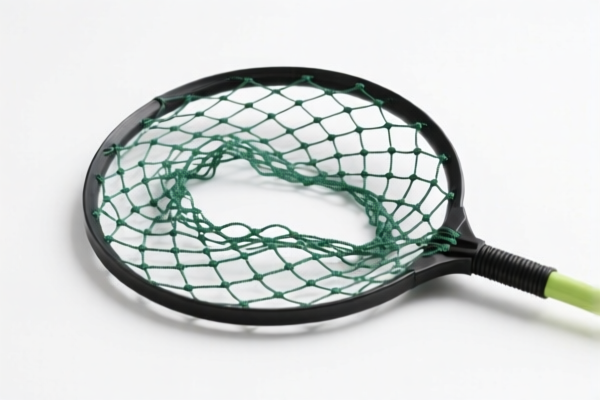

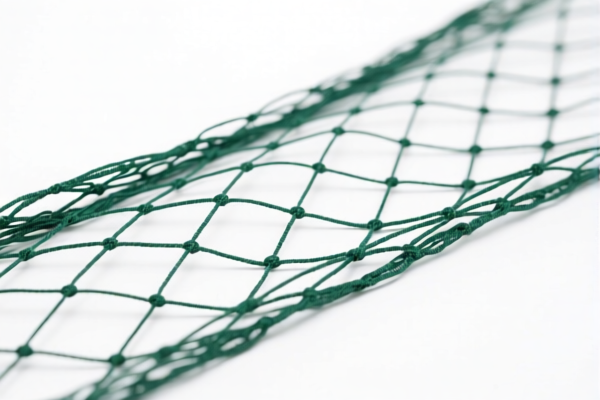
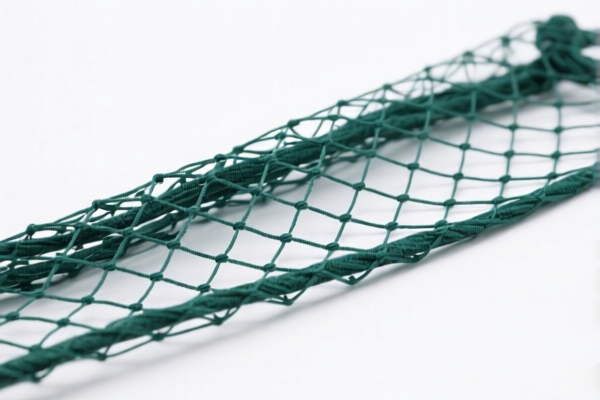
AI Analysis
🛡️ Isolation Net (Wire & Plastic Mesh Structures)
🌐 HS Code Reference & Customs Clearance Guide | 2026 Latest Tariff Analysis | Professional Clearance Strategy
📌 I. Product Definition & Classification: What Exactly is an "Isolation Net"?
In international trade, "Isolation Net" is a functional term, not a specific HS Code description. It generally refers to mesh structures used for fencing, separation, safety, or containment. The classification depends entirely on the material (Iron/Steel vs. Plastic) and the specific application (Hardware Accessory vs. General Manufacture).
⚠️ Critical Distinction:
- If made of Iron/Steel and intended as a fixing/accessory for doors, windows, or fences → Classified under Chapter 83 (Base Metal Accessories).
- If made of Iron/Steel but is a generic mesh/product without specific fixture function → Classified under Chapter 73 (General Iron/Steel Articles).
- If made of Plastic → Classified under Chapter 39 (Plastics and Articles Thereof).
📦 II. HS Code Classification Details (2026 Latest Tariff Authority Match)
Based on the provided data, here are the 5 most likely HS Codes for "Isolation Net," ranging from metal accessories to plastic meshes.
| HS Code | Product Summary (Inferred) | Material & Feature | Application Scenario |
|---|---|---|---|
| 8302.49.60.85 | Metal/Plastic mesh parts; accessories for doors, windows, fences | Base Metal Accessory | Fence posts, window guards, door mesh grilles |
| 8302.41.60.80 | Metal grid structures; other base metal mounting accessories | Base Metal Accessory | Generic metal grids used for mounting or support |
| 7326.20.00.90 | Iron/Steel wire mesh products; other wire articles | Iron/Steel Wire | General industrial wire nets, bird cages, general fencing |
| 7326.90.86.88 | Iron/Steel articles not specified elsewhere; other iron/steel items | Iron/Steel (Generic) | "Catch-all" category for steel nets not fitting other specific wire codes |
| 3926.90.99.89 | Plastic mesh structures; other plastic articles | Plastic | Garden fencing, plastic safety nets, decorative mesh |
🔍 Key Insight:
- 8302 codes are preferred if the net is sold as a hardware component (e.g., "Fence Accessory").
- 7326 codes are used for general manufacturing steel nets.
- 3926 codes apply only if the material is explicitly plastic/polymer.
- Tariff Impact: Metal nets face heavy "Section 301" + "122 Clause" duties, while plastic nets face significantly lower rates.
💰 III. 2026 Latest Tariff Rate Breakdown (Detailed Tax Clauses)
✅ Applicable Country: United States (US)
✅ Origin: China (CN) (Note: All listed total taxes reflect the heavy penalty duties for Chinese origin)
✅ Effective Time: Current active rates (Section 301 & Section 122)
🎯 1. 8302.49.60.85 – Metal/Plastic Mesh Accessories (Fence/Door)
| Item | Content |
|---|---|
| Base Tariff | 5.7% |
| Section 301 (Add-on) | +25.0% |
| 122 Clause (Steel/Alu/Cu) | +50.0% |
| Total Effective Tax | 90.7% |
| Calculation Base | CIF Value × 90.7% |
| De Minimis Exemption? | ❌ NO (Denied) |
📌 Explanation:
- This high rate (90.7%) applies because it is classified as a base metal accessory.
- The 50% "122 Clause" tariff is aggressively applied to steel/aluminum/copper products from China.
- Even if it contains plastic parts, if the primary function is metal hardware, this high rate often applies.
🎯 2. 8302.41.60.80 – Metal Grid Structures (Other Accessories)
| Item | Content |
|---|---|
| Base Tariff | 3.9% |
| Section 301 (Add-on) | +25.0% |
| 122 Clause (Steel/Alu/Cu) | +50.0% |
| Total Effective Tax | 88.9% |
| Calculation Base | CIF Value × 88.9% |
| De Minimis Exemption? | ❌ NO (Denied) |
📌 Note:
- Slightly lower base tariff (3.9%) than 8302.49, but the 50% 122 Clause remains the dominant cost driver.
- Total tax is nearly identical to the previous code.
🎯 3. 7326.20.00.90 – Iron/Steel Wire Mesh Products
| Item | Content |
|---|---|
| Base Tariff | 3.9% |
| Section 301 (Add-on) | +25.0% |
| 122 Clause (Steel/Alu/Cu) | +50.0% |
| Total Effective Tax | 88.9% |
| Calculation Base | CIF Value × 88.9% |
| De Minimis Exemption? | ❌ NO (Denied) |
📌 Explanation:
- Classified as "Other wire articles."
- Subject to the same 301 (25%) and 122 Clause (50%) penalties.
- Common for industrial steel mesh fencing.
🎯 4. 7326.90.86.88 – Other Iron/Steel Articles (Generic)
| Item | Content |
|---|---|
| Base Tariff | 2.9% |
| Section 301 (Add-on) | +25.0% |
| 122 Clause (Steel/Alu/Cu) | +50.0% |
| Total Effective Tax | 87.9% |
| Calculation Base | CIF Value × 87.9% |
| De Minimis Exemption? | ❌ NO (Denied) |
📌 Note:
- The lowest base tariff (2.9%) among metal codes, but the 50% 122 Clause still applies.
- This is the "catch-all" for steel products not fitting specific wire mesh definitions.
🎯 5. 3926.90.99.89 – Plastic Mesh Structures
| Item | Content |
|---|---|
| Base Tariff | 5.3% |
| Section 301 (Add-on) | +7.5% |
| 122 Clause (Steel/Alu/Cu) | N/A (Not applicable to plastic) |
| Total Effective Tax | 22.8% |
| Calculation Base | CIF Value × 22.8% |
| De Minimis Exemption? | ❌ NO (Denied) |
📌 CRITICAL SAVINGS OPPORTUNITY:
- If the "Isolation Net" is made of Plastic/PVC/HDPE, the tariff drops from ~89% to 22.8%.
- The 122 Clause (50%) ONLY applies to Steel, Aluminum, and Copper.
- Action Item: If you can source or manufacture plastic nets instead of steel, you save ~66% in taxes.
🛠️ IV. Customs Clearance Practical Advice (Battle-Tested Guide)
✅ 1. Documentation Checklist (Non-Negotiable)
| Document | Required? | Purpose |
|---|---|---|
| Product Specification Sheet | ✔️ | Must explicitly state Material (e.g., "PVC-coated wire" vs. "HDPE Plastic"). Material dictates the HS Code. |
| Commercial Invoice | ✔️ | Must clearly describe the item. Avoid vague terms like "Net." Use "Plastic Garden Fence Net" or "Steel Wire Mesh Panel." |
| Bill of Lading / Packing List | ✔️ | Ensure weight matches the declared value. |
| Photos of Product & Label | ✔️ | Clear images showing the mesh structure and any material tags (e.g., "100% Polyethylene"). |
| Material Safety Data Sheet (MSDS) | ✔️ | If plastic, helps prove polymer composition. |
✅ 2. Declaration Strategy (Key Mantras)
🔥 “Material First, Function Second, Name Precise, Tax Avoided!”
| Scenario | Correct Declaration | Consequence of Error |
|---|---|---|
| Plastic Net | 3926.90.99.89 |
Tax: 22.8% (Optimal) |
| Steel Wire Mesh | 7326.20.00.90 |
Tax: 88.9% (High) |
| Steel Fence Accessory | 8302.49.60.85 |
Tax: 90.7% (Highest) |
| Vague "Net" | Ambiguous/Incorrect | Audit Risk: CBP may reclassify to highest duty, plus penalties. |
📌 Strategic Tip:
- If the net is primarily for fencing and made of steel, consider if it can be structured as a plastic-coated plastic mesh rather than bare steel wire.
- Avoid classifying steel nets as "Plastic" unless the plastic is the essential character (e.g., thick PVC coating over thin wire might still be classified as steel depending on weight/function). Consult a customs broker for material composition proof.
✅ 3. Special Considerations
| Situation | Advice |
|---|---|
| Coated Wire | If steel wire is coated with plastic, it may still be classified under Chapter 73 (Steel) if the steel provides the structural integrity. Do not assume plastic coating = Chapter 39. |
| Kit Assembly | If selling "Net + Posts + Clips," declare the primary product. Usually, the net is the main component. Splitting them increases total duty on accessories. |
| De Minimis (Section 321) | ❌ Not Applicable. All these codes are subject to 301 and 122 duties, which are not waived under the $800 de minimis rule for Chinese goods. |
🌍 V. Global Market Comparison (2026 Snapshot)
| Market | Best HS Code for Isolation Net | Est. Tariff (China Origin) | Note |
|---|---|---|---|
| 🇺🇸 USA | 3926.90.99.89 (Plastic) |
22.8% | Plastic is key to savings. Steel nets are ~89%. |
| 🇺🇸 USA | 7326.20.00.90 (Steel) |
88.9% | Avoid unless no plastic alternative exists. |
| 🇪🇺 EU | 3926.90 / 7326.20 |
~5-7% | No Section 301/122. Tariffs are significantly lower. Consider EU routing? |
| 🇨🇳 China | 3926.90 / 7326.20 |
~5-10% | Low import duties for domestic use. |
📌 Conclusion:
- The US is the most expensive market for isolation nets due to punitive tariffs.
- Plastic nets are 66% cheaper to import into the US than steel nets.
- If your product is steel-based, evaluate supply chain diversification (e.g., final assembly in a non-Chinese country) to mitigate 122 Clause duties.
📌 VI. Common Mistakes & Pitfalls (Blood & Tears Lessons)
❌ Mistake 1: Calling a steel mesh "Plastic Net" to avoid tariffs.
👉 Result: CBP rejects the declaration, demands proof of material composition. If found false, fraud penalties apply.
❌ Mistake 2: Using "Accessories" code (8302) for a generic steel mesh roll.
👉 Result: Overpaying or underpaying depending on how CBP views it. Usually, generic rolls go to 7326. Misclassification leads to audit flags.
❌ Mistake 3: Assuming "De Minimis" ($800) applies to small shipments.
👉 Result: Denied. 301 and 122 duties must be paid regardless of value for Chinese-origin goods.
✅ Correct Approach:
"High-Density Polyethylene (HDPE) Garden Isolation Net, UV-Stabilized, Green, 10m x 1.5m Roll, Model XYZ"
→ Declared as3926.90.99.89
🎯 VII. Conclusion: Professional Declaration, Cost Efficiency!
🎯 Remember the Mantra:
🔹 "Plastic is 22%, Steel is 89%. Know your material!"
🔹 "122 Clause hits Steel, not Plastic. Choose wisely!"
🔹 "No De Minimis for China. Pay upfront or get seized."
📌 Pro Tip:
If you are importing Steel Isolation Nets, request a Binding Tariff Ruling (BTR) from CBP to confirm the exact subheading. If you are using Plastic, ensure your supplier provides a Material Certificate stating "100% Plastic" or "HDPE/PVC" to support the 3926 classification.
📣 Immediate Action:
📞 Contact a Customs Broker to review your product samples.
📝 Update Invoices to specify "Plastic" or "Steel" clearly.
🚀 Switch to Plastic if possible to save $66,000 per $1M in imports!
✨ Professional Clearance Starts with Precise Classification!
💼 Every dollar in duty saved is profit earned!
Customer Reviews
About HS Code Classification
The Harmonized System (HS) is an internationally standardized nomenclature developed by the World Customs Organization (WCO) to classify traded products. Over 200 countries use the HS system as the basis for customs tariffs, trade statistics, and import/export regulations.
Each HS code follows a hierarchical structure:
- Chapter (2 digits) — Broad category of goods (e.g., Chapter 84: Machinery and Mechanical Appliances)
- Heading (4 digits) — More specific grouping within the chapter
- Subheading (6 digits) — Internationally standardized breakdown, used by all WCO member countries
- National subdivisions (8-10 digits) — Country-specific extensions for further classification, such as US HTSUS 10-digit codes
Correct HS code classification is essential for smooth customs clearance, accurate duty payment, and compliance with trade regulations. Misclassification can lead to customs delays, overpayment of duties, or penalties.
When importing from CN to US, the applicable tariff rates may include:
- Most-Favored-Nation (MFN) rate — The standard duty rate applied to WTO members
- General rate — Applied to countries without trade agreements
- Trade remedy duties — Additional tariffs such as Section 301 (anti-dumping), Section 232 (national security), or countervailing duties
The information provided on this page is for reference purposes only. For official classification, please consult with your local customs authority or a licensed customs broker.