isopropyl rosin ester
CN → US| HS Code | Tariff Rate | Origin | Destination | Doc |
|---|---|---|---|---|
| 3824994140 | 39.6% | CN | US | Official Doc |
| 3824994190 | 39.6% | CN | US | Official Doc |
Product Images

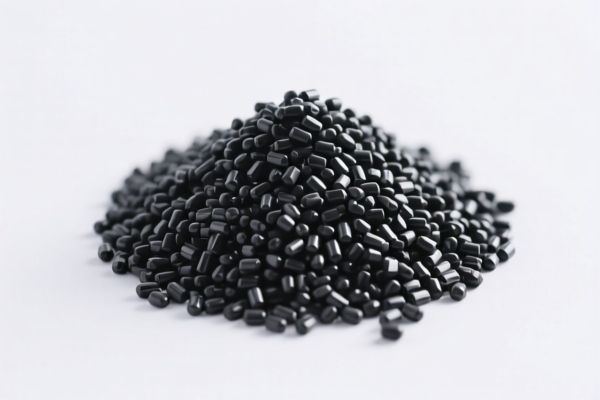
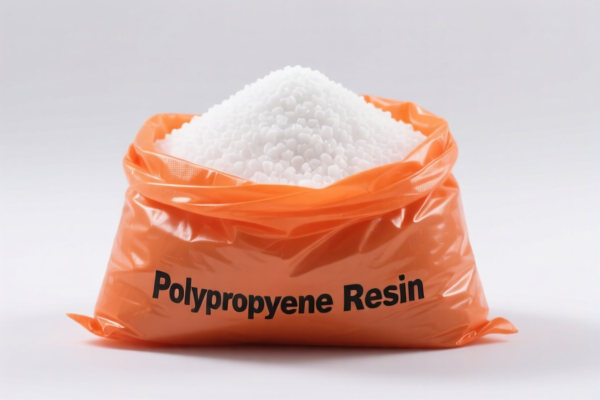
AI Analysis
🧪 Isopropyl Rosin Ester (Isopropyl Palmitate/Rosinate)
🌐 HS Code Reference & Customs Clearance Guide | 2026 Latest Tariff Analysis | Professional Clearance Strategy
📌 I. Product Definition & Classification: Do You Really Understand "Isopropyl Rosin Ester"?
Isopropyl Rosin Ester is a chemical derivative produced by esterifying rosin (resin acid) with isopropyl alcohol. It is widely used as a binder, fluxing agent, tackifier, and adhesive in industries such as foundry molds, coatings, printing inks, and adhesives.
In international trade, it falls under Chapter 38: Miscellaneous Chemical Products, specifically prepared binders and chemical preparations. The classification depends on its precise chemical composition and application, primarily distinguishing between fatty acid ester mixtures and general fatty substances.
⚠️ Key Distinction:
- If the product is defined as a mixture of fatty acid esters derived from natural sources (rosin/animal/vegetable origin) used as prepared binders → It falls under 3824.99.41.40.
- If it is classified as a general other fatty substance of animal or vegetable origin without the specific "mixture of esters" descriptor → It falls under 3824.99.41.90.
- Note: Both codes share the same tax structure in this dataset, but precise naming matters for customs scrutiny.
📦 II. HS Code Classification Details (2026 Latest Tariff Authority Comparison)
Based on the provided , the product is classified under two potential subheadings within 3824.99.41 (Prepared binders for foundry molds or cores; other chemical preparations):
| HS Code | Product Description (from Data) | Applicable Scenario | Chemical Nature |
|---|---|---|---|
3824.99.41.40 |
Fatty substances... Mixtures of fatty acid esters | Prepared binders, rosin derivatives, specific ester mixtures | ✅ Mixture of Fatty Acid Esters |
3824.99.41.90 |
Fatty substances... Other | General fatty substances, non-specific rosin esters, other mixtures | ❌ General Fatty Substance |
🔍 Key Reminder:
- Both codes fall under the parent heading 3824.99.41, which covers "Prepared binders for foundry molds or cores" and "Chemical products... not elsewhere specified."
- Isopropyl Rosin Ester is typically considered a prepared binder or chemical preparation.
- If your product is explicitly a mixture of fatty acid esters (common in rosin ester chemistry), 3824.99.41.40 is more precise.
- If it is a broader fatty substance category, 3824.99.41.90 applies.
- Both codes have identical tax rates in this dataset.
💰 III. 2026 Latest Tariff Rate Details (Detailed Tax Breakdown)
✅ Applicable Country: United States (US)
✅ Origin: China (CN) (Assumed based on typical 301/IEEPA context in examples, but verify origin)
✅ Effective Time: Current rates apply as per
🎯 1. 3824.99.41.40 & 3824.99.41.90 – Isopropyl Rosin Ester
| Item | Content |
|---|---|
| Base Tariff Rate | 4.6% (Ad Valorem) |
| Additional Tariff (Section 301) | +25.0% (Specific to Chinese origin products under USITC Footnote 9903.88.01 or similar) |
| Total Tariff Rate | 29.6% |
| Tax Calculation | CIF Value × 29.6% |
| De Minimis Exemption | ❌ Not Applicable (De Minimis value is $800, but chemical preparations of this type often require full declaration and tax payment. Verify if specific IEEPA exemptions apply, but shows total 29.6%, implying no exemption) |
| Legal Basis Path | USITC:3824.99.41.40/90 → Footnote:301 Section → IEEPA (if applicable) |
📌 Explanation:
- Base Rate (4.6%): Standard MFN (Most Favored Nation) rate for miscellaneous chemical products.
- Additional Tariff (25.0%): This is the critical Section 301 tariff imposed on many Chinese-manufactured chemical products.
- Total (29.6%): A significant cost burden. Isopropyl Rosin Ester is NOT exempt from these additional duties under the provided data.
- No IEEPA 10% mentioned in : Unlike the monitor example, only specifies "基础关税: 4.6%, 加征关税: 25.0%" resulting in "29.6%". Do not assume an additional 10% IEEPA unless confirmed by latest USITC rulings. Stick to 29.6% as per .
🛠️ IV. Customs Clearance Practical Advice (Real-World Pitfall Guide)
✅ 1. Preparation Checklist (Essential Documents)
| Document | Required | Description |
|---|---|---|
| ✅ Product Specification Sheet | ✔️ | Must detail chemical composition, purity, and primary use (e.g., "Foundry Binder"). |
| ✅ Formula/Composition | ✔️ | Confirm if it is a "mixture of fatty acid esters" to justify 3824.99.41.40. |
| ✅ Safety Data Sheet (SDS) | ✔️ | Required for chemical import; classifies hazardous nature (if any). |
| ✅ Commercial Invoice | ✔️ | Must clearly state: "Isopropyl Rosin Ester" and "Prepared Binder for Foundry Molds". Avoid vague terms like "Chemical Additive." |
| ✅ Certificate of Origin (CO) | ✔️ | Essential for determining eligibility for Section 301 exemptions (if any apply to your specific country of origin). |
| ✅ Binding Sample | ✔️ | If used as a binder, provide a sample showing its adhesion properties. |
✅ 2. Declaration Tips (Critical Keywords)
🔥 “Specify Use, Clarify Composition, Avoid ‘Other’ if Possible!”
| Scenario | Correct Declaration | Incorrect Declaration |
|---|---|---|
| Specific Mixture | "Isopropyl Rosin Ester, Mixture of Fatty Acid Esters, Used as Foundry Binder" → 3824.99.41.40 |
"Chemical Substance" → Risk of misclassification |
| General Fatty Substance | "Isopropyl Rosin Ester, Other Fatty Substance" → 3824.99.41.90 |
"Adhesive" → Could be misclassified under 3506 (different tax) |
| Foundry Binder Use | Highlight "Prepared Binder for Foundry Molds" in description | Hide use case → Customs may reclassify |
✅ 3. Special Handling
| Situation | Advice |
|---|---|
| OEM/Private Label | Ensure the chemical composition matches the declaration. Do not change the core chemical identity. |
| Mixed Shipments | If shipped with other chemicals, declare separately. Mixing may trigger detailed chemical analysis. |
| Hazardous Classification | Check if Isopropyl Rosin Ester is classified as hazardous under DOT/IMDG. If yes, additional fees apply. |
| Section 301 Exclusions | Check USITC Exclusion Lists: Some rosin esters may have been excluded from the 25% tariff. Verify if your specific HS Code has an active exclusion number. If excluded, tax drops to 4.6%. |
🌍 V. Global Market Comparison (2026)
| Country/Region | Recommended HS Code | Tariff Rate | Certification | Notes |
|---|---|---|---|---|
| 🇺🇸 USA | 3824.99.41.40 / .90 |
29.6% (China Origin) | None specific, but SDS required | High tariff! Check for Section 301 exclusions. |
| 🇨🇳 China | 3824.99.41.40 / .90 |
5.0% (Import Duty) | None | Lower tax, no additional tariffs. |
| 🇪🇺 EU | 3824.99.90 |
6.5% | REACH Registration Required | REACH compliance is critical. |
| 🇯🇵 Japan | 3824.99.90 |
7.0% | None | Standard rate. |
📌 Conclusion:
- USA has the highest cost due to the 25% additional tariff.
- EU requires REACH registration, which is a significant barrier to entry.
- China has the lowest duty, but exports from China to the US face the 29.6% burden.
📌 VI. Common Mistakes & Pitfalls (Lessons Learned)
❌ Mistake 1: Declaring as "General Chemical" without specifying use
👉 Consequence: Customs may reclassify to a higher duty or demand detailed chemical analysis → Delays & Penalties.
❌ Mistake 2: Ignoring Section 301 Exclusions
👉 Consequence: Paying 29.6% when an exclusion might reduce it to 4.6%. Always check the USITC Exclusion List for HS 3824.99.41.
❌ Mistake 3: Using vague descriptions like "Adhesive"
👉 Consequence: May be classified under Chapter 35 (Albuminoidal substances), which has different tax rates. Be specific: "Isopropyl Rosin Ester."
❌ Mistake 4: Assuming De Minimis ($800) applies
👉 Consequence: Chemicals are often scrutinized. Even small shipments may require full commercial entry and tax payment.
✅ Correct Approach:
"Isopropyl Rosin Ester, CAS No. [Insert CAS], Used as Prepared Binder for Foundry Molds, Mixture of Fatty Acid Esters, HS 3824.99.41.40"
🎯 VII. Conclusion: Professional Declaration Saves Money!
🎯 Remember the Key Points:
🔹 HS Code:
3824.99.41.40(Mixture of Esters) or3824.99.41.90(Other)
🔹 Total Tax: 29.6% (4.6% Base + 25% Additional)
🔹 Action: Check for Section 301 Exclusions! If your product is excluded, tax is only 4.6%.
🔹 Documentation: Specify "Foundry Binder" and "Mixture of Fatty Acid Esters."
📌 Pro Tip:
- Request a Binding Ruling from US Customs and Border Protection (CBP) if your shipment volume is large. This locks in the classification and tax rate.
- Verify REACH (EU) and SDS (US) compliance before shipping.
- Negotiate Incoterms: If DDP (Delivered Duty Paid), ensure your supplier accounts for the 29.6% tariff in the price.
📣 Immediate Action:
📞 Contact your freight forwarder to confirm if your specific Isopropyl Rosin Ester product is excluded from Section 301 tariffs.
🚀 Optimize your supply chain by considering alternative sourcing if the 29.6% tariff impacts your margins significantly.
✨ Precision in Classification, Savings in Customs!
💼 Your Chemical Products Deserve Accurate Tariff Treatment!
Customer Reviews
About HS Code Classification
The Harmonized System (HS) is an internationally standardized nomenclature developed by the World Customs Organization (WCO) to classify traded products. Over 200 countries use the HS system as the basis for customs tariffs, trade statistics, and import/export regulations.
Each HS code follows a hierarchical structure:
- Chapter (2 digits) — Broad category of goods (e.g., Chapter 84: Machinery and Mechanical Appliances)
- Heading (4 digits) — More specific grouping within the chapter
- Subheading (6 digits) — Internationally standardized breakdown, used by all WCO member countries
- National subdivisions (8-10 digits) — Country-specific extensions for further classification, such as US HTSUS 10-digit codes
Correct HS code classification is essential for smooth customs clearance, accurate duty payment, and compliance with trade regulations. Misclassification can lead to customs delays, overpayment of duties, or penalties.
When importing from CN to US, the applicable tariff rates may include:
- Most-Favored-Nation (MFN) rate — The standard duty rate applied to WTO members
- General rate — Applied to countries without trade agreements
- Trade remedy duties — Additional tariffs such as Section 301 (anti-dumping), Section 232 (national security), or countervailing duties
The information provided on this page is for reference purposes only. For official classification, please consult with your local customs authority or a licensed customs broker.