jewellery boxes
CN → US| HS Code | Tariff Rate | Origin | Destination | Doc |
|---|---|---|---|---|
| 7020006000 | 40.0% | CN | US | Official Doc |
| 4420906500 | 35.0% | CN | US | Official Doc |
| 4420904500 | 39.3% | CN | US | Official Doc |
| 7020004000 | 41.6% | CN | US | Official Doc |
| 3926400090 | 15.3% | CN | US | Official Doc |
Product Images
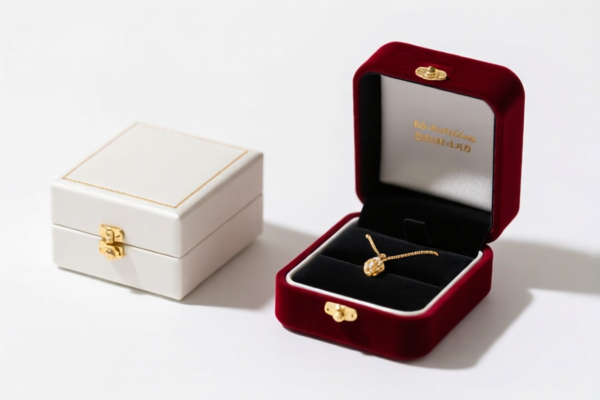
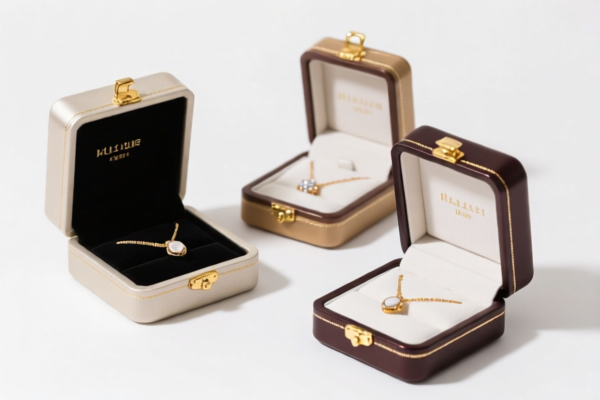
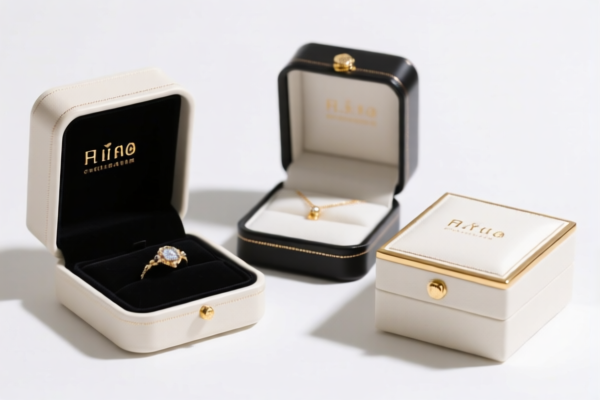
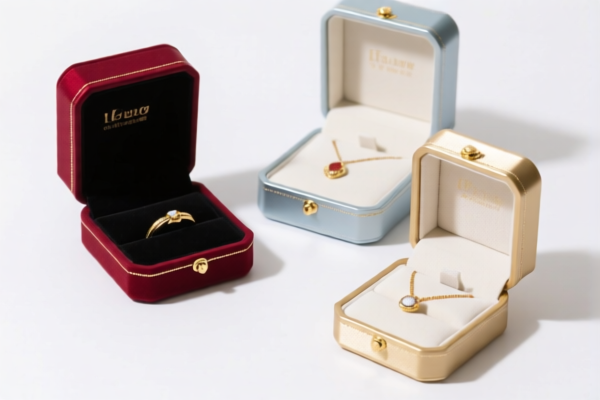
AI Analysis
🎁 Jewellery Boxes: HS Code Classification & US Customs Clearance Guide (2026)
🌐 HS Code Reference & Customs Clearance Strategy | 2026 Latest Tariff Analysis | Professional Import Compliance
📌 一、Product Definition & Classification: What Exactly is a "Jewellery Box"?
In international trade, Jewellery Boxes are generally classified based on their primary material and functional purpose. They are not a single HS Code but fall into specific categories depending on whether they are made of wood, glass, plastic, or other materials.
⚠️ Key Distinction:
- If the box is made of wood → It falls under Chapter 44 (Wood and articles of wood).
- If the box is made of glass → It falls under Chapter 70 (Glass and glassware).
- If the box is made of plastic → It may fall under Chapter 39 (Plastics and articles thereof) or Chapter 71 (Jewellery, precious stones, etc.) depending on design.
📦 二、HS Code Classification Details (Based on Provided Data)
Below is the authoritative classification for Jewellery Boxes imported into the United States from China, based on the provided dataset.
| HS Code | Product Description | Material Inference | Key Characteristics |
|---|---|---|---|
4420.90.65.00 |
Wooden containers for jewellery | Wood | Matches use and material; classified as wooden containers. |
4420.90.45.00 |
Wooden jewellery boxes (general) | Wood | Matches use and form; material inferred as wood. |
7020.00.60.00 |
Glass jewellery boxes | Glass | Material inferred as glass; classified as other glass articles. |
7020.00.40.00 |
Other glass/plastic/leather boxes | Glass/Plastic/Leather | Fallback category for glass/plastic/leather; "Other glass articles" catch-all. |
3926.40.00.90 |
Decorative jewellery boxes | Plastic/Non-metal | Classified as decorative articles; material usually plastic or non-metal. |
🔍 Important Note:
- Wooden boxes (4420.xx) are common for high-end, traditional jewellery storage.
- Glass boxes (7020.xx) are often used for display or luxury packaging.
- Plastic boxes (3926.xx) are typically for mass-market, decorative, or promotional jewellery.
💰 三、2026 US Tariff Rate Details (Including Additional Taxes)
✅ Applicable Country: United States (US)
✅ Origin: China (CN)
✅ Effective Time: Current rates as per provided data (including Section 301 and IEEPA tariffs)
🎯 1. 4420.90.65.00 – Wooden Jewellery Boxes
| Item | Details |
|---|---|
| Base Duty Rate | 0.0% |
| Section 301 Additional Duty | +25.0% |
| IEEPA Section 122 Duty | +10.0% |
| Total Duty Rate | 35.0% |
| Tax Calculation | CIF Value × 35% |
| De Minimis Exemption | ❌ Not Eligible |
| Legal Basis | Base tariff (0%) + Section 301 (25%) + IEEPA (10%) |
📌 Explanation:
- Wooden jewellery boxes are exempt from base duty (0%) under HTS 4420.90.65.00.
- However, Section 301 tariffs (25%) apply to all Chinese-origin wood products.
- IEEPA Section 122 tariffs (10%) are also applied, resulting in a total of 35%.
- This is a high-cost category for importers.
🎯 2. 4420.90.45.00 – Other Wooden Jewellery Boxes
| Item | Details |
|---|---|
| Base Duty Rate | 4.3% |
| Section 301 Additional Duty | +25.0% |
| IEEPA Section 122 Duty | +10.0% |
| Total Duty Rate | 39.3% |
| Tax Calculation | CIF Value × 39.3% |
| De Minimis Exemption | ❌ Not Eligible |
| Legal Basis | Base tariff (4.3%) + Section 301 (25%) + IEEPA (10%) |
📌 Explanation:
- This code applies to wooden boxes that do not meet the specific criteria for4420.90.65.00.
- The base duty is 4.3%, which is higher than the 0% rate for4420.90.65.00.
- Total tariff: 39.3%, making it even more expensive than4420.90.65.00.
🎯 3. 7020.00.60.00 – Glass Jewellery Boxes
| Item | Details |
|---|---|
| Base Duty Rate | 5.0% |
| Section 301 Additional Duty | +25.0% |
| IEEPA Section 122 Duty | +10.0% |
| Total Duty Rate | 40.0% |
| Tax Calculation | CIF Value × 40.0% |
| De Minimis Exemption | ❌ Not Eligible |
| Legal Basis | Base tariff (5.0%) + Section 301 (25%) + IEEPA (10%) |
📌 Explanation:
- Glass jewellery boxes fall under Chapter 70.
- Base duty is 5.0%, with Section 301 (25%) and IEEPA (10%) applying.
- Total tariff: 40.0%.
- High tariff due to Chinese origin.
🎯 4. 7020.00.40.00 – Other Glass/Plastic/Leather Boxes
| Item | Details |
|---|---|
| Base Duty Rate | 6.6% |
| Section 301 Additional Duty | +25.0% |
| IEEPA Section 122 Duty | +10.0% |
| Total Duty Rate | 41.6% |
| Tax Calculation | CIF Value × 41.6% |
| De Minimis Exemption | ❌ Not Eligible |
| Legal Basis | Base tariff (6.6%) + Section 301 (25%) + IEEPA (10%) |
📌 Explanation:
- This is a fallback category for glass, plastic, or leather boxes that do not fit more specific codes.
- Base duty is 6.6%, leading to the highest total tariff of 41.6%.
- Importers should avoid this code if possible by correctly classifying based on material.
🎯 5. 3926.40.00.90 – Plastic/Decorative Jewellery Boxes
| Item | Details |
|---|---|
| Base Duty Rate | 5.3% |
| Section 301 Additional Duty | 0.0% |
| IEEPA Section 122 Duty | +10.0% |
| Total Duty Rate | 15.3% |
| Tax Calculation | CIF Value × 15.3% |
| De Minimis Exemption | ❌ Not Eligible |
| Legal Basis | Base tariff (5.3%) + IEEPA (10%) |
📌 Explanation:
- Plastic jewellery boxes are classified under Chapter 39 (Plastics).
- Section 301 tariffs (25%) do NOT apply to this code.
- Only IEEPA Section 122 (10%) applies.
- Total tariff: 15.3%, making it the most cost-effective option for importers.
🛠️ 四、Customs Clearance Practical Advice (Avoiding Pitfalls)
✅ 1. Documentation Checklist (Mandatory)
| Document | Required | Notes |
|---|---|---|
| ✅ Product Specification Sheet | ✔️ | Must specify material (wood, glass, plastic), dimensions, and interior lining. |
| ✅ Product Photos | ✔️ | Clear images showing exterior, interior, and any branding. |
| ✅ Commercial Invoice | ✔️ | Must clearly state "Jewellery Box" and material type. |
| ✅ Packing List | ✔️ | Detail quantity, weight, and packaging type. |
| ✅ Material Declaration | ✔️ | Explicitly state if wood, glass, plastic, or mixed materials. |
| ✅ Certificate of Origin (CO) | ✔️ | To verify Chinese origin and apply correct tariffs. |
✅ 2. Declaration Tips (Key Mantra)
🔥 "Material First, Purpose Second, Code Accurate, Tax Saved!"
| Scenario | Correct Declaration | Incorrect Declaration |
|---|---|---|
| Wooden Box | 4420.90.65.00 or 4420.90.45.00 |
Misclassified as plastic → Overpay tax |
| Glass Box | 7020.00.60.00 or 7020.00.40.00 |
Misclassified as wood → Underpay tax |
| Plastic Box | 3926.40.00.90 |
Misclassified as glass → Overpay tax |
| Mixed Material | Declare primary material | Vague description → Customs detention |
✅ 3. Special Cases
| Situation | Handling Advice |
|---|---|
| OEM Custom Boxes | Provide design files and material specs to avoid classification errors. |
| Boxes with Mirrors/Glass Inserts | If glass is predominant, classify under Chapter 70. |
| Boxes with Leather Trims | If leather is minor, classify based on main material (e.g., wood or plastic). |
| Promotional Free Samples | May still be subject to duties; declare correctly as "Free Sample, Value $X." |
🌍 五、Global Customs Comparison (2026)
| Country/Region | Recommended HS Code | Duty Rate (China Origin) | Notes |
|---|---|---|---|
| 🇺🇸 USA | 3926.40.00.90 (Plastic) |
15.3% | Lowest duty among provided options. |
| 🇺🇸 USA | 4420.90.65.00 (Wood) |
35.0% | High duty due to Section 301. |
| 🇺🇸 USA | 7020.00.60.00 (Glass) |
40.0% | Highest duty for glass. |
| 🇪🇺 EU | Varies by material | Varies | EU may have different tariff structures; check EU TARIC. |
| 🇨🇳 China | Varies by material | Varies | Export from China may have different export duties. |
📌 Conclusion:
- Plastic jewellery boxes (3926.40.00.90) are the most tariff-efficient option for US imports.
- Wooden and glass boxes incur high tariffs (35–41.6%) due to Section 301 and IEEPA.
- Importers should consider supply chain adjustments (e.g., sourcing from non-China origins) to reduce costs.
📌 六、Common Mistakes & Pitfalls (Lessons Learned)
❌ Mistake 1: Misclassifying plastic boxes as wood or glass
👉 Consequence: Overpaying tariffs (40%+ instead of 15.3%).
❌ Mistake 2: Not specifying material in declaration
👉 Consequence: Customs may reclassify and impose penalties.
❌ Mistake 3: Assuming "Jewellery Box" is a single HS Code
👉 Consequence: Classification error → Delays, fines, or seizure.
✅ Correct Approach:
"Jewellery Box, Wooden, Liner Velvet, Model XYZ, Made in China"
"Jewellery Box, Plastic, Decorative, Model ABC, Made in China"
🎯 七、Conclusion: Accurate Classification Saves Money!
🎯 Key Takeaways:
🔹 Plastic Boxes (
3926.40.00.90): 15.3% Total Duty → Best Option
🔹 Wooden Boxes (4420.90.65.00): 35.0% Total Duty → High Cost
🔹 Glass Boxes (7020.00.60.00): 40.0% Total Duty → Highest Cost🔹 "Material determines Code, Code determines Tax, Tax determines Profit!"
📌 Pro Tip:
If your jewellery boxes are sourced from Vietnam, Malaysia, or Thailand, you may qualify for lower or zero tariffs under US trade agreements.
Recommendation: Seek an Advance Ruling from US Customs before importing to ensure correct classification.
📣 Immediate Action:
📞 Consult a licensed customs broker + Provide product material specs + Apply for HS Code Advance Ruling
🚀 Ensure smooth clearance, minimize costs, and maximize profits!
✨ Professional Customs Clearance Starts with Accurate Classification!
💼 Every cent of duty paid is a cent lost from your profit!
Customer Reviews
About HS Code Classification
The Harmonized System (HS) is an internationally standardized nomenclature developed by the World Customs Organization (WCO) to classify traded products. Over 200 countries use the HS system as the basis for customs tariffs, trade statistics, and import/export regulations.
Each HS code follows a hierarchical structure:
- Chapter (2 digits) — Broad category of goods (e.g., Chapter 84: Machinery and Mechanical Appliances)
- Heading (4 digits) — More specific grouping within the chapter
- Subheading (6 digits) — Internationally standardized breakdown, used by all WCO member countries
- National subdivisions (8-10 digits) — Country-specific extensions for further classification, such as US HTSUS 10-digit codes
Correct HS code classification is essential for smooth customs clearance, accurate duty payment, and compliance with trade regulations. Misclassification can lead to customs delays, overpayment of duties, or penalties.
When importing from CN to US, the applicable tariff rates may include:
- Most-Favored-Nation (MFN) rate — The standard duty rate applied to WTO members
- General rate — Applied to countries without trade agreements
- Trade remedy duties — Additional tariffs such as Section 301 (anti-dumping), Section 232 (national security), or countervailing duties
The information provided on this page is for reference purposes only. For official classification, please consult with your local customs authority or a licensed customs broker.