juicer accessories: blades
CN → US| HS Code | Tariff Rate | Origin | Destination | Doc |
|---|---|---|---|---|
| 8214909000 | 0.0% | CN | US | Official Doc |
| 8438800000 | 35.0% | CN | US | Official Doc |
| 8438909090 | 37.8% | CN | US | Official Doc |
| 8214906000 | 0.0% | CN | US | Official Doc |
| 8208300060 | 35.0% | CN | US | Official Doc |
| 8208906000 | 35.0% | CN | US | Official Doc |
Product Images
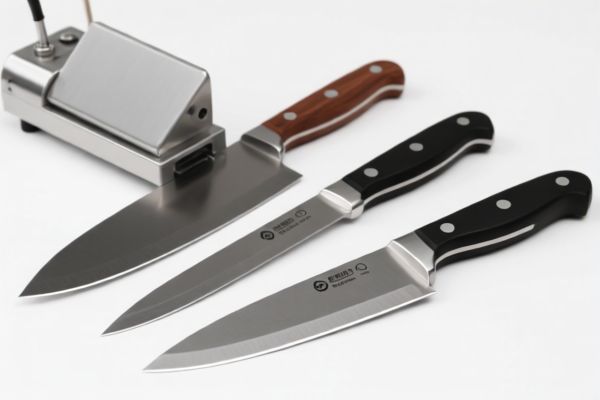
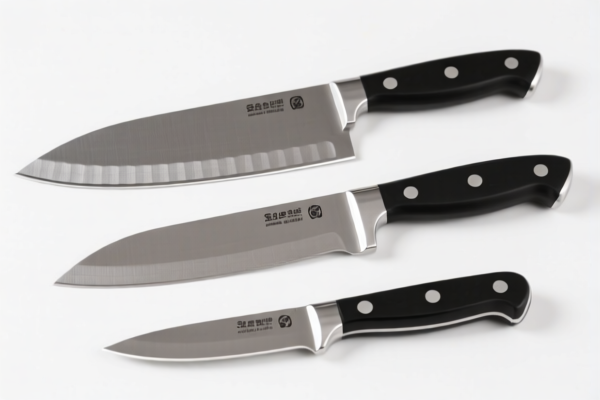
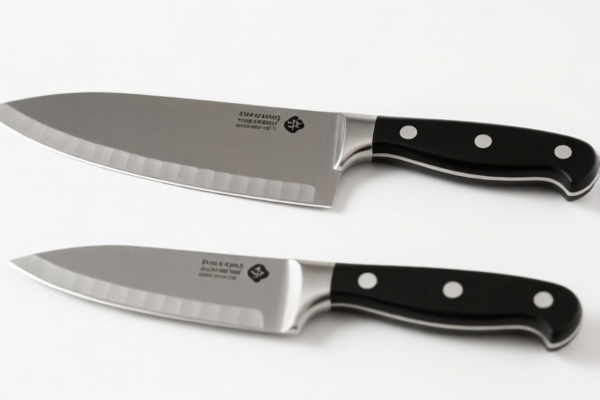
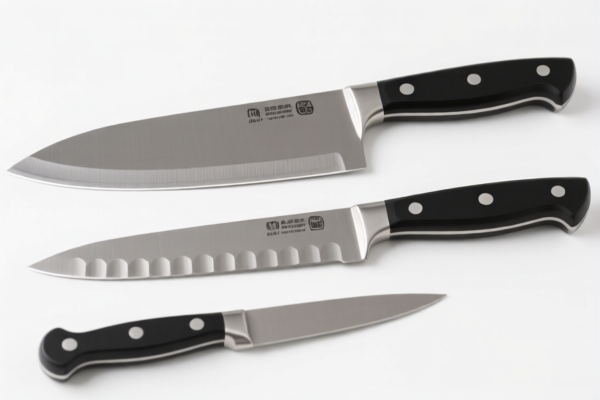
AI Analysis
🔪 Juicer Accessories: Blades
🌐 HS Code Reference & Clearance Guide | 2026 Latest Tariff Analysis | Professional Customs Strategy
📌 I. Product Definition & Classification: Do You Really Understand "Juicer Blades"?
Juicer blades are critical components for food and beverage preparation machinery. In international trade, they are not simply "metal objects" but specialized parts and accessories for machinery. Their classification depends heavily on their specific design intent (food grade vs. industrial cutting) and material properties.
⚠️ Key Distinction Point:
- If the blade is specifically designed as a spare part for a juice extractor (food/beverage machinery) → Classified under 8438.90 or 8438.80.
- If the blade is a general metal cutting tool or fits the general description of "knives/blades" without specific machinery integration → Classified under 8208 or 8214.
- Crucial Note: Blades intended for food machinery often face higher scrutiny due to "122-Clause" tariffs if sourced from China.
📦 II. HS Code Classification Details (2026 Latest Tariff Authority Comparison)
| HS Code | Product Description | Application Scenario | Tax Rate Detail (China Origin) |
|---|---|---|---|
8438.80.00.00 |
Juicer Accessories (Blades): Specifically for food/beverage machinery parts | Food Grade Juice Extractor Parts | 35.0% |
8438.90.90.90 |
Juicer Accessories (Blades): Industrial food/beverage prep machinery parts | Industrial Scale Juice Machines | 37.8% |
8214.90.60.00 |
Blades: Metal cutting tool components, accessory default matching | General Metal Cutting Blades | 0.2¢/each + 3.1% + 10.0% |
8208.30.00.60 |
Blades: Match juicer accessory form, metal material, cutting blade description | Juicer Blades (Metal/Knife Type) | 35.0% |
8208.90.60.00 |
Blades: Knife and cutting blade classification, juicer accessory scope, no material conflict | Juicer Blades (Accessory Scope) | 35.0% |
🔍 Critical Insight:
- Category 1 (Food Machinery Parts - 8438): Best for dedicated juicer parts. However,8438.90.90.90incurs a base duty of 2.8%, leading to a higher total tax (37.8%) compared to other options. - Category 2 (General Tools/Knives - 8208/8214): These leverage the "Accessory Default Matching Principle" or "Cutting Blade" classification. 8208 codes often have 0% base duty, making the total tax 35.0% (due to surcharges), which is lower than8438.90.90.90. - Category 3 (Specific Metric - 8214): Unique pricing model (cents per unit + ad valorem), suitable for high-volume, low-value individual blades.
💰 III. 2026 Latest Tariff Rate Breakdown (Including Surcharges & Policy Add-ons)
✅ Applicable Country: United States (US)
✅ Origin: China (CN)
✅ Effective Date: Post-November 2025 (Includes subsequent imports)
🎯 1. 8438.80.00.00 & 8208.30.00.60 & 8208.90.60.00 — The "35% Tier"
These three codes share a similar tax structure but differ in legal basis.
| Item | Content |
|---|---|
| Base Tariff | 0.0% (Ad valorem) Note: 8438.80 and 8208 series have 0% base. |
| Section 301 Surcharge | +25.0% (USITC Footnote for Chinese goods) |
| 122-Clause Tariff | +10.0% (Additional surcharge on specific machinery/tools) |
| Total Tax Rate | 35.0% |
| Tax Calculation | CIF Value × 35% |
| De Minimis Exemption | ❌ Not Applicable High value or specific classification prevents de minimis. |
| Legal Basis Path | Base Duty: 0.0% → Surcharge: 25.0% → 122-Clause: 10.0% |
📌 Explanation:
- These codes are favored if the base duty is 0%. The 35% total is driven entirely by the 25% Section 301 tariff and the 10% 122-Clause tariff. - Strategic Choice:8208codes (Knives/Blades) are often easier to justify than8438(Machinery Parts) if the blade is a generic metal cutting tool.
🎯 2. 8438.90.90.90 — The "37.8% Tier"
| Item | Content |
|---|---|
| Base Tariff | 2.8% |
| Section 301 Surcharge | +25.0% |
| 122-Clause Tariff | +10.0% |
| Total Tax Rate | 37.8% |
| Tax Calculation | (CIF Value × 2.8%) + (CIF Value × 35% Surcharge components) |
| De Minimis Exemption | ❌ Not Applicable |
| Legal Basis Path | Base Duty: 2.8% → Surcharge: 25.0% → 122-Clause: 10.0% |
📌 Warning:
- This code has a higher base duty (2.8%) than others. Even though surcharges are the same, the total cost is higher. - Avoid this code unless customs specifically requires "Industrial Food Machinery Parts" and no other 0% base code applies.
🎯 3. 8214.90.60.00 — The "Metric + Ad Valorem" Tier
| Item | Content |
|---|---|
| Base Tariff | 0.2¢ each + 3.1% |
| Section 301 Surcharge | 0.0% (Note: Data indicates 0.0% for this specific line item's surcharge component in the provided text, likely due to specific tooling exemptions or classification nuances) |
| 122-Clause Tariff | +10.0% |
| Total Tax Rate | Complex: 0.2¢/unit + 3.1% + 10% |
| Tax Calculation | (Unit Price × 0.2¢) + (CIF Value × 13.1%) |
| De Minimis Exemption | ❌ Not Applicable |
| Legal Basis Path | Base: 0.2¢+3.1% → Surcharge: 0.0% → 122-Clause: 10.0% |
📌 Strategic Note:
- If you have high volume of small, low-cost blades, the 0.2¢ per unit fee might be negligible, and the 3.1% base is low. - However, the 10% 122-Clause still applies. - Key Advantage: The Section 301 surcharge appears as 0.0% in this specific line item's detail in the data, which could be a significant cost saver if audited correctly. Verify with current USITC lists as this is an anomaly.
🛠️ IV. Customs Clearance Practical Advice (Real-World Pitfall Guide)
✅ 1. Preparation Checklist (No Exceptions)
| Document | Must Provide | Description |
|---|---|---|
| ✅ Product Spec Sheet | ✔️ | Dimensions, material (e.g., Stainless Steel 420), hardness, coating. |
| ✅ Photos (Clear) | ✔️ | Show blade shape, edge type, and any branding/model numbers. |
| ✅ Usage Declaration | ✔️ | Explicitly state: "Spare part for Juicer" OR "Industrial Cutting Blade". |
| ✅ Commercial Invoice | ✔️ | Value must match CIF. Describe as "Juicer Blade Assembly" or "Metal Cutting Blade". |
| ✅ Bill of Lading | ✔️ | Ensure weight and package count match invoice. |
✅ 2. Declaration Strategy (Key Mnemonics)
🔥 “Match Intent, Choose Base, Avoid 2.8%!”
| Scenario | Recommended HS Code | Why? |
|---|---|---|
| Dedicated Juicer Blade | 8438.80.00.00 |
Clear link to food machinery, 0% base duty. |
| General Metal Knife/Blade | 8208.30.00.60 or 8208.90.60.00 |
Broad classification, 0% base, 35% total. |
| High Volume, Low Cost Blades | 8214.90.60.00 |
Metric pricing may reduce total cost if base surcharge is 0%. |
| Industrial Machine Part | 8438.90.90.90 |
Avoid unless forced; 37.8% is the highest. |
✅ 3. Special Situations
| Situation | Handling Advice |
|---|---|
| OEM Juicer Brand | Use the brand’s part number in description. Links to 8438.80.00.00. |
| Generic Replacement Blade | Use "Stainless Steel Cutting Blade for Food Processing". Links to 8208 or 8214. |
| Set of Blades | If sold as a kit, declare as "Juicer Accessories" or "Blade Set". Do not split unless necessary. |
| Coated Blades | Mention coating (e.g., Teflon) in specs. May not change HS code but helps customs verify "Food Grade" intent. |
🌍 V. Global Market Comparison (2026 Latest)
| Country/Region | Recommended HS Code | Tariff (China Origin) | Certification | Remarks |
|---|---|---|---|---|
| 🇺🇸 USA | 8208.30.00.60 / 8438.80.00.00 |
35.0% | FDA (Food Contact) | 122-Clause & 301 apply. |
| 🇨🇳 China | 8438.90.90.90 |
8% - 10% | CCC (if applicable) | Lower tariffs for domestic import. |
| 🇪🇺 EU | 8208.30.00.60 |
0% - 4% | CE + LFGB (Food) | No 122-Clause/301 surcharges. |
| 🇬🇧 UK | 8208.30.00.60 |
0% - 4% | UKCA | Post-Brexit tariffs often favorable. |
📌 Conclusion:
- USA is the most expensive market due to layered tariffs (Base + 301 + 122-Clause).
- EU/UK are significantly cheaper; ensure Food Contact Material (FCM) compliance (LFGB in Germany, FDA in US).
📌 VI. Common Mistakes & Pitfall Guide (Lessons from Tears)
❌ Mistake 1: Declaring "Juicer Blades" as "General Kitchen Knives" without justification
👉 Result: Customs may classify under 8214 with higher scrutiny or reject the 0% base duty claim.
❌ Mistake 2: Using 8438.90.90.90 without justification
👉 Result: 37.8% tax instead of 35.0%. Unnecessary cost!
❌ Mistake 3: Ignoring the 122-Clause
👉 Result: Audits reveal unpaid 10% surcharge + penalties.
❌ Mistake 4: Claiming De Minimis for blades
👉 Result: Rejected. These are not eligible for de minimis clearance due to surcharges.
✅ Correct Approach:
“Stainless Steel Juicer Blade, Model X, For Commercial Juice Extractor, FDA Compliant”
HS Code:8438.80.00.00or8208.30.00.60
Tax: 35.0%
🎯 VII. Conclusion: Precise Classification Saves Money!
🎯 Remember the Mantra:
🔹 “Zero Base, 35% Total, Avoid 2.8% Base!”
🔹 “HS Code determines fate, 2.8% base means 37.8% total!”
🔹 “122-Clause is always 10%, don’t forget it!”
📌 Pro Tip:
If your blades are not made in China (e.g., Vietnam, Germany), Section 301 and 122-Clause do NOT apply. Tax rates drop to 0% - 5%.
💡 Action: Consider supply chain diversification to avoid US tariffs entirely.
📣 Immediate Action:
📞 Contact your customs broker with clear photos and spec sheets.
🚀 Pre-clearance ruling is highly recommended for high-volume shipments.
✨ Professional clearance starts with accurate classification!
💼 Every percent saved is pure profit!
Customer Reviews
About HS Code Classification
The Harmonized System (HS) is an internationally standardized nomenclature developed by the World Customs Organization (WCO) to classify traded products. Over 200 countries use the HS system as the basis for customs tariffs, trade statistics, and import/export regulations.
Each HS code follows a hierarchical structure:
- Chapter (2 digits) — Broad category of goods (e.g., Chapter 84: Machinery and Mechanical Appliances)
- Heading (4 digits) — More specific grouping within the chapter
- Subheading (6 digits) — Internationally standardized breakdown, used by all WCO member countries
- National subdivisions (8-10 digits) — Country-specific extensions for further classification, such as US HTSUS 10-digit codes
Correct HS code classification is essential for smooth customs clearance, accurate duty payment, and compliance with trade regulations. Misclassification can lead to customs delays, overpayment of duties, or penalties.
When importing from CN to US, the applicable tariff rates may include:
- Most-Favored-Nation (MFN) rate — The standard duty rate applied to WTO members
- General rate — Applied to countries without trade agreements
- Trade remedy duties — Additional tariffs such as Section 301 (anti-dumping), Section 232 (national security), or countervailing duties
The information provided on this page is for reference purposes only. For official classification, please consult with your local customs authority or a licensed customs broker.