key storage box
CN → US| HS Code | Tariff Rate | Origin | Destination | Doc |
|---|---|---|---|---|
| 3926903500 | 24.0% | CN | US | Official Doc |
| 4202322000 | 55.0% | CN | US | Official Doc |
| 3926908500 | 24.0% | CN | US | Official Doc |
| 4202399000 | 55.0% | CN | US | Official Doc |
| 3926909989 | 22.8% | CN | US | Official Doc |
Product Images
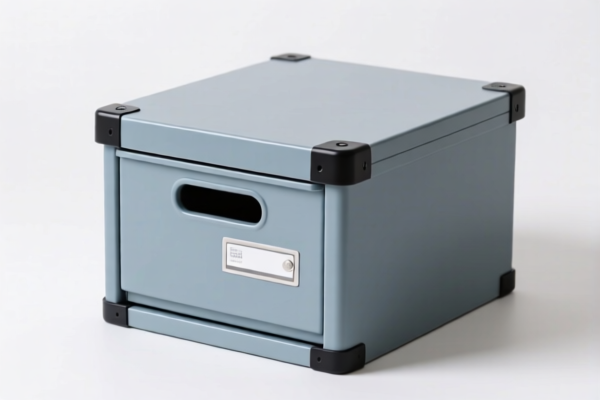
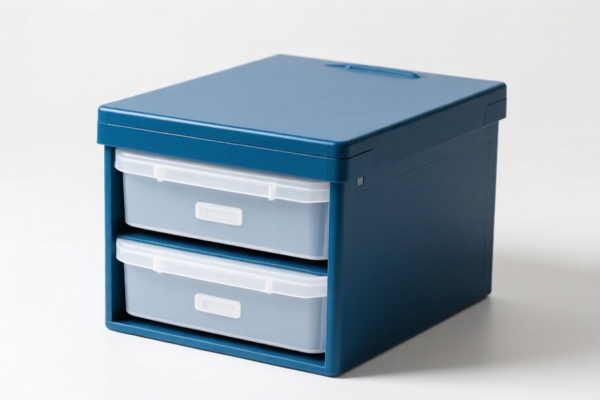
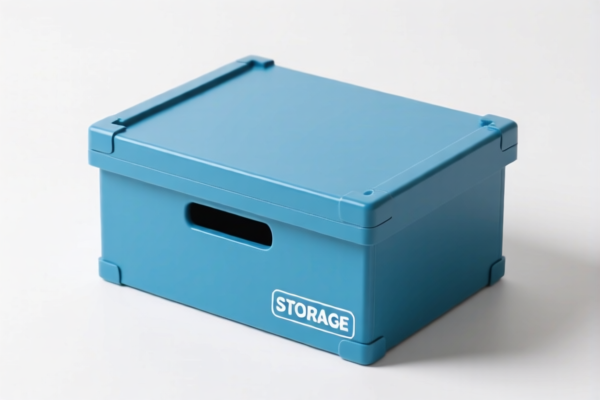
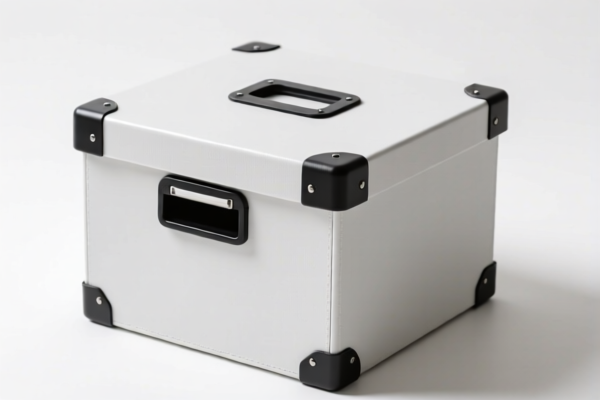
AI Analysis
🔑 Key Storage Box (Key Organizer / Lockbox)
🌐 HS Code Reference & Customs Clearance Guide | 2026 Latest Tariff Analysis | Professional Clearance Strategy
📌 I. Product Definition & Classification: Do You Really Understand "Key Storage"?
A Key Storage Box is a container designed to securely hold, organize, or hide keys. In international trade, its classification depends heavily on its primary material and intended use case (e.g., pocket carry vs. wall-mounted home storage). It is generally not treated as a single homogeneous product but is split into two main categories:
- Plastic/Metal Accessories (Household/Office): Rigid or semi-rigid boxes for home, office, or safe use. These fall under Chapter 39 (Plastics) or similar material chapters.
- Wearable/Carried Containers (Pocket/Bag): Flexible or compact cases designed to be carried in a pocket, handbag, or attached to a belt. These fall under Chapter 42 (Articles of Leather/Travel Goods).
⚠️ Critical Distinction:
- If it is a rigid box for stationary storage (home/office) → Often classified under Plastics (Ch. 39).
- If it is a pouch, case, or organizer meant to be carried in a pocket or handbag → Classified under Articles of Leather/Travel Goods (Ch. 42).
- Misclassification here can lead to massive tariff differences (24% vs. 55%).
📦 II. HS Code Classification Details (2026 Latest Tariff Authority对照)
Based on the inferred materials and usage scenarios from the provided data, here are the potential HS Codes and their corresponding tax structures for imports into the United States from China.
| HS Code | Product Description | Primary Material | Usage Scenario | Key Differentiator |
|---|---|---|---|---|
3926.90.35.00 |
Plastic Key Storage Box / Organizer | Plastic | Home, Office, Vehicle Dashboard | Rigid/semi-rigid plastic container for stationary storage. |
4202.32.20.00 |
Key Case / Pouch (Pocket/Bag Accessory) | Plastic Sheet / Synthetic Leather | Carried in pocket, handbag, or attached to bag | Designed for personal carry; outer surface is plastic sheeting. |
3926.90.85.00 |
Mixed Material Key Holder | Plastic or Metal | General utility storage | Often includes metal components or mixed materials; falls under "Other articles". |
4202.39.90.00 |
Other Key Containers (Textile/Leather/Plastic) | Textile, Leather, or Plastic | Pocket/Belt bag accessory | Fallback category for carried containers not specifically listed in 4202.32. |
3926.90.99.89 |
Plastic Key Storage (Other/Unspecified) | Plastic | Miscellaneous plastic key holders | Generic "Other plastic articles" fallback. |
🔍 Focus Reminder:
- Portable/Carried items (pockets/bags) face much higher tariffs (55%).
- Stationary/Plastic items face lower tariffs (22.8%–24%).
- Do not confuse a "key ring" (often Ch. 71 or 73) with a "storage box/case" (Ch. 39 or 42).
💰 III. 2026 Latest Tariff Rate Details (Including Surtaxes & Policy Add-ons)
✅ Applicable Country: United States (US)
✅ Origin: China (CN)
✅ Effective Time: Current applicable rates (including Section 301 & IEEPA surcharges)
🎯 1. 3926.90.35.00 & 3926.90.85.00 — Plastic/Mixed Key Storage (Stationary/General)
| Item | Detail |
|---|---|
| Base Tariff | 6.5% (for .35) / 6.5% (for .85) |
| Section 301 Surtax | +7.5% |
| IEEPA Surcharge | +10% (122 Clause / China-specific) |
| Total Tax Rate | 24.0% |
| Calculation | CIF Value × 24% |
| De Minimis Eligibility | ❌ No (High total rate usually disqualifies from $800 de minimis exemptions in strict enforcement cases, though technically de minimis is $800 regardless of duty, risk of seizure exists for prohibited items; however, key storage is not prohibited, but cost analysis applies). |
| Legal Path | HTSUS:3926.90.35.00 → Section 301: Footnote 9903.88.03 → IEEPA:9903.01.25 |
📌 Explanation:
- These codes classify plastic key boxes/organizers not designed as wearable accessories.
- The 24% rate is significantly lower than the wearable category.
- Ideal for wall-mounted key trays, desktop organizers, or glovebox storage.
🎯 2. 3926.90.99.89 — Other Plastic Key Storage (Generic Plastic)
| Item | Detail |
|---|---|
| Base Tariff | 5.3% |
| Section 301 Surtax | +7.5% |
| IEEPA Surcharge | +10% |
| Total Tax Rate | 22.8% |
| Calculation | CIF Value × 22.8% |
| De Minimis Eligibility | ❌ No (High risk assessment) |
| Legal Path | HTSUS:3926.90.99.89 → Section 301 → IEEPA |
📌 Explanation:
- A generic fallback for plastic key storage items that don’t fit specific sub-headings.
- Offers the lowest total duty (22.8%) among all options, but requires strict material verification (must be purely plastic or dominant plastic).
🎯 3. 4202.32.20.00 & 4202.39.90.00 — Carried Key Cases (Pocket/Bag)
| Item | Detail |
|---|---|
| Base Tariff | 20.0% |
| Section 301 Surtax | +25.0% |
| IEEPA Surcharge | +10% |
| Total Tax Rate | 55.0% |
| Calculation | CIF Value × 55% |
| De Minimis Eligibility | ❌ No |
| Legal Path | HTSUS:4202.32.20.00 / 4202.39.90.00 → Section 301: Footnote 9903.88.01 → IEEPA:9903.01.25 |
📌 Explanation:
- These codes apply to key cases designed to be carried in a pocket, purse, or handbag.
- 55% is a devastating tariff rate.
- Includes leather-like plastic sheets, fabric key fobs with storage, or compact wearable organizers.
- Warning: Many sellers mistakenly declare these as "Plastic Storage" (24%) to save cost, leading to customs audits, penalties, and seizure.
🛠️ IV. Customs Clearance Practical Advice (Battle-Proven Pitfall Guide)
✅ 1. Document Checklist (Essential)
| Document | Required? | Notes |
|---|---|---|
| ✅ Product Photos | ✔️ | Show the item open and closed. Highlight material (plastic vs. textile/leather). |
| ✅ Specifications Sheet | ✔️ | Must state: "Intended Use: Household Storage" vs. "Intended Use: Pocket Carry". |
| ✅ Commercial Invoice | ✔️ | Description must match HS Code logic. Do not write "Key Chain" if it’s a "Box". |
| ✅ Material Composition | ✔️ | Clearly state % of plastic, metal, leather, fabric. Critical for Ch. 39 vs. Ch. 42. |
| ✅ Packaging Info | ✔️ | Shows if it’s sold as a standalone unit or part of a set. |
✅ 2. Declaration Tips (Golden Rules)
🔥 “Material Defines Chapter, Use Defines Subheading!”
| Scenario | Correct HS Code | Incorrect Declaration | Risk |
|---|---|---|---|
| Rigid Plastic Box (for desk/car) | 3926.90.35.00 (24%) |
“Plastic Box” (Safe) | Low risk if material is clear. |
| Pocket Key Pouch (leather/plastic sheet) | 4202.32.20.00 (55%) |
“Plastic Storage” | HIGH RISK: Audit → Back taxes + Penalty. |
| Key Holder with Metal Frame | 3926.90.85.00 (24%) |
“Metal Accessory” | If plastic is dominant, Ch. 39 may still apply, but verify. |
| Textile Key Bag | 4202.39.90.00 (55%) |
“Textile Product” | Chapter 42 takes precedence for bag/pocket items. |
✅ 3. Special Handling for E-Commerce/SMEs
| Situation | Recommendation |
|---|---|
| Selling on Amazon US | If your product is a pouch/fob, expect 55% duty. Build this into COGS. Do not undervalue. |
| Wall-Mounted Trays | Clearly describe as “Wall-Mounted” or “Desktop” to support Ch. 39 (24%) classification. |
| Mixed Material | If >50% plastic by weight, argue for Ch. 39. If >50% textile/leather, it’s Ch. 42. |
| De Minimis ($800) | While legally $800 is exempt, high-duty items (55%) are frequently targeted in audits. Consider B2B clearance for large volumes. |
🌍 V. Global Market Comparison (2026 Latest)
| Market | Recommended HS | Est. Total Duty (China Origin) | Notes |
|---|---|---|---|
| 🇺🇸 USA | 3926.90.35.00 or 4202.32.20.00 |
24% (Plastic) / 55% (Carried) | Strict enforcement on Ch. 42 misclassification. |
| 🇨🇳 China | 3926.90.99.00 or 4202.39.00 |
~5-10% | Lower base tariffs, no Section 301/IEEPA. |
| 🇪🇺 EU | 3926.90 or 4202.32 |
~0-6.5% | No heavy surcharges, but VAT applies. |
| 🇬🇧 UK | 3926.90 or 4202.32 |
~0-6.5% | Post-Brexit rules, generally favorable. |
| 🇨🇦 Canada | 3926.90 or 4202.32 |
~5-15% | USMCA may not apply if sourced from China. |
📌 Conclusion:
- The USA is the most hostile market for Ch. 42 (Wearable) goods from China.
- Plastic storage (Ch. 39) is the safer, cheaper route (24% vs 55%).
- Design your product to be clearly stationary/household to avoid the 55% rate.
📌 VI. Common Mistakes & Pitfall Guide (Lessons Learned)
❌ Mistake 1: Declaring a leather-looking plastic key pouch as “Plastic Storage”
👉 Result: Customs detects it’s a “container for handbags/pockets” → Reclassifies to 4202 → 55% Duty + Penalty.
❌ Mistake 2: Calling a rigid plastic box a “Key Chain”
👉 Result: Wrong HS Code entirely → Delays + Misdeclaration Fine.
❌ Mistake 3: Ignoring the IEEPA 10% Surcharge
👉 Result: Budgeting only for 301 (7.5% or 25%) → Shortfall in cash flow.
❌ Mistake 4: Assuming De Minimis protects you
👉 Result: While $800 shipments are often released, high-risk categories (like Ch. 42 from China) face increased scrutiny. Don’t rely on it for bulk.
✅ Correct Approach:
“Plastic Box for Home? → 3926.90.35.00 (24%)”
“Pocket Pouch for Carry? → 4202.32.20.00 (55%)”
Choose your product design wisely!
🎯 VII. Conclusion: Professional Declaration, Save Costs!
🎯 Key Takeaway:
🔹 “If it goes in a pocket, it’s 55%. If it stays on a desk, it’s 24%.”
🔹 “Chapter 42 is a Tariff Trap for Key Items.”
📌 Pro Tip:
If you are selling key organizers for the US market, design them as rigid plastic boxes or desktop trays to qualify for Chapter 39. Avoid flexible, pocket-sized designs unless you can absorb the 55% duty.
📣 Action Item:
📞 Consult a Customs Broker to verify your specific product’s “Primary Use” and “Material Composition”.
📄 Get an Advance Ruling if your product is on the borderline between Ch. 39 and Ch. 42.
✨ Customs Clearance Starts with Accurate Classification!
💼 Every Dollar Saved on Duty is Pure Profit!
Customer Reviews
About HS Code Classification
The Harmonized System (HS) is an internationally standardized nomenclature developed by the World Customs Organization (WCO) to classify traded products. Over 200 countries use the HS system as the basis for customs tariffs, trade statistics, and import/export regulations.
Each HS code follows a hierarchical structure:
- Chapter (2 digits) — Broad category of goods (e.g., Chapter 84: Machinery and Mechanical Appliances)
- Heading (4 digits) — More specific grouping within the chapter
- Subheading (6 digits) — Internationally standardized breakdown, used by all WCO member countries
- National subdivisions (8-10 digits) — Country-specific extensions for further classification, such as US HTSUS 10-digit codes
Correct HS code classification is essential for smooth customs clearance, accurate duty payment, and compliance with trade regulations. Misclassification can lead to customs delays, overpayment of duties, or penalties.
When importing from CN to US, the applicable tariff rates may include:
- Most-Favored-Nation (MFN) rate — The standard duty rate applied to WTO members
- General rate — Applied to countries without trade agreements
- Trade remedy duties — Additional tariffs such as Section 301 (anti-dumping), Section 232 (national security), or countervailing duties
The information provided on this page is for reference purposes only. For official classification, please consult with your local customs authority or a licensed customs broker.