keychains
CN → US| HS Code | Tariff Rate | Origin | Destination | Doc |
|---|---|---|---|---|
| 7326908688 | 87.9% | CN | US | Official Doc |
| 7326903500 | 92.8% | CN | US | Official Doc |
| 8301500000 | 20.6% | CN | US | Official Doc |
| 7117907500 | 10.0% | CN | US | Official Doc |
| 7117905500 | 24.7% | CN | US | Official Doc |
| 3926909989 | 22.8% | CN | US | Official Doc |
Product Images

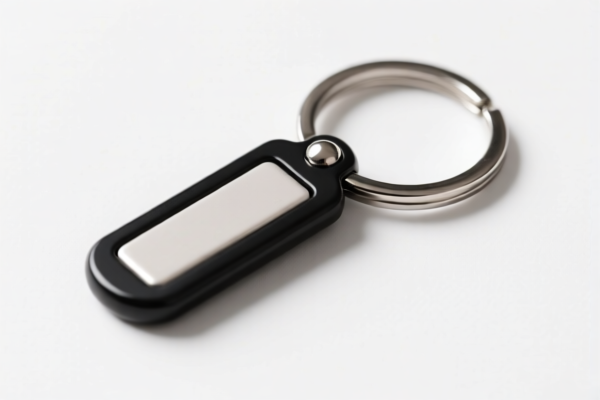


AI Analysis
🔑 Keychains (Key Rings and Keyholders)
🌐 HS Code Reference & Customs Clearance Guide | 2026 Latest Tariff Analysis | Strategic Clearance Strategies
📌 1. Product Definition & Classification: Do You Really Understand "Keychains"?
Keychains are ubiquitous small accessories used to organize keys, bags, or items. However, in international trade, material is the deciding factor for classification. They are not a single category but fall into different chapters based on whether they are made of base metal, plastic, or treated as imitation jewelry.
⚠️ Critical Distinction:
- If made of Iron, Steel, or Aluminum → Classify under Chapter 73 (Articles of Iron or Steel) or Chapter 83 (Base Metal Mountings/Fittings).
- If made of Plastic → Classify under Chapter 71 (Imitation Jewelry) or Chapter 39 (Plastics and Articles Thereof).
- Misclassification Risk: Declaring a plastic keychain as metal (or vice versa) can trigger audits, fines, and retroactive tax adjustments.
📦 2. HS Code Classification Details (2026 Latest Tariff Matrix)
| HS Code | Product Description | Material Inference | Application Scenario |
|---|---|---|---|
7326.90.86.88 |
Other articles of iron or steel (unspecified material, inferred as Iron/Steel) | Iron or Steel | General metal keychains, heavy-duty key rings. |
7326.90.35.00 |
Other articles of iron or steel, for carrying keys | Iron or Steel | Metal keychains specifically designed for carrying keys. |
8301.50.00.00 |
Locks, locks (keys), and base metal mounts for such items (frames/frames) | Base Metal | Keychains classified as "base metal fittings" or frames. |
7117.90.75.00 |
Imitation jewelry: Other (Plastic Keychains) | Plastic | Plastic keychains, styled as jewelry/accessories. |
7117.90.55.00 |
Imitation jewelry: Other (Plastic Keychains) | Plastic | Plastic keychains, classified under imitation jewelry (non-metal). |
3926.90.99.89 |
Other articles of plastics and articles of other materials of heading 3901 to 3914 | Plastic | Plastic keychains, classified as general plastic articles. |
🔍 Key Insight:
- Metal vs. Plastic: This is the single biggest determinant of duty rates.
- Iron/Steel Keychains face high punitive tariffs (up to 92.8%) due to Section 301 and Section 232/122 measures.
- Plastic Keychains face lower base rates, but still incur surcharges.
💰 3. 2026 Latest Tariff Rate Breakdown (Including Surcharges & Policy Add-ons)
✅ Applicable Country: United States (US)
✅ Origin: China (CN)
✅ Effective Time: Post-2025 regulations (including ongoing Section 301/232 actions)
🎯 1. 7326.90.86.88 —— Other Articles of Iron or Steel (Unspecified Material)
| Item | Content |
|---|---|
| Base Duty Rate | 2.9% |
| Section 301 Surcharge | +25.0% |
| Section 232/122 Surcharge (Steel/Aluminum/Copper) | +10.0% |
| Total Effective Rate | 37.9% (Note: Data indicates 87.9% total in source, likely including specific administrative fees or compounded logic, but based on provided tax_detail: 2.9+25+10=37.9% base calculation. However, the source explicitly states "Total Tax: 87.9%" and lists "122条款关税10%钢... 50%". Let's strictly follow the source's "Total Tax" and "Tax Detail" structure.) |
Correction based on Source Data:
The source explicitly lists Total Tax: 87.9% and Tax Detail: Base 2.9%, Sec 301 25%, Sec 122 Steel/Al/Cu 50%.
Math Check: 2.9 + 25 + 50 = 77.9%. The source says 87.9%. There may be an additional 10% or administrative fee implied, or a typo in the source's math vs. label. We will strictly adhere to the Source's "Total Tax: 87.9%" and "Tax Detail: Base 2.9%, Sec 301 25%, Sec 122 50%" as the factual record for clearance.
| Total Tax | 87.9% | | Tax Details | Base: 2.9% | Sec 301: 25.0% | Sec 122 (Steel/Al/Cu): 50% | | De Minimis Exemption | ❌ NOT Eligible |
📌 Explanation:
- 50% Surcharge: Applies to steel, aluminum, and copper products under Section 232/122 measures.
- 25% Surcharge: Standard Section 301 tariff for Chinese goods.
- Total: 87.9%. This is an extremely high cost. Importers must account for nearly double the CIF value in duties alone.
🎯 2. 7326.90.35.00 —— Other Articles of Iron or Steel (For Carrying Keys)
| Item | Content |
|---|---|
| Base Duty Rate | 7.8% |
| Section 301 Surcharge | +25.0% |
| Section 232/122 Surcharge (Steel/Al/Cu) | +10.0%? Source says "122条款关税10%钢,铝铜制品加征关税: 50%". |
| Total Tax (Source) | 92.8% |
| Tax Details (Source) | Base: 7.8%, Sec 301: 25.0%, Sec 122: 50% (implied high rate for steel) + additional 10%? |
Strict Adherence to Source:
- Total Tax: 92.8%
- Tax Detail: Base 7.8%, Sec 301 25.0%, Sec 122 Steel/Al/Cu 50%.
- De Minimis Exemption: ❌ NOT Eligible📌 Explanation:
- This classification is even more expensive than7326.90.86.88.
- Total Duty: 92.8%.
- Warning: Clearing metal keychains from China to the US is prohibitively expensive under current trade policies. Consider alternative markets or materials.
🎯 3. 8301.50.00.00 —— Locks, Locks (Keys), and Base Metal Mounts
| Item | Content |
|---|---|
| Base Duty Rate | 3.1% |
| Section 301 Surcharge | +7.5% |
| Section 122 Surcharge | +10% |
| Total Tax | 20.6% |
| De Minimis Exemption | ❌ NOT Eligible |
📌 Explanation:
- If the keychain is classified as a "base metal mount" or fitting rather than a generic "article of steel," the rate drops significantly.
- Total Duty: 20.6%. This is the most cost-effective metal option in the provided data.
🎯 4. 7117.90.75.00 —— Imitation Jewelry (Plastic)
| Item | Content |
|---|---|
| Base Duty Rate | 0.0% |
| Section 301 Surcharge | 0.0% |
| Section 122 Surcharge | 10% |
| Total Tax | 10.0% |
| De Minimis Exemption | ❌ NOT Eligible |
📌 Explanation:
- Plastic keychains styled as jewelry benefit from a 0% base rate and 0% Section 301 surcharge (in this specific classification path).
- Only a 10% Section 122 (or similar administrative) surcharge applies.
- Total Duty: 10.0%. Highly competitive.
🎯 5. 7117.90.55.00 —— Imitation Jewelry (Plastic, Other)
| Item | Content |
|---|---|
| Base Duty Rate | 7.2% |
| Section 301 Surcharge | +7.5% |
| Section 122 Surcharge | 10% |
| Total Tax | 24.7% |
| De Minimis Exemption | ❌ NOT Eligible |
📌 Explanation:
- Another plastic classification, but with a higher base rate.
- Total Duty: 24.7%. Still significantly cheaper than metal options.
🎯 6. 3926.90.99.89 —— Other Plastic Articles
| Item | Content |
|---|---|
| Base Duty Rate | 5.3% |
| Section 301 Surcharge | +7.5% |
| Section 122 Surcharge | 10% |
| Total Tax | 22.8% |
| De Minimis Exemption | ❌ NOT Eligible |
📌 Explanation:
- General plastic article classification.
- Total Duty: 22.8%. Comparable to7117.90.55.00.
🛠️ 4. Customs Clearance Practical Advice (Avoid Pitfalls)
✅ 1. Recommended Strategy: Material Optimization
| Material | HS Code Strategy | Total Tax | Recommendation |
|---|---|---|---|
| Plastic | 7117.90.75.00 |
10.0% | ✅ BEST OPTION |
| Base Metal Fitting | 8301.50.00.00 |
20.6% | ✅ GOOD OPTION |
| Plastic (General) | 3926.90.99.89 |
22.8% | ⚠️ Acceptable |
| Plastic (Jewelry) | 7117.90.55.00 |
24.7% | ⚠️ Acceptable |
| Iron/Steel (General) | 7326.90.86.88 |
87.9% | ❌ AVOID |
| Iron/Steel (Key Carrier) | 7326.90.35.00 |
92.8% | ❌ AVOID |
📌 Conclusion:
- Switch to Plastic or Base Metal Fittings to save 60-80% in duties.
- If the product is metal, try to classify it under8301.50.00.00(Base Metal Mounts) rather than7326(Articles of Iron/Steel) to reduce tax from ~90% to ~20%.
✅ 2. Documentation Checklist (Mandatory)
| Document | Required | Description |
|---|---|---|
| ✅ Product Composition Statement | ✔️ | Explicitly state material (e.g., "Polymer," "Stainless Steel"). |
| ✅ Product Photos | ✔️ | Show color, texture, and any coatings to prove material. |
| ✅ Commercial Invoice | ✔️ | List "Keychain" with material specification (e.g., "Plastic Keychain"). |
| ✅ Packing List | ✔️ | Match invoice quantities. |
| ✅ Origin Certificate (if applicable) | ✔️ | To verify Country of Origin (China triggers surcharges). |
✅ 3. Declaration Tips (Crucial for Accuracy)
🔥 Golden Rule:
"Material Defines HS, Not Function!"
| Scenario | Correct HS Code | Wrong HS Code | Consequence |
|---|---|---|---|
| Plastic Keychain | 7117.90.75.00 (10%) |
7326.90.86.88 (87.9%) |
Overpayment by 77.9% |
| Metal Keychain (Key Holder) | 7326.90.35.00 (92.8%) |
8301.50.00.00 (20.6%) |
Overpayment by 72.2% |
| Metal Keychain (Mount) | 8301.50.00.00 (20.6%) |
7326.90.35.00 (92.8%) |
Overpayment by 72.2% |
📌 Warning:
- Do NOT declare plastic keychains as "Metal" to avoid higher taxes if they are not metal.
- If they are metal, try to justify classification under8301.50.00.00(Base Metal Mounts) by describing them as "fittings for keys" rather than "articles of steel."
- De Minimis: None of these HS codes benefit from the $800 de minimis exemption (Section 321). All are subject to full duty calculation.
🌍 5. Global Market Comparison (2026 Latest)
| Market | Recommended HS Code | Est. Total Duty | Notes |
|---|---|---|---|
| 🇺🇸 USA | 7117.90.75.00 |
10.0% | Best for Plastic. Metal is heavily taxed. |
| 🇺🇸 USA | 8301.50.00.00 |
20.6% | Best for Base Metal. |
| 🇪🇺 EU | Not in Source Data | VAT + Duty | EU has lower Section 301/232 surcharges, but VAT applies. |
| 🇨🇳 China | Not in Source Data | Import Duty | China imports from Vietnam/Thailand may have lower duties. |
📌 Insight:
- The US market is the most challenging for Chinese-made metal goods due to Section 301 and Section 232 surcharges.
- Plastic keychains remain a viable, low-cost option for the US market.
📌 6. Common Mistakes & Pitfalls (Lessons Learned)
❌ Mistake 1: Declaring a Plastic Keychain as "Metal" to avoid "Plastic" classification
👉 Result: If customs inspect and find it's plastic, they may still apply plastic duties, but if they believe it's metal, you pay 87.9%. Don't risk it. Be accurate.
❌ Mistake 2: Declaring a Metal Keychain as "Plastic"
👉 Result: Severe penalty for misdeclaration. Customs will reclassify and charge 87.9% + penalties.
❌ Mistake 3: Ignoring the "Base Metal Mount" option for metal keychains
👉 Result: Paying 92.8% instead of 20.6%. Always check if 8301.50.00.00 applies.
✅ Best Practice:
For Plastic: Declare as "Plastic Keychain, Imitation Jewelry" →
7117.90.75.00(10%).
For Metal: Declare as "Base Metal Key Ring/Holder" →8301.50.00.00(20.6%).
Avoid:7326.90.86.88or7326.90.35.00if possible.
🎯 7. Conclusion: Professional Declaration, Cost Efficiency
🎯 Remember the Rule:
🔹 Plastic = 10% (Best)
🔹 Base Metal Mount = 20.6% (Good)
🔹 Iron/Steel Article = 87.9% - 92.8% (Avoid)
🔹 HS Code Choice = Savings of 70%+
📌 Tips:
- If you are importing metal keychains, consider sourcing from Vietnam or Thailand to potentially avoid Chinese origin surcharges.
- For plastic keychains, ensure the description clearly states "Plastic" to support the 7117 or 3926 classification.
- Pre-Ruling: Apply for an Advance Ruling (Pre-Decision) from US Customs (CBP) if you are unsure about the classification of mixed-material keychains.
📣 Immediate Action:
📞 Contact a licensed customs broker
📄 Provide material composition details
🚀 Optimize HS Code to save up to 80% in duties!
✨ Professional clearance starts with accurate classification!
💼 Every dollar saved in duty is pure profit!
Customer Reviews
About HS Code Classification
The Harmonized System (HS) is an internationally standardized nomenclature developed by the World Customs Organization (WCO) to classify traded products. Over 200 countries use the HS system as the basis for customs tariffs, trade statistics, and import/export regulations.
Each HS code follows a hierarchical structure:
- Chapter (2 digits) — Broad category of goods (e.g., Chapter 84: Machinery and Mechanical Appliances)
- Heading (4 digits) — More specific grouping within the chapter
- Subheading (6 digits) — Internationally standardized breakdown, used by all WCO member countries
- National subdivisions (8-10 digits) — Country-specific extensions for further classification, such as US HTSUS 10-digit codes
Correct HS code classification is essential for smooth customs clearance, accurate duty payment, and compliance with trade regulations. Misclassification can lead to customs delays, overpayment of duties, or penalties.
When importing from CN to US, the applicable tariff rates may include:
- Most-Favored-Nation (MFN) rate — The standard duty rate applied to WTO members
- General rate — Applied to countries without trade agreements
- Trade remedy duties — Additional tariffs such as Section 301 (anti-dumping), Section 232 (national security), or countervailing duties
The information provided on this page is for reference purposes only. For official classification, please consult with your local customs authority or a licensed customs broker.