kids braces bowtie
CN → US| HS Code | Tariff Rate | Origin | Destination | Doc |
|---|---|---|---|---|
| 9021908100 | 10.0% | CN | US | Official Doc |
| 9021298000 | 10.0% | CN | US | Official Doc |
Product Images
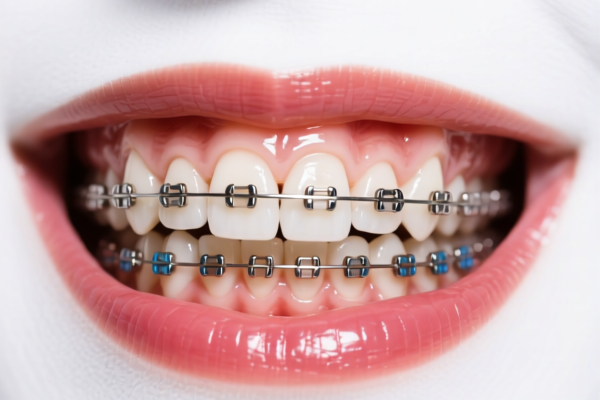
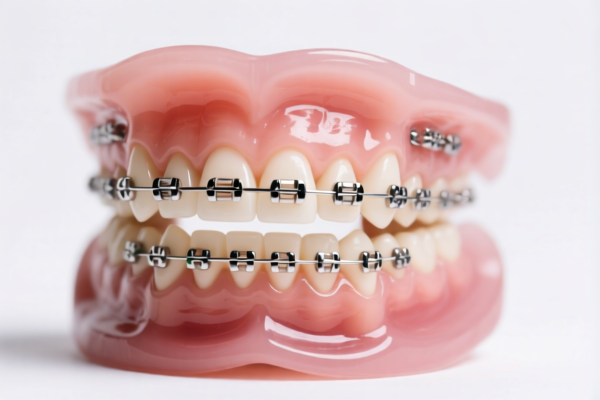
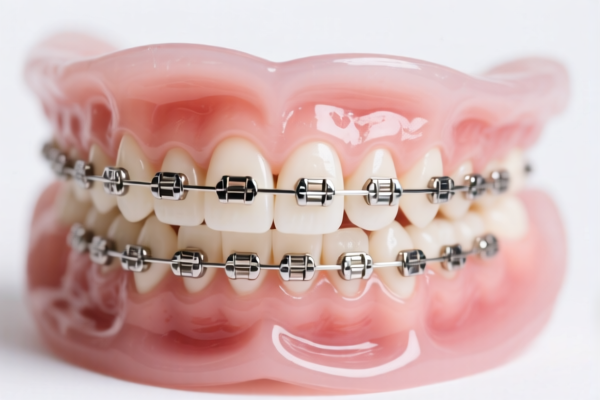
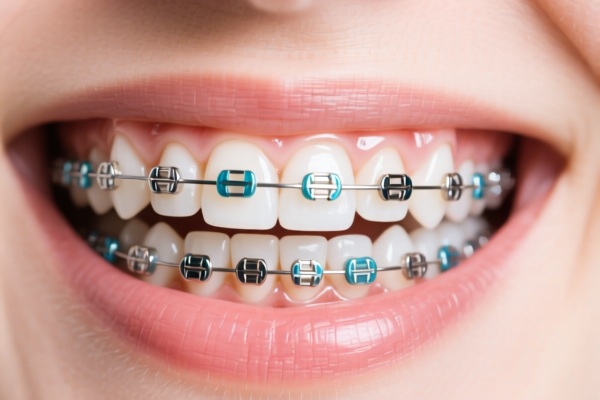
AI Analysis
🎀 Kids’ Bowtie Braces (Orthodontic Appliance Accessories)
🌐 HS Code Reference & Customs Clearance Guide | 2026 Latest Tariff Analysis | Professional Level Strategy
📌 I. Product Definition & Classification: Do You Really Understand "Bowtie Braces"?
Kids’ bowtie braces refer to the elastic components (often shaped like bowties or specific elastic configurations) used in pediatric orthodontic treatment. These are not the metal brackets themselves, but rather the parts and accessories of orthopedic appliances used to apply force to teeth.
In international trade, these items fall under the broad category of Orthopedic Appliances. The key distinction lies in whether they are classified as the main appliance or merely an accessory/component.
⚠️ Key Distinction Point: - If the item is a complete orthodontic bracket system or a splint, it may fall under different subheadings. - If it is specifically an elastic tie, ligature, or accessory attached to the braces, it is classified under "Parts and accessories thereof". - Since "bowtie" implies a specific aesthetic or functional accessory rather than the primary structural device, it is best categorized under "Other parts and accessories".
📦 II. HS Code Classification Details (2026 Latest Tariff Authority Cross-Reference)
| HS Code | Product Description | Application Scenario | Tax Rate |
|---|---|---|---|
9021.90.81.00 |
Orthopedic appliances: Other: Other | General orthopedic aids (crutches, splints, etc.) | 0.0% |
9021.29.80.00 |
Artificial teeth and dental fittings...: Other: Other | Correct Classification for Orthodontic Accessories | 0.0% |
🔍 Critical Analysis: - Why
9021.29.80.00?
Children's braces are a subset of dental fittings (Chapter 90, Heading 9021). The "bowtie" component is an accessory to the main orthodontic apparatus. While9021.90.81.00covers general orthopedic appliances, dental-specific items (including artificial teeth, dentures, and orthodontic appliances/accessories) are more specifically covered under9021.29.
-9021.29covers "Artificial teeth and dental fittings, and parts and accessories thereof: Other".
- Therefore, elastic bowtie ties or orthodontic accessories are best matched here.📌 Note:
- If the product is marketed as a general orthopedic splint rather than a dental fitting, it might be forced into9021.90.81.00, but both have the same tax rate.
- Both codes have a total tax rate of 0.0%, making this category highly favorable for import/export.
💰 III. 2026 Latest Tariff Rate Details (Including Additional Taxes)
✅ Applicable Country: United States (US)
✅ Origin: China (CN)
✅ Effective Date: 2025/2026 Current Rules
🎯 1. 9021.29.80.00 —— Orthodontic Accessories / Dental Fittings (Best Fit)
| Item | Content |
|---|---|
| Base Tariff | 0.0% |
| USITC Additional Duty | 0.0% |
| IEEPA Additional Duty | 0.0% |
| Total Tax Rate | 0.0% |
| Tax Calculation | CIF Value × 0.0% = $0 |
| De Minimis Eligibility | ✅ Yes (If value ≤ $800, may enter duty-free under Section 321, but classification still applies) |
| Legal Basis Path | HTSUS:9021.29.80.00 → General Note 3 → No 301/IEEPA Penalty |
📌 Explanation:
- Orthodontic appliances and their parts are generally considered essential medical/dental devices.
- Unlike consumer electronics or textiles, dental fittings and orthopedic aids do not fall under the major 301 tariff lists for Chinese goods.
- Result: Zero Duty. This is a highly competitive category for pricing.
🎯 2. 9021.90.81.00 —— Other Orthopedic Appliances (Alternative)
| Item | Content |
|---|---|
| Base Tariff | 0.0% |
| USITC Additional Duty | 0.0% |
| IEEPA Additional Duty | 0.0% |
| Total Tax Rate | 0.0% |
| Tax Calculation | CIF Value × 0.0% = $0 |
| De Minimis Eligibility | ✅ Yes |
📌 Note:
- Even if misclassified as a general orthopedic aid, the tax remains 0.0%.
- However,9021.29.80.00is more precisely descriptive for dental/orthodontic items.
🛠️ IV. Customs Clearance Practical Advice (Real-World Pitfall Guide)
✅ 1. Required Documentation Checklist
| Document | Mandatory? | Description |
|---|---|---|
| ✅ Product Specifications | ✔️ | Must specify: Material (e.g., elastic rubber, silicone), Usage (Orthodontic), Target Group (Pediatric) |
| ✅ Photos | ✔️ | Show the "bowtie" shape, packaging, and any branding |
| ✅ Intended Use Statement | ✔️ | Clearly state: "For use in pediatric orthodontic treatment as an accessory to dental braces" |
| ✅ Commercial Invoice | ✔️ | HS Code must be listed as 9021.29.80.00 |
| ✅ FDA Registration | ⚠️ Conditional | If marketed as a Class I medical device, FDA registration may be required. Check if the product is a "device" or "accessory". |
🔥 Critical Tip:
- Do NOT describe the product simply as "Elastic Ties" or "Rubber Bands" without context.
- Use professional terminology: "Orthodontic Accessories" or "Dental Fittings Parts".
- If you label it as "Fashion Accessory," it might be reclassified as a toy or fashion item, leading to higher tariffs and FDA complications.
✅ 2. Declaration Strategy (Key Mnemonics)
🔥 “Dental Fit, Not Fashion, Ortho Accessory, Tax Zero!”
| Scenario | Correct Declaration | Wrong Action |
|---|---|---|
| Bowtie elastic ties for braces | 9021.29.80.00 - Orthodontic Accessories |
Declare as "Fashion Bowtie" → Misclassification |
| Brackets with bowtie design | 9021.29.80.00 - Dental Fittings |
Declare as "Toy" → Higher Duty + FDA Issues |
| General Elastic Bands | 4016.93.00 (Rubber Goods) |
If used for braces, must be 9021.29.80.00 |
✅ 3. Special Cases
| Case | Handling Advice |
|---|---|
| FDA Compliance | Most orthodontic elastics are Class I devices. Ensure your supplier is FDA-registered. |
| Pediatric Safety | Ensure product labeling meets CPSC (Consumer Product Safety Commission) guidelines if sold as a toy-like item, but medical use takes precedence. |
| Bulk Import | For large shipments, consider Advance Ruling from CBP to confirm 9021.29.80.00 is acceptable. |
🌍 V. Global Market Customs Comparison (2026 Latest)
| Country/Region | Recommended HS Code | Tariff | Certification | Notes |
|---|---|---|---|---|
| 🇺🇸 USA | 9021.29.80.00 |
0.0% | FDA (Class I) | No 301/IEEPA penalty |
| 🇨🇳 China | 9021.29.80.00 |
0.0% | CFDA/NMPA | Import license may be needed |
| 🇪🇺 EU | 9021.29 |
0.0% | CE Mark | Class I Medical Device |
| 🇬🇧 UK | 9021.29 |
0.0% | UKCA | Post-Brexit rules apply |
| 🇯🇵 Japan | 9021.29 |
0.0% | PMDA | Medical device classification |
📌 Conclusion:
- Orthodontic accessories enjoy 0% duty globally in most major markets.
- The main hurdle is regulatory compliance (FDA/CE), not tariff costs.
📌 VI. Common Mistakes & Pitfalls (Blood Lessons)
❌ Mistake 1: Declaring as "Fashion Accessories"
👉 Consequence: Rejected by FDA, reclassified as general goods, potential higher duties and fines.
❌ Mistake 2: Not specifying "Orthodontic Use" on Invoice
👉 Consequence: Customs may classify under general rubber goods (4016) or toys, causing delays.
❌ Mistake 3: Ignoring FDA Registration
👉 Consequence: Detention at US border if supplier is not FDA-registered for medical devices.
✅ Correct Action:
"Orthodontic Elastic Ties, Bowtie Style, Pediatric Use, HS 9021.29.80.00, FDA Registered Supplier"
🎯 VII. Conclusion: Professional Clearance, Cost-Saving!
🎯 Remember:
🔹 "Medical Use, Not Fashion; Zero Duty, FDA Consent!"
🔹 "HS Code 9021.29.80.00 is your golden ticket!"
📌 Pro Tip:
- If you are importing from China, ensure the supplier provides FDA Registration Number and ISO 13485 certificates.
- Always use precise descriptions to avoid ambiguity.
📣 Immediate Action:
📞 Contact your customs broker with the correct HS Code: 9021.29.80.00
🚀 Clear customs smoothly, save 100% on duties, and boost margins!
✨ Professional clearance starts with accurate classification!
💼 Your every cent saved counts!
Customer Reviews
About HS Code Classification
The Harmonized System (HS) is an internationally standardized nomenclature developed by the World Customs Organization (WCO) to classify traded products. Over 200 countries use the HS system as the basis for customs tariffs, trade statistics, and import/export regulations.
Each HS code follows a hierarchical structure:
- Chapter (2 digits) — Broad category of goods (e.g., Chapter 84: Machinery and Mechanical Appliances)
- Heading (4 digits) — More specific grouping within the chapter
- Subheading (6 digits) — Internationally standardized breakdown, used by all WCO member countries
- National subdivisions (8-10 digits) — Country-specific extensions for further classification, such as US HTSUS 10-digit codes
Correct HS code classification is essential for smooth customs clearance, accurate duty payment, and compliance with trade regulations. Misclassification can lead to customs delays, overpayment of duties, or penalties.
When importing from CN to US, the applicable tariff rates may include:
- Most-Favored-Nation (MFN) rate — The standard duty rate applied to WTO members
- General rate — Applied to countries without trade agreements
- Trade remedy duties — Additional tariffs such as Section 301 (anti-dumping), Section 232 (national security), or countervailing duties
The information provided on this page is for reference purposes only. For official classification, please consult with your local customs authority or a licensed customs broker.