kids cardigan sweater
CN → US| HS Code | Tariff Rate | Origin | Destination | Doc |
|---|---|---|---|---|
| 6103230070 | 0.0% | CN | US | Official Doc |
| 6110909023 | 23.5% | CN | US | Official Doc |
| 6110909041 | 23.5% | CN | US | Official Doc |
| 6110909041 | 23.5% | CN | US | Official Doc |
| 6103292074 | 0.0% | CN | US | Official Doc |
Product Images
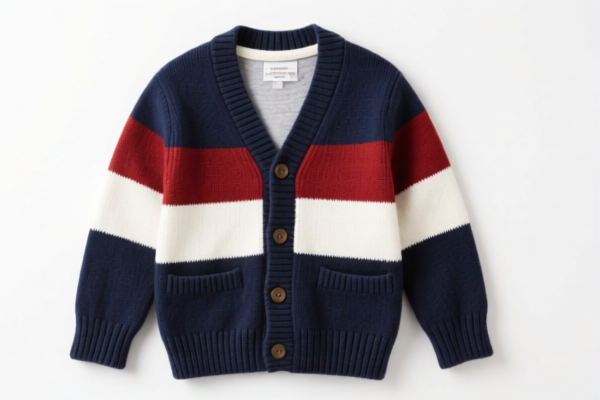
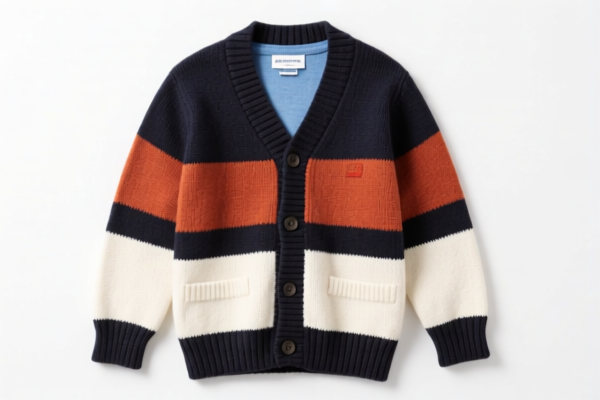
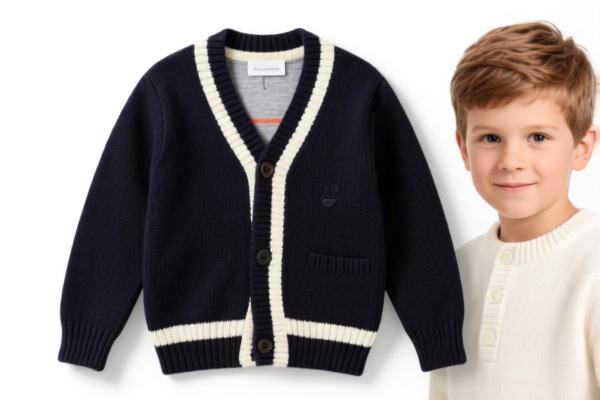
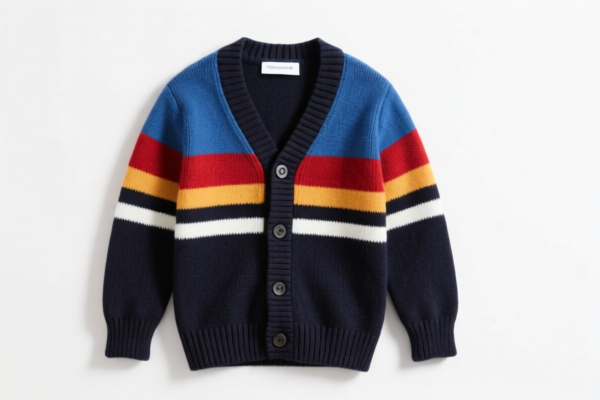
AI Analysis
🧶 Kids Cardigan Sweater: HS Code Classification & Duty Analysis (2026 Edition)
🌐 HS Code Reference & Customs Clearance Guide | 2026 Latest Tariff Analysis | Professional-Level Strategy
📌 I. Product Definition & Classification: Do You Really Know "Kids Cardigan Sweater"?
A kids' cardigan sweater is a knitted or crocheted outer garment for children, characterized by an open front (buttoned, zipped, or pullover style), typically worn over shirts or tops. In international trade, classification depends heavily on:
Knitted vs. Woven: Cardigans are predominantly knitted → Chapter 61.
Material Composition: Synthetic fibers (polyester, acrylic) vs. "Other textile materials" (wool, cotton blends, etc.).
Form Factor: Knitted pullover/knitwear category → Subheading 6110 or 6103.
⚠️ Key Distinction Points:
- If made of synthetic fibers (e.g., polyester), it may fall under 6103.23/29 (knitted men’s/boys’ suits, ensembles, etc.) or 6110 depending on exact structure.
- If made of other textile materials (non-synthetic, non-wool defined elsewhere), it often falls under 6110.90.90 (knitted/crocheted sweaters, pullovers, etc., of other textile materials).
- Children’s wear does NOT automatically get a separate HS code; classification follows material and construction.
📦 II. HS Code Classification Details (2026 Latest Tariff Authoritative Reference)
Based on the provided <DATA>, here are the applicable HS Codes for "kids cardigan sweater":
| HS Code | Product Description | Material | Key Characteristics |
|---|---|---|---|
6103.23.00.70 |
Cardigan sweater, form: knitted pullover, material: inferred as synthetic fiber | Synthetic Fiber | Knitted, open front, synthetic material |
6110.90.90.23 |
Cardigan sweater, form matches knitted/pullover category, material: other textile materials | Other Textile Materials | Knitted/crocheted, not wool/synthetic-defined elsewhere |
6110.90.90.41 |
Cardigan sweater, form: knitted/crocheted, use: sweater type, material: other textile materials | Other Textile Materials | Explicitly identified as sweater-type knitwear |
6110.90.90.41 |
Cardigan sweater, form: knitted or crocheted, use: sweater type, material: other textile materials | Other Textile Materials | Alternative description for same code |
6103.29.20.74 |
Cardigan sweater, form: sweater/knitwear, material: other textile materials | Other Textile Materials | Overlap with 6110 category but classified under 6103 due to specific form |
🔍 Important Notes:
- Two distinct tariff treatment groups exist:
1. Group A (Synthetic/6103.23/29): Lower base duty, but subject to same additional duties.
2. Group B (Other Textile Materials/6110.90.90): Base duty of 6.0%, plus additional duties.
- Children’s status does not exempt from additional tariffs; material and construction dictate classification.
💰 III. 2026 Latest Tariff Rate Breakdown (Including Additional Duties & Policy Surcharges)
✅ Applicable Country: United States (US)
✅ Country of Origin: China (CN)
✅ Effective Date: From 2025-11-10 onwards (including subsequent imports)
🎯 1. HS Code: 6103.23.00.70 —— Cardigan Sweater, Synthetic Fiber
| Item | Content |
|---|---|
| Base Tariff Rate | "The rate applicable to each garment in the ensemble if separately classified" (typically low, e.g., 0–8% depending on exact synthetic type) |
| Additional Duty (Section 301) | +7.5% |
| Section 122 Tariff | +10% |
| Total Tariff | Base Rate + 17.5% (e.g., if base is 8%, total = 25.5%; if base is 0%, total = 17.5%) |
| Tax Calculation | CIF Value × (Base Rate + 17.5%) |
| De Minimis Eligibility | ❌ Not Eligible (Section 122 and 301 duties apply) |
| Legal Basis Path | Section 301 → Section 122 → USITC Tariff Schedule |
📌 Explanation:
- "Base Rate": Varies by specific synthetic fiber (e.g., polyester vs. acrylic). Must be confirmed with exact material composition.
- "Section 301 Duty (7.5%)": Standard USITC additional duty on Chinese-origin knitwear.
- "Section 122 Duty (10%)": Additional tariff under US Trade Act Section 122, applied to specific textile categories.
- Total Effective Rate: High, depends on base rate. Example: If base is 8%, total = 25.5%.
🎯 2. HS Codes: 6110.90.90.23 & 6110.90.90.41 —— Cardigan Sweater, Other Textile Materials
| Item | Content |
|---|---|
| Base Tariff Rate | 6.0% |
| Additional Duty (Section 301) | +7.5% |
| Section 122 Tariff | +10% |
| Total Tariff | 23.5% |
| Tax Calculation | CIF Value × 23.5% |
| De Minimis Eligibility | ❌ Not Eligible (Section 122 and 301 duties apply) |
| Legal Basis Path | Section 301 → Section 122 → USITC:6110.90.90.23/41 → FOOTNOTE:9903.xxxx |
📌 Explanation:
- "Base Rate 6.0%": Standard MFN rate for "other textile material" knitted sweaters.
- "Section 301 Duty (7.5%)": Standard additional duty.
- "Section 122 Duty (10%)": Fixed 10% surcharge.
- Total Fixed Rate: 23.5% – Predictable and consistent across both sub-codes.
🎯 3. HS Code: 6103.29.20.74 —— Cardigan Sweater, Other Textile Materials (Under 6103 Category)
| Item | Content |
|---|---|
| Base Tariff Rate | "The rate applicable to each garment in the ensemble if separately classified" (typically 6–8%) |
| Additional Duty (Section 301) | +7.5% |
| Section 122 Tariff | +10% |
| Total Tariff | Base Rate + 17.5% |
| Tax Calculation | CIF Value × (Base Rate + 17.5%) |
| De Minimis Eligibility | ❌ Not Eligible |
| Legal Basis Path | Section 301 → Section 122 → USITC Tariff Schedule |
📌 Note:
- Despite being under 6103 (usually for men’s/boys’ suits), this code applies to cardigans classified as "other textile materials."
- Total Rate mirrors Group A: Base + 17.5%.
🛠️ IV. Customs Clearance Practical Advice (Battle-Tested Pitfall Avoidance Guide)
✅ 1. Required Documentation Checklist (None Can Be Missing)
| Document | Mandatory | Notes |
|---|---|---|
| ✅ Product Specification Sheet | ✔️ | Include: Material composition (e.g., 100% Polyester, 60% Cotton/40% Acrylic), size range, weight |
| ✅ Material Certification | ✔️ | Third-party lab report confirming fiber content (critical for 6103 vs. 6110 distinction) |
| ✅ Product Photos (Clear Label) | ✔️ | Show front/back, buttons/zippers, label with care instructions |
| ✅ Commercial Invoice | ✔️ | Clearly state: "Kids Cardigan Sweater, Knitted, [Material], Origin: China" |
| ✅ Packing List | ✔️ | Detail quantity per carton, gross/net weight |
| ✅ Origin Certificate (CO) | ✔️ | Required for duty calculation; must show China origin |
✅ 2. Declaration Tips (Key Mnemonic)
🔥 “Material Dictates Code, Synthetic vs. Other, 6103 or 6110, Tax Difference No More!”
| Scenario | Correct Declaration | Wrong Practice |
|---|---|---|
| 100% Polyester Cardigan | 6103.23.00.70 |
Misdeclare as 6110 → Overpay base duty |
| Cotton/Acrylic Blend | 6110.90.90.23 or 6110.90.90.41 |
Misdeclare as 6103 → Incorrect classification |
| Mixed Pack (Synthetic + Other) | Declare separately by material | Mixed declaration → Customs seizure & audit |
| OEM Custom Cardigan | Provide design specs + material proof | Vague description "Sweater" → Classification delay |
✅ 3. Special Cases Handling
| Case | Handling Advice |
|---|---|
| OEM Custom Kids Cardigan | Provide customer order + material test report. Avoid generic descriptions. |
| Cardigan with Hood | Still classified as sweater if primary function is knitwear. Do not declare as "hoodie" if structure differs. |
| Children’s Size vs. Adult Size | Size does NOT change HS code. Material and construction are key. |
| Sample Shipment | Same duties apply. Do not assume "samples" are exempt from Section 122/301. |
🌍 V. Global Market Customs Comparison (2026 Latest)
| Country/Region | Recommended HS Code | Tariff Rate (China Origin) | Certification Requirements | Notes |
|---|---|---|---|---|
| 🇺🇸 United States | 6103.23.00.70 or 6110.90.90.23/41 |
23.5%–25.5% | CPSIA, ASTM F963, Prop 65 | Highest duty among major markets |
| 🇨🇳 China | 6103.23.00.70 or 6110.90.90.23 |
0–8% (Import Duty) | CCC (if applicable) | No Section 301/122 |
| 🇪🇺 European Union | 6110.20.00 (Wool) or 6110.90 |
0–12% | CE, REACH, EN 71 | No additional US-style tariffs |
| 🇬🇧 United Kingdom | 6110.20.00 or 6110.90 |
0–12% | UKCA, REACH | Post-Brexit, aligns with EU mostly |
| 🇯🇵 Japan | 6110.30.00 (Synthetic) or 6110.90 |
0–15% | PSE (if electronics embedded) | No additional surcharges |
📌 Conclusion:
- United States is the MOST expensive market for kids' cardigan sweaters due to Section 301 + Section 122 duties.
- EU, UK, Japan offer significantly lower duty rates (0–15% vs. 23.5–25.5%).
- Strategy: Consider transshipment from Vietnam/Mexico (if eligible) to avoid US additional tariffs, but ensure substantial transformation to comply with Rules of Origin.
📌 VI. Common Mistakes & Pitfall Avoidance (Blood-Teach Lessons)
❌ Mistake 1: Declaring "Kids Sweater" without specifying material composition
👉 Consequence: Customs cannot determine 6103 vs. 6110 → Classification delay + Potential reclassification + Penalties
❌ Mistake 2: Assuming "Children’s wear" gets tariff exemption
👉 Consequence: No exemption for Section 301/122 duties → Unexpected high taxes
❌ Mistake 3: Mixing synthetic and other-material cardigans in one shipment without separate declaration
👉 Consequence: Customs may audit entire shipment → Delay + Storage fees + Possible seizure
❌ Mistake 4: Using vague terms like "Knitwear" or "Jumper" without "Cardigan" specification
👉 Consequence: Misclassification under 6110.90.90 (higher base) or 6103.29 (lower base) → Tariff discrepancy
✅ Correct Declaration Example:
"Kids Cardigan Sweater, Knitted, Open Front with Buttons, 100% Acrylic, Size 2T-8T, Origin: China, Model: KS-2026"
🎯 VII. Conclusion: Precise Classification, Save Time, Reduce Costs!
🎯 Remember the Mnemonic:
🔹 "Material Defines Code, Synthetic 6103, Other 6110, Base + 17.5% vs. Fixed 23.5%, Declaration Must Be Clear!"
🔹 "HS Code Determines Fate, Duty Difference 25%, Declaration One Step Wrong, Tax Bill Skyrockets!"
📌 Pro Tips:
- If your kids' cardigan sweaters are originally manufactured in Vietnam, Mexico, or Thailand, you may apply for IEEPA/Section 301 Exemption (if eligible), reducing rates to 0–5%.
- Recommendation: Apply for a Binding Tariff Information (BTI) or Advance Ruling from US CBP before bulk shipment to lock in classification and duty rate.
- Supply Chain Optimization: For US-bound goods, consider assembly or finishing in a non-China country to qualify for Rules of Origin benefits.
📣 Immediate Action Required:
📞 Engage a Professional Customs Broker + Provide Product Photos & Material Report + Apply for HS Code Advance Ruling
🚀 Ensure your kids' cardigan sweaters clear customs smoothly, efficient global shipping, profit maximization!
✨ Professional Customs Clearance Starts with Accurate Classification!
💼 Every Cent of Your Cost Deserves Precision Calculation!
Customer Reviews
About HS Code Classification
The Harmonized System (HS) is an internationally standardized nomenclature developed by the World Customs Organization (WCO) to classify traded products. Over 200 countries use the HS system as the basis for customs tariffs, trade statistics, and import/export regulations.
Each HS code follows a hierarchical structure:
- Chapter (2 digits) — Broad category of goods (e.g., Chapter 84: Machinery and Mechanical Appliances)
- Heading (4 digits) — More specific grouping within the chapter
- Subheading (6 digits) — Internationally standardized breakdown, used by all WCO member countries
- National subdivisions (8-10 digits) — Country-specific extensions for further classification, such as US HTSUS 10-digit codes
Correct HS code classification is essential for smooth customs clearance, accurate duty payment, and compliance with trade regulations. Misclassification can lead to customs delays, overpayment of duties, or penalties.
When importing from CN to US, the applicable tariff rates may include:
- Most-Favored-Nation (MFN) rate — The standard duty rate applied to WTO members
- General rate — Applied to countries without trade agreements
- Trade remedy duties — Additional tariffs such as Section 301 (anti-dumping), Section 232 (national security), or countervailing duties
The information provided on this page is for reference purposes only. For official classification, please consult with your local customs authority or a licensed customs broker.