kids casual outfits
CN → US| HS Code | Tariff Rate | Origin | Destination | Doc |
|---|---|---|---|---|
| 6209303020 | 33.5% | CN | US | Official Doc |
| 6209205035 | 26.8% | CN | US | Official Doc |
| 6111305020 | 33.5% | CN | US | Official Doc |
| 6109100014 | 34.0% | CN | US | Official Doc |
| 6111206020 | 25.6% | CN | US | Official Doc |
| 6203223010 | 0.0% | CN | US | Official Doc |
Product Images


AI Analysis
👶🎒 Kids’ Casual Outfits: HS Code Classification, Tax Analysis & Customs Clearance Strategy
🌐 HS Code Reference & Customs Guide | 2026 Latest Tariff Rules | Professional Clearance Strategy
📌 1. Product Definition & Classification: Do You Really Understand “Kids’ Casual Outfits”?
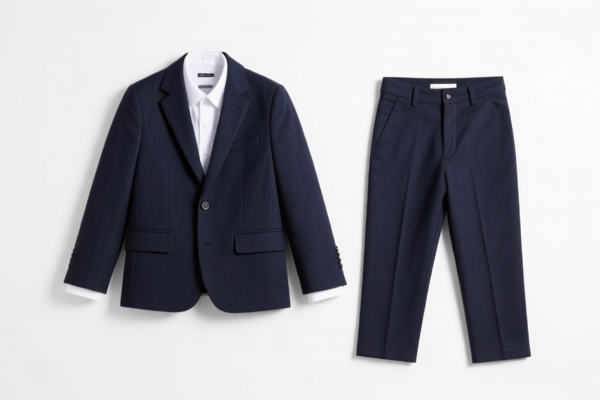
In international trade, “kids’ casual outfits” refer to coordinated clothing sets designed for children, typically including tops (shirts, T-shirts, sweaters) and bottoms (pants, shorts, skirts). These are distinct from formal wear or sportswear and are classified based on:
- Material composition: Cotton, synthetic fibers (polyester, nylon), wool, or blended fibers
- Knitting vs. Woven: Whether the fabric is knitted/knitted-knit or woven
- Gender specificity: Unisex, boys’, or girls’ styles
⚠️ Key Classification Criteria:
- If the outfit consists of separate garments sold as a set but can be worn independently, each item may be assessed separately for tariff purposes.
- If the items are physically connected (e.g., jumpsuits, overalls), they are classified as a single ensemble.
- Knitted/knitwear falls under Chapter 61, while woven fabrics fall under Chapter 62.
📦 2. HS Code Classification Details (2026 Latest Tariff Authority Cross-Reference)
| HS Code | Product Description | Material Inference | Total Tax Rate | Tax Breakdown |
|---|---|---|---|---|
6209.30.30.20 |
Children’s woven outfits, synthetic fiber | Synthetic fibers (polyester/nylon) | 33.5% | Base: 16.0%, Section 301: 7.5%, Section 122: 10% |
6209.20.50.35 |
Children’s woven outfits, cotton or other fibers | Cotton or other natural/synthetic blends | 26.8% | Base: 9.3%, Section 301: 7.5%, Section 122: 10% |
6111.30.50.20 |
Children’s knitted/knit outfits, synthetic fiber | Synthetic fibers | 33.5% | Base: 16.0%, Section 301: 7.5%, Section 122: 10% |
6109.10.00.14 |
Children’s knitted/knit outfits, unspecified material | Likely synthetic or blend | 34.0% | Base: 16.5%, Section 301: 7.5%, Section 122: 10% |
6111.20.60.20 |
Children’s knitted/knit outfits, cotton | Cotton | 25.6% | Base: 8.1%, Section 301: 7.5%, Section 122: 10% |
6203.22.30.10 |
100% Cotton Boys’ Casual Woven Outfits | 100% Cotton | Rate applicable per garment + 17.5% | Base: Rate per garment if separated, Section 301: 7.5%, Section 122: 10% |
🔍 Critical Notes:
- Chapter 61 (Knitted/Knit): Generally lower base rates for cotton (e.g., 8.1% for6111.20.60.20) compared to synthetic fibers (16.0–16.5%).
- Chapter 62 (Woven): Synthetic fiber sets (6209.30.30.20) incur higher base rates (16.0%) than cotton sets (6209.20.50.35, 9.3%).
- Ensemble Rule: If items are sold as a set but can be worn separately (e.g., shirt + pants), Customs may assess each garment individually, potentially triggering separate tax calculations.
💰 3. 2026 Latest Tariff Rate Details (Including Surtaxes & Policy Add-ons)
✅ Applicable Country: United States (US)
✅ Origin: China (CN)
✅ Effective Date: November 10, 2025 onward
🎯 1. Synthetic Fiber Sets (6209.30.30.20 / 6111.30.50.20)
- Base Tariff: 16.0% (Section 9903.88.01)
- Section 301 Surtax: +7.5%
- Section 122 Tariff: +10%
- Total Rate: 33.5%
- Legal Basis:
IEEPA:9903.01.25→USITC:6209.30.30.20→FOOTNOTE:9903.88.01
🎯 2. Cotton Sets (6209.20.50.35 / 6111.20.60.20)
- Base Tariff: 9.3% (cotton woven) / 8.1% (cotton knit)
- Section 301 Surtax: +7.5%
- Section 122 Tariff: +10%
- Total Rate: 26.8% (woven) / 25.6% (knit)
- Legal Basis:
IEEPA:9901.25→USITC:6209.20.50.35→FOOTNOTE:9903.88.01
🎯 3. Boys’ 100% Cotton Sets (6203.22.30.10)
- Base Tariff: Variable – depends on individual garment rates if separated
- Section 301 Surtax: +7.5%
- Section 122 Tariff: +10%
- Total Rate: Rate per garment + 17.5%
- Note: If items are classified separately, the base rate may differ per garment (e.g., shirt vs. pants).
📌 Key Insight:
- Cotton products enjoy lower base tariffs than synthetics due to historical preferential treatment.
- Knitted items often have slightly lower base rates than woven equivalents.
- Section 122 (10%) applies uniformly to all apparel imports from China, regardless of material.
🛠️ 4. Customs Clearance Practical Advice (Real-World Pitfall Guide)
✅ 1. Documentation Checklist (Mandatory)
| Document | Required? | Purpose |
|---|---|---|
| Product Specification Sheet | ✔️ | Details material composition, knit/weave type, garment structure |
| Fabric Composition Certificate | ✔️ | Proves % of cotton, polyester, etc. |
| Product Photos (Label + Item) | ✔️ | Shows tags, seams, and whether items are connected |
| Commercial Invoice | ✔️ | Must specify “Children’s Casual Outfit Set” and item count |
| Packing List | ✔️ | Clarifies if items are bundled or separate |
| Third-Party Test Report | ✔️ | Oeko-Tex, CPSIA (US-specific safety compliance) |
✅ 2. Declaration Best Practices (Pro Tips)
🔥 “Separate = Separate Tax; Connected = Single Tax!”
| Scenario | Correct Declaration | Mistake to Avoid |
|---|---|---|
| Shirt + Pants sold together but worn separately | Declare as two separate items if possible | Bundle as one → may trigger ensemble rule penalties |
| Jumpsuit/Overall (physically connected) | Declare as one item under appropriate HS | Split into top/bottom → misclassification |
| Knitted vs. Woven confusion | Specify “Knitted Cotton” or “Woven Polyester” | Vague description → delays + audits |
✅ 3. Special Cases
- OEM/Private Label: Provide design approval letters to prove origin.
- CPSIA Compliance: All children’s apparel must meet US safety standards (lead, phthalates). Non-compliance = rejection.
- Seasonal Variations: Ensure material description matches actual shipment (e.g., summer polyester vs. winter fleece).
🌍 5. Global Market Clearance Comparison (2026)
| Country/Region | Recommended HS Code | Tariff Rate | Certification Requirement | Notes |
|---|---|---|---|---|
| 🇺🇸 USA | 6111.20.60.20 (knit cotton) |
25.6% | CPSIA + Oeko-Tex | Highest total tax due to Section 122 |
| 🇪🇺 EU | 6111.20.60.20 |
0% | REACH + CE | No additional surtaxes |
| 🇬🇧 UK | 6111.20.60.20 |
6.5% | UKCA | Post-Brexit tariffs apply |
| 🇨🇦 Canada | 6111.20.60.20 |
17% | CBSA Compliance | No Section 301 equivalent |
| 🇯🇵 Japan | 6111.20.60.20 |
16% | JIS Standards | Moderate rates, no surtaxes |
📌 Conclusion:
- The US has the highest effective tariff for Chinese-origin kids’ apparel due to Section 301 (7.5%) + Section 122 (10%).
- EU/UK/Japan offer significantly lower costs, making them preferable for export diversification.
📌 6. Common Mistakes & Pitfalls (Lessons Learned)
❌ Mistake 1: Declaring a knitted outfit as “woven” to avoid higher taxes
👉 Consequence: Customs reclassification → 33.5% instead of 25.6% → 7.9% penalty + delay
❌ Mistake 2: Failing to specify material composition
👉 Consequence: Customs assumes worst-case (synthetic) → 33.5% applied automatically
❌ Mistake 3: Ignoring CPSIA requirements
👉 Consequence: Product seizure + fines ($10,000+ per violation)
❌ Mistake 4: Bundling disconnected items as one “set”
👉 Consequence: Audit risk → individual item assessment → higher total tax
✅ Best Practice Declaration Example:
“Children’s Casual Outfit Set, 100% Cotton, Knitted, Unisex, Ages 2–5, CPSIA Compliant, Model XYZ”
🎯 7. Conclusion: Precision Classification Saves Money!
🎯 Key Takeaways:
🔹 Cotton > Synthetic: Lower base tariffs.
🔹 Knit vs. Woven: Knit often cheaper.
🔹 Separate = Separate Tax: Avoid ensemble rule traps.
🔹 CPSIA is Mandatory: No exception for US imports.
📌 Pro Tip:
If your children’s outfits are originating from Vietnam, Bangladesh, or Indonesia, you may qualify for IEEPA exemptions, reducing total tax to 0–5%. Always verify origin certificates!
📣 Action Step:
📞 Engage a licensed customs broker + Provide fabric test reports + Apply for Advance Ruling
🚀 Streamline clearance, reduce costs, and scale your kids’ apparel business globally!
✨ Professional clearance starts with accurate classification!
💼 Every percentage point saved is pure profit!
Customer Reviews
About HS Code Classification
The Harmonized System (HS) is an internationally standardized nomenclature developed by the World Customs Organization (WCO) to classify traded products. Over 200 countries use the HS system as the basis for customs tariffs, trade statistics, and import/export regulations.
Each HS code follows a hierarchical structure:
- Chapter (2 digits) — Broad category of goods (e.g., Chapter 84: Machinery and Mechanical Appliances)
- Heading (4 digits) — More specific grouping within the chapter
- Subheading (6 digits) — Internationally standardized breakdown, used by all WCO member countries
- National subdivisions (8-10 digits) — Country-specific extensions for further classification, such as US HTSUS 10-digit codes
Correct HS code classification is essential for smooth customs clearance, accurate duty payment, and compliance with trade regulations. Misclassification can lead to customs delays, overpayment of duties, or penalties.
When importing from CN to US, the applicable tariff rates may include:
- Most-Favored-Nation (MFN) rate — The standard duty rate applied to WTO members
- General rate — Applied to countries without trade agreements
- Trade remedy duties — Additional tariffs such as Section 301 (anti-dumping), Section 232 (national security), or countervailing duties
The information provided on this page is for reference purposes only. For official classification, please consult with your local customs authority or a licensed customs broker.