kitchen tools: slicer
CN → US| HS Code | Tariff Rate | Origin | Destination | Doc |
|---|---|---|---|---|
| 8205517500 | 38.7% | CN | US | Official Doc |
| 8210000000 | 38.7% | CN | US | Official Doc |
| 3924104000 | 13.4% | CN | US | Official Doc |
| 8205513030 | 38.7% | CN | US | Official Doc |
| 3924103000 | 22.8% | CN | US | Official Doc |
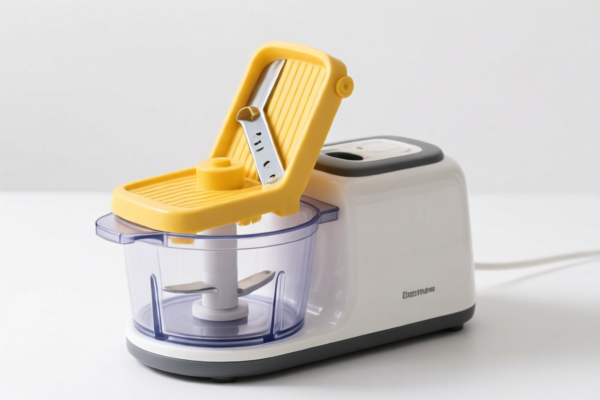
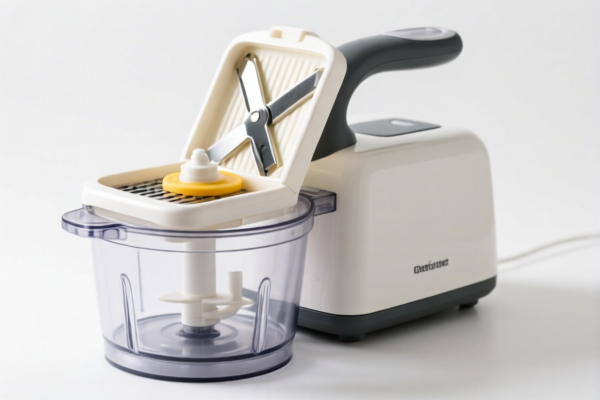
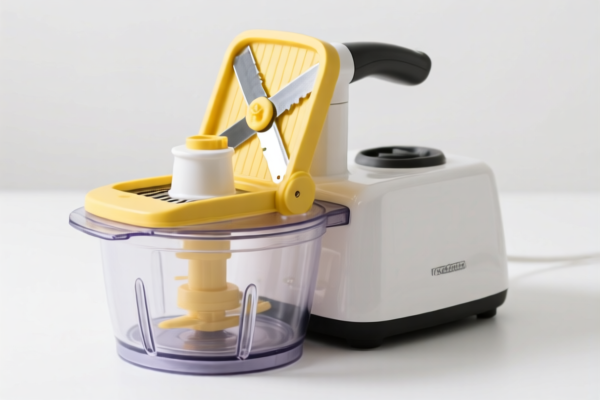
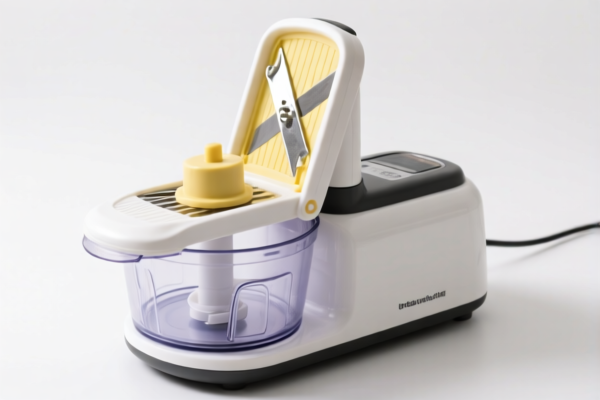
Product Images
AI Analysis
🔪 Slicer (Kitchen Tools)
Classification Guide & Customs Clearance Strategy | 2026 Harmonized System Analysis
🌐 HS Code Reference & Customs Strategy | Latest Tariff Analysis for 2026
📌 I. Product Definition & Classification: What Exactly is a "Slicer"?
In international trade, the term "Slicer" is ambiguous. It falls under different Harmonized System (HS) codes depending on three critical factors: 1. Material (Metal vs. Plastic) 2. Function (General kitchen use vs. Food preparation machinery) 3. Structure (Hand tool vs. Mechanical device)
Misclassification leads to massive tariff penalties (up to 38.7% vs. 13.4%). Below is the authoritative breakdown based on US customs data.
⚠️ Key Distinction Point:
- If it is made of Plastic and is a simple hand tool → Chapter 39 (Lower Tax!)
- If it is made of Metal (Iron/Steel) → Chapter 82 (High Tax!)
- If it is a Mechanical Food Prep Device → Chapter 82 (High Tax!)
📦 II. HS Code Classification Matrix (2026 Latest Data)
| HS Code | Product Description | Material | Key Features | Total Tax Rate (US/CN) |
|---|---|---|---|---|
3924.10.40.00 |
Plastic Kitchen Slicer | Plastic | Hand-held, non-mechanical, for slicing fruits/veg | 13.4% ✅ Best Case |
3924.10.30.00 |
Plastic Kitchen Utensil | Plastic | General plastic kitchenware, may include slicer parts | 22.8% |
8205.51.75.00 |
Metal Hand Slicer | Iron/Steel | Hand tool, shaped as a slicer, for kitchen use | 38.7% ⚠️ High Risk |
8210.00.00.00 |
Manual Food Prep Tool | Metal | Manual mechanical器具 for food prep (includes slicers) | 38.7% ⚠️ High Risk |
8205.51.30.30 |
Metal Kitchen Tool | Iron/Steel | General metal kitchen tool, specifically iron/steel | 38.7% ⚠️ High Risk |
🔍 Critical Insight:
- Plastic vs. Metal is the #1 Driver of Cost:
- Plastic slicers (3924.10.40.00) attract a 13.4% total tax.
- Metal slicers (8205.51.75.00,8210.00.00.00) attract a 38.7% total tax.
- Difference: 25.3% extra cost if misclassified as metal!
💰 III. 2026 Tariff Breakdown (Detailed Tax Clauses)
✅ Applicable Country: United States (US)
✅ Origin: China (CN)
✅ Effective Date: Post-2025 (Includes Section 301 & IEEPA measures)
🎯 1. 3924.10.40.00 – Plastic Kitchen Slicer 🥇 Lowest Tax
| Item | Detail |
|---|---|
| Base Duty | 3.4% |
| Section 301 (Add-on) | 0.0% (Plastic kitchenware often exempt from 25% tariff) |
| IEEPA Section 122 | +10% |
| Total Tax Rate | 13.4% |
| Calculation | CIF Value × 13.4% |
| Legal Basis | HTSUS:3924.10.40.00 + IEEPA:122 |
📌 Why it's cheaper:
- Plastic kitchen utensils are exempt from the 25% Section 301 tariff.
- Only the 10% IEEPA surcharge applies.
- Savings: Compare this to metal slicers which add 25% + 10%.
🎯 2. 3924.10.30.00 – Plastic Kitchen Utensil
| Item | Detail |
|---|---|
| Base Duty | 5.3% |
| Section 301 (Add-on) | +7.5% |
| IEEPA Section 122 | +10% |
| Total Tax Rate | 22.8% |
| Calculation | CIF Value × 22.8% |
📌 Note:
- Slightly higher base rate (5.3%) and a small 7.5% add-on compared to3924.10.40.00.
- Use this if the item is a "general utensil" but not specifically a "slicer" in naming.
🎯 3. 8205.51.75.00 & 8205.51.30.30 & 8210.00.00.00 – Metal Slicers/Tools 🚫 Highest Tax
| Item | Detail |
|---|---|
| Base Duty | 3.7% |
| Section 301 (Add-on) | +25.0% |
| IEEPA Section 122 | +10% |
| Total Tax Rate | 38.7% |
| Calculation | CIF Value × 38.7% |
| Legal Basis | HTSUS:8205/8210 + Section 301 + IEEPA:122 |
📌 Why it's expensive:
- 25% Section 301 Tariff applies to most metal kitchen tools from China.
- 10% IEEPA Surcharge applies additionally.
- Base Duty is low (3.7%), but the 25% add-on is the killer.
🛠️ IV. Customs Clearance Practical Advice (Pitfall Avoidance)
✅ 1. Material Declaration is Critical
| Scenario | Correct HS Code | Risk of Misclassification |
|---|---|---|
| Plastic Slicer | 3924.10.40.00 |
If declared as "Metal" → Tax jumps from 13.4% to 38.7% |
| Metal Slicer | 8205.51.75.00 |
If declared as "Plastic" → Penalty + Back Taxes |
| Mixed Material | Depends on dominant component | Must declare material composition accurately |
✅ 2. Naming & Description Strategy
🔥 Golden Rule:
- For Plastic: Use keywords like "Plastic Kitchen Slicer," "Non-metal Vegetable Cutter," "PP/PE Slicer."
- For Metal: Use "Stainless Steel Kitchen Tool," "Iron Slicer," "Manual Food Prep Device."
| Wrong Description | Right Description | Impact |
|---|---|---|
| "Kitchen Slicer" (Vague) | "Plastic Kitchen Slicer, PP Material" | Avoids ambiguity, lowers risk |
| "Metal Tool" | "Iron Slicer, Manual" | Correctly triggers 38.7% but avoids fraud suspicion |
| "Food Cutter" | "Manual Food Prep Device (Metal)" | Aligns with 8210.00.00.00 |
✅ 3. Documentation Requirements
| Document | Requirement |
|---|---|
| Product Photo | Must clearly show material (plastic vs. metal) |
| Spec Sheet | List material composition (e.g., "Body: PP Plastic, Blade: Stainless Steel") |
| Commercial Invoice | Use precise HS Code description, not generic "Kitchen Tool" |
🌍 V. Global Market Comparison (2026)
| Market | Recommended HS Code | Total Tax (China Origin) | Notes |
|---|---|---|---|
| 🇺🇸 USA | 3924.10.40.00 (Plastic) |
13.4% | Best for plastic slicers |
| 🇺🇸 USA | 8205.51.75.00 (Metal) |
38.7% | High tax due to Section 301 |
| 🇪🇺 EU | 8205.51.00 |
~5-12% | No Section 301, lower base duty |
| 🇨🇳 China | 8205.51.00 |
~5-10% | Import duty only, no US add-ons |
📌 Conclusion:
- USA Market is Hardest for Metal Kitchen Tools due to 25%+10% tariffs.
- Plastic Slicers are Highly Competitive in the US due to lower tax (13.4%).
- Strategy: If possible, shift production to Plastic or Non-Chinese Origins to avoid 38.7% tax.
📌 VI. Common Mistakes & Lessons Learned
❌ Mistake 1: Declaring a Metal Slicer as a Plastic Slicer
👉 Consequence: Customs audit reveals discrepancy → Back taxes + 25% penalty + 10% IEEPA → Total liability could triple!
❌ Mistake 2: Using vague term "Kitchen Tool"
👉 Consequence: Customs may assign highest duty code (8210.00.00.00 → 38.7%) due to uncertainty.
❌ Mistake 3: Ignoring IEEPA Section 122
👉 Consequence: Underestimating cost by 10% on all items, including plastics.
✅ Best Practice:
"Clearly state Material + Function + HS Code."
Example:
"Plastic Kitchen Slicer, PP Material, Model XYZ, HS 3924.10.40.00"
🎯 VII. Final Recommendation
- If your slicer is Plastic:
- Use HS Code
3924.10.40.00 - Total Tax: 13.4%
-
✅ Lowest Cost Option
-
If your slicer is Metal:
- Use HS Code
8205.51.75.00or8210.00.00.00 - Total Tax: 38.7%
-
⚠️ High Cost Option – Consider pricing strategy or alternative materials.
-
Always Verify Material:
- A small metal blade on a plastic handle? Still likely Plastic Category if the handle/body is plastic and it's a hand tool. Consult a customs broker for mixed-material items.
📌 Pro Tip:
For Plastic Slicers, ensure the description explicitly says "Plastic" to avoid being downgraded to Metal categories.
For Metal Slicers, prepare for 38.7% tax and factor it into your FOB/CIF pricing.
✨ Precision Classification Saves Money!
💼 13.4% vs. 38.7% – That’s a 25% difference on every dollar sold!
Customer Reviews
About HS Code Classification
The Harmonized System (HS) is an internationally standardized nomenclature developed by the World Customs Organization (WCO) to classify traded products. Over 200 countries use the HS system as the basis for customs tariffs, trade statistics, and import/export regulations.
Each HS code follows a hierarchical structure:
- Chapter (2 digits) — Broad category of goods (e.g., Chapter 84: Machinery and Mechanical Appliances)
- Heading (4 digits) — More specific grouping within the chapter
- Subheading (6 digits) — Internationally standardized breakdown, used by all WCO member countries
- National subdivisions (8-10 digits) — Country-specific extensions for further classification, such as US HTSUS 10-digit codes
Correct HS code classification is essential for smooth customs clearance, accurate duty payment, and compliance with trade regulations. Misclassification can lead to customs delays, overpayment of duties, or penalties.
When importing from CN to US, the applicable tariff rates may include:
- Most-Favored-Nation (MFN) rate — The standard duty rate applied to WTO members
- General rate — Applied to countries without trade agreements
- Trade remedy duties — Additional tariffs such as Section 301 (anti-dumping), Section 232 (national security), or countervailing duties
The information provided on this page is for reference purposes only. For official classification, please consult with your local customs authority or a licensed customs broker.