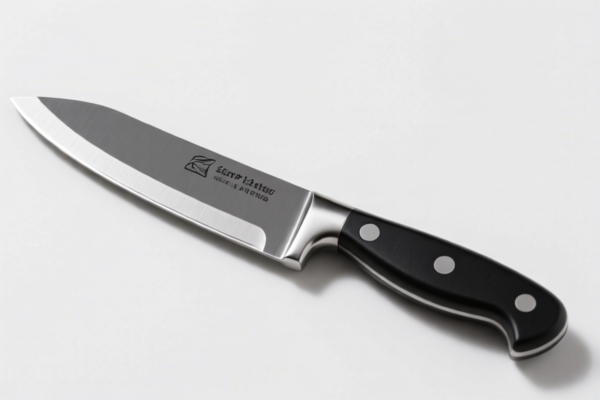
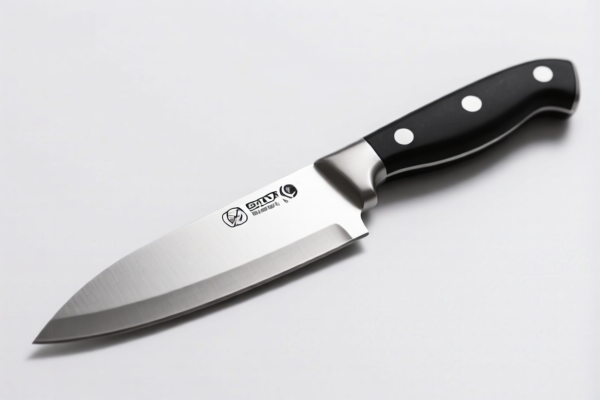
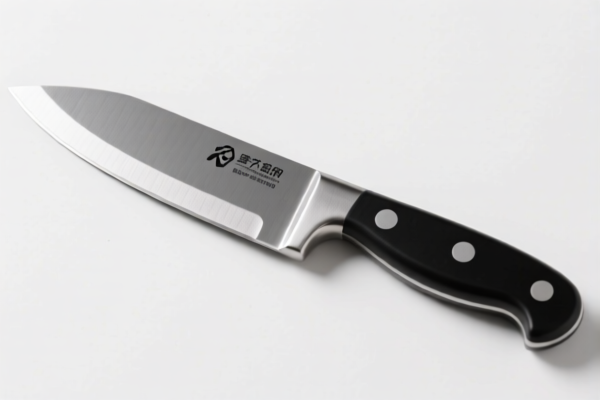
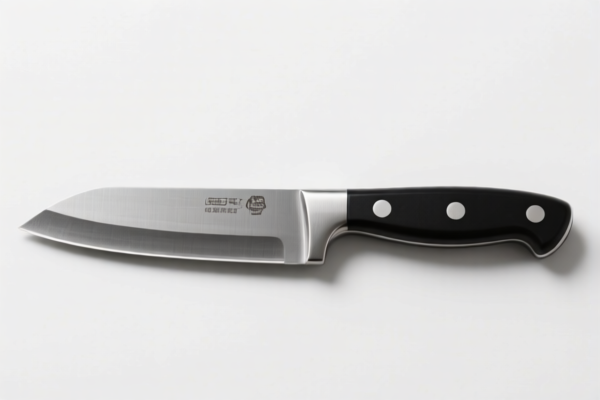
knife with cutting blade
CN → US| HS Code | Tariff Rate | Origin | Destination | Doc |
|---|---|---|---|---|
| 8208906000 | 35.0% | CN | US | Official Doc |
| 8212200010 | 17.5% | CN | US | Official Doc |
| 8211945000 | 0.0% | CN | US | Official Doc |
| 8208100060 | 35.0% | CN | US | Official Doc |
| 8211941000 | 0.0% | CN | US | Official Doc |
Product Images
AI Analysis
🔪 Knife with Cutting Blade (Industrial & Commercial Knives)
🌐 HS Code Reference & Customs Clearance Guide | 2026 Latest Tariff Analysis | Professional Clearance Strategy
📌 I. Product Definition & Classification: What Exactly Is a "Knife with Cutting Blade"?
In international trade, the term "Knife with Cutting Blade" is ambiguous and highly dependent on specific use, material, and physical form. It generally falls under Chapter 82: Tools, Implements, Cutlery, Spoons and Forks of Base Metal; Parts Thereof.
However, misclassification can lead to massive tariff discrepancies (from 0% to 35%+). Key distinctions include:
1. Industrial Cutting Blades (8208 Series):
- Long, continuous blades or flat sheets for machinery (e.g., agricultural knives, industrial guillotine blades).
- Not hand-held kitchen knives.
2. Manual Cutlery/Knives (8211 Series):
- Hand-held knives with fixed blades (e.g., table knives, butcher knives, kitchen knives).
- Includes parts (blades) if classified separately under specific subheadings.
3. Safety/Razor Blades (8212 Series):
- Shaving blades, razor blades, or safety razor blades.
- Distinct from general-purpose cutting knives.
⚠️ Critical Distinction:
- If it is a continuous blade for machinery → 8208
- If it is a hand-held knife → 8211
- If it is a shaving/razor blade → 8212
- Note: "Knife" alone is too vague. Specify "Industrial," "Kitchen," or "Razor" to avoid duty pitfalls.
📦 II. HS Code Classification Details (2026 Latest Tariff Authority Comparison)
Based on the provided data, here are the 5 potential HS Codes for "Knife with Cutting Blade" with their specific summaries and tax implications.
| HS Code | Product Description & Summary | Matching Criteria | Total Tax Rate (China Origin → US) |
|---|---|---|---|
8208.90.60.00 |
Industrial/General Cutting Blades Matches form & use as a knife/cutting blade. Inferred as metal. |
Fits "knife and cutting blade" category. General metal material assumption. | 35.0% |
8212.20.00.10 |
Razor/Shaving Blades Matches form & use as shaving blades. Inferred as metal. Fits "other" category fallback. |
Specific to shaving/razor use. | 17.5% |
8211.94.50.00 |
Other Manual Cutlery Parts/Blades Form matches leaf/knife type. Inferred as base metal parts. |
Fits "other base metal parts" for manual knives. | 1¢ each + 5.4% + 35.0% |
8208.10.00.60 |
Specific Industrial Cutting Blades Matches form & use as cutting blades. Inferred as metal parts. |
Fits "base metal parts" rule for industrial knives. | 35.0% |
8211.94.10.00 |
Other Manual Cutlery Blades Form matches blades exactly. Inferred as base metal. No classification conflict. |
Specific to manual knife blades. | 0.16¢ each + 2.2% + 35.0% |
🔍 Key Insight:
- Industrial Blades (8208) and Manual Knife Parts (8211) attract the highest total tariffs (35%+) due to Section 301 and IEEPA duties.
- Razor Blades (8212) are significantly cheaper (17.5%) but only if explicitly for shaving.
- Per-Unit Fees apply to some 8211 codes, adding complexity to small-item shipments.
💰 III. 2026 Latest Tariff Rate Breakdown (Detailed Tax Clauses)
✅ Applicable Country: United States (US)
✅ Origin: China (CN)
✅ Effective Date: November 10, 2025 (and subsequent imports)
🎯 1. 8208.90.60.00 & 8208.10.00.60 —— Industrial Cutting Blades
| Item | Detail |
|---|---|
| Base Tariff | 0.0% (ad valorem) |
| Section 301 Additional Duty | +25.0% (From USITC Footnote 9903.88.01) |
| IEEPA Additional Duty | +10.0% (Targeting China/HK products, effective Nov 10, 2025) |
| Total Effective Rate | 35.0% |
| Calculation | CIF Value × 35% |
| De Minimis Exemption | ❌ Not Applicable (deny_de_minimis) |
| Legal Path | IEEPA:9903.01.25 → IEEPA:9903.01.24 → USITC:8208 → FOOTNOTE:9903.88.01 |
📌 Explanation:
- These codes cover industrial machinery blades. The 35% rate is a compound of the standard 301 tariff (25%) and the new IEEPA surcharge (10%).
- High Risk: Misclassifying an industrial blade as "general tool" might initially show 0%, but customs will reclassify it, leading to back taxes.
🎯 2. 8212.20.00.10 —— Shaving/Razor Blades
| Item | Detail |
|---|---|
| Base Tariff | 0.0% |
| Section 301 Additional Duty | +7.5% (From USITC Footnote 9903.88.01) |
| IEEPA Additional Duty | +10.0% (Targeting China/HK products) |
| Total Effective Rate | 17.5% |
| Calculation | CIF Value × 17.5% |
| De Minimis Exemption | ❌ Not Applicable (deny_de_minimis) |
| Legal Path | IEEPA:9903.01.24 → USITC:8212.20.00.10 → FOOTNOTE:9903.88.01 |
📌 Note:
- This is the lowest tariff among the options but is strictly limited to shaving blades.
- Using this code for kitchen knives or industrial blades is smuggling/fraud. Customs can seize goods and levy fines.
🎯 3. 8211.94.50.00 —— Manual Knife Parts/Blades (Unit Fee Applicable)
| Item | Detail |
|---|---|
| Base Tariff | 1¢ each + 5.4% (ad valorem) |
| Section 301 Additional Duty | +25.0% |
| IEEPA Additional Duty | +10.0% |
| Total Effective Rate | 1¢ each + 5.4% + 35.0% |
| Calculation | (Count × $0.01) + (CIF Value × 40.4%) |
| De Minimis Exemption | ❌ Not Applicable (deny_de_minimis) |
| Legal Path | IEEPA:9903.01.24 → USITC:8211.94.50.00 → FOOTNOTE:9903.88.01 |
📌 Warning:
- The 1¢ per unit fee makes this code unsuitable for very high-volume, low-value items (e.g., cheap disposable blades) due to administrative burden.
- Total ad valorem burden is 40.4% (5.4% base + 25% + 10%).
🎯 4. 8211.94.10.00 —— Other Manual Cutlery Blades (Low Base + High Total)
| Item | Detail |
|---|---|
| Base Tariff | 0.16¢ each + 2.2% (ad valorem) |
| Section 301 Additional Duty | +25.0% |
| IEEPA Additional Duty | +10.0% |
| Total Effective Rate | 0.16¢ each + 2.2% + 35.0% |
| Calculation | (Count × $0.0016) + (CIF Value × 37.2%) |
| De Minimis Exemption | ❌ Not Applicable (deny_de_minimis) |
| Legal Path | IEEPA:9903.01.24 → USITC:8211.94.10.00 → FOOTNOTE:9903.88.01 |
📌 Note:
- Lower base rate (2.2%) than8211.94.50.00, but still subject to the 35% additional duties.
- Best for higher-value manual knife blades where the per-unit fee is negligible.
🛠️ IV. Customs Clearance Practical Advice (Battle-Tested Pitfall Avoidance)
✅ 1. Required Documentation Checklist (Non-Negotiable)
| Document | Mandatory? | Explanation |
|---|---|---|
| ✅ Product Specification Sheet | ✔️ | Must detail: Material (e.g., High-Speed Steel, Stainless Steel), Length, Thickness, Intended Use (Industrial vs. Manual). |
| ✅ Technical Drawing/Photo | ✔️ | Clear images showing the blade shape. Crucial to distinguish between "Razor" (8212) and "Knife" (8211/8208). |
| ✅ Commercial Invoice | ✔️ | Must accurately describe the item. Avoid vague terms like "Knife." Use "Stainless Steel Industrial Cutting Blade for Packaging Machine." |
| ✅ Certificate of Origin (CO) | ✔️ | Proves China origin. Without it, you may lose preferential claims or face stricter scrutiny. |
| ✅ Packing List | ✔️ | Item count is critical for codes with per-unit duties (8211.94.50.00 / 8211.94.10.00). |
✅ 2. Declaration Strategies (Key Mnemonics)
🔥 "Use Defines Code, Material Defines Duty, Vague Names Trigger Audit!"
| Scenario | Correct Declaration | Wrong Practice | Consequence |
|---|---|---|---|
| Industrial Blade | "High-Speed Steel Cutting Blade for Agricultural Machinery" → 8208.90.60.00 |
"Knife" | Risk of reclassification to 8211 or 8208.10 with different rates. |
| Razor Blade | "Disposable Shaving Blades, Safety Razor Type" → 8212.20.00.10 |
"Cutting Knife" | Seizure for fraud. 17.5% vs 35% savings lost. |
| Kitchen Knife Blade | "Stainless Steel Fixed Blade for Kitchen Knife Assembly" → 8211.94.10.00 |
"Blade" | Customs may reject under-specification. |
| Mixed Shipment | Separate HS Codes on Invoice | Combining Razor & Industrial Blades on one line | Delays, audits, and potential penalties. |
✅ 3. Special Handling Cases
| Situation | Handling Advice |
|---|---|
| OEM Custom Blades | Provide customer design drawings to prove specific industrial use (8208) vs. general use. |
| Sample Shipments | Even samples are subject to 35% tariffs if from China. Do not declare as "Gift" or "Sample" to evade duties. |
| Packaging Components | If blades are part of a larger machine, they may be classified with the machine (different chapter), but if shipped separately, they are 8208/8211. |
| Material Variance | If made of precious metal (e.g., gold-plated cutter), classification changes entirely (Chapter 71). Confirm base metal status. |
🌍 V. Global Market Comparison for "Knife Blades" (2026)
| Country/Region | Recommended HS Code | Tariff (China Origin) | Certification Requirements | Notes |
|---|---|---|---|---|
| 🇺🇸 USA | 8208 / 8211 / 8212 |
17.5% – 35% | None specific, but strict enforcement | Highest barrier. 35% for most knives. |
| 🇨🇳 China | 8208 / 8211 |
0% – 9% | CCC (if applicable) | Domestic trade is low-duty. |
| 🇪🇺 EU | 8208 / 8211 |
0% – 6% | CE (if machinery parts), RoHS | Generally lower tariffs than US. |
| 🇬🇧 UK | 8208 / 8211 |
0% – 6% | UKCA, RoHS | Post-Brexit rules apply. |
| 🇯🇵 Japan | 8208 / 8211 |
0% – 3.2% | PSE (if electrical tools) | Low tariffs, high quality standards. |
📌 Conclusion:
- The USA is the most expensive market for Chinese-origin knife blades due to Section 301 + IEEPA.
- EU/Asia are more cost-effective for exports.
- Strategy: If targeting the US, ensure precise classification to avoid overpaying or facing audits. Consider third-country processing (e.g., Vietnam, Malaysia) for IEEPA exemption if feasible.
📌 VI. Common Errors & Pitfall Avoidance (Lessons Learned)
❌ Error 1: Calling "Industrial Blade" a "Knife"
👉 Result: May be misclassified as 8211 (35%) instead of 8208 (35%) — same rate, but wrong legal description leads to delays. Worse, if misclassified as 8212 (17.5%), it’s fraud.
❌ Error 2: Ignoring the 1¢ per unit fee
👉 Result: For 8211.94.50.00, shipping 1,000,000 units incurs $10,000 in unit fees alone. Use 8211.94.10.00 (0.16¢) or 8208 (no unit fee) if applicable.
❌ Error 3: Assuming "De Minimis" applies
👉 Result: NO knife blades qualify for $800 de minimis exemption from China. All shipments are liable for duties.
❌ Error 4: Vague Invoice Description
👉 Result: "Knife" → Customs officer discretion → Potential reclassification & penalty.
✅ Correct: "Stainless Steel Cutting Blade, Model XYZ, for Use in Packaging Machine, HS 8208.90.60.00"
🎯 VII. Conclusion: Precision Saves Millions
🎯 Remember the Mnemonic:
🔹 "Industrial Blades 8208, Razor Blades 8212, Hand Knives 8211."
🔹 "US Tariff is 35%, Don't Guess, Specify!"
🔹 "No De Minimis for China Blades, Pay Up or Stay Out!"
📌 Pro Tip:
If your knife blades are essential components for a machine already classified elsewhere, consult a customs broker for Bundled Classification possibilities. However, standalone blades are strictly Chapter 82.
📣 Immediate Action:
📞 Contact a Licensed Customs Broker
📄 Provide Technical Drawings + Photos
🚀 Apply for an Advance Ruling (CBP Binding Ruling) to lock in the correct HS Code and avoid future disputes.
✨ Professional Clearance Starts with Precise Classification!
💼 Every Percent of Duty Matters. Every Character on the Invoice Counts.
Customer Reviews
About HS Code Classification
The Harmonized System (HS) is an internationally standardized nomenclature developed by the World Customs Organization (WCO) to classify traded products. Over 200 countries use the HS system as the basis for customs tariffs, trade statistics, and import/export regulations.
Each HS code follows a hierarchical structure:
- Chapter (2 digits) — Broad category of goods (e.g., Chapter 84: Machinery and Mechanical Appliances)
- Heading (4 digits) — More specific grouping within the chapter
- Subheading (6 digits) — Internationally standardized breakdown, used by all WCO member countries
- National subdivisions (8-10 digits) — Country-specific extensions for further classification, such as US HTSUS 10-digit codes
Correct HS code classification is essential for smooth customs clearance, accurate duty payment, and compliance with trade regulations. Misclassification can lead to customs delays, overpayment of duties, or penalties.
When importing from CN to US, the applicable tariff rates may include:
- Most-Favored-Nation (MFN) rate — The standard duty rate applied to WTO members
- General rate — Applied to countries without trade agreements
- Trade remedy duties — Additional tariffs such as Section 301 (anti-dumping), Section 232 (national security), or countervailing duties
The information provided on this page is for reference purposes only. For official classification, please consult with your local customs authority or a licensed customs broker.