knitted hair band
CN → US| HS Code | Tariff Rate | Origin | Destination | Doc |
|---|---|---|---|---|
| 6114909070 | 15.6% | CN | US | Official Doc |
| 6114200060 | 28.3% | CN | US | Official Doc |
| 6505000100 | 26.9% | CN | US | Official Doc |
| 6505001525 | 42.9% | CN | US | Official Doc |
| 6117808500 | 32.1% | CN | US | Official Doc |
| 6117803010 | 12.3% | CN | US | Official Doc |
Product Images
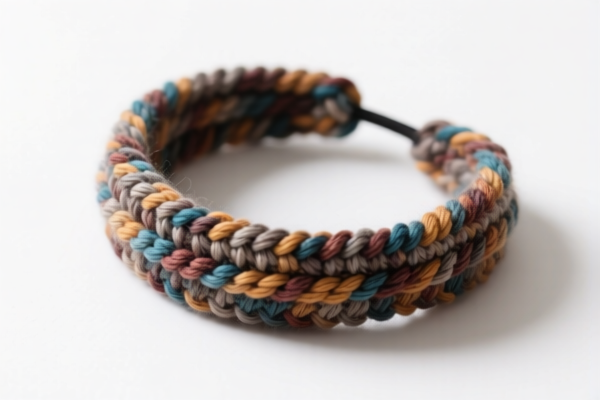
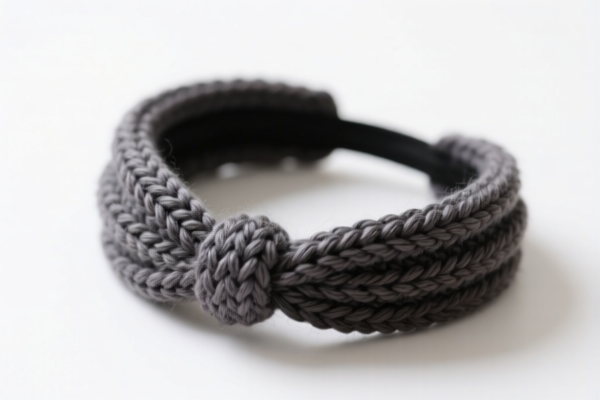

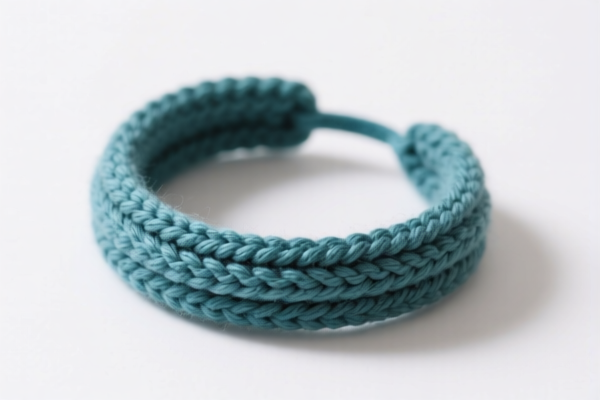
AI Analysis
🎀 Knitted Hair Band (Headbands & Ponytail Holders)
🌐 HS Code Reference & Customs Clearance Guide | 2024 Latest Tariff Analysis | Professional Strategy
📌 I. Product Definition & Classification: What Exactly is a "Knitted Hair Band"?
A Knitted Hair Band falls under the broad category of "Other made up clothing accessories, knitted or crocheted" in the Harmonized System (HS). In international trade, this item is not classified simply as a "garment" but as an accessory or headgear component.
Key Distinctions in Classification: 1. Material Matters: The HS code varies significantly based on whether the band is made of Cotton (most common for elastic bands) or Silk (luxury items). 2. Form Factor: It includes headbands that wrap around the head, as well as ponytail holders and similar elasticated articles. 3. Knitted vs. Crocheted: Both are generally grouped together under Chapter 61 (Articles of Apparel and Clothing Accessories, Knitted or Crocheted).
⚠️ Critical Classification Point:
- If made of Silk (or ≥70% silk): It attracts $0$ tariff (preferential treatment in many contexts).
- If made of Other Textiles (e.g., Cotton, Polyester, Wool): It is subject to Standard Tariffs + Section 301 Retaliatory Tariffs if originating from China.
- Hair Nets are distinct from Hair Bands. Hair nets (lace/netting) have their own code (6505.00.01.00), but simple knitted elastic bands are6117.80....
📦 II. HS Code Breakdown (2024 Latest Tariff Matrix)
Based on the provided data, here are the specific HS codes and tax implications for Knitted Hair Bands:
| HS Code | Product Description | Material Composition | Total Tax Rate (China Origin) |
|---|---|---|---|
| 6117.80.30.10 | Other made up clothing accessories... Headbands, ponytail holders... | ≥70% Silk or Silk Waste | 0.0% |
| 6117.80.85.00 | Other made up clothing accessories... Headbands, ponytail holders... | Other Textiles (e.g., Cotton, Acrylic, Polyester) | 22.1% |
| 6505.00.01.00 | Hats and other headgear... Hair-nets | Any Material (Net/Lace Structure) | 0.0% |
| 6505.00.15.25 | Hats and other headgear... Visors, etc. | Cotton/Flax (Visor type only) | 0.0% |
🔍 Detailed Explanation of Classification:
- Why6117.80.85.00for Cotton/Polyester?: Most "knitted hair bands" are elasticated accessories made of cotton blends or synthetic fibers. They do not cover the entire crown of the head like a hat; they are accessories. Hence, they fall under "Other accessories". The "Other" sub-category captures non-silk materials.
- Why6117.80.30.10for Silk?: High-end or traditional silk hair bands are explicitly categorized under silk content. This often benefits from lower base tariffs.
- Why NOT6505.00.01.00?: This code is specifically for "Hair-nets" (finely meshed netting used to contain hair, often in salons or hospitals). A solid knitted band is not a hair-net. Misclassifying a knitted band as a hair-net to avoid tariffs is a common customs error that can lead to penalties.
💰 III. Detailed Tax Breakdown & Policy Analysis
✅ Applicable Jurisdiction: United States (US)
✅ Origin: China (CN)
✅ Effective Date: Current Trade Policies (Section 301 & IEEPA)
🎯 1. 6117.80.85.00 —— Knitted Hair Band (Non-Silk / Cotton / Synthetic)
This is the most common classification for mass-market hair accessories.
| Item | Detail |
|---|---|
| Base Tariff (MFN) | 14.6% |
| Additional Tariff (Section 301) | +7.5% |
| Total Tariff Rate | 22.1% |
| Calculation Basis | CIF Value (Cost, Insurance, Freight) × 22.1% |
| De Minimis Exemption (Section 321) | ❌ NOT ELIGIBLE |
| Legal Basis | USITC Footnote for Chapter 61 + Section 301 List 4B |
📌 Explanation:
- The 14.6% is the standard Most Favored Nation (MFN) duty for knitted accessories.
- The 7.5% is the Section 301 retaliatory tariff imposed on Chinese imports in this category.
- Crucial for e-commerce (Shein/Temu/Amazon): Because the rate is 22.1%, it exceeds the threshold for the de minimis exemption (currently $800). Even if shipped individually, if declared as Chinese origin, customs may scrutinize the value. However, for B2B shipments, the full 22.1% is applied.
🎯 2. 6117.80.30.10 —— Knitted Hair Band (Silk ≥70%)
| Item | Detail |
|---|---|
| Base Tariff | 0.0% |
| Additional Tariff | 0.0% |
| Total Tariff Rate | 0.0% |
| De Minimis Exemption | ✅ Eligible (if under $800, though $0 duty makes it moot) |
| Legal Basis | USITC Special Provisions for Silk |
📌 Explanation:
- Silk hair accessories are treated as luxury/textile goods with no punitive tariffs.
- This is a strategic advantage for high-end beauty brands importing silk scrunchies or headbands from China.
🎯 3. 6505.00.01.00 —— Hair-Nets (If Applicable)
| Item | Detail |
|---|---|
| Base Tariff | 0.0% |
| Additional Tariff | 0.0% |
| Total Tariff Rate | 0.0% |
📌 Note: Only use this if the product is literally a mesh net. Do not use this for knitted bands.
🛠️ IV. Customs Clearance Operational Advice (Best Practices)
✅ 1. Documentation Checklist
| Document | Requirement | Why It Matters |
|---|---|---|
| Product Description | Must specify: "Knitted Hair Accessory, 100% Cotton Elastic Band" | Avoid vague terms like "Hair Band" which confuse customs officers. |
| Material Composition | Explicit % of Silk vs. Cotton/Synthetic | Determines if you pay 22.1% or 0%. |
| Photo of Product | Clear view of weave/knit structure | Proves it is "Knitted" (Chapter 61) and not "Net" (Chapter 65). |
| Harmonized Tariff Schedule (HTS) Proof | Pre-ruling document (if available) | Speeds up clearance for large shipments. |
✅ 2. Declaration Strategy
🔥 "Material is King, Structure Defines Code"
| Scenario | Correct Declaration | Risk of Misclassification |
|---|---|---|
| Cotton Elastic Band | 6117.80.85.00 - Knitted Headband |
❌ High Risk: If declared as 6505 (Hat/Net), you risk fraud penalties for under-declaring tax. |
| Silk Headband | 6117.80.30.10 - Silk Accessory |
✅ Low Risk: Low duty, easy clearance. |
| Mesh Hair Net | 6505.00.01.00 - Hair Net |
⚠️ Medium Risk: Ensure it is truly a net. Solid fabric = Incorrect. |
| Visor/Band with Front Panel | 6505.00.15.25 |
⚠️ Low Risk: Specific for visors. |
✅ 3. Special Cases & Pitfalls
| Situation | Advice |
|---|---|
| Mixed Material Bands | If <70% silk, it falls under "Other Textiles" (6117.80.85.00) and pays 22.1%. Do not try to argue for 70% unless proven. |
| "Hair Clips" with Knitted Band | If the clip is the primary function, it might fall under Chapter 63 (Other Made Up Articles). However, if it's a band for holding hair, 6117.80 is standard. Consult a broker for complex hybrids. |
| De Minimis (Section 321) for US Retail | For shipments < $800 to individual consumers: - Silk ( 6117.80.30.10): $0 Tax, Smooth Clearance.- Cotton ( 6117.80.85.00): Technically subject to 22.1%, but CBP often processes de minimis shipments quickly if declared correctly. However, repeat shipments from the same sender may trigger audits. |
🌍 V. Global Market Comparison
| Country/Region | Recommended HS Code | Est. Duty (China Origin) | Key Requirement |
|---|---|---|---|
| 🇺🇸 USA | 6117.80.85.00 |
22.1% (Cotton) 0% (Silk) |
Accurate material labeling is critical. |
| 🇪🇺 EU | 6117.80.90 |
12% - 17% | No Section 301 equivalent, but standard duty applies. |
| 🇨🇦 Canada | 6117.80.00 |
12.5% | MFN rate applies. |
| 🇬🇧 UK | 6117.80.00 |
12% | Post-Brexit tariffs apply. |
📌 Conclusion:
The US is the most expensive market for non-silk knitted hair accessories due to the 7.5% Section 301 surcharge.
Strategy: For US imports, consider silk blends (if ≥70% silk) for duty-free entry, or factor the 22.1% cost into your pricing model.
📌 VI. Common Errors & Avoidance Guide (Lessons Learned)
❌ Error 1: Declaring a cotton hair band as a "Hair Net" (6505.00.01.00) to avoid tax.
👉 Consequence: Customs will reject the declaration upon inspection. Back duties + penalties + shipment delay.
👉 Fix: Only use 6505 for actual mesh nets.
❌ Error 2: Ignoring the "Knitted" specification.
👉 Consequence: If you ship a sewn fabric band (woven, not knitted), it falls under Chapter 62 (Non-Knitted), which may have different duty rates.
👉 Fix: Ensure your product is indeed knitted (loop structure) or declare correctly as woven (6217.10).
❌ Error 3: Vague Description "Hair Accessories".
👉 Consequence: High probability of manual examination by CBP.
👉 Fix: Use specific language: "Knitted Elastic Headband, 100% Cotton, Width 2cm, For Hair Styling".
🎯 VII. Final Recommendation: Smart Sourcing & Declaring
🎯 Key Takeaway:
"Cotton Bands Pay 22%, Silk Bands Pay 0%. Be Specific, Stay Compliant."
✅ For Importers:
1. Audit Your Supply Chain: If you are importing 100% cotton bands to the US, budget for 22.1% duty.
2. Consider Silk Alternatives: If marketing allows, switch to 70%+ silk products to access 0% duty.
3. Pre-Arrival Review: For large shipments, apply for a Binding Ruling from US CBP to confirm the HS code and duty rate before shipping.
✅ For E-commerce Sellers:
- Ensure your product title matches the HS Code description to avoid de minimis flagging issues.
- Use "Knitted Headband" not just "Hair Band" to distinguish from hats or clips.
📣 Immediate Action:
📞 Verify Material Composition with your manufacturer.
📄 Update Commercial Invoice with precise HS Code:6117.80.85.00(Non-Silk) or6117.80.30.10(Silk).
🚀 Optimize Landed Cost by understanding the 22.1% impact on your US margins.
✨ Professional Clearance Starts with Accurate Classification!
💼 Every Percentage Point of Duty Counts Towards Your Profit Margin!
Customer Reviews
About HS Code Classification
The Harmonized System (HS) is an internationally standardized nomenclature developed by the World Customs Organization (WCO) to classify traded products. Over 200 countries use the HS system as the basis for customs tariffs, trade statistics, and import/export regulations.
Each HS code follows a hierarchical structure:
- Chapter (2 digits) — Broad category of goods (e.g., Chapter 84: Machinery and Mechanical Appliances)
- Heading (4 digits) — More specific grouping within the chapter
- Subheading (6 digits) — Internationally standardized breakdown, used by all WCO member countries
- National subdivisions (8-10 digits) — Country-specific extensions for further classification, such as US HTSUS 10-digit codes
Correct HS code classification is essential for smooth customs clearance, accurate duty payment, and compliance with trade regulations. Misclassification can lead to customs delays, overpayment of duties, or penalties.
When importing from CN to US, the applicable tariff rates may include:
- Most-Favored-Nation (MFN) rate — The standard duty rate applied to WTO members
- General rate — Applied to countries without trade agreements
- Trade remedy duties — Additional tariffs such as Section 301 (anti-dumping), Section 232 (national security), or countervailing duties
The information provided on this page is for reference purposes only. For official classification, please consult with your local customs authority or a licensed customs broker.