knitting machine
CN → US| HS Code | Tariff Rate | Origin | Destination | Doc |
|---|---|---|---|---|
| 8447204000 | 17.5% | CN | US | Official Doc |
| 8447206000 | 17.5% | CN | US | Official Doc |
| 8446305030 | 38.7% | CN | US | Official Doc |
| 8446100090 | 17.5% | CN | US | Official Doc |
| 7319402010 | 72.0% | CN | US | Official Doc |
Product Images
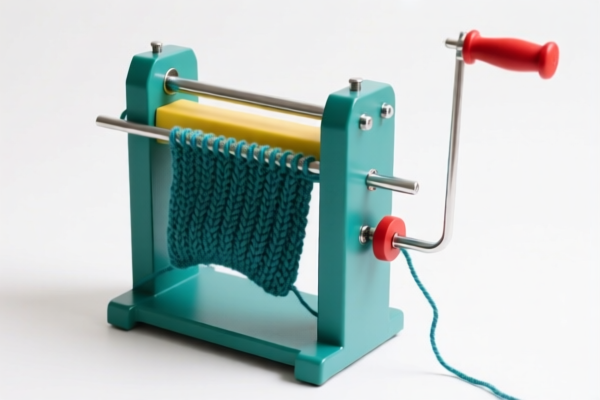
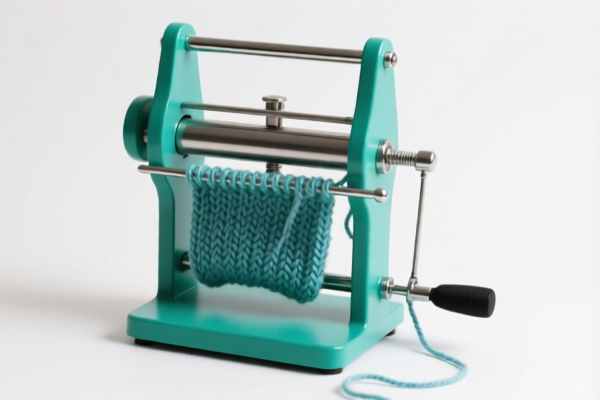
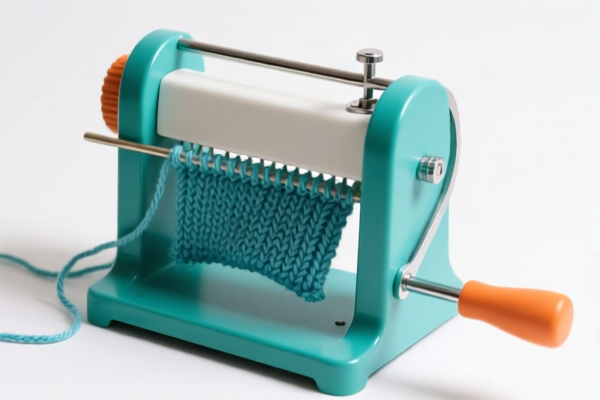

AI Analysis
🧶 Knitting Machine (Textile Machinery)
🌐 HS Code Reference & Customs Clearance Guide | 2026 Latest Tariff Analysis | Strategic Entry Protocol
📌 I. Product Definition & Classification: What Exactly is a "Knitting Machine"?
In international trade, "Knitting Machines" are specialized industrial equipment used to interlock loops of yarn to form fabrics. However, customs classification depends heavily on the mechanism type (weft knitting vs. warp knitting) and the specific operation (sewing/joining vs. pure knitting). Misclassification can lead to drastic tariff differences—from 17.5% to 72.0% or more.
⚠️ Key Distinction Points:
- Knitting Machines (Weft/Warp): Used for creating fabric from yarn loops → Typically fall under 8447 or 8446.
- Knitting Needles: Individual metal pins used within the machine → Fall under 7319.
- No-Loom Weaving Machines: If the machine weaves flat cloth rather than knitting loops → Fall under 8446.
📦 II. HS Code Classification Details (2026 Latest Tariff Authority Match)
Based on the provided data, here are the potential HS Codes and their logical justifications:
| HS Code | Product Description | Application Scenario | Logic/Justification |
|---|---|---|---|
8447.20.40.00 |
Weft Knitting Machines | Circular knitting machines, flat knitting machines | Matches "knitting machines" usage scope exactly; no material conflict. |
8447.20.60.00 |
Knitting/Connecting Equipment | Sewing/joining knitting devices | Matches "knitting machines, sewing/joining machines" usage scope. |
8446.30.50.30 |
Other No-Loom Weaving Machines | Machines that weave rather than knit (if misclassified as knitting) | "Other" category fallback; usage aligns with non-shuttle looms. |
8446.10.00.90 |
Other Looms (Shuttle/No-Shuttle) | General weaving machines | Matches "weaving fabrics" definition; no material conflict. |
7319.40.20.10 |
Knitting Needles (Iron/Steel) | Individual needles, not the whole machine | Matches shape/usage of knitting needles; material is iron/steel. |
🔍 Critical Reminder:
- If the item is a complete machine for making fabric → 8447 is the most accurate for true knitting.
- If the item is a weaver (interlacing threads) → 8446 applies.
- If the item is a single needle/part → 7319 applies.
- Do not mix these categories; Customs will scrutinize the technical manual.
💰 III. 2026 Latest Tariff Rate Breakdown (Including Additional Duties)
✅ Applicable Country: USA (US)
✅ Origin: China (CN)
✅ Effective Date: Post-November 2025 (Current enforcement period)
🎯 1. 8447.20.40.00 & 8447.20.60.00 — True Knitting Machines
These are the most likely codes for actual knitting machinery.
| Item | Content |
|---|---|
| Base Duty Rate | 0.0% (ad valorem) |
| Section 301 (Add-on Duty) | +7.5% |
| Section 122 Duty | +10.0% |
| Total Tax Rate | 17.5% |
| Calculation Method | CIF Value × 17.5% |
| De Minimis Eligibility | ❌ NOT Eligible (Deny De Minimis for Section 301/122 goods from China) |
| Legal Basis Path | USITC:8447.20 → SECTION_301:8447 (7.5%) → SECTION_122:8447 (10%) |
📌 Explanation:
- Section 301 (7.5%): Standard punitive tariff on Chinese textile machinery.
- Section 122 (10%): Additional tariff under Section 232/301 frameworks for specific industrial goods.
- Total 17.5% is relatively low for machinery, but De Minimis (small package exemption) is VOID. You must declare fully.
🎯 2. 8446.10.00.90 — Other Looms (Weaving Machines)
If the machine is actually a weaver, not a knitter.
| Item | Content |
|---|---|
| Base Duty Rate | 0.0% |
| Section 301 (Add-on Duty) | +7.5% |
| Section 122 Duty | +10.0% |
| Total Tax Rate | 17.5% |
| Calculation Method | CIF Value × 17.5% |
| De Minimis Eligibility | ❌ NOT Eligible |
| Legal Basis Path | USITC:8446.10 → SECTION_301:8446 → SECTION_122:8446 |
📌 Note:
- Even if misclassified as a "loom," the rate is the same (17.5%) due to matching Section 301 lists.
- However, incorrect classification risks penalties and delays.
🎯 3. 8446.30.50.30 — Other No-Loom Weaving Machines
Used as a fallback if the machine doesn't fit standard loom definitions.
| Item | Content |
|---|---|
| Base Duty Rate | 3.7% |
| Section 301 (Add-on Duty) | +25.0% |
| Section 122 Duty | +10.0% |
| Total Tax Rate | 38.7% |
| Calculation Method | CIF Value × 38.7% |
| De Minimis Eligibility | ❌ NOT Eligible |
| Legal Basis Path | USITC:8446.30 → SECTION_301:8446 (25%) → SECTION_122:8446 |
⚠️ Warning:
- This rate is more than double the true knitting machine rate.
- Only apply if the machine is definitively not a knitting machine (8447) but a complex weaving device.
🎯 4. 7319.40.20.10 — Knitting Needles (Iron/Steel)
For individual parts, not the machine.
| Item | Content |
|---|---|
| Base Duty Rate | 4.5% |
| Section 301 (Add-on Duty) | +7.5% |
| Section 122 Duty | +10.0% |
| Steel/Aluminum/Copper Add-on | +50.0% (If made of steel/iron) |
| Total Tax Rate | 72.0% |
| Calculation Method | CIF Value × 72.0% |
| De Minimis Eligibility | ❌ NOT Eligible |
| Legal Basis Path | USITC:7319.40 → SECTION_301:7319 → SECTION_122:7319 → STEE_50%_ONSTEEL |
📌 Critical Alert:
- This is the highest tax bracket.
- Why so high? Section 301 lists specific iron/steel articles (like needles) at higher punitive rates (often 25% base add-on, but here calculated as 7.5% + 50% steel duty? Note: Data shows 4.5% base + 7.5% + 10% + 50% = 72%).
- Do NOT classify a whole machine as "needles" to avoid this, but also do NOT classify needles as a machine if they are separate parts.
🛠️ IV. Customs Clearance Practical Advice (Pitfall Avoidance Guide)
✅ 1. Documentation Checklist (Mandatory)
| Document | Required | Purpose |
|---|---|---|
| ✅ Product Specification Sheet | ✔️ | Must clearly state: "Knitting Machine," "Circular/Flat," "Gauge," "Speed." |
| ✅ Technical Manual/Operation Guide | ✔️ | Proves it is a knitting device (loops), not a weaving device (interlacing). |
| ✅ Photographs (Clear & Detailed) | ✔️ | Show the yarn feed mechanism, needle bed, and fabric output. |
| ✅ Commercial Invoice | ✔️ | Description: "Industrial Knitting Machine, Model XYZ, Used for Weft Knitting." |
| ✅ Bill of Lading | ✔️ | Ensure no conflicting descriptions (e.g., don't call it "Textile Loom"). |
| ✅ Certified CO (Certificate of Origin) | ✔️ | To confirm Chinese origin (triggers Section 301/122). |
✅ 2. Declaration Strategy (Key Mantras)
🔥 "Correct Name, Correct Code, Avoid the 72% Trap!"
| Scenario | Correct Declaration | Wrong Declaration | Risk |
|---|---|---|---|
| Whole Knitting Machine | 8447.20.40.00 / .60 |
8446... (Loom) |
May incur 38.7% if misjudged as complex loom. |
| Knitting Needles (Parts) | 7319.40.20.10 |
8447... (Machine) |
72% Tax! Never under-declare machine value as parts. |
| Mixed Shipment | Separate HS Codes | Combined Value | Customs will split and tax each at highest rate. |
| Used Machine | Mark as "Used" | "New" | "New" machines face stricter inspection; "Used" may have different age rules. |
✅ 3. Special Circumstances Handling
| Situation | Handling Advice |
|---|---|
| OEM Knitting Machine | Provide end-user agreement and technical specs to prove it's industrial equipment. |
| Machine with Software | Do not split "Software" as 9013 or 8517; it's integral to the machine 8447. |
| Knitting Needles + Machine | Declare separately! Needles (7319) and Machine (8447) have vastly different taxes (72% vs 17.5%). |
| Small Sample Knitting Machine | Still subject to full tariffs. De Minimis ($800) is NOT available for China-origin textile machinery. |
🌍 V. Global Market Comparison (2026 Update)
| Country/Region | Recommended HS Code | Est. Tariff (China Origin) | Certification Notes |
|---|---|---|---|
| 🇺🇸 USA | 8447.20.40.00 |
17.5% | No special certs required for import, but safety (UL/CE) recommended. |
| 🇨🇳 China | 8447.20.40.00 |
0% (Import Duty) | VAT 13% applies. No Section 301/122. |
| 🇪🇺 EU | 8447.20.40.00 |
~0-4% (MFN) | CE Marking mandatory. No punitive tariffs. |
| 🇬🇧 UK | 8447.20.40.00 |
~0-4% | UKCA Marking required post-Brexit. |
| 🇦🇺 Australia | 8447.20.40.00 |
5% | RCM certification if electrical. |
📌 Conclusion:
- The USA imposes a 17.5% surcharge on Chinese knitting machines.
- No De Minimis exemption applies.
- Knitting Needles are taxed at 72% due to steel-specific penalties.
- Always prioritize8447for true knitting machines to keep rates at 17.5%.
📌 VI. Common Errors & Pitfalls (Lessons Learned)
❌ Error 1: Declaring "Knitting Needles" inside a machine box as separate items to avoid high taxes.
👉 Consequence: Customs sees a machine kit; charges 17.5% on machine, 72% on needles = Higher Total Cost.
❌ Error 2: Calling a "Weaving Loom" a "Knitting Machine."
👉 Consequence: Misclassification penalty + potential 38.7% tax if deemed "Other Loom."
❌ Error 3: Assuming small shipments (<$800) are tax-free.
👉 Consequence: Confiscation or forced payment + fees because Section 301/122 goods from China are excluded from De Minimis.
❌ Error 4: Ignoring the "Steel" surcharge on parts.
👉 Consequence: Needles (7319) hit with 50% steel duty on top of standard tariffs.
✅ Correct Approach:
"Industrial Weft Knitting Machine, Model XYZ, Circular Type, 120mm Gauge, AC 380V, Made in China."
🎯 VII. Conclusion: Precision is Profit
🎯 Remember the Golden Rules:
🔹 "Knitting is 8447 (17.5%), Needles are 7319 (72%), Looms are 8446 (38.7%). Choose wisely!"
🔹 "No De Minimis for China Textile Machinery. Declare everything!"
🔹 "Section 122 + Section 301 = 17.5% for Machines. Don't fight it, plan for it."
📌 Pro Tip:
If you are shipping knitting needles separately, consider if they can be bundled as "parts of the machine" (8447) to avoid the 72% steel duty. However, if they are sold as replacement parts, they must be declared as 7319. Consult a customs broker for part-vs-machine classification.
📣 Immediate Action Required:
📞 Verify your Technical Manual matches 8447.
📦 Calculate landed cost with 17.5% tax for machines, 72% for needles.
🚀 Avoid surprise penalties at US Customs!
✨ Professional Customs Clearance Starts with Accurate Classification!
💼 Every percentage point counts in global textile trade.
Customer Reviews
About HS Code Classification
The Harmonized System (HS) is an internationally standardized nomenclature developed by the World Customs Organization (WCO) to classify traded products. Over 200 countries use the HS system as the basis for customs tariffs, trade statistics, and import/export regulations.
Each HS code follows a hierarchical structure:
- Chapter (2 digits) — Broad category of goods (e.g., Chapter 84: Machinery and Mechanical Appliances)
- Heading (4 digits) — More specific grouping within the chapter
- Subheading (6 digits) — Internationally standardized breakdown, used by all WCO member countries
- National subdivisions (8-10 digits) — Country-specific extensions for further classification, such as US HTSUS 10-digit codes
Correct HS code classification is essential for smooth customs clearance, accurate duty payment, and compliance with trade regulations. Misclassification can lead to customs delays, overpayment of duties, or penalties.
When importing from CN to US, the applicable tariff rates may include:
- Most-Favored-Nation (MFN) rate — The standard duty rate applied to WTO members
- General rate — Applied to countries without trade agreements
- Trade remedy duties — Additional tariffs such as Section 301 (anti-dumping), Section 232 (national security), or countervailing duties
The information provided on this page is for reference purposes only. For official classification, please consult with your local customs authority or a licensed customs broker.