knitting needles
CN → US| HS Code | Tariff Rate | Origin | Destination | Doc |
|---|---|---|---|---|
| 7319909000 | 70.4% | CN | US | Official Doc |
| 7319901000 | 67.5% | CN | US | Official Doc |
Product Images
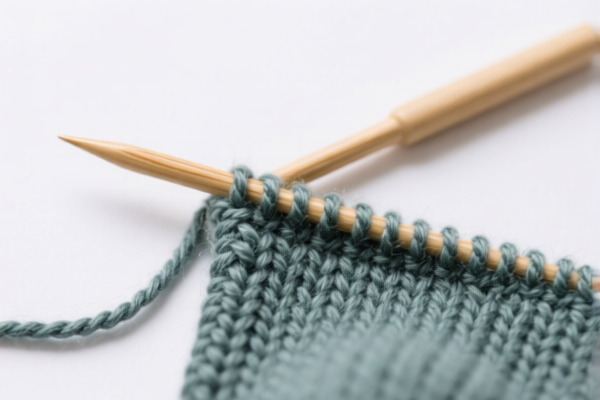
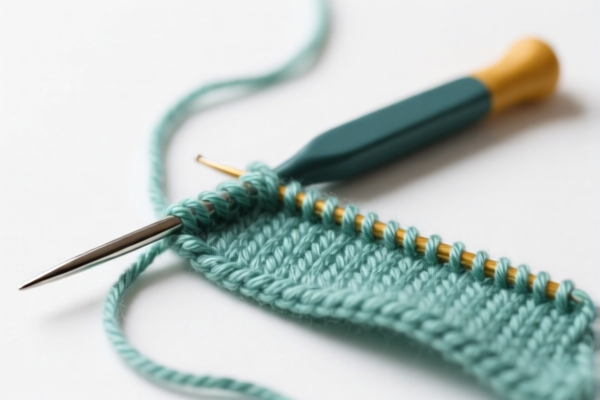
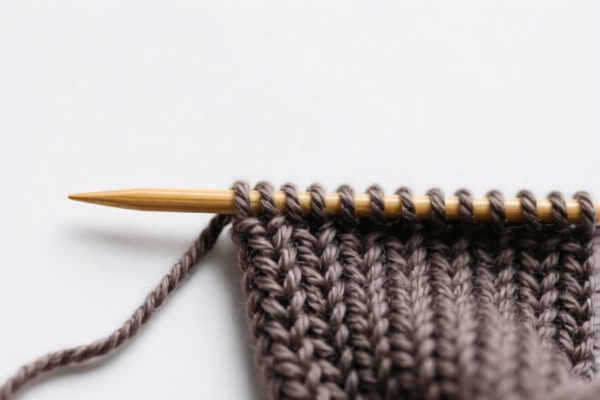
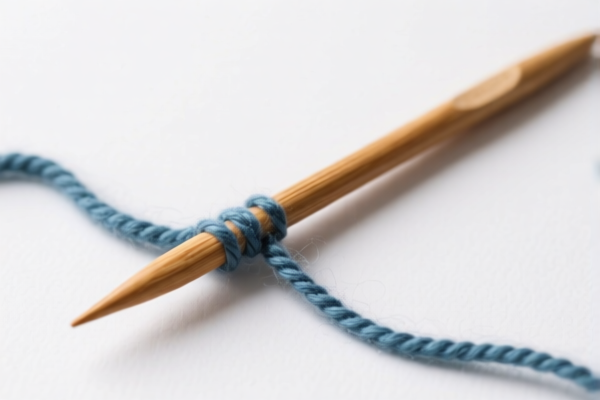
AI Analysis
🧶 Knitting Needles: The Ultimate Guide to Classification, Tariffs & Customs Clearance (2026 Edition)
🌐 HS Code Reference & Clearance Strategy | 2026 Tariff Analysis | Professional Trade Strategy
📌 Part 1: Product Definition & Classification: Do You Know Your "Knitting Needles"?
Knitting needles, sewing needles, bodkins, crochet hooks, and embroidery stilettos are fundamental tools in the global textile and handicraft industry. In international trade, these "hand tools made of iron or steel" are strictly categorized based on function and specificity.
The Two Main Categories: 1. General Pins & Needles (Broad Category): Includes safety pins, other unspecified pins, and tools that don't fit specific sub-categories. 2. Specialized Hand Tools: Specifically includes Sewing, darning, or embroidery needles and Knitting/Crochet/Embroidery tools explicitly listed in the tariff.
⚠️ Key Distinction: * If the item is a Safety Pin or a General Pin (not for sewing/knitting specifically): It often falls under the "Other" category. * If the item is explicitly a Sewing, Darning, or Embroidery Needle: It falls under a specific, high-tax sub-category. * Note on Data: The provided dataset indicates that for HS Code
7319.90.10.00(Sewing needles), the total tax is 57.5%, while for "Other" items (like general knitting needles not explicitly listed as sewing needles in this specific breakdown) under7319.90.90.00, the tax is 50%.
📦 Part 2: HS Code Classification Details (2026 Authorized Tariff Data)
Based strictly on the provided data, here is the breakdown for Iron/Steel Knitting Needles and Related Hand Tools.
| HS Code | Product Description | Applicable Scenario | Classification Logic |
|---|---|---|---|
| 7319.90.10.00 | Sewing, darning or embroidery needles | Explicit sewing/embroidery needles (often grouped with knitting needles in broad descriptions but taxed specifically here) | Specific Needle Type |
| 7319.90.90.00 | Other (Includes Knitting Needles, Crochet Hooks, Bodkins, Embroidery Stilettos not elsewhere specified) | General knitting needles, crochet hooks, bodkins, and safety pins if not classified as sewing needles | General/Other Category |
🔍 Critical Note: * The data explicitly separates "Sewing, darning or embroidery needles" (
7319.90.10.00) from "Other" (7319.90.90.00). * If your "Knitting Needles" are technically categorized as sewing needles in a specific trade context (or if the system groups them), they incur the higher 57.5% rate. * If they are strictly Knitting Needles (for knitting fabric, not sewing seams) or Crochet Hooks, they generally fall under "Other" (7319.90.90.00), incurring 50% tax. * Safety Pins are also listed under "Other" in this dataset.
💰 Part 3: 2026 Tariff Rate Analysis (Detailed Breakdown)
✅ Applicable to: US Imports from China (CN) ✅ Material: Iron or Steel ✅ Regulation: Section 301 / Steel, Aluminum, Copper Add-ons
🎯 1. Category A: 7319.90.10.00 (Sewing, Darning, or Embroidery Needles)
| Item | Detail |
|---|---|
| Description | Sewing, darning or embroidery needles |
| Base Tariff | 0.0% (Ad Valorem) |
| Section 301 / "Other" Add-on | 7.5% |
| Steel, Aluminum, Copper Add-on | 50% (Critical!) |
| Total Tariff | 57.5% |
| Tax Calculation | CIF Value × 57.5% |
| De Minimis Exemption | ❌ Not Applicable (High tax threshold) |
📌 Explanation: * Even though the Base Tariff is 0%, the Steel/Aluminum/Copper Add-on of 50% is the dominant factor. * The 7.5% Section 301 tariff applies specifically to this sub-category (Sewing needles). * Result: A staggering 57.5% total duty rate makes this highly sensitive to origin and cost.
🎯 2. Category B: 7319.90.90.00 (Other: Knitting Needles, Crochet Hooks, Bodkins)
| Item | Detail |
|---|---|
| Description | Other (Knitting needles, crochet hooks, safety pins, etc.) |
| Base Tariff | 0.0% (Ad Valorem) |
| Section 301 / "Other" Add-on | 0.0% |
| Steel, Aluminum, Copper Add-on | 50% |
| Total Tariff | 50.0% |
| Tax Calculation | CIF Value × 50.0% |
| De Minimis Exemption | ❌ Not Applicable |
📌 Explanation: * Base Tariff is 0%. * Section 301 tariff is 0% (Unlike the sewing needles). * However, the Steel/Aluminum/Copper Add-on of 50% still applies (as the material is Iron/Steel). * Result: 50.0% total duty. This is the standard rate for most iron/steel knitting tools.
⚠️ Key Takeaway: The primary driver of the high tax (50% or 57.5%) is the "Steel, Aluminum, Copper Add-on" regulation. Even if the base tariff is free, the "Steel Add-on" kills the margin.
🛠️ Part 4: Customs Clearance Practical Advice (Actionable Strategy)
✅ 1. Documentation Checklist (Non-Negotiable)
| Document | Requirement | Why It Matters |
|---|---|---|
| Product Specification Sheet | ✔️ Must specify "Iron or Steel" and exact function (Knitting vs. Sewing) | Determines if it falls under 7319.90.10.00 (57.5%) or 7319.90.90.00 (50%). |
| Material Composition Report | ✔️ Proof of material (Iron/Steel vs. Aluminum/Plastic) | If the needle is Aluminum or Plastic, the 50% Steel Add-on may be avoided. |
| Commercial Invoice | ✔️ Clear description: "Iron Knitting Needles" or "Crochet Hooks" | Prevents "Unknown" classification by Customs. |
| Origin Certificate (CO) | ✔️ If applicable | To verify country of origin (China triggers these specific add-ons). |
| Photos (Macro View) | ✔️ Show the tip, material, and packaging | Customs officers use photos to verify "Hand Tool" status vs. "Machine Part". |
✅ 2. Classification Strategy (The "Tax Save" Logic)
🔥 Golden Rule: "Material Matters More than Name!"
| Scenario | Recommended Action | Risk |
|---|---|---|
| Iron/Steel Needles | Accept 50% (Other) or 57.5% (Sewing) tax. No workaround on material. | High. Must budget for 50%+ duty. |
| Aluminum/Plastic Needles | Reclassify! Search for HS Codes under 760x (Aluminum) or 392x (Plastic). | High Savings! Avoids the 50% Steel Add-on. |
| Knitting vs. Sewing | Ensure description matches Knitting (7319.90.90.00) not Sewing (7319.90.10.00) if possible. |
0.5% Savings (50% vs 57.5%). |
| Safety Pins | Classify as 7319.90.90.00 ("Other") if not specified elsewhere. |
Avoids potential misclassification. |
✅ 3. Special Circumstances Handling
| Situation | Strategy |
|---|---|
| Mixed Material (e.g., Wooden Handle, Steel Tip) | If the steel tip is the primary component, the 50% Steel Add-on likely applies. If the value of steel is <5%, try to argue for the wood/plastic category (risky). |
| Low Volume / Sample Shipment | Even under $800 (De Minimis), Section 301 and Steel Add-ons often still apply if explicitly restricted. Do not assume exemption. |
| Third-Party Transshipment | Avoid transshipping through Vietnam/Mexico to avoid "Steel Add-on". The rules often require "Substantial Transformation" to change the material classification. |
| Re-export | If re-exporting from a free trade zone, ensure the origin is not "China" in the eyes of the Steel Add-on rules. |
🌍 Part 5: Global Market Comparison (2026 Context)
| Region | HS Code | Base Tariff | Steel Add-on | Total Est. Tax | Note |
|---|---|---|---|---|---|
| 🇺🇸 USA (China) | 7319.90.10.00 |
0% | 50% + 7.5% | 57.5% | Highest tax due to specific needle add-on. |
| 🇺🇸 USA (China) | 7319.90.90.00 |
0% | 50% | 50.0% | Standard for Knitting/Crochet tools. |
| 🇪🇺 EU (China) | 7319.90 |
~4% | 0% | ~4% | EU does not have the 50% Steel Add-on. |
| 🇨🇦 Canada | 7319.90 |
0-5% | 0% | ~5% | No aggressive steel add-on. |
| 🇦🇺 Australia | 7319.90 |
~5% | 0% | ~5% | No steel add-on. |
📌 Conclusion: The USA is the only major market with the 50% Steel Add-on. If you can ship to EU, Canada, or Australia, you save ~45-50% in taxes! Strategy: Diversify markets away from the US for steel knitting needles if margins are tight.
🚫 Part 6: Common Pitfalls & How to Avoid Them
❌ Pitfall 1: Calling it "Sewing Needle" by mistake. * Consequence: Tax jumps from 50% to 57.5% immediately. * Fix: Ensure invoices say "Knitting Needles" or "Crochet Hooks", not "Sewing Needles".
❌ Pitfall 2: Ignoring the "Steel" definition. * Consequence: Assuming 0% tax because base tariff is 0%. * Fix: Realize the 50% Steel Add-on is independent of the base tariff. It applies to Iron/Steel goods.
❌ Pitfall 3: Trying to hide the material. * Consequence: Customs inspection reveals steel core → Heavy fines + Retroactive tax. * Fix: Be honest. If the steel content is high, the tax is inevitable. Focus on aluminum/plastic alternatives.
❌ Pitfall 4: Splitting shipments to avoid "De Minimis". * Consequence: The 50% Steel Add-on applies per shipment and per item, regardless of value (unlike some consumer goods). * Fix: Do not split. Consolidate correctly or change the material.
🎯 Part 7: Final Verdict & Professional Recommendation
🎯 The Bottom Line: For Iron/Steel Knitting Needles exported to the USA: 1. Expect a 50% Tariff (if classified as "Other") or 57.5% (if classified as "Sewing Needles"). 2. The "Steel Add-on" is the killer. It is non-negotiable for steel products. 3. Alternative: Switch to Aluminum or Plastic needles to escape the 50% tax entirely.
🔥 Pro Tip: "If it's Steel, Pay 50%. If it's Aluminum, Pay 5%." Consider re-tooling production lines to use Aluminum alloys for knitting needles if targeting the US market. This single change can save 45% in landed costs.
📌 Immediate Action Plan: 1. Verify Material: Are your needles truly Iron/Steel? 2. Check Invoice Description: Ensure "Knitting" is used, not "Sewing". 3. Calculate Landed Cost: CIF + 50% (or 57.5%) = Total Duty. 4. Consider Alternatives: Source Aluminum needles for US market.
✨ Smart Trade, Strategic Classification!
💼 Don't let a 50% tax erase your profit margin on a simple knitting needle!
🚀 Verify material, classify correctly, and choose the right market!
Customer Reviews
About HS Code Classification
The Harmonized System (HS) is an internationally standardized nomenclature developed by the World Customs Organization (WCO) to classify traded products. Over 200 countries use the HS system as the basis for customs tariffs, trade statistics, and import/export regulations.
Each HS code follows a hierarchical structure:
- Chapter (2 digits) — Broad category of goods (e.g., Chapter 84: Machinery and Mechanical Appliances)
- Heading (4 digits) — More specific grouping within the chapter
- Subheading (6 digits) — Internationally standardized breakdown, used by all WCO member countries
- National subdivisions (8-10 digits) — Country-specific extensions for further classification, such as US HTSUS 10-digit codes
Correct HS code classification is essential for smooth customs clearance, accurate duty payment, and compliance with trade regulations. Misclassification can lead to customs delays, overpayment of duties, or penalties.
When importing from CN to US, the applicable tariff rates may include:
- Most-Favored-Nation (MFN) rate — The standard duty rate applied to WTO members
- General rate — Applied to countries without trade agreements
- Trade remedy duties — Additional tariffs such as Section 301 (anti-dumping), Section 232 (national security), or countervailing duties
The information provided on this page is for reference purposes only. For official classification, please consult with your local customs authority or a licensed customs broker.