knob switch
CN → US| HS Code | Tariff Rate | Origin | Destination | Doc |
|---|---|---|---|---|
| 8538908160 | 38.5% | CN | US | Official Doc |
| 3926902500 | 24.0% | CN | US | Official Doc |
| 8536509025 | 35.0% | CN | US | Official Doc |
| 8536509020 | 35.0% | CN | US | Official Doc |
| 3926301000 | 24.0% | CN | US | Official Doc |
Product Images
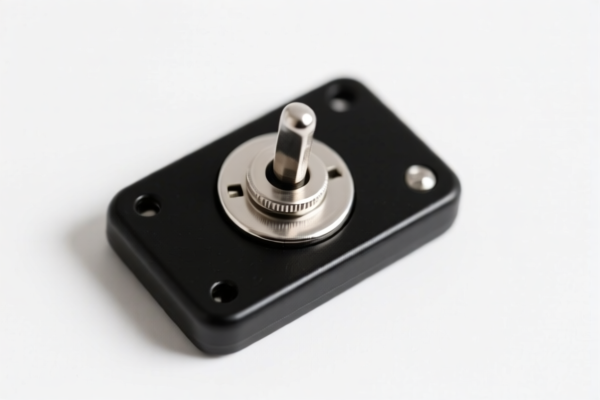
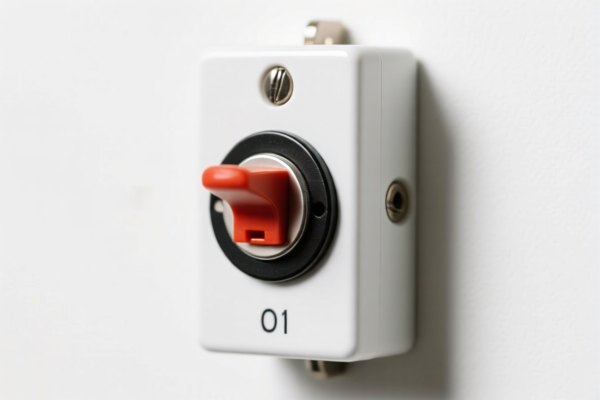
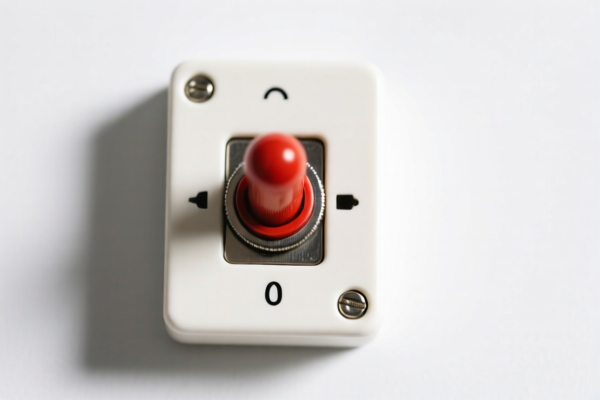
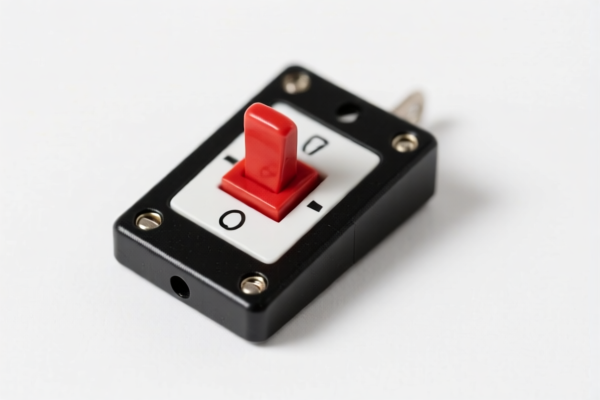
AI Analysis
🔘 Knob Switch (Rotary Switch)
🌐 HS Code Reference & Customs Clearance Guide | 2026 Latest Tariff Analysis | Professional Clearance Strategy
📌 I. Product Definition & Classification: Do You Really Understand the "Knob Switch"?
The Knob Switch is a critical component in electrical control systems, used to manually operate circuits or devices. In international trade, its classification depends heavily on its material, function, and structural integration. It is generally categorized into three main branches:
- Electrical Parts (8538): Specifically for parts of switches, relays, etc.
- Plastic Articles (3926/3924): If it is purely a plastic handle/knob with no electrical conductivity itself.
- Circuit Switches (8536): If it is considered a complete rotary switch unit or part thereof.
⚠️ Key Distinction Point:
- If it is an electrical connector/component integrated into a switch assembly → 8538.90.81.60
- If it is a plastic knob/handle (non-conductive, purely mechanical shape) → 3926.90.25.00 or 3926.30.10.00
- If it is a rotary switch mechanism (electrical function dominant) → 8536.50.90.25 or 8536.50.90.20
📦 II. HS Code Classification Details (2026 Latest Tariff Authority Comparison)
| HS Code | Product Description | Applicable Scenario | Material/Function Logic |
|---|---|---|---|
8538.90.81.60 |
Parts of switches, relays, etc. | Electrical parts of switchgear | ✅ Electrical part, no material conflict |
3926.90.25.00 |
Other articles of plastic | Plastic knobs/handles | ✅ Plastic material, shape matches |
8536.50.90.25 |
Other switches (Rotary) | Electrical rotary switches | ✅ Electrical function, catch-all rule |
8536.50.90.20 |
Other switches (Circuit) | Circuit switch范畴 inference | ✅ Circuit switch scope inference |
3926.30.10.00 |
Plastic articles (other) | General plastic knobs | ✅ Plastic material, no conflict |
🔍 Key Reminder:
- Electrical vs. Plastic: If the knob has internal metal contacts or is part of an electrical circuit, 8538 or 8536 is preferred. If it is purely a plastic cover/handle for a user to touch, 3926 is appropriate. - Material Conflict: Ensure the declared material matches the HS code. Plastic knobs go to 3926; electrical parts go to 8538/8536.
💰 III. 2026 Latest Tariff Rate Details (Including Surcharges & Policy Add-ons)
✅ Applicable Country: United States (US)
✅ Origin: China (CN)
✅ Effective Date: 2025-11-10 onwards (including subsequent imports)
🎯 1. 8538.90.81.60 —— Parts of Switches (Electrical)
| Item | Content |
|---|---|
| Base Tariff | 3.5% (ad valorem) |
| Section 301 Surcharge | +25.0% |
| IEEPA Surcharge | +10.0% |
| Total Tariff | 38.5% |
| Tax Calculation | CIF Value × 38.5% |
| De Minimis Eligibility | ❌ Not Eligible (deny_de_minimis) |
| Legal Basis Path | Base: 3.5% → 301: 25.0% → IEEPA: 10% |
📌 Explanation:
- This code falls under "Parts of electrical equipment." - Total 38.5% is high. It includes base tariff, Section 301 (25%), and IEEPA (10%). - Critical: Must declare as "Part of Switch," not "Plastic Part," to avoid misclassification penalties.
🎯 2. 3926.90.25.00 —— Other Plastic Articles (Plastic Knob)
| Item | Content |
|---|---|
| Base Tariff | 6.5% (ad valorem) |
| Section 301 Surcharge | +7.5% |
| IEEPA Surcharge | +10.0% |
| Total Tariff | 24.0% |
| Tax Calculation | CIF Value × 24.0% |
| De Minimis Eligibility | ❌ Not Eligible (deny_de_minimis) |
| Legal Basis Path | Base: 6.5% → 301: 7.5% → IEEPA: 10% |
📌 Explanation:
- If the product is purely plastic (no electrical contact), it may qualify for this lower tariff band. - Total 24.0% is significantly lower than 38.5%. - Condition: Must be proven to be a non-electrical plastic component (e.g., a cover or handle).
🎯 3. 8536.50.90.25 —— Other Switches (Rotary/Circuit)
| Item | Content |
|---|---|
| Base Tariff | 0.0% (ad valorem) |
| Section 301 Surcharge | +25.0% |
| IEEPA Surcharge | +10.0% |
| Total Tariff | 35.0% |
| Tax Calculation | CIF Value × 35.0% |
| De Minimis Eligibility | ❌ Not Eligible (deny_de_minimis) |
| Legal Basis Path | Base: 0.0% → 301: 25.0% → IEEPA: 10% |
📌 Explanation:
- Base tariff is 0%, but Section 301 applies at 25%. - Total 35.0%. This is a "catch-all" for rotary switches not specified elsewhere. - Inference: Based on "other category" fallback rules.
🎯 4. 8536.50.90.20 —— Other Switches (Circuit Scope)
| Item | Content |
|---|---|
| Base Tariff | 0.0% (ad valorem) |
| Section 301 Surcharge | +25.0% |
| IEEPA Surcharge | +10.0% |
| Total Tariff | 35.0% |
| Tax Calculation | CIF Value × 35.0% |
| De Minimis Eligibility | ❌ Not Eligible (deny_de_minimis) |
| Legal Basis Path | Base: 0.0% → 301: 25.0% → IEEPA: 10% |
📌 Explanation:
- Similar to above, based on "circuit switch" inference. - Total 35.0%.
🎯 5. 3926.30.10.00 —— Other Plastic Articles (General)
| Item | Content |
|---|---|
| Base Tariff | 6.5% (ad valorem) |
| Section 301 Surcharge | +7.5% |
| IEEPA Surcharge | +10.0% |
| Total Tariff | 24.0% |
| Tax Calculation | CIF Value × 24.0% |
| De Minimis Eligibility | ❌ Not Eligible (deny_de_minimis) |
| Legal Basis Path | Base: 6.5% → 301: 7.5% → IEEPA: 10% |
📌 Explanation:
- Used if the knob is considered a general plastic article. - Total 24.0%. Same as 3926.90.25.00 but different sub-category.
🛠️ IV. Customs Clearance Practical Advice (Battle-Tested Pitfall Guide)
✅ 1. Preparation Checklist (Non-negotiable)
| Document | Required | Note |
|---|---|---|
| ✅ Product Spec Sheet | ✔️ | Dimensions, material (Plastic/Metal/Electrical), voltage rating (if any) |
| ✅ Circuit Diagram/Structure | ✔️ | Critical to prove if it’s electrical or just plastic |
| ✅ Product Photos (Label) | ✔️ | Clear view of model, brand, input/output parameters |
| ✅ Test Reports | ✔️ | UL, CE, RoHS (if electrical component) |
| ✅ Commercial Invoice | ✔️ | Must specify "Knob Switch" or "Plastic Knob" accurately |
| ✅ Certificate of Origin | ✔️ | For potential preferential treatment (if applicable) |
| ✅ Packing List | ✔️ | Show relationship between knob and assembly |
✅ 2. Declaration Strategy (Key Mantras)
🔥 "Electrical Parts to 8538, Plastic Knobs to 3926, Rotary to 8536!"
| Scenario | Correct Declaration | Wrong Practice |
|---|---|---|
| Electrical Part (integrated) | 8538.90.81.60 (38.5%) |
Declared as "Plastic Part" → 24% → Penalty for Misclassification |
| Plastic Handle (non-conductive) | 3926.90.25.00 (24.0%) |
Declared as "Switch Part" → 38.5% → Overpayment |
| Rotary Switch (complete unit) | 8536.50.90.25 (35.0%) |
Declared as "Part" → 38.5% → Minor Overpayment |
| Generic Plastic Knob | 3926.30.10.00 (24.0%) |
Declared as "Electrical" → 38.5% → Overpayment |
✅ 3. Special Cases Handling
| Scenario | Handling Advice |
|---|---|
| OEM Custom Knobs | Provide design drawings to prove material composition (Plastic vs. Electrical) |
| Knob with Metal Contacts | Must declare under 8538 or 8536. Cannot use 3926. |
| Knob Only (No Circuit) | Declare under 3926. Provide material test report showing no conductivity. |
| Mixed Shipment | Separate declarations for electrical parts and plastic parts to optimize tax. |
🌍 V. Global Market Comparison (2026 Latest)
| Country/Region | Recommended HS Code | Tariff Rate (China Origin) | Certification Required | Note |
|---|---|---|---|---|
| 🇺🇸 USA | 8538.90.81.60 |
38.5% | UL, FCC (if electrical) | High tariff due to 301+IEEPA |
| 🇺🇸 USA | 3926.90.25.00 |
24.0% | RoHS | Lower if purely plastic |
| 🇨🇳 China | 8538.90.81.60 |
3.5% | CCC | No additional surcharges |
| 🇪🇺 EU | 8538.90.81.60 |
0-2.7% | CE, RoHS | Low tariff in EU |
| 🇯🇵 Japan | 8538.90.81.60 |
0-3.2% | PSE | Low tariff in Japan |
📌 Conclusion:
- USA is the highest-cost market due to Section 301 and IEEPA surcharges. - Plastic knobs (3926) offer 14.5% tax savings vs. Electrical parts (8538) in the US. - Strategy: If the product is non-conductive, insist on 3926 classification to save costs.
📌 VI. Common Errors & Pitfall Guide (Blood-Teaching Lessons)
❌ Error 1: Declaring an electrical switch part as a "Plastic Knob"
👉 Consequence: Customs audit reveals conductivity → Back taxes + Fines (38.5% - 24% = 14.5% penalty + interest).
❌ Error 2: Declaring a plastic knob as a "Switch Part"
👉 Consequence: Overpaying tax → Loss of profit (24% vs 38.5%).
❌ Error 3: Missing Circuit Diagram for electrical parts
👉 Consequence: Customs cannot verify function → Delay in release or Rejection.
❌ Error 4: Vague Description ("Switch Knob")
👉 Consequence: Customs assigns default high tariff or random classification.
✅ Correct Description Example:
"Plastic Rotary Knob Handle, Non-Conductive, Model XYZ, for Industrial Panel Mount"
OR
"Electrical Switch Part, Rotary Knob with Internal Contacts, Model ABC, 250V"
🎯 VII. Conclusion: Precision Classification Saves Money!
🎯 Remember the Mantra:
🔹 "Plastic? Go 3926 (24%). Electrical? Go 8538 (38.5%). Rotary? Go 8536 (35%). Mix it up? Pay more!"
🔹 "HS Code defines your cost. 14.5% difference is huge!"
📌 Pro Tip:
If your knobs are manufactured in Vietnam, Mexico, or Thailand, you may qualify for IEEPA Exemptions or lower Section 301 rates.
Recommend Applying for Advance Ruling before shipment to lock in the correct HS Code and tariff.
📣 Take Action Now:
📞 Contact Professional Customs Broker + Provide Product Specs + Apply for HS Code Pre-Ruling
🚀 Ensure your Knob Switches clear customs smoothly, minimize tax, and maximize profit!
✨ Professional Clearance Starts with Accurate Classification!
💼 Every Cent Saved is Pure Profit!
Customer Reviews
About HS Code Classification
The Harmonized System (HS) is an internationally standardized nomenclature developed by the World Customs Organization (WCO) to classify traded products. Over 200 countries use the HS system as the basis for customs tariffs, trade statistics, and import/export regulations.
Each HS code follows a hierarchical structure:
- Chapter (2 digits) — Broad category of goods (e.g., Chapter 84: Machinery and Mechanical Appliances)
- Heading (4 digits) — More specific grouping within the chapter
- Subheading (6 digits) — Internationally standardized breakdown, used by all WCO member countries
- National subdivisions (8-10 digits) — Country-specific extensions for further classification, such as US HTSUS 10-digit codes
Correct HS code classification is essential for smooth customs clearance, accurate duty payment, and compliance with trade regulations. Misclassification can lead to customs delays, overpayment of duties, or penalties.
When importing from CN to US, the applicable tariff rates may include:
- Most-Favored-Nation (MFN) rate — The standard duty rate applied to WTO members
- General rate — Applied to countries without trade agreements
- Trade remedy duties — Additional tariffs such as Section 301 (anti-dumping), Section 232 (national security), or countervailing duties
The information provided on this page is for reference purposes only. For official classification, please consult with your local customs authority or a licensed customs broker.