kraft split leather for packaging materials
CN → USProduct Images
AI Analysis
📜 Kraft Split Leather for Packaging Materials
🌐 HS Code Reference & Customs Clearance Guide | 2026 Latest Tariff Analysis | Professional-Grade Entry Strategy
📌 I. Product Definition & Classification: Do You Really Understand "Split Leather" for Packaging?
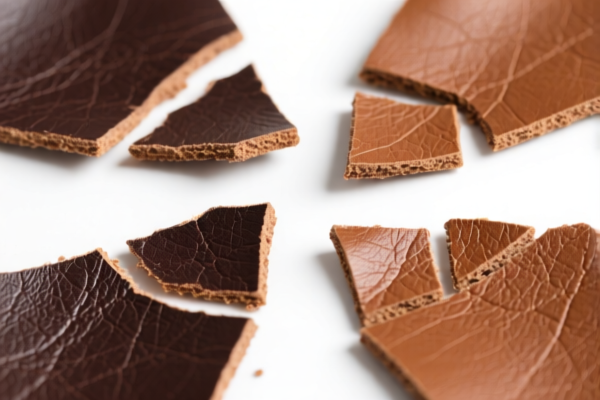
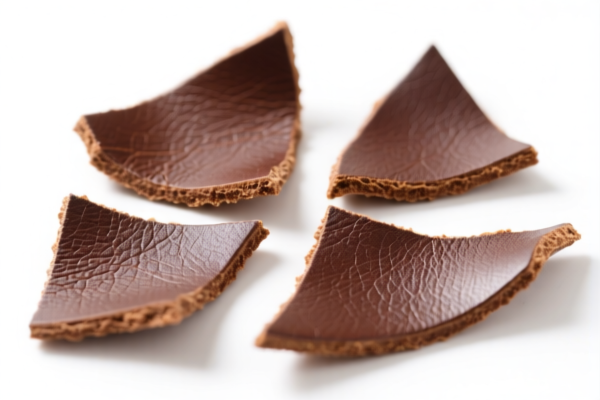
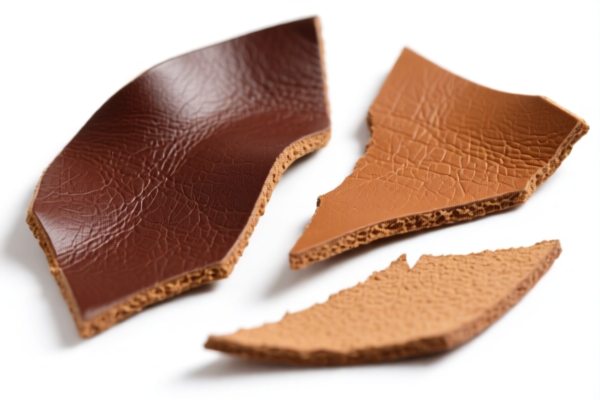
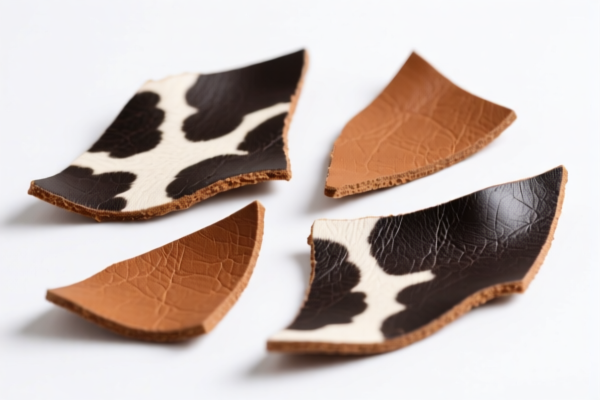
Kraft Split Leather refers to the lower layer of a cowhide (or other animal hide) that remains after the top grain (the "full grain" or "top split") has been separated. In the context of packaging materials, this material is often processed, dyed, and embossed to resemble high-quality leather but is significantly more cost-effective. It is commonly used for luxury packaging boxes, gift bags, book covers, and decorative accessories.
Internationally, it is critically distinguished from "Full Grain" or "Top Grain" leather based on surface treatment and structural integrity:
1. Genuine Split Leather (The Core Product): The bottom layer of the hide. It lacks the natural grain pattern of the top layer and usually requires artificial coating (PU/PVC) or embossing to create a uniform surface. 2. Corrected Full Grain Leather: Top grain leather that has been sanded and artificially coated. 3. Packaging-Specific Classification: If the split leather is used as a covering material for boxes (rigid board), it may fall under different headings than if it is sold as a raw material for upholstery or garments.
⚠️ Key Distinction Point:
- If the product is raw or merely tanned split leather (for further manufacturing) → Classified under Chapter 41 (Leather)
- If the product is fabric backed or heavily coated with plastic (PU/PVC) to form a non-woven or synthetic-like sheet → It may be misclassified. However, genuine leather splits, even if coated, generally remain in Chapter 41 unless the coating significantly alters the essential character to that of plastics (Chapter 39).
- Crucial: "Kraft" here usually refers to the color/natural state (brown/tan) or the source quality, not the paper product "Kraft Paper." Do not confuse with paper packaging.
📦 II. HS Code Classification Details (2026 Latest Tariff Authority Comparison)
| HS Code | Product Description | Applicable Scenario | Tanning Status | Surface Treatment |
|---|---|---|---|---|
4104.41.00.00 |
Bovine leather, full-grain, not fleshed, chromium-tanned | Premium packaging for luxury goods | ✅ Chromium | ✅ Natural/Top Grain |
4104.42.00.00 |
Bovine leather, full-grain, fleshed, chromium-tanned | High-end leather goods, not split | ✅ Chromium | ✅ Sanded/Fleshed |
4104.51.00.00 |
Bovine leather, split, not fleshed, chrome-tanned | Most common for "Split Leather" packaging materials | ✅ Chromium | ✅ Raw Split |
4104.52.00.00 |
Bovine leather, split, fleshed, chrome-tanned | Common split leather for bags, shoes, packaging | ✅ Chromium | ✅ Fleshed Split |
4105.10.00.00 |
Sheepskin/Skin, not split, tanned | Not applicable (User asked for Split/Cow) | ❌ N/A | ❌ N/A |
5903.10.00.00 |
Textile fabric impregnated with PVC/PU | Wrong Classification if leather content is dominant | ❌ N/A | ❌ Synthetic |
🔍 Critical Reminder:
- Split Leather is explicitly categorized under 4104.51 or 4104.52 (if bovine/cowhide).
- The term "Kraft" in this context typically implies untreated or lightly tanned, natural brown color, often used for rustic or eco-friendly packaging aesthetics.
- If the split leather is coated with PVC/PU such that it becomes recognizable as plastic-coated textile, it might shift to Chapter 59, but for pure leather packaging materials, Chapter 41 is standard.
- Do not classify under Chapter 48 (Paper) just because it is used for "packaging." The material itself is leather.
💰 III. 2026 Latest Tariff Rate Details (Including Surtaxes, Policy Add-ons)
✅ Applicable Country: United States (US)
✅ Origin: China (CN)
✅ Effective Time: November 10, 2025 onwards (including subsequent imports)
🎯 1. 4104.51.00.00 —— Bovine Leather, Split, Not Fleshed, Chrome-Tanned
| Item | Content |
|---|---|
| Base Rate | 4.0% (ad valorem) |
| USITC Surtax (Section 301) | +7.5% (Footnote 9903.88.01 for leather articles) |
| IEEPA Surtax | +10% (Targeted China/HK products, effective Nov 10, 2025) |
| Total Tariff Rate | 21.5% |
| Tax Calculation | CIF Value × 21.5% |
| De Minimis Eligibility | ❌ No (deny_de_minimis) |
| Legal Basis Path | IEEPA:9903.01.25 → IEEPA:9903.01.24 → USITC:4104.51.00.00 → FOOTNOTE:9903.88.01 |
📌 Explanation:
- 7.5% USITC Surtax: Applies to specific leather products under Section 301. Note: Rates vary slightly by specific leather article type. For raw split leather, it is often grouped with leather articles.
- 10% IEEPA: Additional surtax on Chinese-origin goods under the International Emergency Economic Powers Act.
- Base Rate 4%: Standard MFN rate for chrome-tanned split leather.
- Total 21.5%: This is a moderate-to-high tariff for leather materials. Significant cost impact for bulk packaging imports.
🎯 2. 4104.52.00.00 —— Bovine Leather, Split, Fleshed, Chrome-Tanned
| Item | Content |
|---|---|
| Base Rate | 4.0% (ad valorem) |
| USITC Surtax (Section 301) | +7.5% |
| IEEPA Surtax | +10% |
| Total Tariff Rate | 21.5% |
| Tax Calculation | CIF × 21.5% |
| De Minimis Eligibility | ❌ No |
| Legal Basis Path | IEEPA:9903.01.25 → IEEPA:9903.01.24 → USITC:4104.52.00.00 → FOOTNOTE:9903.88.01 |
📌 Note:
- Same tariff structure as 4104.51.
- "Fleshed" means the inner layer (flesh) has been removed. "Not fleshed" means it has not. Both are split leather.
- If the leather is vegetable-tanned instead of chrome-tanned, the HS code changes to 4104.61/4104.62, but the tariff rates remain identical (4% base + 7.5% + 10% = 21.5%) under current US trade policy for Chinese leather.
🛠️ IV. Customs Clearance Practical Advice (Real-World Pitfall Avoidance Guide)
✅ 1. Required Documentation Checklist (Mandatory)
| Document | Must Provide | Explanation |
|---|---|---|
| ✅ Product Specification Sheet | ✔️ | Must specify: Animal source (Bovine), Tanning method (Chrome/Veg), Split status, Fleshing status, Finish (Coated/Uncoated). |
| ✅ Material Safety Data Sheet (MSDS) | ✔️ | If treated with chemicals, especially if exported as semi-finished goods. |
| ✅ Commercial Invoice | ✔️ | Must clearly state "Bovine Split Leather for Packaging" – NOT "Synthetic Leather" or "Paper." |
| ✅ Packing List | ✔️ | Detail gross/net weight, number of hides/sheets, dimensions. |
| ✅ Certificate of Origin (CO) | ✔️ | Essential for claiming any potential exemptions (though limited for China). |
| ✅ Tanning Declaration | ✔️ | Confirm chromium content compliance if required by destination country regulations (e.g., EU REACH). |
✅ 2. Declaration Tips (Key Mnemonics)
🔥 “Split is not Full, Chrome vs Veg, Leather not Paper!”
| Scenario | Correct Declaration | Wrong Approach |
|---|---|---|
| Raw Split Leather Sheets | 4104.51.00.00 or 4104.52.00.00 |
Misdeclare as "Synthetic Leather" → Anti-dumping investigations |
| Leather-coated Fabric | Check Essential Character | If leather is dominant, use Chapter 41. If plastic is dominant, use Chapter 59. |
| "Kraft" Paper Packaging | 4819.10.00.00 |
Do NOT use this for leather, even if it looks brown/rustic. |
| Finished Leather Boxes | Chapter 42 | If sold as finished boxes, not raw material. |
✅ 3. Special Cases Handling
| Scenario | Handling Advice |
|---|---|
| Leather vs. Synthetic | Customs may request a cross-section test or microscopy report to prove it is genuine animal hide. |
| Coated Leather | If heavily coated with PVC, declare as "Leather with plastic surface." Ensure HS code reflects the essential character (usually still leather if base is hide). |
| Eco-Friendly/Vegetable Tanned | May qualify for Green Import programs in some countries (e.g., EU), but US tariffs remain the same. |
| OEM Custom Embossed | Provide embossing pattern details. If pattern is unique, declare as "Custom Embossed Split Leather." |
🌍 V. Global Major Market Customs Comparison (2026 Latest)
| Country/Region | Recommended HS Code | Tariff Rate | Certification Required | Notes |
|---|---|---|---|---|
| 🇺🇸 United States | 4104.51.00.00 / 4104.52.00.00 |
21.5% (China Origin) | None specific | High tariff due to IEEPA + Section 301. |
| 🇨🇳 China | 4104.51.00.00 |
5% | None | Import duty for raw materials. |
| 🇪🇺 European Union | 4104.51.00.00 |
0% (if GSP/BTP) | REACH, Chromate-free | EU has more favorable rates for many leather imports. |
| 🇬🇧 United Kingdom | 4104.51.00.00 |
0% - 5% | UK REACH | Post-Brexit rules apply. |
| 🇦🇺 Australia | 4104.51.00.00 |
5% | None | Standard MFN rate. |
📌 Conclusion:
- The US has the highest effective tariff rate (21.5%) for Chinese split leather.
- EU and UK offer significantly lower or zero tariffs, making them more attractive for sourcing if end-market is European.
- Always verify the tanning process. Chrome-tanned leather is standard, but Vegetable-tanned leather (4104.61) may have different environmental compliance requirements.
📌 VI. Common Errors & Pitfall Guide (Blood-Tears Lessons)
❌ Error 1: Misclassifying "Split Leather" as "Synthetic Leather" (Chapter 39/59)
👉 Consequence: If caught, customs will reclassify to Chapter 41, apply higher tariffs (21.5%) and impose penalties for misdeclaration.
❌ Error 2: Confusing "Kraft Split Leather" with "Kraft Paper" (Chapter 48)
👉 Consequence: If declared as paper, customs may seize the shipment for fraud or require immediate reclassification with back-taxes.
❌ Error 3: Ignoring "Chrome Content" Compliance
👉 Consequence: In EU/UK, chrome-tanned leather must meet REACH standards. Non-compliance leads to refusal of entry.
❌ Error 4: Not Declaring "Fleshed" Status
👉 Consequence: 4104.51 (Not Fleshed) vs 4104.52 (Fleshed) have different base rates in some historical contexts, but in US 2026, they are similar. However, accurate description is vital for customs audits.
✅ Correct Practice:
“Bovine Split Leather, Chrome-Tanned, Fleshed, Natural Brown Color, Suitable for Luxury Packaging, HS Code 4104.52.00.00, Origin: China”
🎯 VII. Conclusion: Precise Declaration, Save Costs, Ensure Compliance!
🎯 Remember the Mnemonic:
🔹 “Split is Split, Full is Full, Leather is not Paper, Chrome is Standard!”
🔹 “US Tariff 21.5%, Check IEEPA, Origin Matters, Don’t Lie!”
📌 Pro Tip:
If your split leather is processed into finished packaging boxes (not raw material), the HS code changes to 4202 (Articles of Leather). The tariff for finished leather goods may be different. Always declare based on the state of import.
For raw split leather, stick to Chapter 41.
📣 Immediate Action:
📞 Contact a licensed customs broker + Provide hide cross-section photos + Apply for Advance Ruling if value is high.
🚀 Ensure your split leather clears customs smoothly, avoiding 21.5% tariff surprises!
✨ Professional Customs Clearance Starts with Accurate Classification!
💼 Every dollar saved on tariffs is pure profit!
Customer Reviews
About HS Code Classification
The Harmonized System (HS) is an internationally standardized nomenclature developed by the World Customs Organization (WCO) to classify traded products. Over 200 countries use the HS system as the basis for customs tariffs, trade statistics, and import/export regulations.
Each HS code follows a hierarchical structure:
- Chapter (2 digits) — Broad category of goods (e.g., Chapter 84: Machinery and Mechanical Appliances)
- Heading (4 digits) — More specific grouping within the chapter
- Subheading (6 digits) — Internationally standardized breakdown, used by all WCO member countries
- National subdivisions (8-10 digits) — Country-specific extensions for further classification, such as US HTSUS 10-digit codes
Correct HS code classification is essential for smooth customs clearance, accurate duty payment, and compliance with trade regulations. Misclassification can lead to customs delays, overpayment of duties, or penalties.
When importing from CN to US, the applicable tariff rates may include:
- Most-Favored-Nation (MFN) rate — The standard duty rate applied to WTO members
- General rate — Applied to countries without trade agreements
- Trade remedy duties — Additional tariffs such as Section 301 (anti-dumping), Section 232 (national security), or countervailing duties
The information provided on this page is for reference purposes only. For official classification, please consult with your local customs authority or a licensed customs broker.