label dispenser
CN → US| HS Code | Tariff Rate | Origin | Destination | Doc |
|---|---|---|---|---|
| 8422309120 | 35.0% | CN | US | Official Doc |
| 8422309191 | 35.0% | CN | US | Official Doc |
| 3926100000 | 15.3% | CN | US | Official Doc |
| 8472300000 | 36.8% | CN | US | Official Doc |
| 3926909989 | 22.8% | CN | US | Official Doc |
| 8472909080 | 35.0% | CN | US | Official Doc |
Product Images
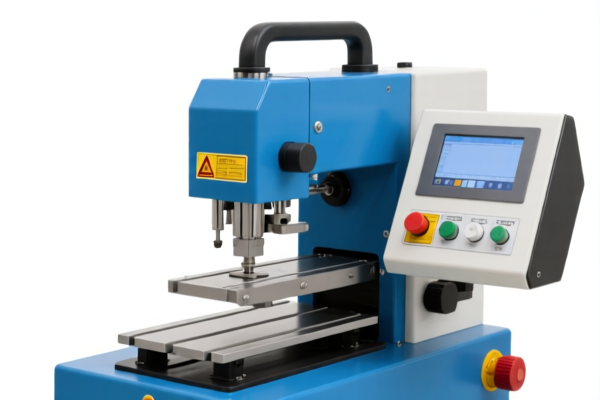
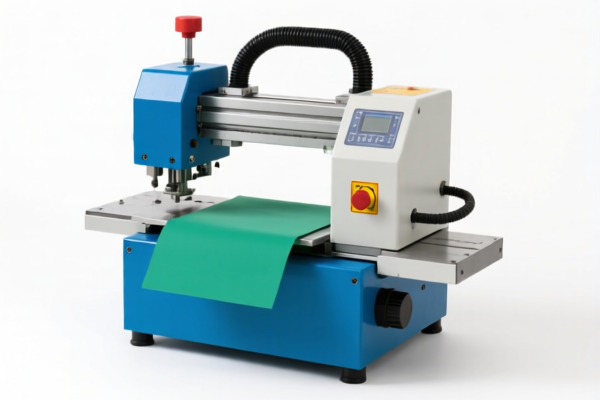
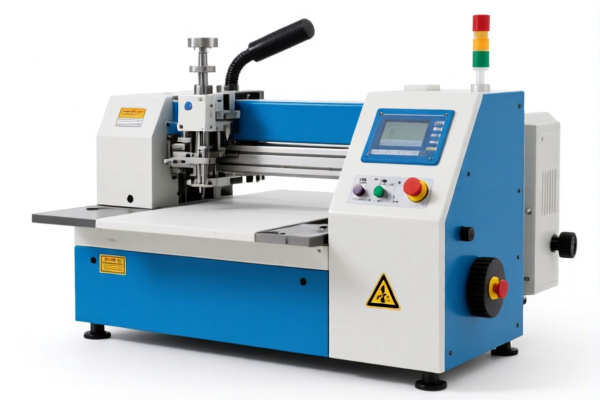
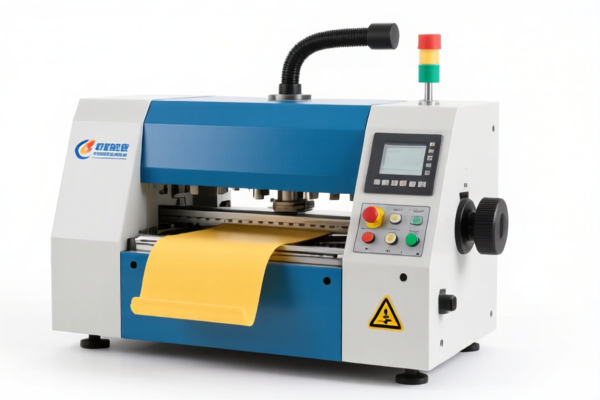
AI Analysis
🏷️ Label Dispenser (标签分配器)
🌐 HS Code Reference & Customs Clearance Guide | 2026 Latest Tariff Analysis | Professional Clearance Strategy
📌 I. Product Definition & Classification: Do You Really Understand the “Label Dispenser”?
A Label Dispenser is a critical device in packaging, logistics, and office automation. Its core function is to separate labels from their backing paper and feed them for application or printing. In international trade, its classification depends heavily on its primary function and structural composition.
According to the provided data, this product falls into two main logical categories: 1. Office Automation/Label Processing Machinery: If it functions as a machine to handle, apply, or prepare labels (even without ink/ribbon), it may be classified under machinery for closing/sealing/labeling containers or office machines. 2. Plastic Articles: If it is a simple manual tool or primarily defined by its material (plastic) rather than its mechanical function, it may be classified under other plastic articles.
⚠️ Key Distinction Point:
- If the device has mechanical parts, motors, or complex feeding mechanisms for automated or semi-automated labeling → Likely Chapter 84 (Machinery).
- If it is a simple handheld tool, stand, or basic plastic holder without mechanical complexity → Likely Chapter 39 (Plastics).
📦 II. HS Code Classification Details (2026 Latest Tariff Authority Comparison)
Based on the provided data, here are the possible HS Codes, their summaries, and tax implications.
| HS Code | Product Description & Logic | Summary Logic | Total Tax Rate |
|---|---|---|---|
8422.30.91.20 |
Label Dispenser (Labeling Machinery) | Functionally consistent with labelers; falls under label processing equipment. No material/form conflict. | 35.0% |
8422.30.91.91 |
Label Dispenser (Other Container Processing) | Fits the category of machinery for closing/sealing/labeling containers. Uses the "Other" clause fallback. | 35.0% |
3926.10.00.00 |
Label Dispenser (Office/School Plastic Supplies) | Inferred as office/school supplies; contains plastic components; fits "Other Plastic Articles." | 15.3% |
8472.30.00.00 |
Label Dispenser (Office Automation Equipment) | Functionally belongs to mail processing/sealing/office automation machines; fits "Other Office Machines." | 36.8% |
3926.90.99.89 |
Label Dispenser (Other Plastic Articles) | Inferred as plastic or mixed-material label dispenser; falls under "Other Plastic Articles" with no material conflict. | 22.8% |
8472.90.90.80 |
Label Dispenser (Other Office Machines) | Belongs to office/office auxiliary equipment; functional purpose matches "Other Office Machines"; no material/form conflict. | 35.0% |
🔍 Key Insight:
- The most common duty rate is 35.0% (for Machinery classifications).
- The lowest duty rate is 15.3% (if classified as Office Plastic Supplies).
- The highest duty rate is 36.8% (if classified broadly as Office Automation).
- Crucial Note: All classifications include significant Additional Duties (Section 301 + IEEPA).
💰 III. 2026 Latest Tariff Rate Details (Including Additional Taxes & Policy Surcharges)
✅ Applicable Country: United States (US)
✅ Origin: China (CN)
✅ Effective Time: 2025/2026 (Post-Trade War Tariffs)
🎯 1. Machinery Classifications (8422.30.91.20, 8422.30.91.91, 8472.90.90.80)
| Item | Content |
|---|---|
| Base Duty Rate | 0.0% (ad valorem) |
| USITC Additional Duty (Section 301) | +25.0% |
| IEEPA Additional Duty (Section 122/China) | +10.0% |
| Total Duty Rate | 35.0% |
| Tax Calculation | CIF Value × 35% |
| De Minimis Exemption | ❌ Not Eligible |
| Legal Basis Path | USITC:8422.30.91.x / 8472.90.90.80 → FOOTNOTE:301 → IEEPA:China10% |
📌 Explanation:
- 0% Base: Basic MFN rate is 0%.
- 25%: Standard Section 301 tariff for Chinese origin machinery in Chapter 84.
- 10%: Additional IEEPA tariff for specific Chinese imports.
- Total 35%: This is a high-cost classification. Misclassifying a complex dispenser as a simple plastic tool could lead to penalties.
🎯 2. Office Automation Classification (8472.30.00.00)
| Item | Content |
|---|---|
| Base Duty Rate | 1.8% |
| USITC Additional Duty | +25.0% |
| IEEPA Additional Duty | +10.0% |
| Total Duty Rate | 36.8% |
| Tax Calculation | CIF Value × 36.8% |
| De Minimis Exemption | ❌ Not Eligible |
| Legal Basis Path | USITC:8472.30.00.00 → FOOTNOTE:301 → IEEPA:China10% |
📌 Note:
- This is the highest tax bracket in the dataset.
- Applies if the dispenser is deemed strictly as "Other Office Machines" under general postal/mail processing categories.
🎯 3. Plastic Articles Classification (3926.10.00.00, 3926.90.99.89)
| Item | Content |
|---|---|
| Base Duty Rate | 5.3% |
| USITC Additional Duty | 0.0% (for 3926.10) / 7.5% (for 3926.90) |
| IEEPA Additional Duty | +10.0% |
| Total Duty Rate | 15.3% (Optimal) / 22.8% (Sub-optimal) |
| Tax Calculation | CIF Value × 15.3% or 22.8% |
| De Minimis Exemption | ❌ Not Eligible |
| Legal Basis Path | USITC:3926.x → IEEPA:China10% |
📌 Advantage:
-3926.10.00.00offers the lowest total tax (15.3%).
- Applicable if the product is simple, manual, and primarily plastic (e.g., a label holder or simple dispenser).
- Risk: If the product has motors, gears, or electronic controls, this classification will be rejected by Customs as "Incorrect Classification."
🛠️ IV. Customs Clearance Practical Advice (Practical Pitfall Avoidance Guide)
✅ 1. Required Documentation Checklist (Indispensable)
| Document | Mandatory? | Description |
|---|---|---|
| ✅ Product Specification Sheet | ✔️ | Must detail mechanical vs. manual operation, motor presence, capacity. |
| ✅ Product Photos (Clear & Labeled) | ✔️ | Show entire unit, control panel (if any), and feeding mechanism. |
| ✅ Commercial Invoice | ✔️ | Accurate description: e.g., "Electric Label Dispenser" vs. "Plastic Label Holder." |
| ✅ Packing List | ✔️ | Detail contents to avoid splitting declarations. |
| ✅ Certification (FCC/CE) | ✔️ | If electronic/mechanical, FCC is often required for US import. |
| ✅ Origin Certificate | ✔️ | Confirm China origin to apply correct IEEPA/301 rates. |
✅ 2. Declaration Strategy (Key Mnemonics)
🔥 “Mechanism Defines Chapter, Plastic Defines Tariff!”
| Scenario | Correct HS Code | Risk if Wrong |
|---|---|---|
| Electric/Auto Dispenser (Motor, gears, electronic feed) | 8422.30.91.20 or 8422.30.91.91 |
Penalty & Back Tax (Up to 36.8%) if misdeclared as plastic. |
| Simple Manual Dispenser (No motor, just a roll holder) | 3926.10.00.00 |
Audit Risk if claimed as machinery without function proof. |
| Complex Office Station (Integrated printer + dispenser) | Likely 8472 or 8422 |
Misclassification if treated as simple plastic item. |
📌 Crucial Tip:
- If the device automatically peels labels using a motor or spring-loaded mechanical system, it leans towards Chapter 84.
- If it is a static plastic stand where the user manually pulls the label, it leans towards Chapter 39.
✅ 3. Special Case Handling
| Situation | Handling Advice |
|---|---|
| Hybrid Product (Plastic body + Small Motor) | Do NOT declare as Plastic. The primary function (label dispensing mechanism) dictates Chapter 84. Aim for 8422.30.91.20 (35%). |
| Sample/Prototype | Declare as "Sample" but ensure HS Code matches final commercial version. Do not use false low-tax codes. |
| Kit/Accessory | If sold as an accessory to a label printer, clarify if it is a "part of the printer" (possibly different rate) or a standalone dispenser. |
🌍 V. Global Market Clearance Comparison (2026 Latest)
| Country/Region | Recommended HS Code | Estimated Duty (China Origin) | Key Certification | Note |
|---|---|---|---|---|
| 🇺🇸 USA | 8422.30.91.20 |
35.0% | FCC, UL (if electric) | High Risk: Verify mechanical function. |
| 🇺🇸 USA (Plastic) | 3926.10.00.00 |
15.3% | None | Only for simple manual tools. |
| 🇨🇳 China | 8422.30.91.20 |
~0% (Domestic) | CCC (if electric) | No export tariffs. |
| 🇪🇺 EU | 8422.30.91 |
~0-4% + VAT | CE, RoHS | No Section 301 equivalent, but strict CE. |
| 🇬🇧 UK | 8422.30.91 |
~0-4% + VAT | UKCA | Post-Brexit rules. |
📌 Conclusion:
- USA is the most critical market due to the 35% total duty.
- Cost Saving: If the product is simple enough,3926.10.00.00(15.3%) saves nearly 20 percentage points in duty.
- Compliance: Do not under-declare. Customs may seize goods for misclassification.
📌 VI. Common Errors & Pitfall Guide (Lessons from Blood & Tears)
❌ Error 1: Declaring an Electric Label Dispenser as 3926.10 (Plastic).
👉 Consequence: Customs will reclassify to 8422, charge 35%, add penalties, and delay shipment.
❌ Error 2: Declaring a Manual Plastic Holder as 8422.
👉 Consequence: You pay 35% tax when you could have paid 15.3%. Profit Erosion!
❌ Error 3: Using vague descriptions like "Label Tool."
👉 Consequence: Customs officer discretion → Likely reclassification to highest duty or request for extensive evidence.
✅ Correct Practice:
- Electric/Auto: "Electric Label Dispenser, for Peeling & Feeding Labels, Model XYZ" →
8422.30.91.20.- Manual: "Plastic Label Dispenser Holder, Manual Use, Model ABC" →
3926.10.00.00.
🎯 VII. Conclusion: Precise Classification Saves Money!
🎯 Remember the Mnemonic:
🔹 "Motor? Go 84. No Motor? Go 39."
🔹 "35% vs 15%: The Cost of a Motor Defines Your Tariff!"
🔹 "HS Code Determines Life or Death for Your Margin!"
📌 Pro Tip:
If your product is on the border (e.g., semi-automatic), consider Advance Ruling (ISF + Pre-Ruling) to get a definitive HS Code decision from CBP before shipping. This avoids post-import audits and retroactive taxes.
📣 Immediate Action:
📞 Consult with a licensed Customs Broker.
📸 Provide photos and function descriptions (Mechanical vs. Static).
🚀 Optimize your supply chain to pay only what is legally required!
✨ Professional Clearance Starts with Accurate Classification!
💼 Every Cent Saved is Pure Profit!
Customer Reviews
About HS Code Classification
The Harmonized System (HS) is an internationally standardized nomenclature developed by the World Customs Organization (WCO) to classify traded products. Over 200 countries use the HS system as the basis for customs tariffs, trade statistics, and import/export regulations.
Each HS code follows a hierarchical structure:
- Chapter (2 digits) — Broad category of goods (e.g., Chapter 84: Machinery and Mechanical Appliances)
- Heading (4 digits) — More specific grouping within the chapter
- Subheading (6 digits) — Internationally standardized breakdown, used by all WCO member countries
- National subdivisions (8-10 digits) — Country-specific extensions for further classification, such as US HTSUS 10-digit codes
Correct HS code classification is essential for smooth customs clearance, accurate duty payment, and compliance with trade regulations. Misclassification can lead to customs delays, overpayment of duties, or penalties.
When importing from CN to US, the applicable tariff rates may include:
- Most-Favored-Nation (MFN) rate — The standard duty rate applied to WTO members
- General rate — Applied to countries without trade agreements
- Trade remedy duties — Additional tariffs such as Section 301 (anti-dumping), Section 232 (national security), or countervailing duties
The information provided on this page is for reference purposes only. For official classification, please consult with your local customs authority or a licensed customs broker.