label hs code 5807900510
CN → US| HS Code | Tariff Rate | Origin | Destination | Doc |
|---|---|---|---|---|
| 5807900510 | 42.9% | CN | US | Official Doc |
| 5807100510 | 42.9% | CN | US | Official Doc |
Product Images
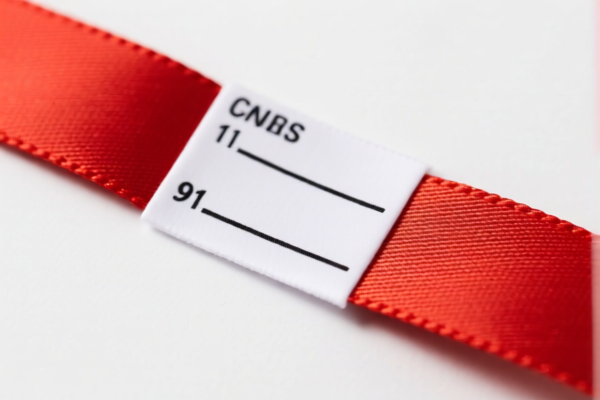

AI Analysis
🏷️ Product Labels / Tags (Textile Labels)
HS Code 5807.90.05.10 & 5807.10.05.10
🌐 HS Code Reference & Customs Clearance Guide | 2026 Latest Tariff Analysis | Professional Strategy
📌 I. Product Definition & Classification: Do You Truly Understand "Labels"?
In international trade, "Labels" (often referred to as woven labels, printed labels, or hang tags in the textile/apparel industry) are critical components for branding, compliance, and product identification. They are classified under Chapter 58: Special Woven Fabrics; Tufted Textiles; Lace; Tapestries; and Trimmings.
While often small, their classification is strict based on Material and Manufacturing Method:
- Woven Labels (5807.10): Made by weaving threads together. The HS Code often hinges on whether the material is Cotton or Man-Made Fibers.
- Non-Woven/Printed/Synthetic Labels (5807.90): Made through printing, non-woven processes, or other synthetic methods not falling under 5807.10.
⚠️ Key Distinction Point:
- If the label is Woven and made of Cotton → Look at 5807.10.05.10
- If the label is Woven but made of Synthetics/Blends OR Printed/Non-Woven → Look at 5807.90.05.10
- Note: Based on the provided data, both codes carry identical tax structures, but accurate classification is vital for compliance and audit trails.
📦 II. HS Code Classification Details (2026 Latest Tariff Alignment)
| HS Code | Product Description | Applicable Scenario | Material/Method |
|---|---|---|---|
5807.90.05.10 |
Labels, tags, or similar articles, of textile materials, not embroidered | Printed labels, non-woven labels, or woven labels of mixed/synthetic fibers where 5807.10 does not strictly apply | ✅ Textile (Non-Embroidered) |
5807.10.05.10 |
Labels, tags, or similar articles, woven, of cotton | Woven cotton labels, care labels made from 100% cotton yarn | ✅ Woven + Cotton |
5807.10.05.10 |
Labels, tags, or similar articles, woven, of cotton | Woven cotton labels, brand labels made from 100% cotton yarn | ✅ Woven + Cotton |
🔍 Important Note from Data Analysis:
- Common Inference: Even if the material is not explicitly stated in the product name, customs logic often infers "Cotton" for standard textile labels under 5807.10 based on common industry practice for woven goods.
- Alternative Logic: For 5807.90, the classification covers "labels" of textile materials broadly, often catching those that don't fit the specific "woven cotton" definition of 5807.10.
- Critical Point: Both codes provided in the dataset carry the same total tax rate, simplifying cost calculation but requiring correct documentation to avoid misclassification penalties.
💰 III. 2026 Latest Tariff Rate Breakdown (Including Surtaxes & Policy Surcharges)
✅ Applicable Country: United States (US)
✅ Origin: China (CN)
✅ Effective Time: Current (Based on provided data: 42.9% Total)
🎯 Total Tax Rate: 42.9%
(Applies to BOTH 5807.90.05.10 and 5807.10.05.10)
| Component | Rate | Description |
|---|---|---|
| 1. Base Tariff | 7.9% | Standard Most Favored Nation (MFN) or General Rate for textile labels |
| 2. Section 301 Surcharge (USITC) | +25.0% | Additional tariff on Chinese goods under Section 301 investigation |
| 3. Section 122 Tariff | +10.0% | Additional tariff under Section 122 authority (Specific to this dataset) |
| 4. Total Tax Rate | 42.9% | Sum of all above (7.9 + 25.0 + 10.0) |
| Tax Calculation | CIF Value × 42.9% | Duty is calculated on the Cost, Insurance, and Freight value |
📌 Detailed Explanation:
- Why 42.9%? This is a high-risk tariff bracket.
- Section 301 (25%): This is the largest component, applied to a vast array of Chinese manufactured goods, including textiles.
- Section 122 (10%): A less common but significant surcharge that adds to the burden, often linked to national security or specific trade remedy provisions.
- Base Rate (7.9%): This is the foundational duty for textile articles.
- No De Minimis Exemption: These goods cannot benefit from the $800 de minimis exemption if declared individually as commercial samples; they must be formally declared and taxed.
🛠️ IV. Customs Clearance Practical Advice (Avoid Pitfalls)
✅ 1. Essential Documentation Checklist
| Document | Required? | Description |
|---|---|---|
| ✅ Product Description | ✔️ | Must clearly state "Labels" or "Textile Tags" + Material (e.g., "Woven Cotton Label") |
| ✅ Material Declaration | ✔️ | Specify: 100% Cotton, Polyester, Blended? This determines 5807.10 vs 5807.90 |
| ✅ Usage Declaration | ✔️ | "For use on apparel/garments" |
| ✅ Commercial Invoice | ✔️ | Must match HS Code exactly; avoid vague terms like "Accessories" |
| ✅ Packing List | ✔️ | Detail quantity and weight; labels are often shipped in bulk bales |
| ✅ Photos | ✔️ | Clear images of the label showing weave/print type |
⚠️ Warning:
- Do NOT declare as "Textile Fabrics" (Chapter 50-55) or "Trimmings" (Chapter 63) incorrectly.
- Misclassification can lead to re-evaluation, delays, and penalties for duty evasion.
✅ 2. Classification Strategy (Key Tips)
🔥 "Material Defines Code, Declaration Defines Compliance"
| Scenario | Recommended HS Code | Reason |
|---|---|---|
| Woven Cotton Labels | 5807.10.05.10 |
Explicitly covers "Woven" + "Cotton" |
| Printed Polyester Labels | 5807.90.05.10 |
"Printed" or "Non-Woven" falls under "Other" (5807.90) |
| Blended Fiber Woven Labels | 5807.90.05.10 |
If not 100% cotton, it likely falls under 5807.90 |
| Embroidered Labels | ❌ Not Listed | Embroidered labels fall under 5807.10.90 or 5810, NOT the codes above. Ensure they are NOT embroidered. |
✅ 3. Special Cases
| Case | Handling Advice |
|---|---|
| OEM Private Label Labels | Provide the end-user’s brand authorization if requested. |
| Sample Labels (Low Value) | Even if low value, if shipped commercially, declare correctly. Do not use "Gift" to avoid $800 exemption unless truly non-commercial. |
| Mixed Shipments (Labels + Garments) | Must Separate! Do not mix labels with finished garments. Garments may have different HS codes and tariffs. Consolidating can trigger audits. |
🌍 V. Global Market Comparison (2026 Overview)
| Country/Region | Typical HS Code for Labels | Base Tariff | Surcharge | Total (China Origin) | Notes |
|---|---|---|---|---|---|
| 🇺🇸 USA | 5807.10.05.10 / 5807.90.05.10 |
7.9% | 35.0% (301+122) | 42.9% | High tariff; strict material verification |
| 🇨🇳 China | 5807.10.00.00 |
~5-10% | None | ~5-10% | Export hub; lower duty burden |
| 🇪🇺 EU | 5807.10 / 5807.90 |
4% | None | 4% | No Section 301/122 equivalents; CE marking not required for labels |
| 🇬🇧 UK | 5807.10 / 5807.90 |
4% | None | 4% | Post-Brexit, no additional surcharges like US |
| 🇨🇦 Canada | 5807.10 / 5807.90 |
5% | None | 5% | No Section 301 equivalent |
📌 Conclusion:
- The USA is the most expensive market for textile labels due to Section 301 and Section 122.
- If your end-market is the US, factor in 42.9% into your landed cost.
- Consider third-country manufacturing (e.g., Vietnam, India) if tariffs erode margins, as these countries may not face the same surcharges.
📌 VI. Common Errors & Pitfalls (Lessons Learned)
❌ Error 1: Declaring "Labels" as "Textile Scrap" or "Waste"
👉 Consequence: Customs rejection, fines, and seizure. Labels are finished goods, not scrap.
❌ Error 2: Ignoring the "Embroidered" distinction
👉 Consequence: Embroidered labels are classified differently (often higher duty or different code). If you declare 5807.90 for an embroidered label, it’s a misdeclaration.
❌ Error 3: Combining Labels with Finished Garments in One Line Item
👉 Consequence: The entire shipment may be audited. Garments have different HS codes. This triggers complex valuation issues.
❌ Error 4: Using "Tag" loosely
👉 Consequence: "Tags" can mean paper hang tags (Chapter 48) OR textile labels (Chapter 58). Ensure you declare Textile Labels if they are fabric-based.
✅ Correct Declaration Example:
"Textile Labels, Woven Cotton, Non-Embroidered, for Use on Apparel, HS 5807.10.05.10"
OR
"Printed Textile Labels, Polyester, Non-Embroidered, HS 5807.90.05.10"
🎯 VII. Conclusion: Precise Classification Saves Money
🎯 Remember the Key Points:
🔹 "Woven Cotton? Go 5807.10. Synthetic/Printed? Go 5807.90."
🔹 "Total Tax is 42.9% – Budget for This!"
🔹 "Never Mix Labels with Garments in One HS Code Line."
🔹 "Embroidery Changes Everything – Check Code First!"
📌 Pro Tip:
If you are shipping large volumes, consider applying for an Advance Ruling (Binding Tariff Information) from US Customs (CBP) to lock in the HS Code classification. This provides legal certainty and protects against future re-evaluations.
📣 Immediate Action:
📞 Verify Material: Is it 100% Cotton? If yes, use
5807.10.05.10. If not, use5807.90.05.10.
📄 Prepare Docs: Invoice, Packing List, and Photos.
🚀 Clear Customs Efficiently: Accurate classification prevents delays and ensures your 42.9% tax is correctly calculated, avoiding surprise penalties.
✨ Professional Customs Clearance Starts with Accurate Classification!
💼 Every label counts – make sure your HS Code counts too!
Customer Reviews
About HS Code Classification
The Harmonized System (HS) is an internationally standardized nomenclature developed by the World Customs Organization (WCO) to classify traded products. Over 200 countries use the HS system as the basis for customs tariffs, trade statistics, and import/export regulations.
Each HS code follows a hierarchical structure:
- Chapter (2 digits) — Broad category of goods (e.g., Chapter 84: Machinery and Mechanical Appliances)
- Heading (4 digits) — More specific grouping within the chapter
- Subheading (6 digits) — Internationally standardized breakdown, used by all WCO member countries
- National subdivisions (8-10 digits) — Country-specific extensions for further classification, such as US HTSUS 10-digit codes
Correct HS code classification is essential for smooth customs clearance, accurate duty payment, and compliance with trade regulations. Misclassification can lead to customs delays, overpayment of duties, or penalties.
When importing from CN to US, the applicable tariff rates may include:
- Most-Favored-Nation (MFN) rate — The standard duty rate applied to WTO members
- General rate — Applied to countries without trade agreements
- Trade remedy duties — Additional tariffs such as Section 301 (anti-dumping), Section 232 (national security), or countervailing duties
The information provided on this page is for reference purposes only. For official classification, please consult with your local customs authority or a licensed customs broker.