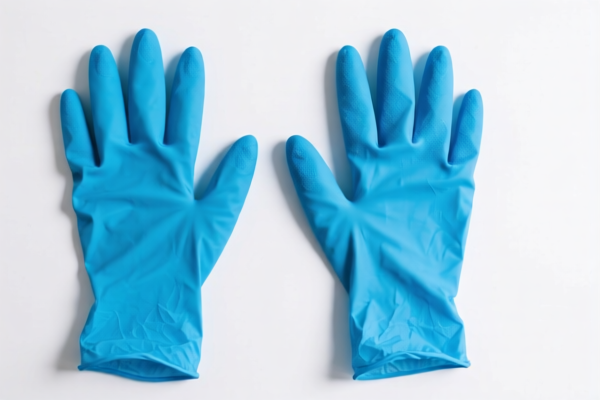
laboratory rubber gloves
CN → US| HS Code | Tariff Rate | Origin | Destination | Doc |
|---|---|---|---|---|
| 6116106500 | 24.5% | CN | US | Official Doc |
| 4014905000 | 14.2% | CN | US | Official Doc |
| 4014901000 | 10.0% | CN | US | Official Doc |
| 6116109500 | 24.5% | CN | US | Official Doc |
| 4015195100 | 49.0% | CN | US | Official Doc |
Product Images



AI Analysis
🧤 Laboratory Rubber Gloves: The Ultimate HS Code & Tax Strategy Guide (2026)
🌐 HS Code Reference & Customs Clearance Guide | 2026 Latest Tariff Analysis | Professional通关 Strategy
📌 I. Product Definition & Classification: Do You Really Know "Rubber Gloves"?
Laboratory rubber gloves are critical PPE (Personal Protective Equipment) used in medical, scientific, and industrial settings. In international trade, they are strictly classified based on material composition and specific use. Confusing them with general industrial gloves can lead to massive tax discrepancies.
There are two main classification paths for "Laboratory Rubber Gloves":
- Chemical-Resistant/Immersed Gloves (Chapter 61/40 Intersection): Often classified under knitting/weaving or specific rubber immersion codes if they meet "glove" morphology.
- Medical/Hygiene Rubber Articles (Chapter 40): If specifically designed for sanitary or medical purposes, they fall under "Sanitary Articles of Rubber."
⚠️ Key Distinction Point:
- Are they "Immersed Gloves" (coated fabric/rubber) → Look at 6116.10.
- Are they "Sanitary/Medical Rubber Articles" (vulcanized rubber) → Look at 4014.90.
- Are they considered "Clothing/Accessories" (less common for pure rubber, but possible for specific formulations) → Look at 4015.
📦 II. HS Code Classification Details (2026 Latest Tariff Authority Comparison)
Based on the provided data, here is the precise breakdown for Laboratory Rubber Gloves:
| HS Code | Product Description (Summary) | Material/Feature Key | Tax Category |
|---|---|---|---|
6116.10.65.00 |
Laboratory Rubber Gloves, Rubber Material, Glove Morphology | Rubber/Plastic Immersed Gloves | High Tax Tier |
4014.90.50.00 |
Laboratory Rubber Gloves, Vulcanized Rubber, Sanitary/Medical Use | Sanitary/Medical Rubber Articles | Medium Tax Tier |
4014.90.10.00 |
Laboratory Rubber Gloves, Rubber, Sanitary/Medical Category | Sanitary/Medical Rubber Articles | Low Base Tax |
6116.10.95.00 |
Laboratory Rubber Gloves, Rubber, Glove Morphology | General Glove Classification | High Tax Tier |
4015.19.51.00 |
Rubber Agricultural Gloves (Note: Included in data context) | Vulcanized Rubber Clothing/Accessory | Highest Tax Tier |
🔍 Critical Reminder:
- Medical vs. General: If the gloves are certified for medical/hygiene use, Chapter 40 (4014.90) is often the correct path, potentially lowering the base tariff.
- Immersed vs. Pure Rubber: If the gloves are fabric coated with rubber/plastic, Chapter 61 (6116.10) applies.
- Avoid Misclassification: Do NOT classify medical lab gloves as "Agricultural Gloves" (4015.19.51.00) unless they are explicitly for farming use, as this carries a punitive tariff rate.
💰 III. 2026 Latest Tariff Rate Breakdown (Including Additional Taxes & Policy Surcharges)
✅ Applicable Country: United States (US)
✅ Origin: China (CN)
✅ Effective Time: 2025/2026 Tariff Schedule (Includes Section 301 & IEEPA implications)
🎯 1. 6116.10.65.00 & 6116.10.95.00 —— Rubber/Plastic Immersed Gloves
These codes fall under "Gloves, Mittens, and Muffs," with specific sub-classifications for rubber/plastic coating.
| Item | Content |
|---|---|
| Base Tariff | 7.0% (Ad Valorem) |
| Section 301 Tariff | 7.5% (Retaliatory/Additional) |
| 122 Clause Tariff | 10% (Specific Policy Surcharge) |
| Total Effective Rate | 24.5% |
| Tax Calculation | CIF Value × 24.5% |
| De Minimis Eligibility | ❌ No (Likely subject to strict scrutiny) |
| Legal Basis | USITC Chapter 61 + Section 301 Footnotes + 122 Clause |
📌 Explanation:
- The 7.0% base is standard for Chapter 61 gloves.
- The 7.5% is the Section 301 additional tariff for many Chinese rubber/plastic goods.
- The 10% is a specific policy surcharge (referred to as "122 Clause" in the data, likely reflecting specific trade action or duty exclusion expiration).
- Total: 24.5%. This is a moderate-to-high burden.
🎯 2. 4014.90.50.00 —— Sanitary/Medical Rubber Articles (Vulcanized)
This classification leverages the "Sanitary or Hygienic Articles of Rubber" provision.
| Item | Content |
|---|---|
| Base Tariff | 4.2% (Ad Valorem) |
| Section 301 Tariff | 0.0% (Often exempt or lower for medical/hygiene rubber) |
| 122 Clause Tariff | 10% |
| Total Effective Rate | 14.2% |
| Tax Calculation | CIF Value × 14.2% |
| De Minimis Eligibility | ❌ No |
| Legal Basis | USITC Chapter 40 + 122 Clause |
📌 Explanation:
- Significant Savings: Compared to Chapter 61, this saves 10.3% in total duty.
- Condition: Must prove the gloves are for sanitary or medical purposes. Documentation is key.
🎯 3. 4014.90.10.00 —— Sanitary/Medical Rubber Articles (Other/Specific)
Another sub-code within Chapter 40, potentially for different types of medical rubber goods.
| Item | Content |
|---|---|
| Base Tariff | 0.0% (Ad Valorem - Duty-Free Base) |
| Section 301 Tariff | 0.0% |
| 122 Clause Tariff | 10% |
| Total Effective Rate | 10.0% |
| Tax Calculation | CIF Value × 10.0% |
| De Minimis Eligibility | ❌ No |
| Legal Basis | USITC Chapter 40 + 122 Clause |
📌 Explanation:
- Most Cost-Effective: The base tariff is 0%.
- Caveat: The 10% surcharge remains.
- Strategy: If your gloves fit this specific sub-heading, this is the optimal HS Code for cost reduction.
🎯 4. 4015.19.51.00 —— Rubber Clothing/Accessories (Agricultural/Other)
⚠️ WARNING: This code is listed in the data for "Laboratory Rubber Gloves" but described as "Agricultural Rubber Gloves."
| Item | Content |
|---|---|
| Base Tariff | 14.0% (Ad Valorem) |
| Section 301 Tariff | 25.0% |
| 122 Clause Tariff | 10% |
| Total Effective Rate | 49.0% |
| Tax Calculation | CIF Value × 49.0% |
| De Minimis Eligibility | ❌ No |
| Legal Basis | USITC Chapter 40 + Section 301 (High Tier) + 122 Clause |
📌 Explanation:
- Highest Burden: 49.0% is extremely high.
- Misclassification Risk: If you misclassify medical lab gloves as "Agricultural Gloves" or "Clothing Articles," you risk paying nearly double the tax of the medical classification.
- Action: Avoid this code unless the gloves are genuinely for agricultural farming use.
🛠️ IV. Customs Clearance Practical Advice (Battle-Tested Pitfall Guide)
✅ 1. Documentation Checklist (Must-Haves)
| Document | Required? | Purpose |
|---|---|---|
| ✅ Product Specification Sheet | ✔️ | Detail material (Vulcanized vs. Latex), thickness, powder-free status. |
| ✅ Medical Device Registration | ✔️ | Crucial for 4014.90 codes. Proves "Sanitary/Medical" use. |
| ✅ Certificate of Origin | ✔️ | Required for Section 301 calculations. |
| ✅ Commercial Invoice | ✔️ | Must clearly state "Laboratory Rubber Gloves, Medical/Sanitary Use." |
| ✅ Bill of Lading | ✔️ | Ensure no "Agricultural" keywords appear if not applicable. |
| ✅ Third-Party Test Report | ✔️ | FDA/CE certification supports medical classification. |
✅ 2. Classification Strategy (Key Mnemonics)
🔥 “Medical = 4014, Immersed = 6116, Agri = 4015 (Danger!)”
| Scenario | Recommended HS Code | Tax Rate | Why? |
|---|---|---|---|
| Medical/Lab Gloves (Vulcanized) | 4014.90.10.00 |
10.0% | Lowest base tariff. Best for cost. |
| Medical/Lab Gloves (Other Sanitary) | 4014.90.50.00 |
14.2% | Still low base tariff. Safe alternative. |
| General Lab Gloves (Coated/Immersed) | 6116.10.65.00 |
24.5% | Standard for rubber-coated gloves. |
| General Lab Gloves (Other) | 6116.10.95.00 |
24.5% | Same as above, different sub-feature. |
| Agricultural Gloves (Misclassified Lab) | 4015.19.51.00 |
49.0% | DO NOT USE for lab gloves. Avoid! |
📌 Pro Tip:
- Always prioritize Chapter 40 (4014.90) if the gloves are medical/sanitary. The difference between 10% and 24.5% is huge.
- Ensure your invoice description matches the HS code. If using4014.90, use words like "Sanitary," "Medical," "Hygienic." If using6116.10, use "Rubber-Coated," "Immersed."
✅ 3. Special Cases Handling
| Situation | Handling Advice |
|---|---|
| Mixed Containers | If a container has both Medical Gloves (4014) and General Gloves (6116), declare separately. Do not mix. |
| Private Label (OEM) | Provide the OEM contract. If the label says "Lab Gloves," ensure the technical spec supports 4014 (medical) vs 6116 (industrial). |
| Exemptions? | Currently, no de minimis or major Section 301 exemptions are indicated for these codes. Budget for the full surcharge. |
| Material Change | If you switch from Latex to Nitrile (still rubber), 4014.90 is still valid for medical use. 6116.10 may apply if it's coated fabric. |
🌍 V. Global Market Comparison (2026 Outlook)
| Market | Recommended HS Code | Est. Tariff (China Origin) | Key Requirement |
|---|---|---|---|
| 🇺🇸 USA | 4014.90.10.00 |
10.0% | FDA/CE Medical Proof |
| 🇺🇸 USA | 6116.10.65.00 |
24.5% | Standard Industrial Proof |
| 🇨🇳 China | 4014.90.10.00 |
~0-5% (Varies) | CCC (if medical device) |
| 🇪🇺 EU | 4014.90 |
0% (if MDR certified) | CE Mark (MDR Regulation) |
| 🇬🇧 UK | 4014.90 |
0% (if UKCA certified) | UKCA Mark |
📌 Conclusion:
- USA is the most complex due to Section 301 and 122 Clause surcharges.
- Medical Classification (4014.90) is the gold standard for reducing US duties on lab gloves.
- Non-Medical Classification (6116.10) incites a ~15% higher tax burden.
📌 VI. Common Mistakes & Pitfalls (Lessons Learned)
❌ Mistake 1: Calling "Medical Gloves" "Industrial Gloves"
👉 Result: Customs forces classification under 6116.10 → Tax jumps from 10% to 24.5%.
❌ Mistake 2: Using 4015.19.51.00 for Lab Gloves
👉 Result: Tax jumps to 49.0%. This code is for agricultural or clothing rubber, not fine lab gloves.
❌ Mistake 3: Not providing Medical Certification for 4014.90
👉 Result: Customs rejects the medical classification → Reverts to general rubber tariff → Back taxes + Penalties.
❌ Mistake 4: Vague Invoice Description ("Rubber Gloves")
👉 Result: Customs officer has discretion → Likely chooses the higher tariff code (6116.10 or 4015) → Higher Cost.
✅ Correct Practice:
"Vulcanized Rubber Laboratory Gloves, Powder-Free, Medical Grade, for Chemical Resistance, FDA Registered, Model XYZ"
🎯 VII. Conclusion: Precision Classification Saves Money!
🎯 Remember the Golden Rule:
🔹 “Medical is 10%, Immersed is 24.5%, Agri is 49.0%.”
🔹 “Prove it’s medical, save 15% instantly.”
🔹 “Don’t let vague descriptions cost you dearly.”
📌 Pro Tip:
If your supply chain is shifting, consider pre-ruling with US Customs (CBP) to confirm the 4014.90.10.00 classification for your specific product design. This locks in the 10% rate and protects against audit penalties.
📣 Immediate Action:
📞 Consult a licensed customs broker.
📄 Prepare Medical/Sanitary Certification documents.
🚀 Optimize your invoice description to match4014.90.10.00if eligible.
✨ Smart Classification, Smarter Profits!
💼 Every percentage point counts in cross-border trade!
Customer Reviews
About HS Code Classification
The Harmonized System (HS) is an internationally standardized nomenclature developed by the World Customs Organization (WCO) to classify traded products. Over 200 countries use the HS system as the basis for customs tariffs, trade statistics, and import/export regulations.
Each HS code follows a hierarchical structure:
- Chapter (2 digits) — Broad category of goods (e.g., Chapter 84: Machinery and Mechanical Appliances)
- Heading (4 digits) — More specific grouping within the chapter
- Subheading (6 digits) — Internationally standardized breakdown, used by all WCO member countries
- National subdivisions (8-10 digits) — Country-specific extensions for further classification, such as US HTSUS 10-digit codes
Correct HS code classification is essential for smooth customs clearance, accurate duty payment, and compliance with trade regulations. Misclassification can lead to customs delays, overpayment of duties, or penalties.
When importing from CN to US, the applicable tariff rates may include:
- Most-Favored-Nation (MFN) rate — The standard duty rate applied to WTO members
- General rate — Applied to countries without trade agreements
- Trade remedy duties — Additional tariffs such as Section 301 (anti-dumping), Section 232 (national security), or countervailing duties
The information provided on this page is for reference purposes only. For official classification, please consult with your local customs authority or a licensed customs broker.